How These Violent Delights transforms one of the world’s most familiar love stories into a contemporary, almost wordless cinematic experience.
Courtesy Scottish Ballet These Violent Delights
There are few love stories as familiar as Romeo and Juliet. Its young lovers, feuding families and fatal ending have travelled across centuries, languages and artistic forms. Yet in These Violent Delights, Scottish Ballet finds a way to make the tragedy feel immediate again by taking away the words.
For 70 minutes, there is no Shakespearean dialogue to explain an emotion or announce a turn in the plot. Instead, movement, music, costume and camera become the language of the story. The result is not simply a ballet recorded for the screen, but a work conceived as cinema, one in which a glance can carry a confession and a body in motion can reveal everything that speech might conceal.
Directed by Scottish Ballet’s artistic director Christopher Hampson and filmmaker Oscar Sansom, and made in association with production company Forest of Black, These Violent Delights marks Scottish Ballet’s first major feature-length film. Following its world premiere at the Edinburgh International Film Festival in August, it arrives in UK and Irish cinemas on 21 October.
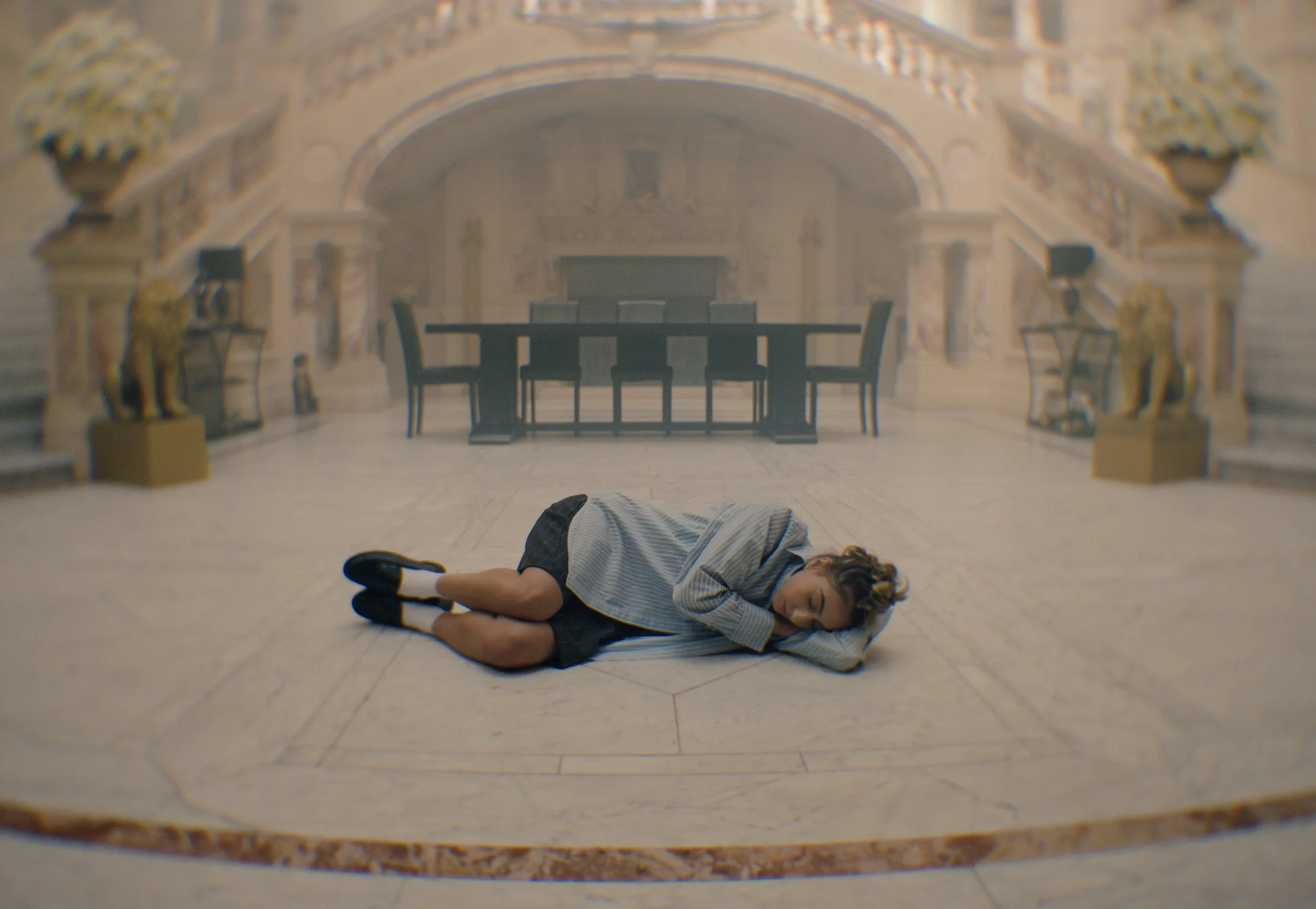
The film begins at the end. Juliet awakens inside The Apothecary surrounded by the remnants of tragedy: a dagger, spilt poison and Romeo’s body. From there, time folds backwards. Yet the film does not attempt to recount the whole story of Romeo and Juliet, scene by scene. Instead, it narrows the tragedy to Juliet’s point of view and enters their subconscious. What follows is not an objective chronology, but a fractured journey through memory and hallucination: Juliet’s recollection of events is pulled through the moments that brought them to this point, allowing a story whose conclusion we already know to acquire the fractured logic of a fever dream.
Courtesy Scottish Ballet These Violent Delights
At the centre of it all is Kayla-Maree Tarantolo’s brilliant performance as Juliet. Tarantolo has the difficult task of carrying not only the emotional weight of the film but also its subjective point of view and much of its narrative clarity. Through movement and expression alone, the dancer makes Juliet’s shifts between vulnerability, desire, fear and defiance immediately legible. Tarantolo gives physical form to the character’s subconscious, distinguishing what Juliet experiences from what they remember and what they may wish had happened differently. Even in stillness, the performance retains an extraordinary intensity; the camera draws us close enough to see thought and resistance forming before they become action.
It is one of the film’s most impressive achievements that the absence of dialogue never becomes an obstacle to following the story. Knowledge of Shakespeare’s original tragedy certainly provides a map, but the film does not depend on the audience mentally supplying the missing lines. Here, the choreographers take the place of the dialogue: Julia Cheng, Morgann Runacre-Temple, Myles Thatcher, Sophie Laplane, Nicholas Shoesmith and Andrea Azzari allow gesture, rhythm and physical distance to express what another adaptation might entrust to Shakespeare’s text. John Lemke’s score, William Aikman’s sound design and Oscar Sansom’s editing complete that vocabulary. The camera does not merely observe the dancers. It guides our attention, fragments memories and changes our relationship to the performers, allowing an intimate gesture to become as significant as the most expansive choreography.
The visual effects are equally important to the storytelling. Rather than functioning as decorative flourishes, they help externalise Juliet’s state of mind, dissolving the boundaries between memory, nightmare and present reality. Alongside shifts in colour, light and perspective, they make the film’s movement through the subconscious intelligible: we may not always know whether we are watching an event as it happened or as Juliet now recalls it, but we understand how that memory feels.
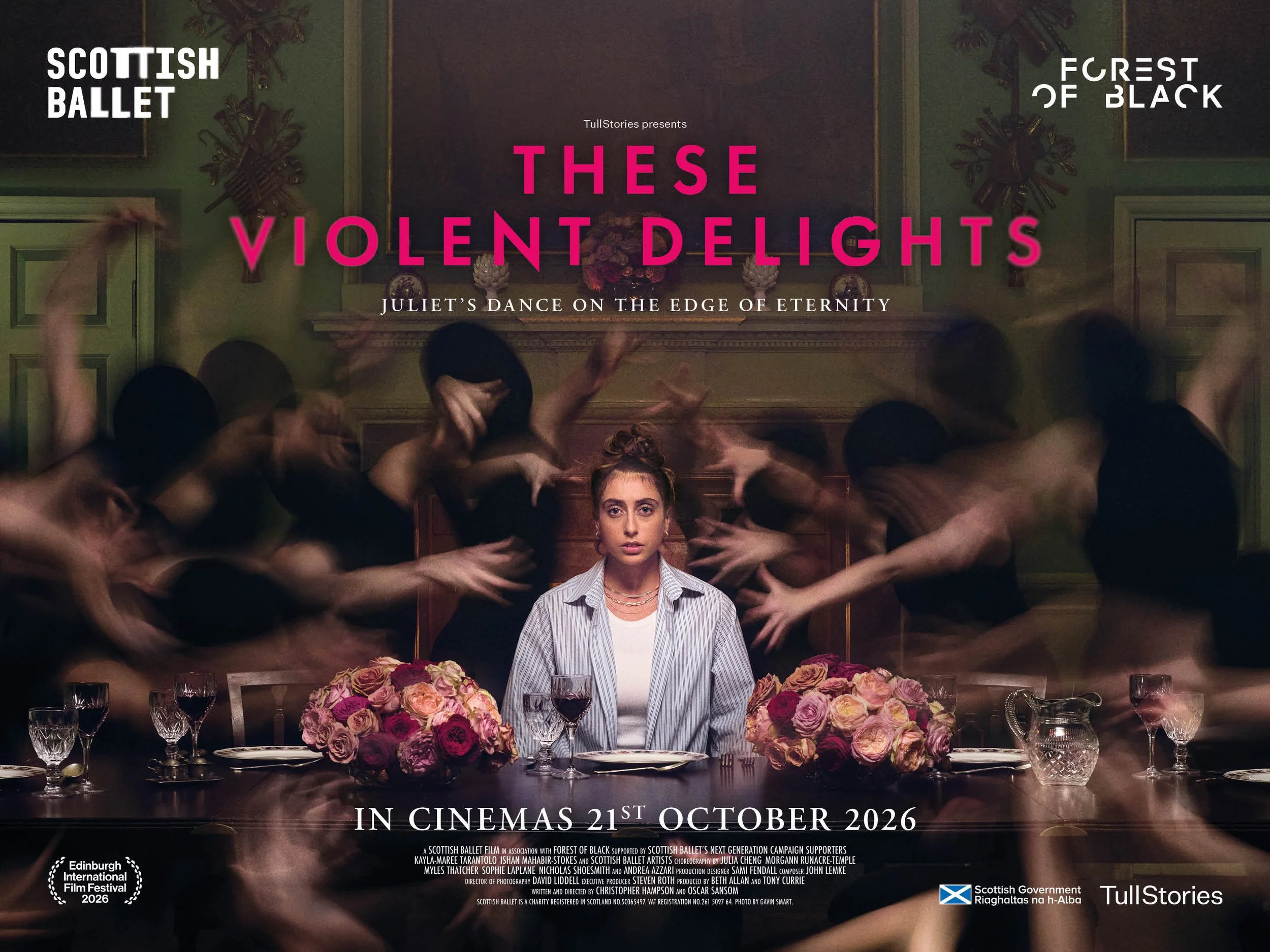
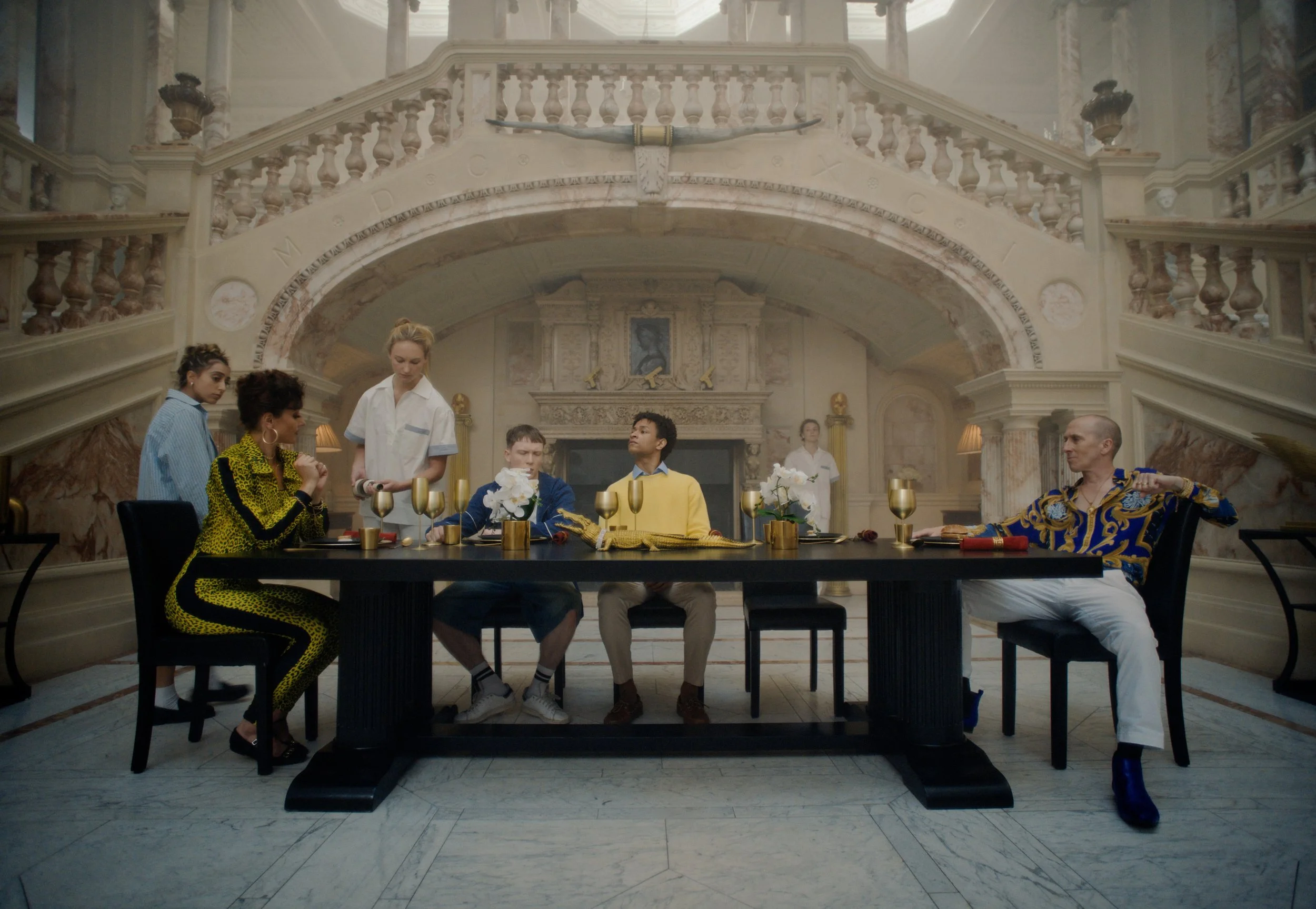
That cinematic language is especially effective in the contrast between the worlds Juliet inhabits. The Capulets and Montagues occupy mirrored dining rooms shaped by ritual, ambition and restraint. Their tables appear less like places of communion than stages upon which family roles are imposed. Paris is presented as the future already selected for Juliet; Romeo, played by Ishan Mahabir-Stokes, is similarly constrained by the expectations of his own family.
Then comes The Apothecary.
Courtesy Scottish Ballet These Violent Delights
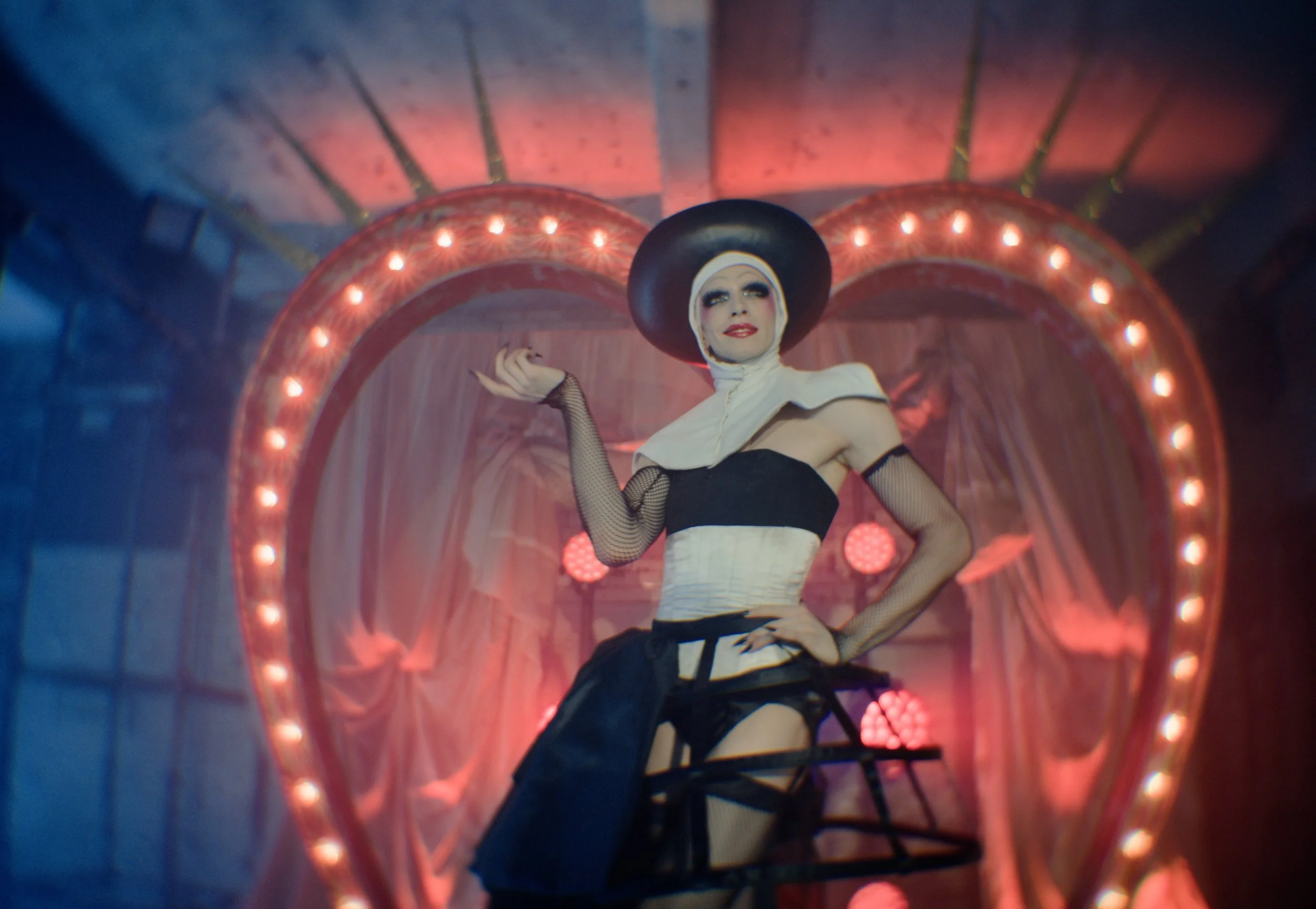
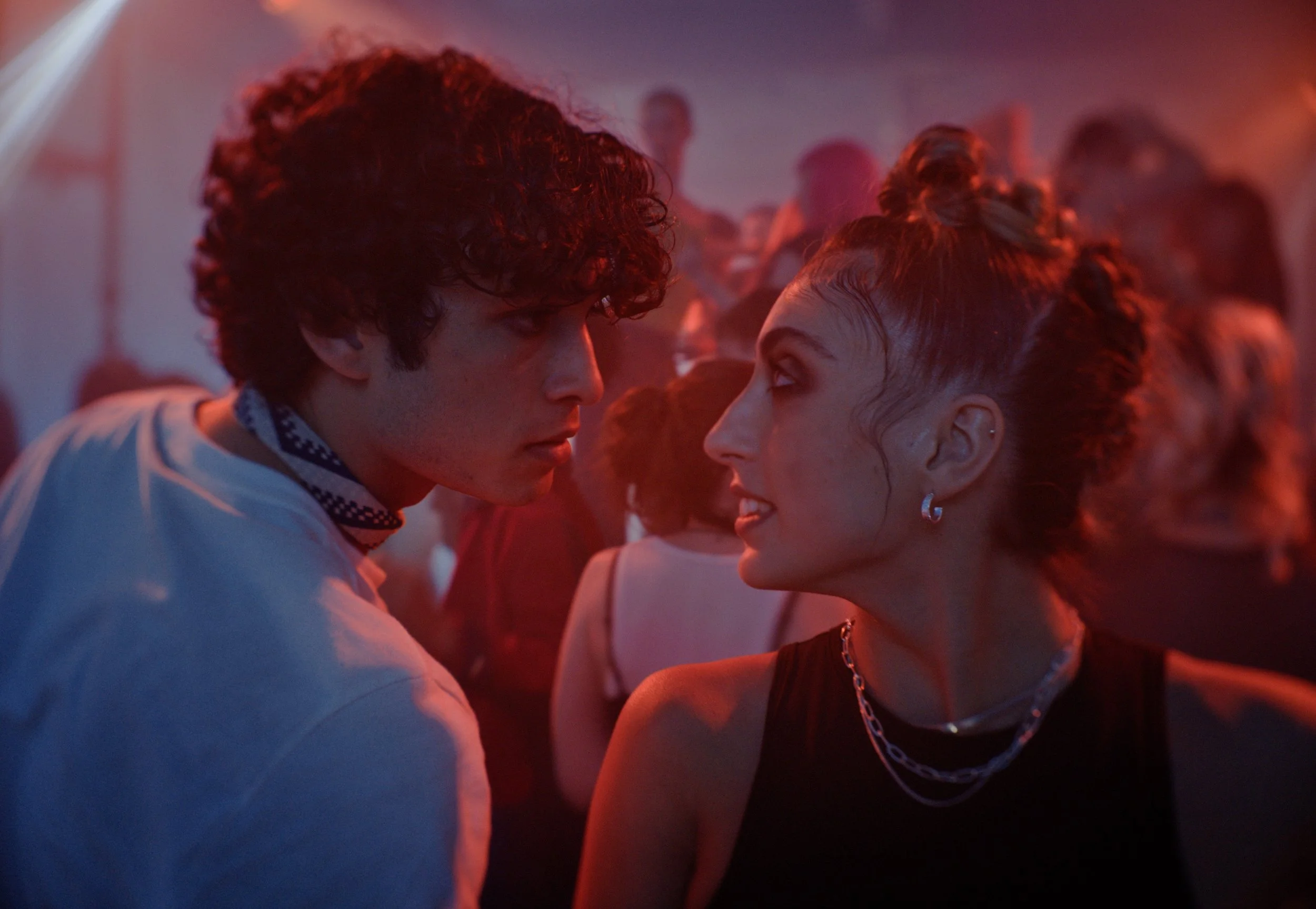
Reimagined as an inclusive queer nightclub reclaimed from an abandoned building, it introduces colour, sweat, glitter and possibility into the film. Presided over by the drag Sisters Laurence and Giovanna, It offers a space where identity can be explored and reinvented rather than dictated by family or convention. Under its neon light, the lovers’ first encounter feels like more than romantic attraction. It is also the recognition of another person searching for freedom.
Production and costume designer Sami Fendall and director of photography David Liddell make the difference between these spaces palpable. The ordered, ritualised atmosphere of the family worlds gives way to the sensual abandon of the dance floor. The contrast is visual, but it is also political: outside The Apothecary, the young characters are repeatedly told who they are and what futures await them; inside it, they briefly experience the freedom to decide for themselves.
This transformation also gives the familiar conflict a distinctly contemporary energy. The tragedy is no longer only about two families who refuse to end an ancient feud. It becomes a story about the violence of prescribed identities and the fragile sanctuaries created by those who resist them. Belonging, in this version, is not guaranteed by blood. It is discovered among those willing to make room for you.
The film’s queer reimagining does not feel imposed upon Shakespeare’s story. On the contrary, it reveals elements already present within it: young people rebelling against inherited rules, the urgency of desire and the danger of a society more invested in obedience than understanding. The Apothecary may look radically different from the Verona usually imagined on stage, but emotionally it belongs to the same tragedy.
Courtesy Scottish Ballet These Violent Delights
For audiences accustomed to ballet in the theatre, These Violent Delights also demonstrates what changes when dance is created for a lens. Cinema can place us within the choreography, isolate a face from the crowd or make a room feel like an extension of Juliet’s mind. Rather than trying to reproduce the experience of sitting before a stage, Hampson and Sansom use film to create another kind of proximity one that is more intimate, unstable and psychological.
The result is sensorial but never empty spectacle. Its costumes, club imagery and striking compositions may be the first things to capture the eye, but it is Tarantolo’s Juliet who gives them emotional consequence. The performance holds the film together, making the final return to its opening image feel not like a predetermined ending but the culmination of choices, constraints and misunderstandings we have now experienced from within.
Shakespeare gave his lovers some of the most enduring words in the English language. These Violent Delights removes those words and discovers that the story can still speak — through bodies, rhythm, colour and the charged silence between two people. This Romeo and Juliet may be almost wordless, but it has plenty to say.
These Violent Delights is released in UK and Irish cinemas on 21 October 2026, accompanied by a 20-minute Q&A.
Courtesy Scottish Ballet These Violent Delights