Anish Kapoor Returns to the Hayward Gallery in London
Source: own archive
Few artists possess the ability to make us question the reliability of our own senses. Fewer still can transform an entire building into a psychological landscape. Walking into Anish Kapoor's new exhibition at the Hayward Gallery in London, one is immediately confronted with the unsettling possibility that what appears solid may not be solid at all, that what seems empty may be full, and that what initially feels familiar may reveal itself to be something altogether stranger.
It is an appropriate homecoming. Nearly three decades after the Hayward Gallery presented the first major survey of Kapoor's work in the United Kingdom, the artist has returned to the South Bank with an exhibition that occupies not simply the gallery's rooms but the imagination itself. Presented as a centrepiece of the Southbank Centre's seventy-fifth anniversary celebrations, the exhibition unfolds across the Hayward's distinctive Brutalist architecture, transforming its concrete volumes into spaces of illusion, contemplation and visceral confrontation. This is not a show that asks to be viewed. It asks to be experienced.
Entering the Unknown
The warning arrives almost immediately. "Be careful not to touch the artwork". It is not the usual instruction found in galleries. Here, it carries a different weight. Some of Kapoor's works seem less like objects and more like living presences occupying the room alongside us. The first encounter is overwhelming.
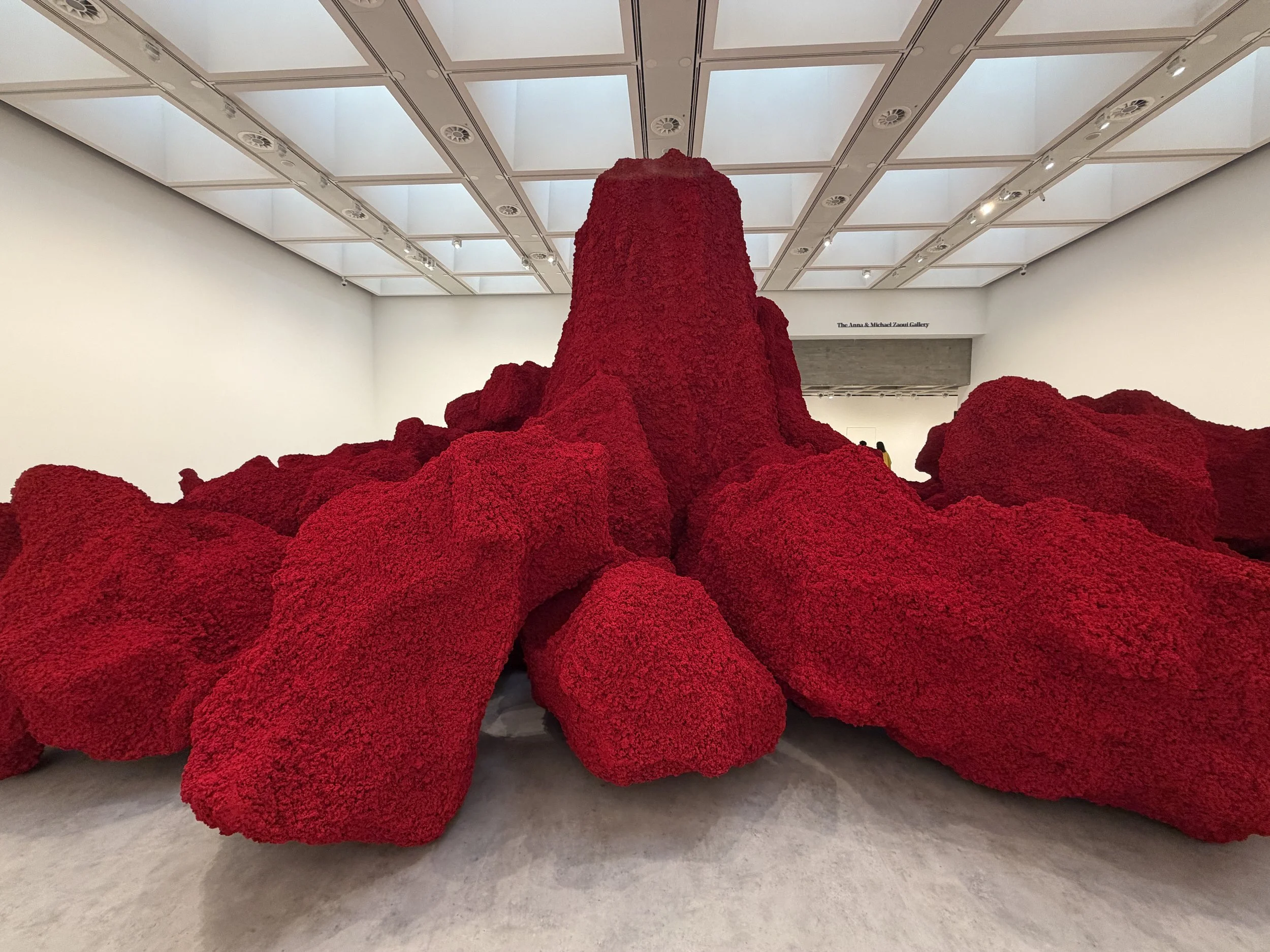
A vast inflated membrane of deep red PVC fills an entire six-metre-high gallery, pressing against the architecture with a strange biological energy. Monumental in scale yet oddly vulnerable, the work appears as though the building itself has developed an internal organ. Visitors move around its edges, searching for orientation while simultaneously questioning the limits of the space they have just entered. The installation immediately establishes one of Kapoor's central concerns: scale.
Source: own archive
Throughout his career, Kapoor has repeatedly manipulated our understanding of physical dimensions, creating works that make us feel simultaneously insignificant and intensely aware of our own bodies. Standing before this enormous red form, the distinction between sculpture and environment begins to dissolve. The artwork does not occupy the room. It becomes the room.
The Architecture of Absence
Born in Mumbai in 1954 and based in London since the 1970s, Kapoor has spent more than four decades exploring the relationship between materiality and immateriality, surface and depth, presence and absence. His work frequently revolves around paradoxes. The visible reveals the invisible. Solid matter suggests emptiness. Monumental forms point towards the intangible.
Source: own archive
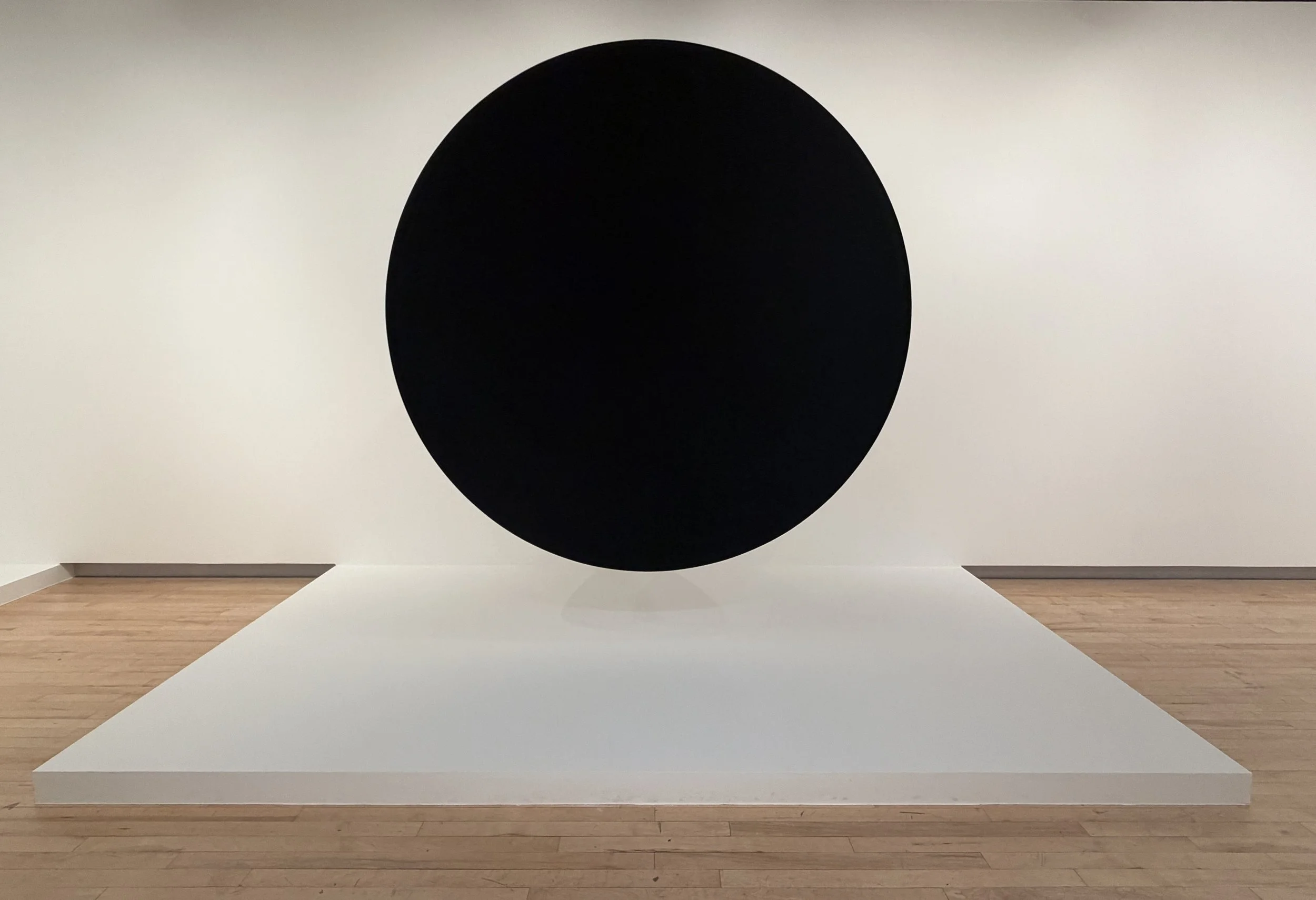
Perhaps nowhere is this more evident than in his celebrated void works. These pieces remain among the most disorientating experiences in contemporary art. Painted in such a way that depth becomes impossible to measure, they appear as openings into another reality. Visitors instinctively lean closer, attempting to understand what they are seeing. The eye searches for clues, but the mind struggles to process the information.
There is something profoundly human about this impulse. We are conditioned to seek certainty. We want to understand boundaries, dimensions and limits. Kapoor repeatedly denies us that comfort. His voids remain stubbornly unknowable. In an age obsessed with information and explanation, there is something refreshing about encountering works that refuse complete understanding.
Vantablack and the Limits of Perception
Among the exhibition's most compelling works are those coated in Vantablack, the light-absorbing nanotechnology that has become synonymous with Kapoor's practice. So black that it absorbs almost all visible light, the material creates an optical effect that feels almost impossible. Three-dimensional objects appear flat. Form disappears. Shadows cease to function as expected. Sculpture transforms into illusion.
These works are often discussed in technological terms, yet their impact is deeply philosophical. They remind us how fragile perception can be. What we see is not necessarily what exists. The experience feels particularly relevant today. We live in a world increasingly mediated through screens, algorithms and digital representations. Certainty often proves elusive. Reality itself can appear unstable. Kapoor's sculptures transform these abstract concerns into physical encounters. They force us to confront the limitations of our own vision.
Blood and the Sublime
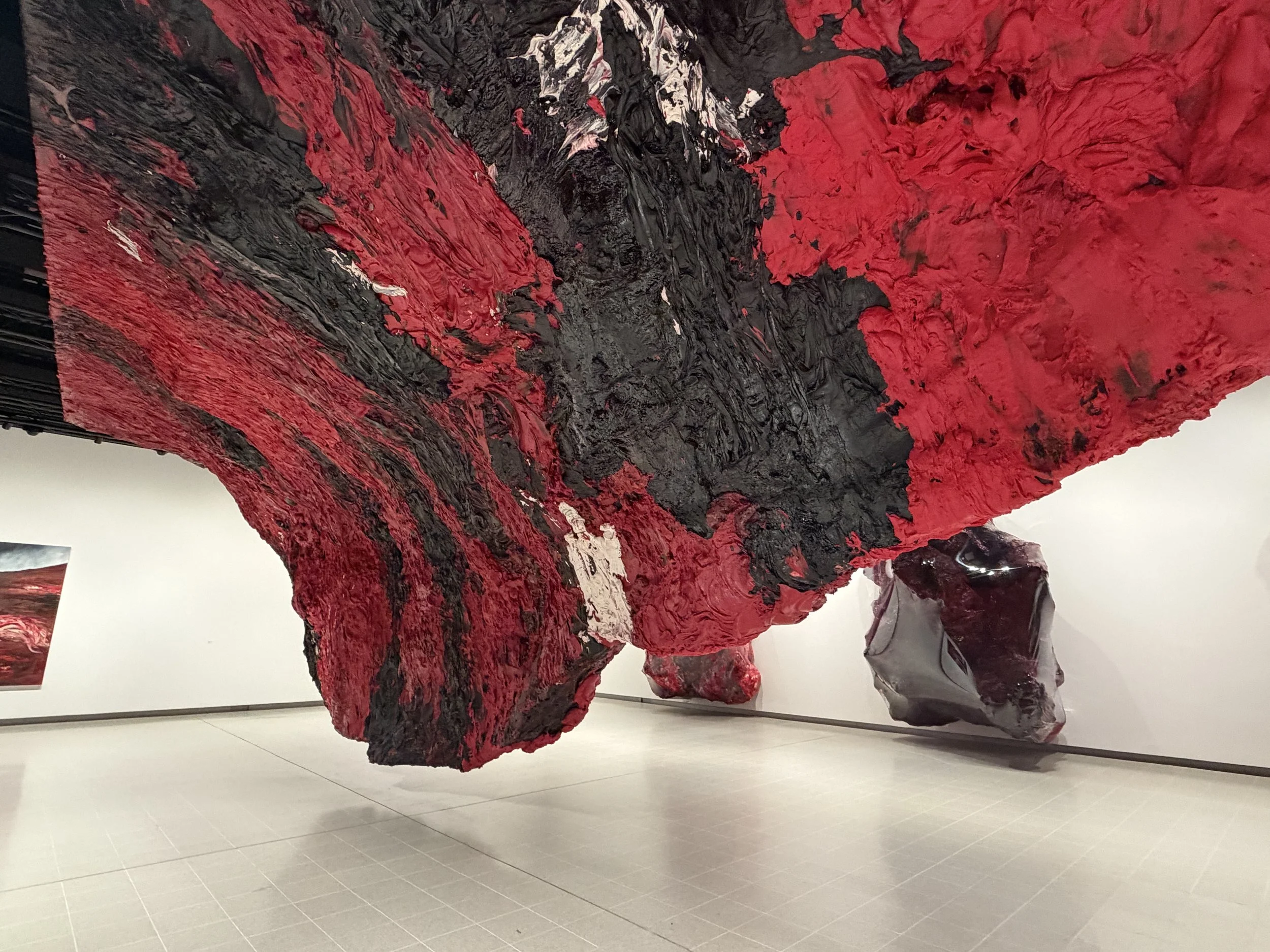
If the void works explore absence, the exhibition's later galleries focus on excess. Here Kapoor turns towards the body. Crimson pigments spill across vast sculptural surfaces. Silicone and resin form shapes that evoke flesh, wounds and internal organs. Massive accumulations of material seem simultaneously geological and biological, ancient and immediate.
One of the exhibition's most powerful works, Mount Moriah at the Gate of the Ghetto (2022), hangs improbably from the ceiling, hovering just above the floor. It is breathtaking. The title references the biblical mountain where Abraham prepared to sacrifice his son Isaac, introducing themes of faith, violence and moral uncertainty. Yet the work resists straightforward interpretation. It is at once landscape, body and monument.
Source: own archive
Throughout these galleries, Kapoor engages with what philosophers have long described as the sublime. Unlike beauty, which comforts and reassures, the sublime unsettles. It emerges through encounters with forces that exceed our capacity to comprehend fully. Mountains, oceans, storms and vast expanses have traditionally occupied this territory. Kapoor achieves a similar effect through sculpture. His works overwhelm not merely through size but through emotional intensity. The result can feel uncomfortable. That discomfort is intentional.
Mirrors, Reflections and Distortion
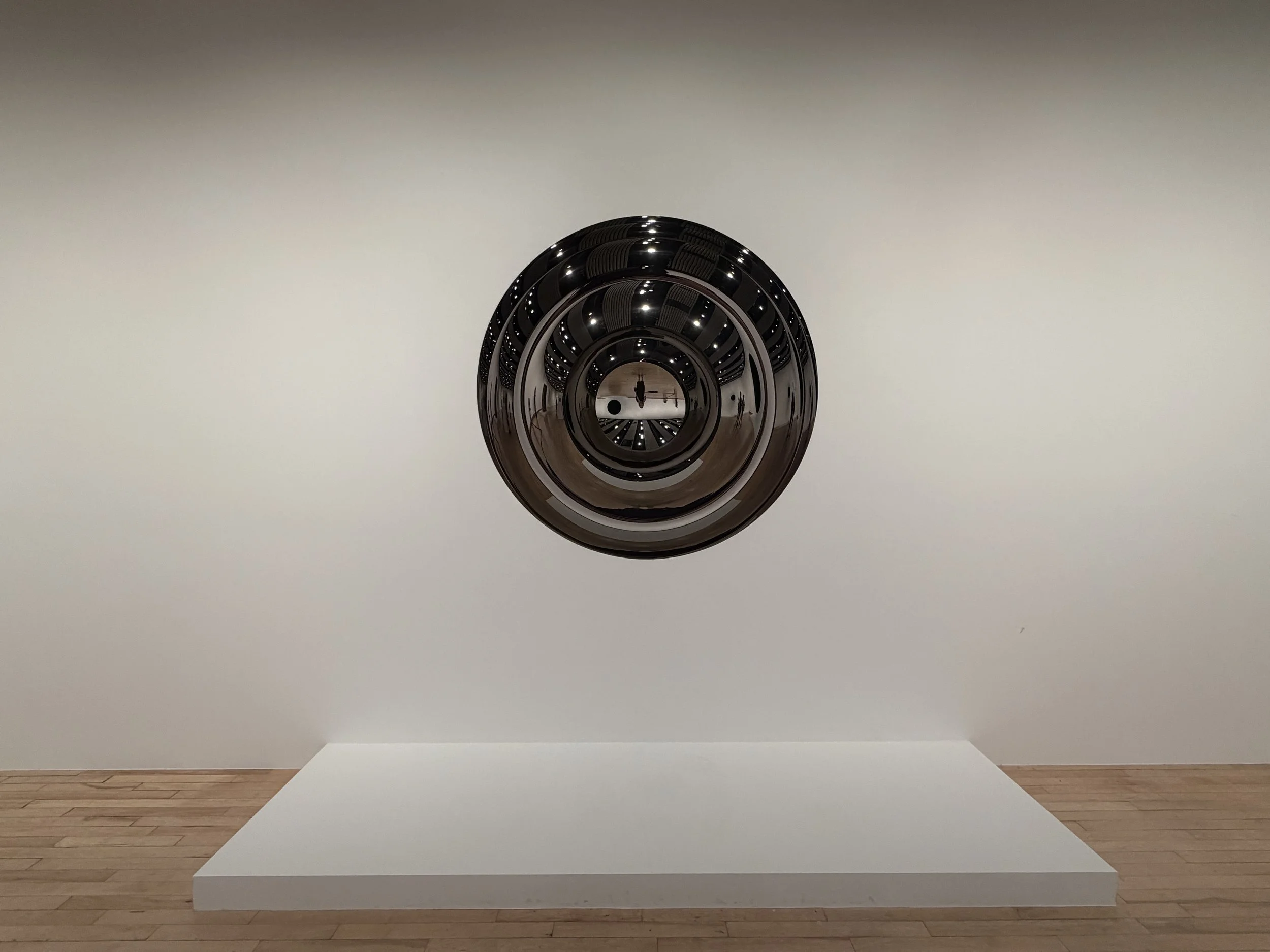
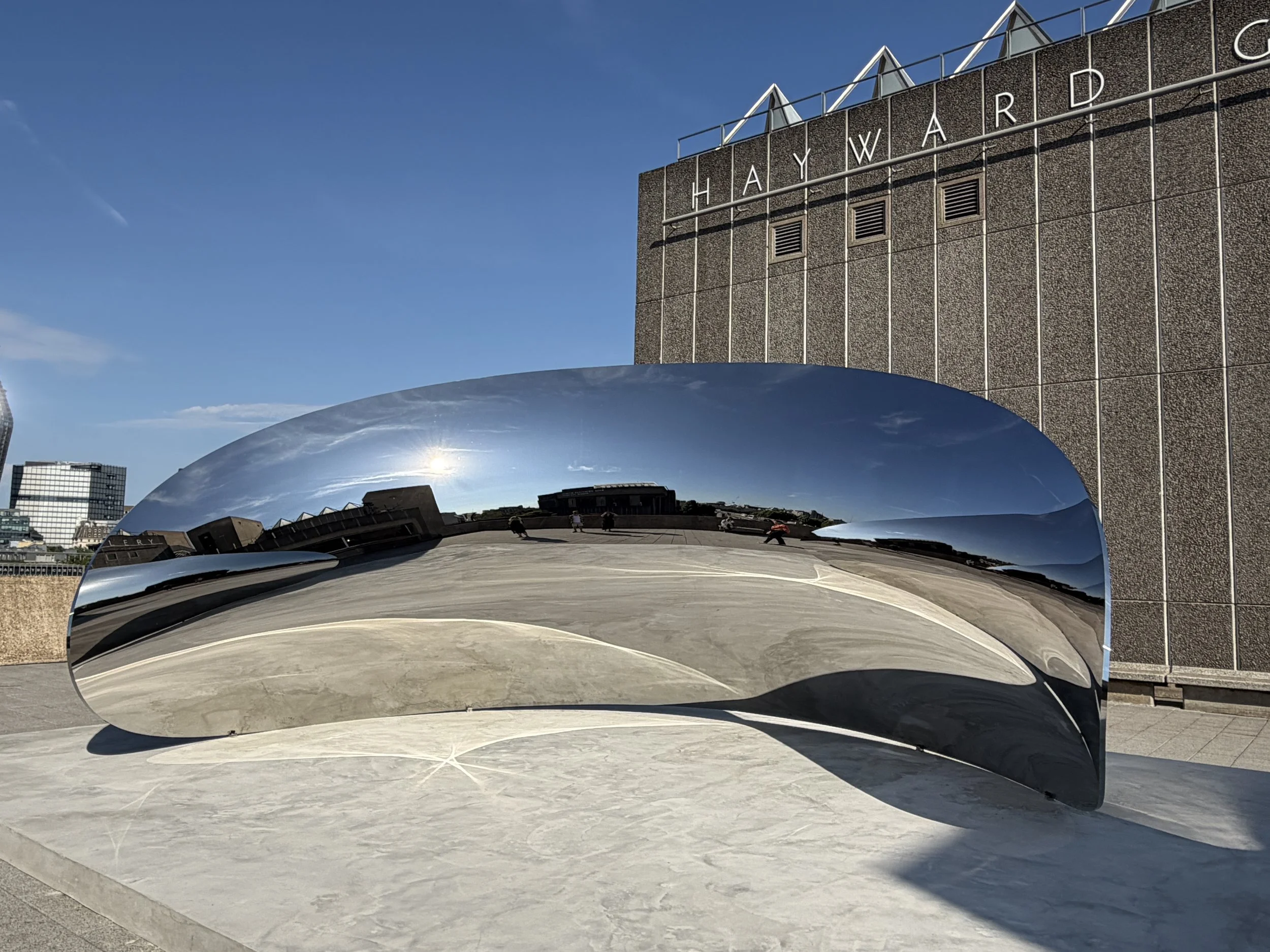
Outside, on the Hayward's terraces, Kapoor's mirrored sculptures continue a conversation that has defined much of his career. The polished steel surfaces capture fragments of London, the sky, the Thames and the visitors themselves. Yet these reflections never remain stable. They stretch, distort and fragment the world into unfamiliar compositions.
Source: own archive
The experience is playful but also profound. We recognise ourselves, yet not quite. The city becomes recognisable and unfamiliar simultaneously. In many ways, these mirrors encapsulate Kapoor's broader artistic project. His work consistently asks us to reconsider our relationship with reality. Nothing remains fixed. Everything is subject to transformation. Perception becomes an active process rather than a passive one.
Returning to the Hayward
The significance of this exhibition extends beyond the artworks themselves. There is something compelling about Kapoor's return to the Hayward after twenty-eight years. The gallery was instrumental in establishing his reputation within Britain, and the intervening decades have transformed him into one of the most influential artists of his generation.
Yet rather than feeling retrospective, this exhibition feels remarkably urgent. The themes Kapoor explores, uncertainty, violence, perception, spirituality and human consciousness, resonate powerfully within contemporary life. His works speak to a world in which images circulate endlessly, where certainty feels increasingly fragile, and where the search for meaning remains as pressing as ever.
Perhaps that is why the exhibition feels so affecting. Kapoor is not interested in providing answers. He is interested in creating conditions for questioning. In a cultural moment dominated by speed and immediacy, Kapoor offers something different. He asks us to slow down. At the Hayward Gallery, nearly three decades after his first major survey there, Anish Kapoor reminds us that art's greatest power may not lie in what it reveals, but in what it allows us to imagine.