Crossing Oceans: Reimagining the Hawaiian Kingdom at the British Museum
Source: own archive
For a city like London, where histories converge and intersect in layered ways through time, the arrival of an exhibition centred on Hawai feels particularly resonant. It draws attention not only to a Pacific story that is often marginal in European narratives, but also to how global histories have always been shaped by exchange, encounter and, at times, imbalance.
The Hawaiian Kingdom in Motion
The Hawaiian Kingdom, formally recognised in the early nineteenth century, occupied a unique position in global history. Strategically located in the Pacific, it became a site of encounter between Indigenous traditions and expanding global powers. Its rulers engaged in diplomacy with nations such as Britain, France and the United States, navigating a rapidly shifting geopolitical landscape.
This exhibition traces those connections, revealing a kingdom that was neither isolated nor passive, but actively engaged in shaping its own destiny. Through artefacts, documents and artistic expressions, the narrative unfolds as one of agency, adaptation and cultural continuity.
What becomes clear is that the Hawaiian Kingdom was not simply a place, but a network. A space defined by movement across water, by the exchange of ideas, goods and identities. The ocean, often perceived as a boundary, emerges instead as a connective force.
Objects as Carriers of Memory
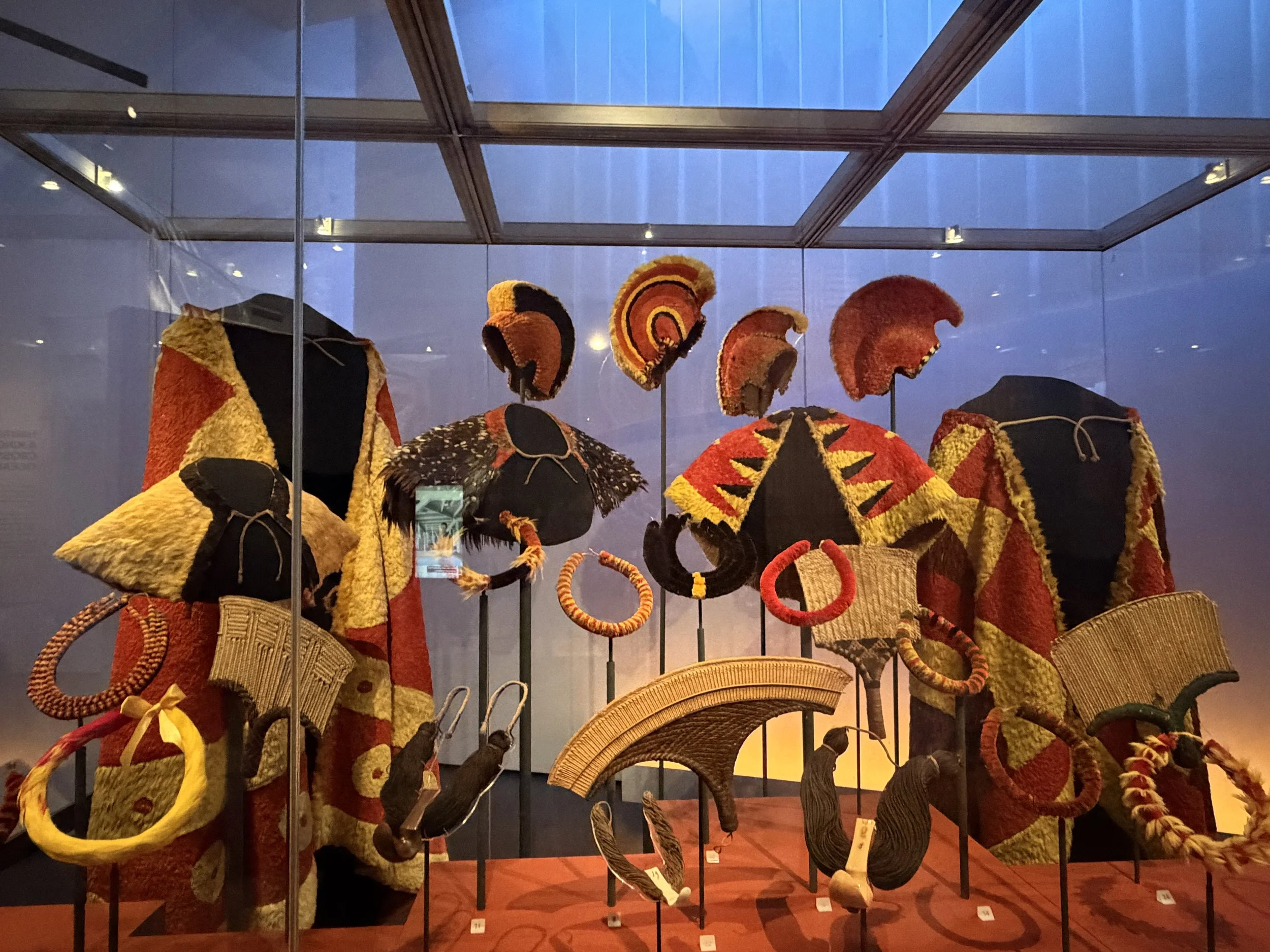
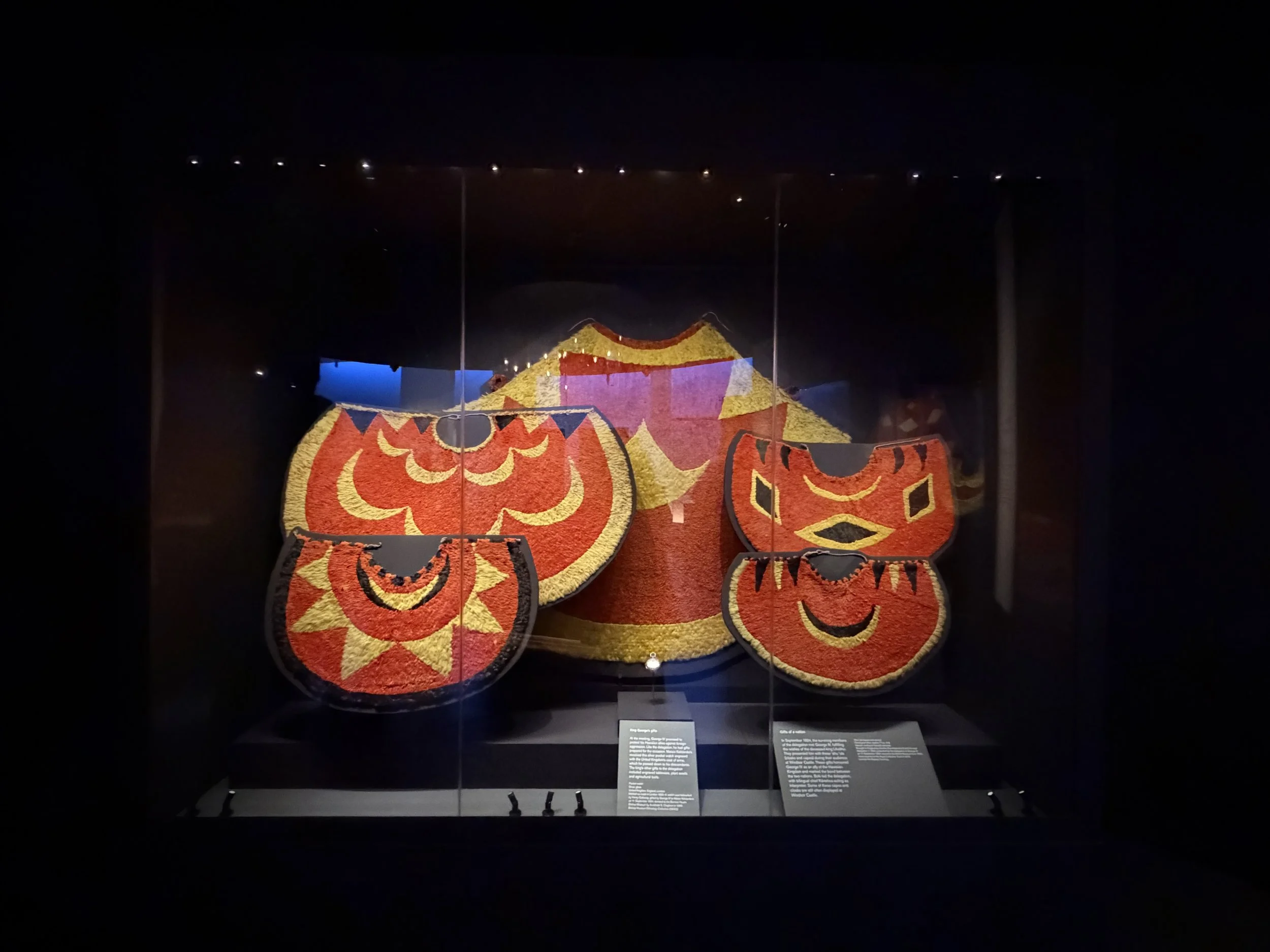
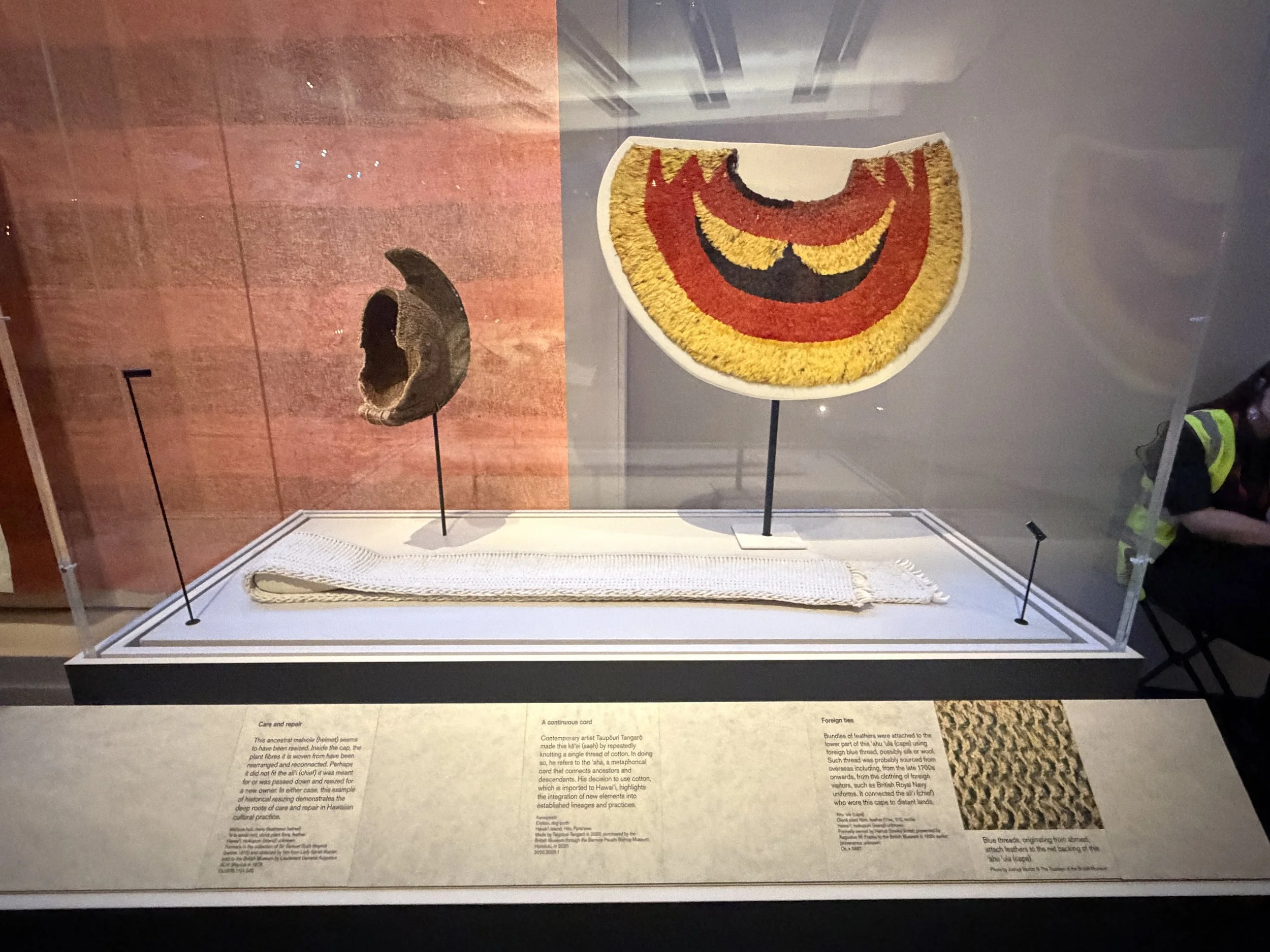
One of the most compelling aspects of the exhibition lies in its attention to material culture. Feather cloaks, intricately crafted with vibrant colours, speak of status, spirituality and the deep relationship between people and the natural world. These garments, created through meticulous processes that required both skill and ecological knowledge, embody a philosophy of care and respect.
Source: own archive
Alongside them, objects that travelled between Hawai‘i and Europe reveal stories of encounter. Gifts exchanged between leaders, items collected during voyages, and artefacts that found their way into museum collections each carry layered histories. They are not static. They hold within them the traces of journeys, negotiations and, at times, displacement.
For a contemporary audience, this raises important questions. How do we understand these objects today? What responsibilities accompany their display? The exhibition does not seek to provide simple answers, but rather to open a space for reflection.
Diplomacy, Identity and Representation
The nineteenth century was a period of profound transformation for the Hawaiian Kingdom. As global powers extended their reach, the kingdom’s leaders engaged in complex diplomatic efforts to maintain sovereignty and cultural integrity.
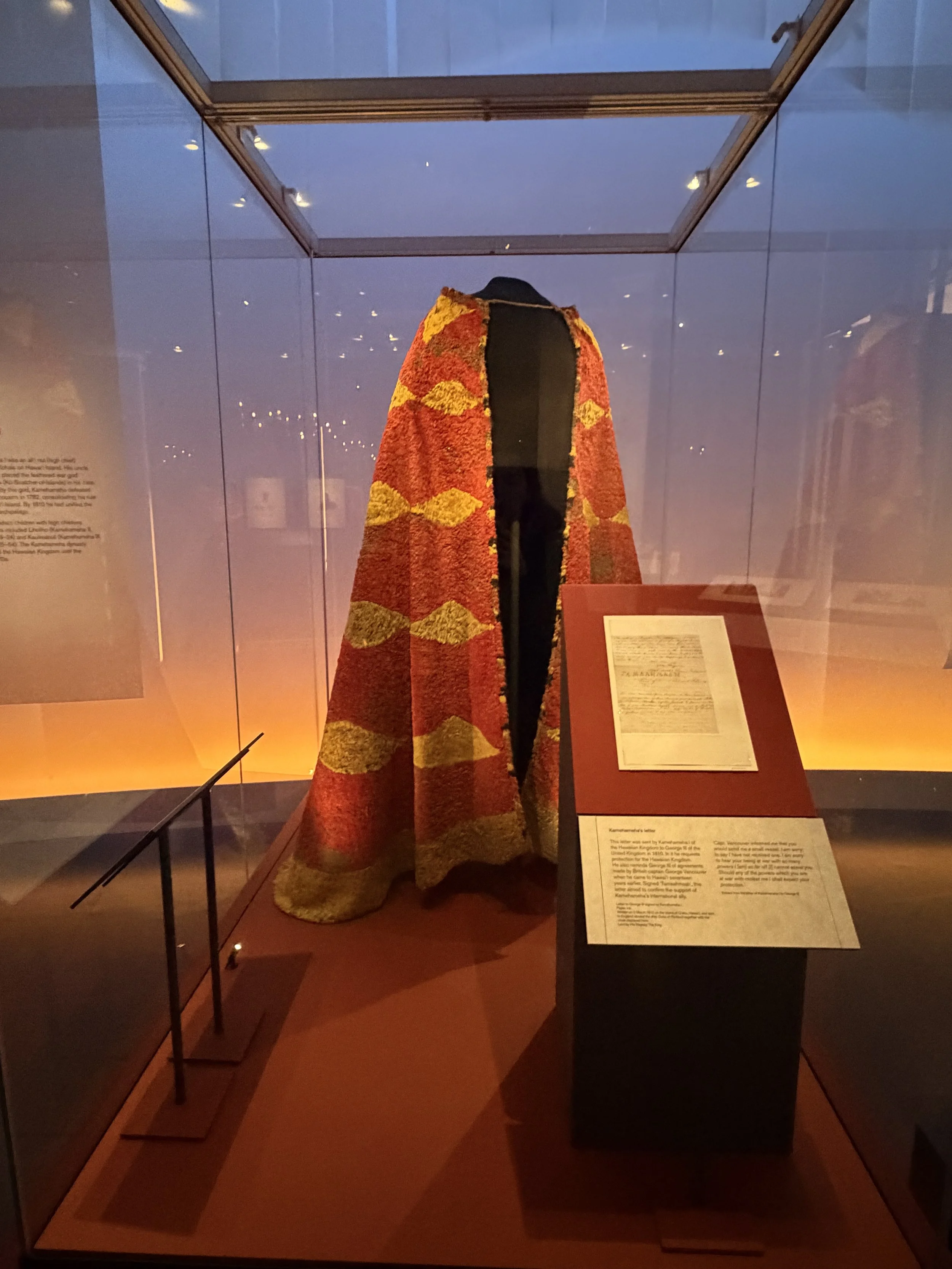
Portraits and documents within the exhibition highlight these interactions, revealing figures who navigated multiple worlds with remarkable skill. They adopted elements of Western diplomacy while remaining rooted in Indigenous identity. This balance was not always easy, and the pressures of external influence were significant.
Source: own archive
Yet the exhibition resists framing the Hawaiian Kingdom solely through the lens of loss. Instead, it emphasises continuity. Cultural practices, language and identity persisted, adapting to new circumstances while retaining their core.
This perspective feels particularly important today, as conversations around heritage, representation and restitution continue to evolve. It reminds us that history is not only about what has been taken, but also about what endures.
The Ocean as Philosophy
Central to the exhibition is the idea of the ocean as more than geography. In Hawaiian culture, the ocean is a living presence, a space of knowledge, navigation and connection.
Source: own archive
Traditional wayfinding techniques, based on an intimate understanding of stars, currents and wind patterns, reflect a sophisticated relationship with the natural world. This knowledge system challenges Western notions of exploration and discovery, offering an alternative perspective in which movement across vast distances is guided not by conquest, but by observation and respect.
In an era increasingly defined by environmental uncertainty, this relationship with the ocean carries renewed relevance. It invites us to reconsider how we engage with the natural world and the knowledge systems that have long existed outside dominant narratives.
A Journey Beyond Distance
What lingers after leaving the exhibition is not a single image or object, but a sense of connection. The understanding that oceans, rather than dividing, have long served as pathways linking cultures and histories. For visitors, the experience is both aesthetic and intellectual. It offers beauty in its craftsmanship, but also depth in its storytelling. It encourages a slower pace, a willingness to engage with nuance rather than certainty.
For those of us who navigate between different worlds, whether through travel, work or personal experience, this resonates deeply. It reflects a way of seeing the world that values exchange over isolation, and understanding over simplification.
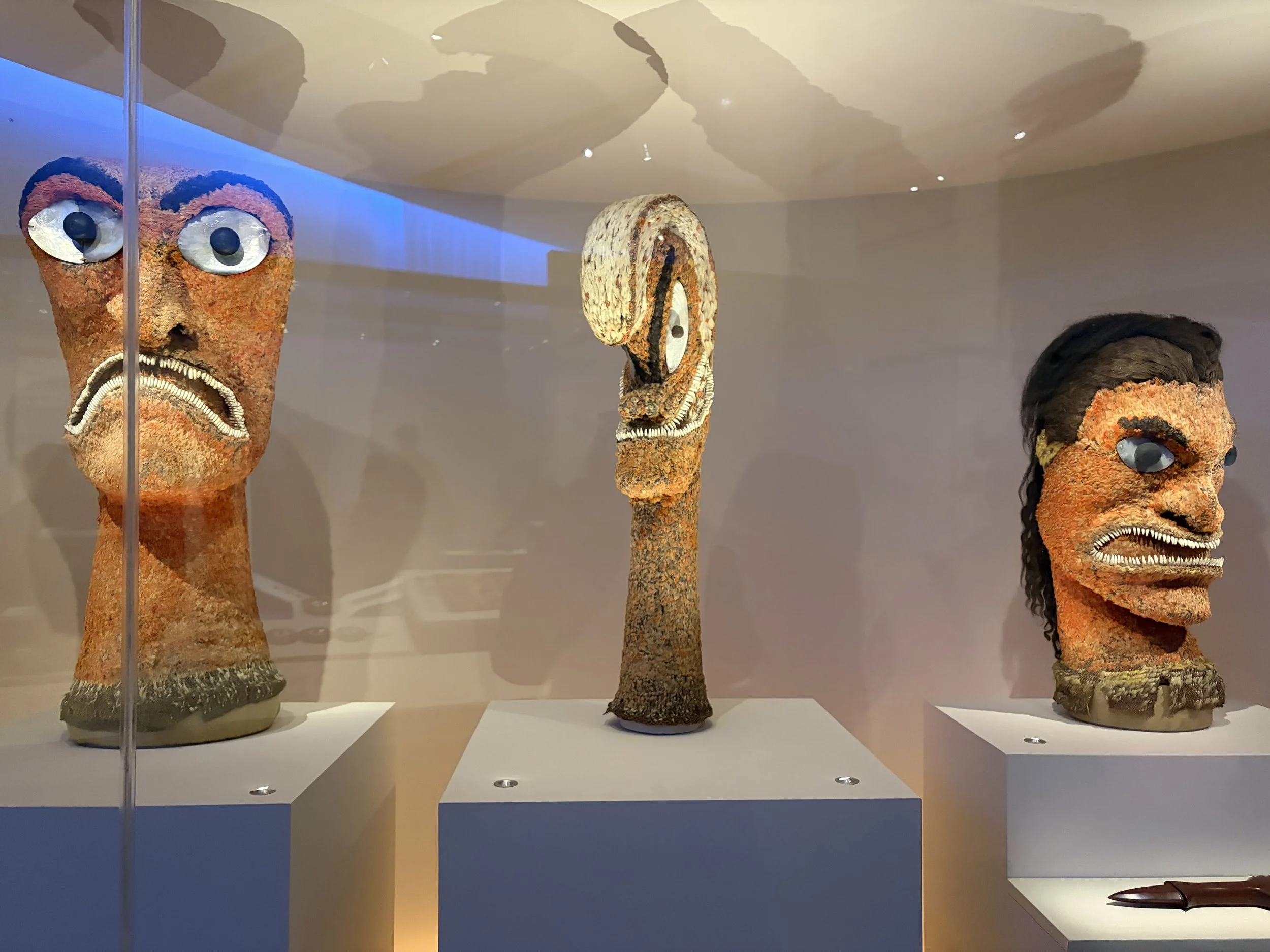
Source: own archive
In bringing the story of the Hawaiian Kingdom to London, the British Museum offers more than an exhibition. It offers an invitation to rethink how we understand distance, identity and belonging. And perhaps most importantly, it reminds us that some journeys are not measured in miles, but in the depth of the connections they create.
Hawaiʻi: a kingdom crossing oceans will run from 15 January to 25 May 2026 in The Joseph Hotung Exhibition Gallery (Room 35). More information is available here:
https://www.britishmuseum.org/exhibitions/hawaii-kingdom-crossing-oceans.