From curtain to couture: inside SDCA's London Fashion Week debut
Before a single look had been shown, Sonia Alves pulled down the curtain framing her set, picked up her scissors and started cutting straight into it.
No pattern, no prep, just fabric and instinct, built directly onto her model in real time. Minutes later, a dress existed that hadn't a moment before, and the model wore it out into the room. It wasn't an opening act so much as a thesis statement: everything SDCA does starts with raw material, not a sketch.
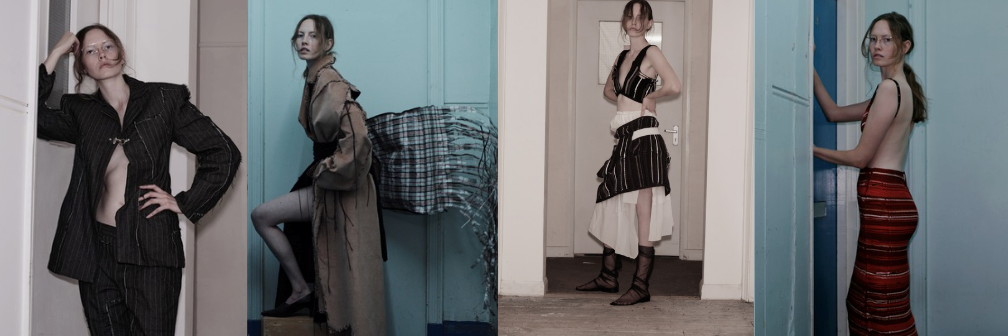
Photography @michaelhemy
Home is where the hem is
That is the idea at the centre of SDCA, the label behind the presentation. There was only one model throughout the show, and the effect was closer to being invited into her home than watching a runway.
She continuously changed, one outfit dissolving into the next, as though we had been let into a private, ongoing act of dressing rather than a staged sequence of looks.
It was a fitting way to introduce a brand built almost entirely around resisting the fashion industry's usual pace.
Initials, not ego
SDCA takes its name from designer Sonia Alves's initials, a deliberate choice.
"I've worked in workrooms and in fashion for the past 15 years, and I always felt like the team, everyone involved in making a show happen, are very rarely acknowledged," she told me after the show.
"One designer cannot make everything on their own. So I chose just letters, so that it becomes inclusive. One day, when my team grows, they feel like it's part of their brand as well, not just mine."
That instinct towards patience and collaboration runs through everything Alves makes. Nothing here is rushed, and nothing is forced into being.
Her garments emerge from trust rather than control, from a willingness to let the material lead instead of dictating a finished idea to it from the outset.
Every piece carries the evidence of that honesty, unpicked, reworked and understood, rather than simply cut and sewn to a plan. It is a practice as rooted in mending as it is in making, taking construction techniques the industry has largely abandoned and reshaping them into something built for circularity rather than disposal.
Fabric first
The clothes sit somewhere between thought and feeling, made to hold both functional and emotional weight. For Alves, none of it means anything if the beauty comes at the cost of comfort, or of the planet the clothes are made from.
That philosophy did not arrive fully formed. Alves spent years as a pattern cutter and studio manager before she started developing her own ideas around 2017, a period she describes as one of disillusionment with an industry that felt relentless.
"There was a time when I felt like it was too fast, it was too much, it was too much offer," she said. "We don't need more clothes, we don't need more anything."
That realisation, arriving alongside the early conversations around climate change and then the disorientation of lockdown, pushed her towards a different starting point altogether: the fabric itself.
"I work from the constraints of the raw material backwards," she explained. Many of her designs are never sketched. They happen because the fabric insists on a shape, the way the tabs on one pair of trousers began as leftover fabric from a minimal-waste pattern that Alves refused to discard, and ended up reshaping the design entirely.
"The fabric gave me the design, and I think that's super powerful," she said. It is an approach she believes could reshape the wider industry if more young designers were taught to work this way, guiding the material rather than imposing on it.
Sustainability over status
The surplus and deadstock suppliers that now exist, feeding leftover stock from major mills down to smaller labels, have made that kind of practice more accessible than when Alves began.
It is a genuine shift, and one she is quick to credit. But it comes with its own tension. Sourcing organic and surplus materials in small quantities means buying through resellers rather than direct from suppliers, and the markups stack.
The result is clothing that can be difficult to justify, particularly for customers weighing up spending during an economic squeeze.
"How can you justify paying so much money for a brand that is probably not a big one?" Alves asked. Her answer is that buying into a label like hers was never about status in the first place. "You're doing it because of your belief system, because you care about what you spend your money on. You're voting with your money."
It is a demanding proposition, and Alves knows it. Visibility remains the hardest part, she admits, the thing that has to happen before growth can.
For a designer whose entire practice depends on things taking exactly as long as they need to, that too seems to be something she is prepared to let unfold in its own time.
To see more check out SDCA Studio here.
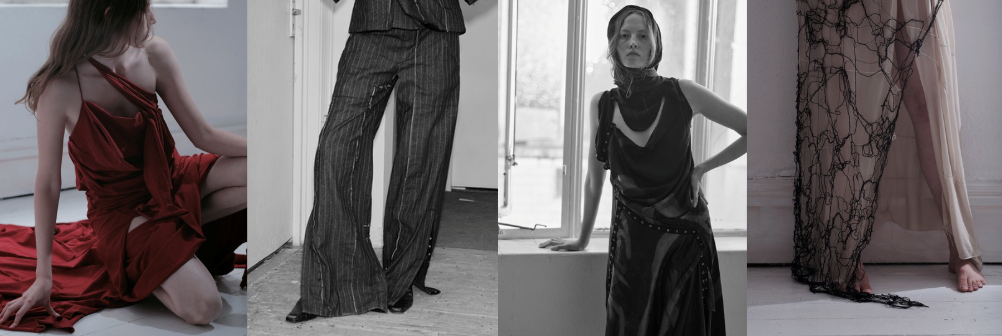
Photography @michaelhemy