From Florence to London: How the Italian Aperitivo Is Being Reimagined
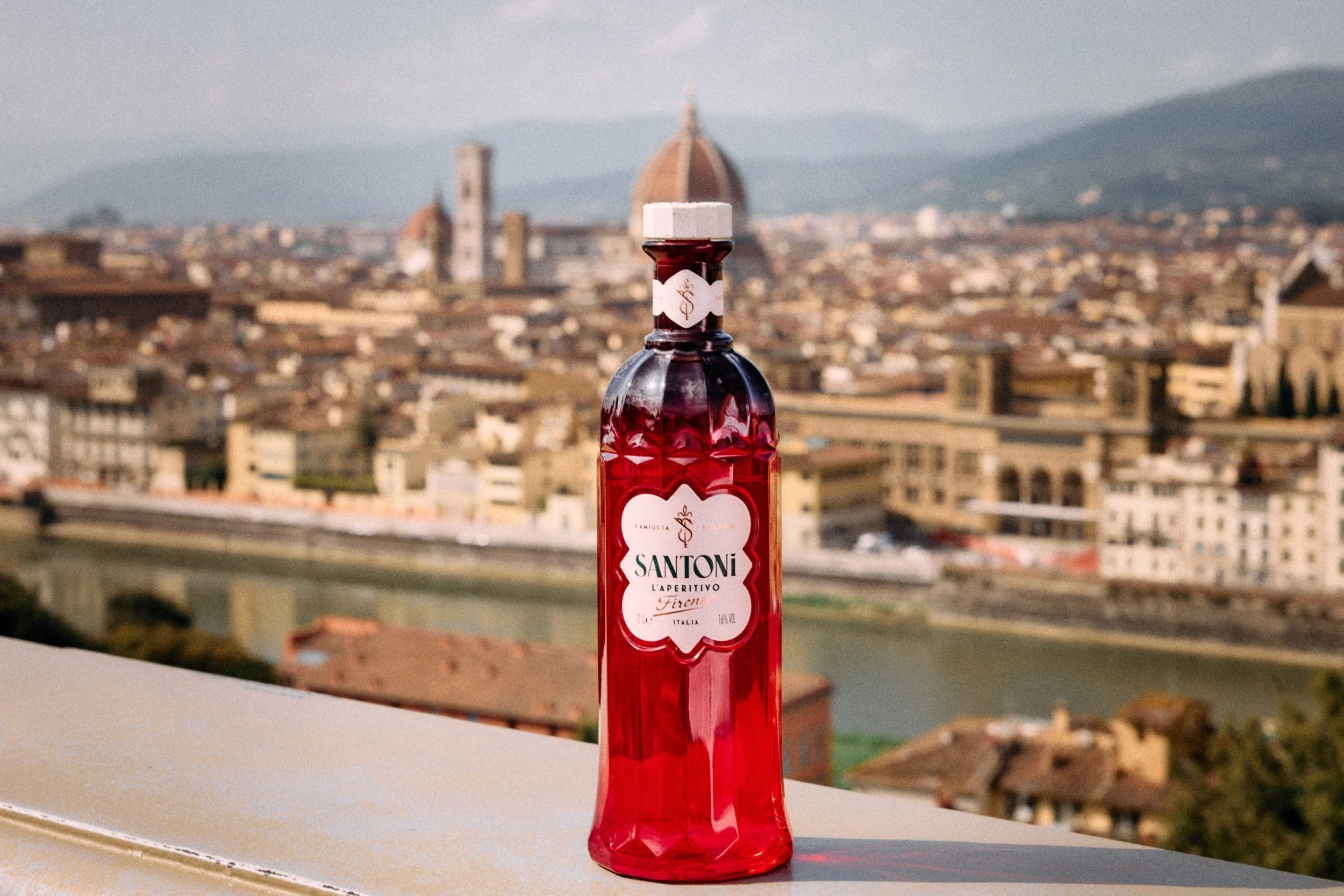
Credits: Courtesy of Santoni L’Aperitivo
There is something distinctly Italian about the idea that drinking should never need to be rushed. Aperitivo occupies that particular moment between the end of the working day and dinner, when the purpose of a drink is not simply what is inside the glass. It is an invitation to slow down, stimulate the appetite, meet friends and allow an ordinary evening to become something more social. It is also a ritual that has travelled remarkably well.
The Spritz, Negroni and Americano have long since become part of London's drinking vocabulary. Yet as bartenders continue to reinterpret classics and drinkers become increasingly interested in flavour, craftsmanship and more moderate drinking occasions, aperitivo culture is evolving beyond the reproduction of familiar Italian recipes.
From 14 to 20 September, Aperitivo Week returns to London for its second edition, bringing that evolution into bars and restaurants across the capital. Created by Florence-born Santoni L’Aperitivo alongside bartenders Simone Caporale and Luca Missaglia, the initiative invites each participating venue to interpret aperitivo through its own identity. This year, I was invited to cover the London edition for Avesso and explore how one of Italy's most recognisable social traditions is being reshaped by one of the world's most international cocktail cities.
A ritual, rather than a recipe
Understanding aperitivo requires separating it from the drinks most commonly associated with it. Aperitivo is not simply a Spritz. Its roots lie in the Italian tradition of gathering before dinner over drinks and small bites, creating a transition between the obligations of the day and the evening ahead. Bitterness has historically played an important role, but perhaps the defining ingredient has always been time. That makes the ritual particularly relevant to contemporary drinking culture.
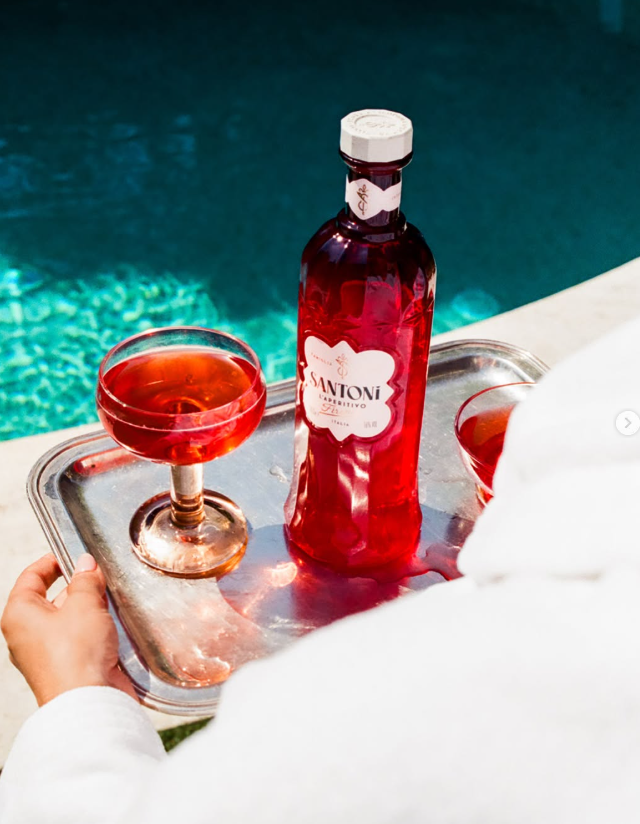
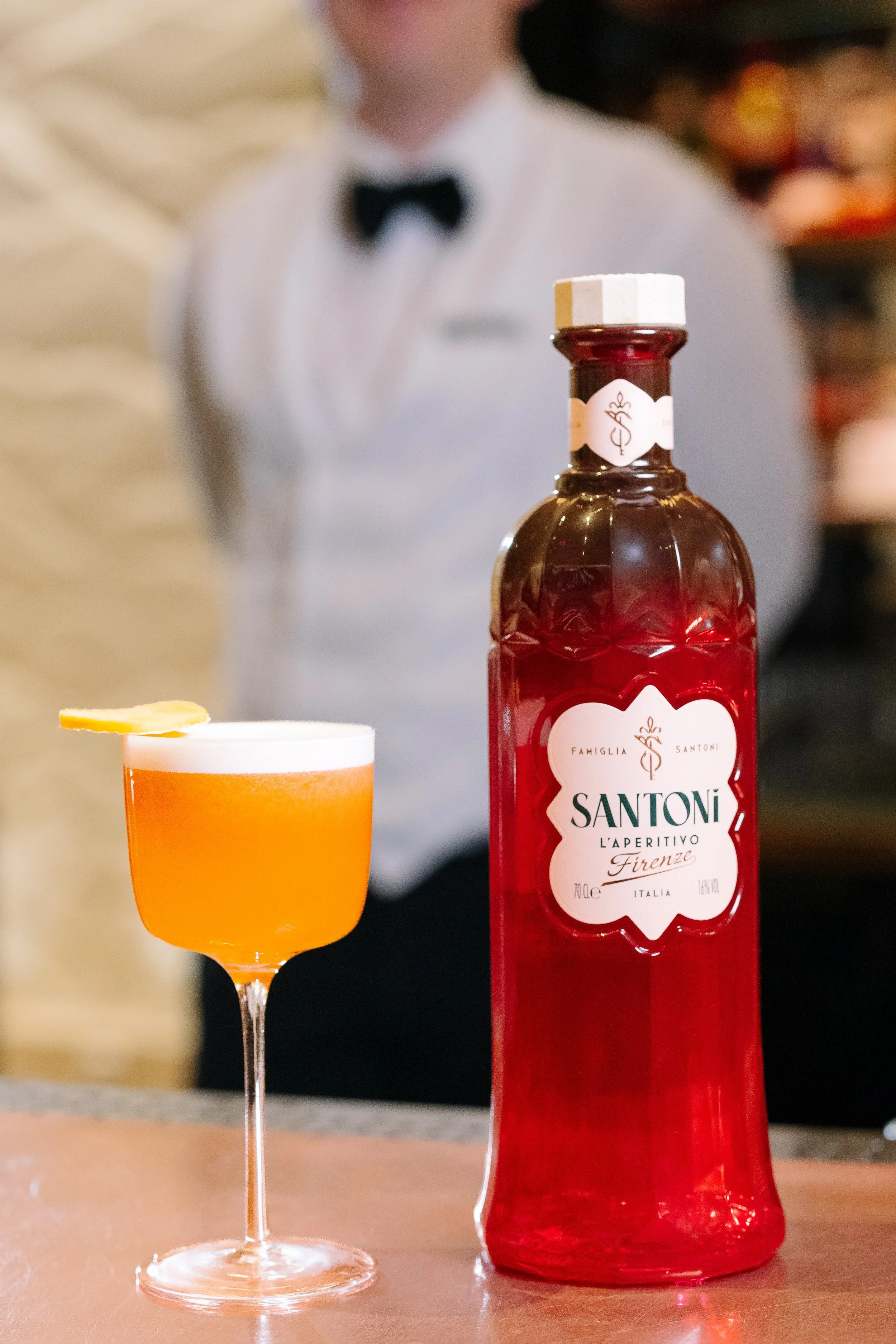
The conversation around moderation has expanded considerably in recent years, bringing greater attention to alcohol-free cocktails and lower-ABV serves. Aperitivo naturally occupies this territory. Drinks can be lighter, longer and designed to accompany food and conversation rather than dominate either. Santoni approaches this tradition from Florence, where the aperitif is produced by Famiglia Santoni, a distillery with more than six decades of history. Its recipe incorporates 34 natural botanicals, with Chinese rhubarb providing its distinctive aromatic foundation alongside floral, citrus and bittersweet notes.
Credits: Courtesy of Santoni L’Aperitivo
But Aperitivo Week becomes more interesting when Santoni leaves Florence. Instead of prescribing one signature serve, bartenders across London have been given the freedom to decide what contemporary aperitivo means within their own venues. And the resulting map stretches across very different versions of London.
Aperitivo across the capital
In Marylebone, Clarette brings aperitivo into the elegant surroundings of the wine bar associated with the Château Margaux family. Its contribution, the Rosemarita, places Santoni within a venue where wine rather than cocktails usually establishes the rhythm of the experience.
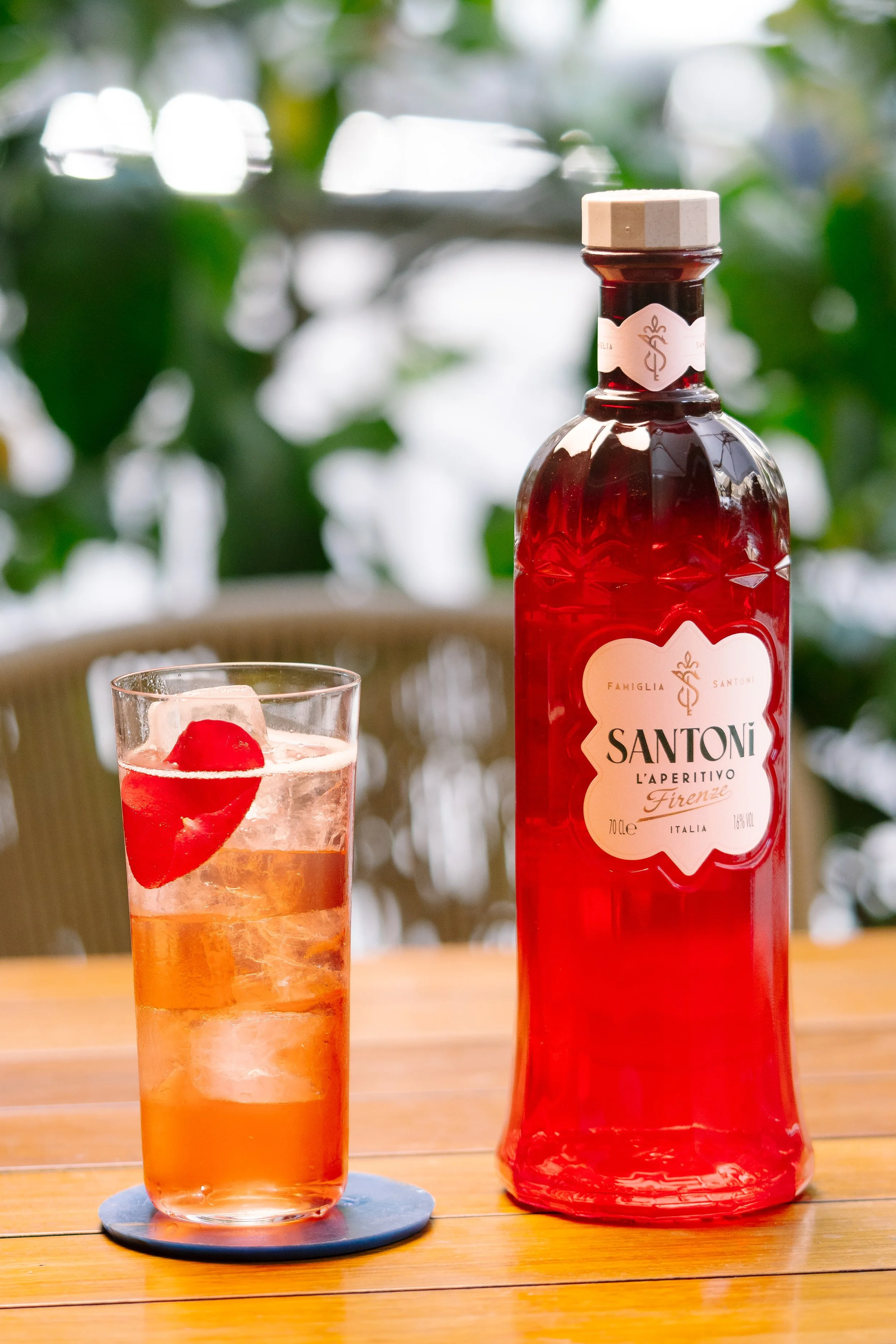
Credits: Rose Fizz. Courtesy of Santoni L’Aperitivo
Across the city at Lavo, Four Seasons Hotel London at Tower Bridge, Italian-American influences provide another interpretation. The restaurant and bar are serving three creations: the Rose Fizz, Rosemary Bloom and Santoni Boulevardier. The latter is particularly fitting within an aperitivo context, taking the familiar bittersweet architecture of a Boulevardier into Santoni's rhubarb-led world.
In Covent Garden, the scale and informality of independent bar Porterhouse offers another setting entirely. Its three drinks make rhubarb particularly visible: the Rhubarb Margarita, Rosé Negroni and Rhubarb & Ginger Spritz. Taken together, the venues begin to illustrate why London is such an interesting city in which to test the boundaries of an Italian tradition. There is no single type of bar, guest or neighbourhood defining the experience. Aperitivo moves with them.
When Italy meets Mexico
Perhaps one of the most intriguing encounters happens in Shoreditch. At Zapote, a Mexican restaurant centred around a live-fire kitchen, the Italian aperitivo enters a very different culinary vocabulary through the Calvillo Martini and Santoni Zapote Spritz. The combination may initially appear unexpected. Yet it demonstrates precisely what happens when aperitivo is treated as a philosophy rather than a fixed set of ingredients.
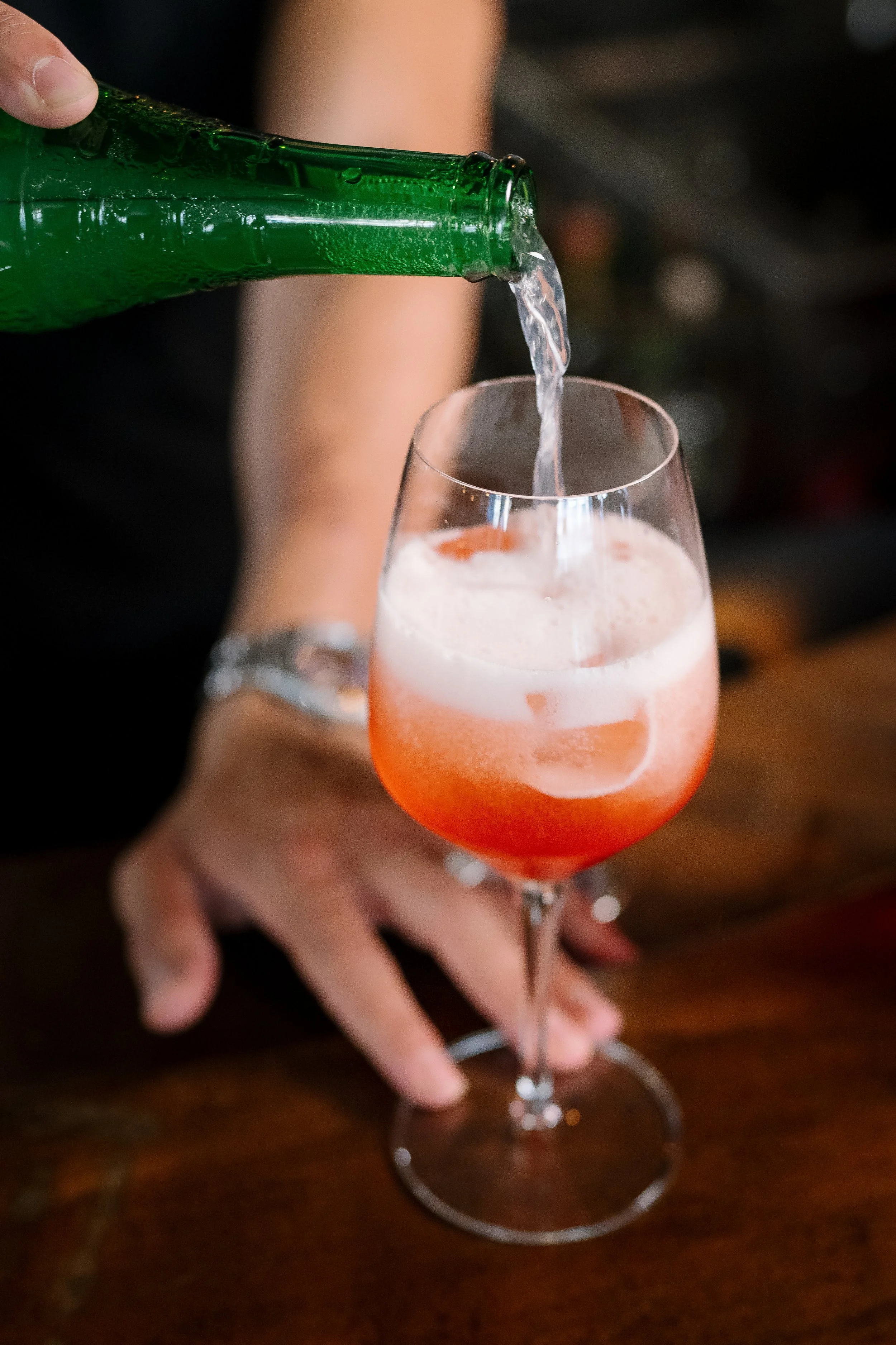
Credits: Zapote Spritz. Courtesy of Santoni L’Aperitivo
Contemporary cocktail culture thrives on these encounters. A bartender does not necessarily need to recreate what might be served in Florence, Milan or Turin to preserve the spirit of aperitivo. Instead, the challenge becomes translating its balance, bitterness, conviviality and pre-dinner purpose into the language of another bar. It is also representative of London itself.
Few cities allow drinking cultures to collide quite so naturally. Italian aperitifs sit beside Mexican spirits, Japanese ingredients, British produce and techniques borrowed from bars thousands of miles away. The resulting cocktail may not be traditionally Italian. The moment around it can still be aperitivo.
From rooftops to live music
The variety becomes even clearer elsewhere in the city. At Savage Garden, the ritual moves upwards. Against panoramic views of the London skyline, the rooftop bar is serving the Palomina, Ureshii and Negroni Santoni Edition. In Stoke Newington, Doña provides almost the opposite atmosphere. Known for its hot-pink interiors, mezcal and female-led live performance, the bar has created three cocktails named Rebecca, Helen and Sophia. The contrast is significant.
One aperitivo can happen above London's skyline. Another can unfold underground alongside music and mezcal. Both are interpretations of the same social idea.This freedom is central to Simone Caporale's approach to the project. Rather than searching for a definitive contemporary aperitivo recipe, Aperitivo Week gives bartenders room to express the personality of their venue and neighbourhood.
A little piece of Liguria in Chelsea
There is another interpretation in Chelsea, where Il Bistrotto brings the drinking culture of the Ligurian Riviera to Hollywood Road. Its Aperitivo Week creations include the San Tonic Spritz, Genova Calling and wonderfully named Apple, Apparently. Here, the relationship with Italy is more immediate. But even when the cultural connection is explicit, the drinks are not presented as exercises in nostalgia.
This is perhaps one of the more interesting developments within contemporary Italian hospitality abroad. Italian identity no longer needs to depend entirely upon reproducing the past. Tradition can provide the foundation while bartenders experiment with ingredients, presentation and technique. The question becomes less about whether a cocktail is authentically Italian and more about whether it preserves the values that made the ritual meaningful in the first place.
Aperitivo in the grand hotel
At Stables Bar at The Milestone Hotel in Kensington, aperitivo enters yet another distinctly London environment. The historic, equestrian-inspired hotel bar is serving the Pink Negroni Sbagliato and Ora d'Oro, placing contemporary Italian drinking culture within the traditions of a British luxury hotel. It is a particularly useful reminder of how adaptable aperitivo has become.The ritual does not require a piazza.
It can happen at a pavement café, restaurant counter, neighbourhood cocktail bar, rooftop or five-star hotel. What matters is less the architecture surrounding the drink than the purpose of the moment itself. Meanwhile, back in Covent Garden, Burro, the produce-led Italian bistro from Trullo's Conor Gadd in Floral Court, brings the conversation naturally towards food. And food matters. Aperitivo was never designed to exist entirely in isolation from eating. Small plates, snacks and the anticipation of dinner are integral to its rhythm. In translating the ritual internationally, retaining that relationship between the kitchen, glass and table may ultimately be more important than faithfully recreating any particular cocktail.
London rewriting an Italian tradition
There is an intriguing reversal happening here. For decades, London enthusiastically imported Italian drinking culture. The Negroni became ubiquitous. Spritzes colonised summer terraces. Vermouth regained its place behind the bar. Italian amari became increasingly familiar to drinkers who might once have encountered them only while travelling. Now the exchange is becoming less one-directional.
London bartenders are taking those traditions and sending back their own interpretations. That does not make aperitivo less Italian. Cultural rituals have always changed as they travel. What matters is understanding where they came from while allowing them to respond to new places and generations. Aperitivo Week makes that process unusually visible because each participating venue starts with the same broad proposition and arrives somewhere different.
Credits: Courtesy of Santoni L’Aperitivo
Clarette interprets it from a wine-led Marylebone perspective. Lavo connects it to Italian-American hospitality. Porterhouse foregrounds rhubarb. Zapote brings Mexico into the conversation. Savage Garden takes it to the rooftops. Doña adds mezcal and performance. Il Bistrotto reconnects London with Liguria. Stables Bar places it within a historic hotel, while Burro returns attention to the relationship between aperitivo and food.
There is no single London aperitivo. Perhaps there should not be. What Aperitivo Week brings to London is therefore more interesting than a collection of limited-edition cocktails. Across Marylebone, Tower Bridge, Covent Garden, Shoreditch, the City, Stoke Newington, Chelsea and Kensington, bartenders are asking what remains when an Italian tradition leaves Italy. And somewhere between Florence and London, rhubarb and bitters, Italian heritage and the creativity of the capital's bars, the essential idea survives.
Aperitivo begins with a drink. The reason to stay has always been the conversation.