Interview with Ceyda Ulasan
Credits Minerva Collective
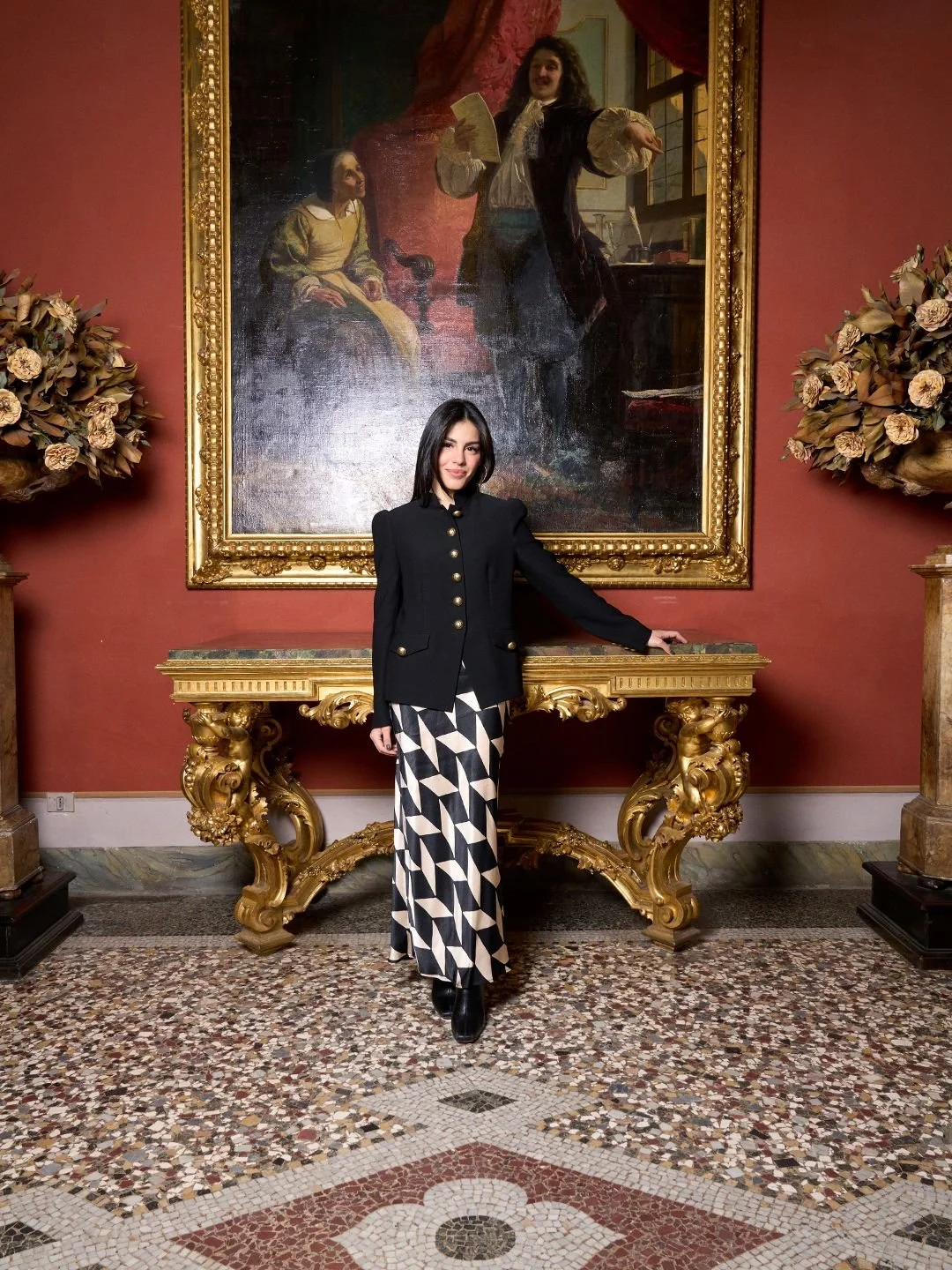
Moving between London and Milan, Ceyda Ulasan has developed a distinctive approach to collecting, shaped by a deep appreciation for Old Masters alongside a curiosity for contemporary art. For Ulasan, collecting is not simply about acquiring objects, but about understanding the stories, people and cultural histories behind them. Her perspective is rooted in aesthetics, architecture, and the ways in which the past continues to influence how we see and experience the present.
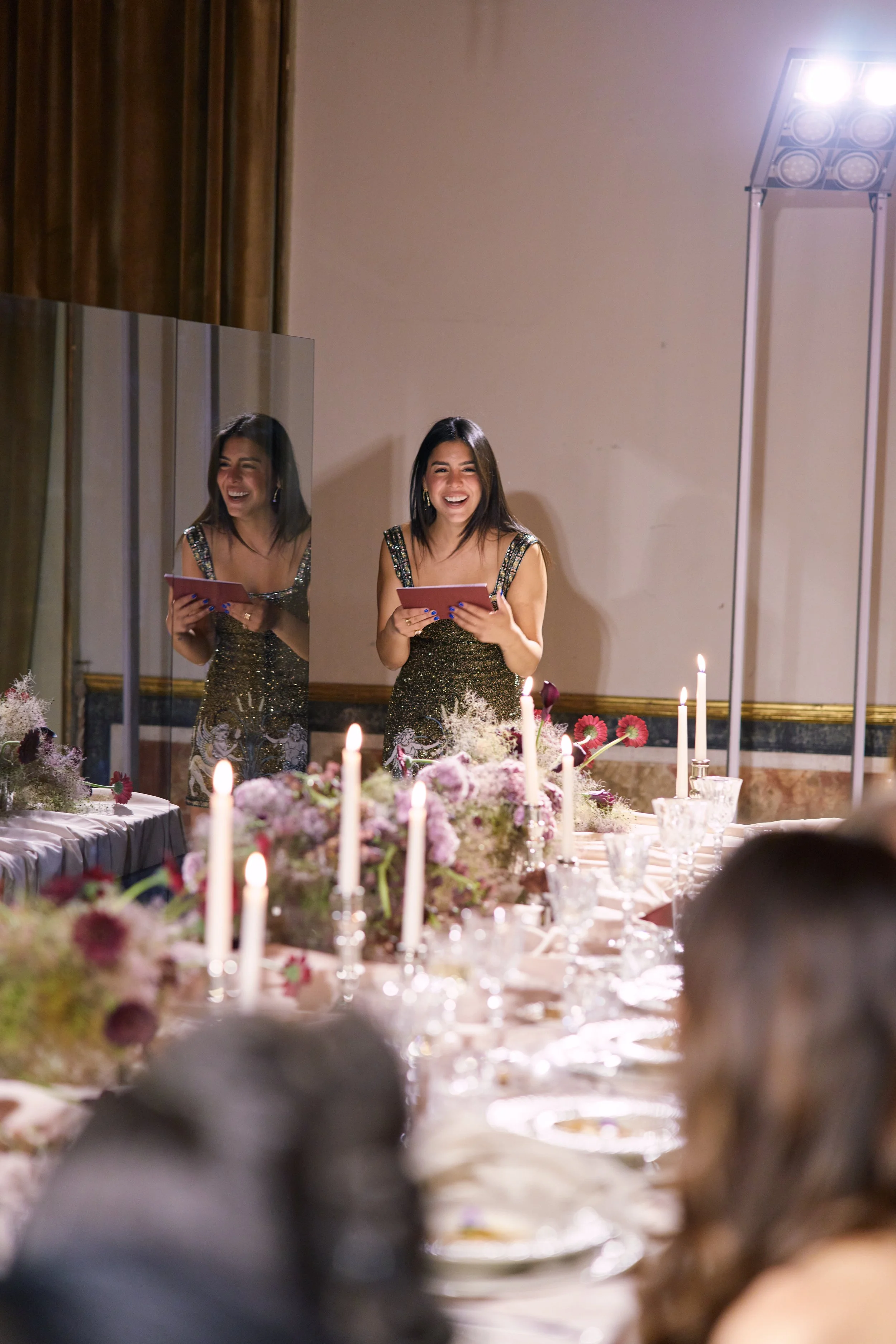
This philosophy also lies at the heart of Minerva, Ulasan’s nomadic cultural platform, which brings intimate gatherings into historic palazzos to create dialogue between old and new. Bringing together collectors, artists, designers and cultural figures from different backgrounds, each table is designed to encourage unexpected connections and new perspectives. In this conversation, Ulasan reflects on finding a sense of home between two cities, her relationship with artists, and her belief in creating spaces where art, culture, and people can come together meaningfully.
You move between London and Milan quite a lot. Where do you feel most at home?
That's a very tough question for me. I mean, London is home, home, because I've been living here for 7 years, and that's where I actually built up the whole idea of how to become a collector, how I see the world, how I met with all of my best friends. And, somehow, where I take most of my inspiration from; but Milan became home in the last year.
When I first moved to Milan, it wasn't really like home, but now it feels like it, because first of all, I built my pool house there. I have my dog there, and I love my house and the community that I have built there. Also, my collection is there. So, whenever I enter my home, it feels like home. At the same time, I really appreciate the beauty of the things in Italy. I love the way of living. It's completely different from London, I would say. It's less international, but if you go local, there's something about Italy that really resonates with what I stand for, basically, from an aesthetic point of view, the way of dressing, even, the way of coffee, all the culture. In London, it's very fast, whereas in Italy, it's more like you observe things. You really appreciate small things.
So, I can't really give an exact answer, but both of them.
You have a real love for Old Masters, but your world is also very contemporary. When did you realise these two sides could exist together?
I think I created a force in my mind because there's always this thing whenever I see an Old Master painting: I reflect on what they were like living, all the luxuries; you could feel the fabric even inside and on the painting. But, of course, they're not very affordable, as you can imagine. But apart from the fact that they're not affordable, I think they really belong in museums. That's where they get the value because it's bigger than you. You can actually feel their presence.
I think the first time it started was when I came across art markets in Italy, and also small dealers, dealers' shops. That's when I realised that it doesn't seem so bad in a smaller space in the shop or in the house. And then I wanted to try it for the first time with a very contemporary frame of mind and putting an Old Master frame on it. And then I really liked how it looked in my home, but at the same time, how it really affected my personality.
I mean, this is another tough question, I would say, but I think in my mind, I feel so connected to the Old Masters that whatever I do on the contemporary side, when I'm buying a piece, there's always a reflection on that side. And I feel like maybe because of my personality, because now people know me very well, it doesn't seem very weird or odd. Even when I'm talking about it, people can see it, I would say.
Credits Minerva Collective
Minerva feels like much more than an art event. So how do you describe it to someone who has never experienced one?
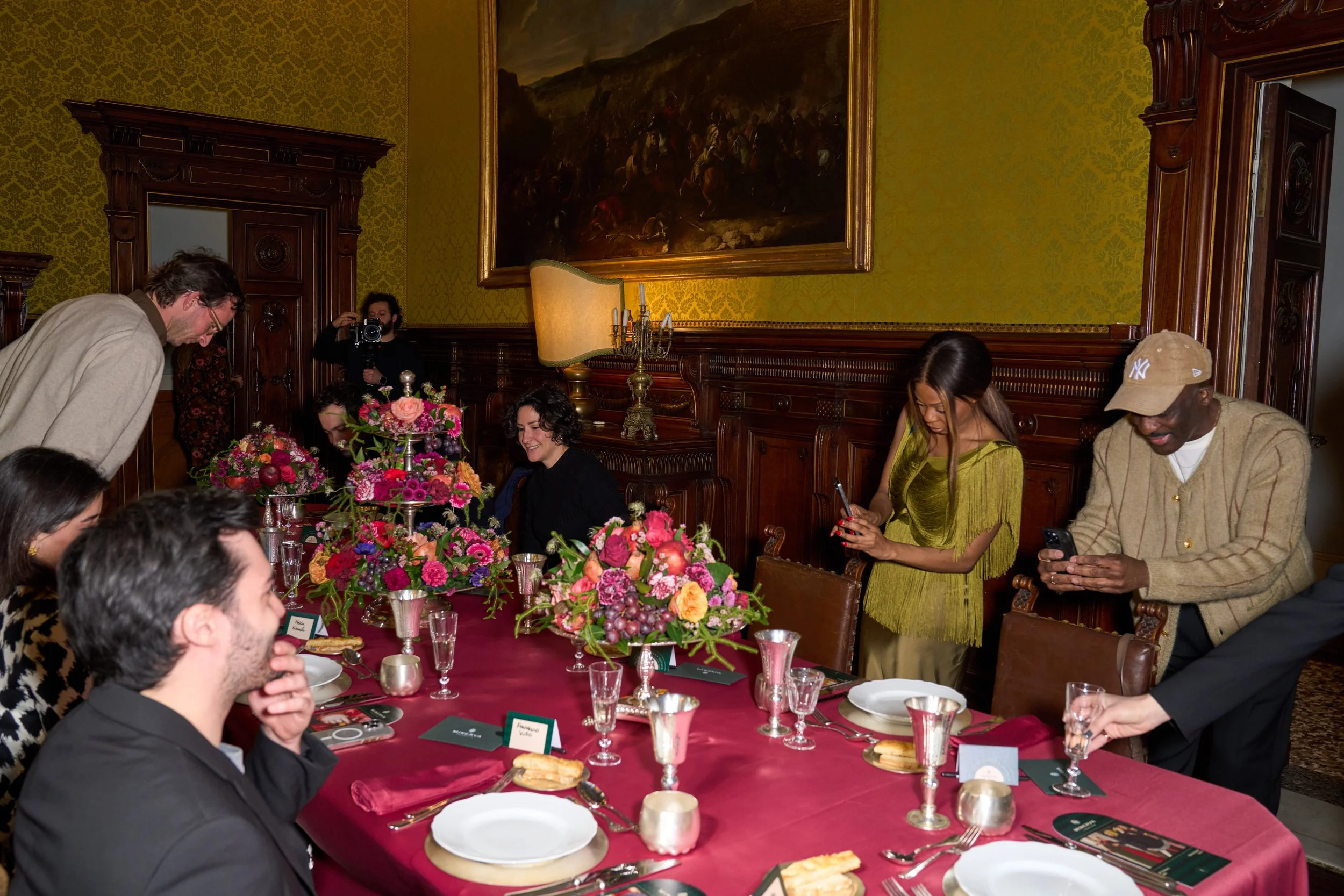
Minerva is actually a nomadic cultural platform, which does art events in historical palazzos, building a dialogue between old and new. But this doesn't necessarily have to be a painting. It could be inspiration from Old Masters, from a palazzo, from a ceiling, from the family's surname, the family history, or any kind of painting, book, music, any kind of aspect that we can find, but reflected into the contemporary side.
That doesn't necessarily reflect it to the contemporary art scene, but it could be a person, it could be a word, it could be music, a place. What Minerva actually does, in these historical places, is recreate a dialogue.
Your events bring together art, food, architecture and people. Which part usually comes first when you start creating an edition?
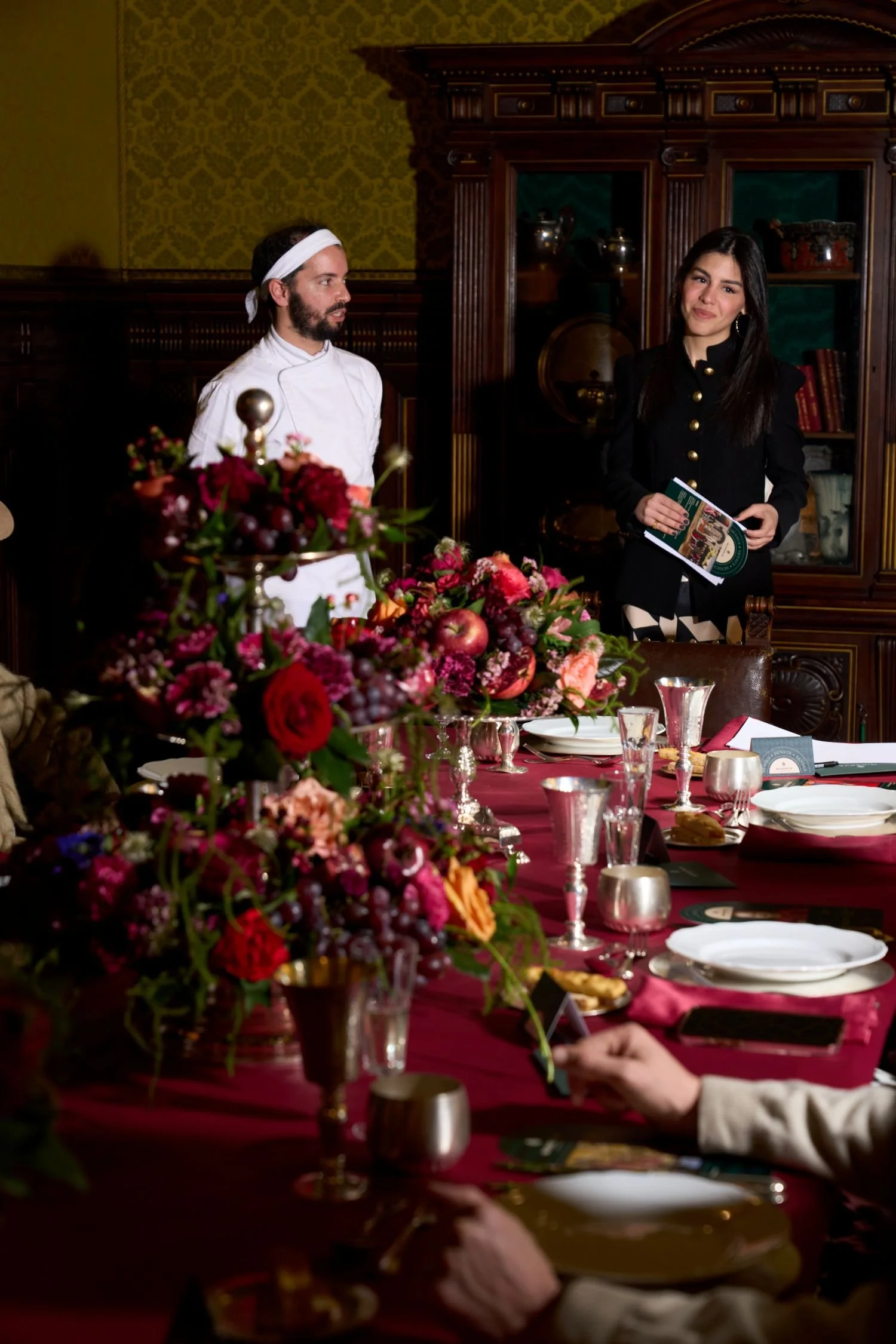
I think a very aesthetic thing - literally, it could be a very detailed one, it could be the smallest detail in a fresco, or it could even be an object that we see in the presence of that house. I'm not really going inside to find something, but whatever attracts my eyes first, I would say. The first thing could be either the architecture or the decorative side of the house rather than the art itself, because I see everything as art anyway.
Credits Minerva Collective
That's fair enough! You create quite intimate gatherings. What do you think happens when you bring the right people together around the table?
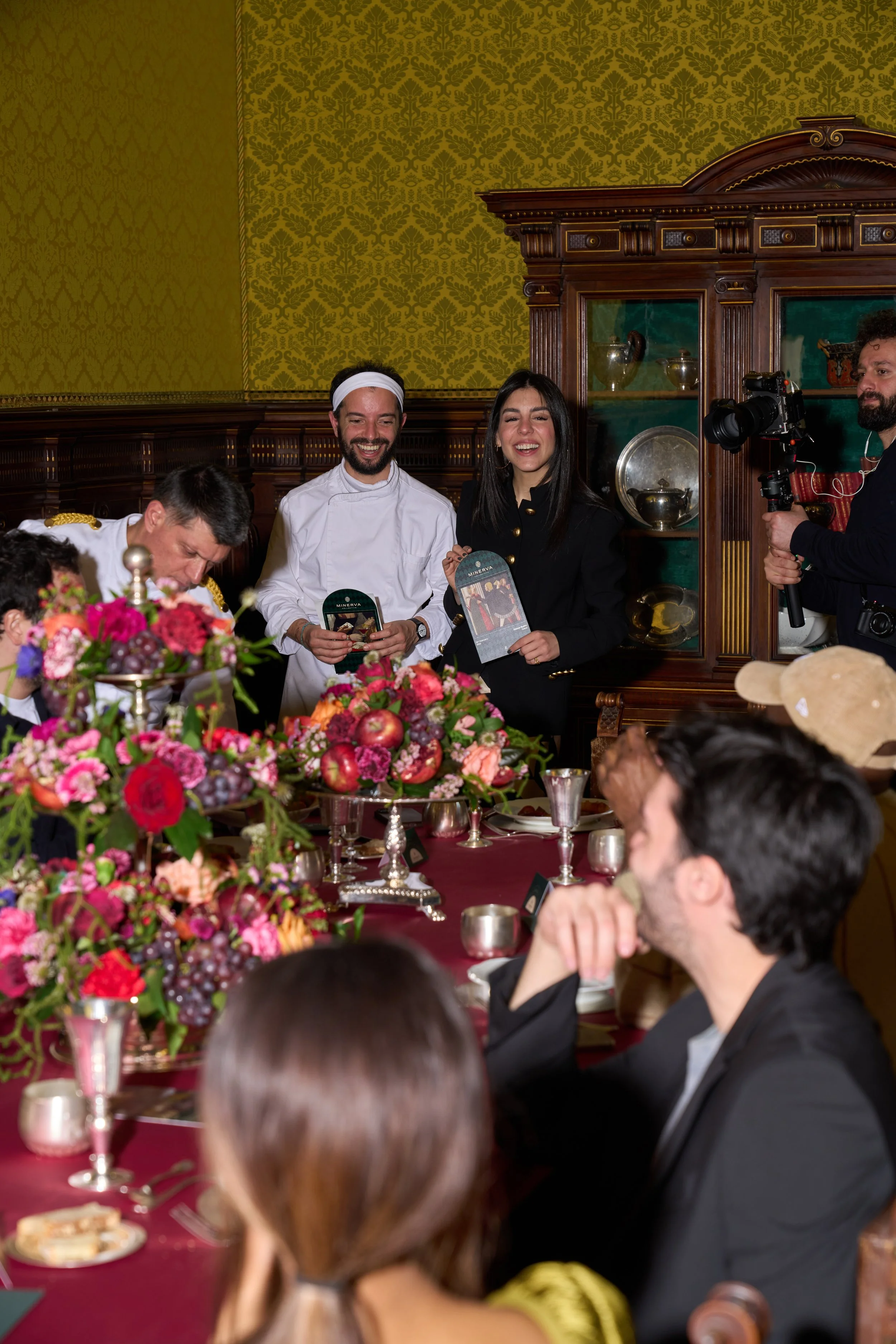
Well, so this is why I created Minerva, because we don't host any more than 20 people. I really wanted it to be intimate, and the most important fact is that I don't want people to know each other, so they can’t bring a plus one. And I really want these people to leave that place knowing someone new, who is from a different background, a different industry, but still going outside from that palazzo saying, today I met with someone new...today, I actually gained a new perspective on something.
So, it's not only about the small gathering or the supper club itself. It's more about how intellectual they are, to connect not only from the art perspective, but from different industry perspectives at the same time.
During one of your events, is there a conversation that stayed with you that you remember until now?
Pretty much all of them, like the Palermo one, which was our 2nd event last September. It was about the Old Master aspect, which was a caravan, just a lost painting, a stolen painting, and the contemporary aspect was the colour theorist friend of mine who was giving the colour scheme of Sicily, and we were talking about the pigmentation, how it changed from Old Masters to contemporary art.
And at that table, we had a conversation about colour, about Pantone colours. And everyone started to talk because we had a fashion designer, and we also had a gallerist who has been in galleries for 32 years.
They were talking about both of their experiences in New York, and one of them started to talk about his experience with David Hockney, which was incredible because everyone went silent, and it was as if we were there, as if we were living the moment. And then the fashion designer made an incredible comment on a very recent experience of his with an editor.
That's why I created Minerva; I wanted people to share their personal stories. I think, that you can never hear those stories when you're at a normal table, but if it is a specific subject then you can feel the presence of the story, as if you were there. So that was one of the core memories, I would say.
Credits Minerva Collective
How do you decide who is going to be invited?
It's a very curated thing, and I'm doing all of them by myself. I consider myself very lucky because I'm based between London and Milan, but at the same time, being a young patron, I get invited to most events. I'm a very social person and I'm also pretty good at networking. So, all the people that I meet, I'm not gathering data, but I want to understand where I'm going to see them next or if I resonated with them. So, from my perception of the people I meet, I like to play with the guest list to understand how to create the table.
It's actually a fun thing to do. Also, in terms of the age, the race, religion-wise, I think it's a great, great mix.
You like to meet artists before buying their work. Has meeting an artist ever completely changed the way you saw their work?
Definitely! I think that's the main reason why I really want to meet with them. It's not only to convince myself, but it's more to understand the personality of that person, culturally, how they were built up. If I can see something, if I can find something in their eye when speaking to me, because not every artist is meant to be in my home or in someone else's home, but I think it's more of a human connection level: I may not necessarily like the artwork, but I would like to keep that person in my life at the same time.
But most of the time, I would say, if I'm doing a studio visit, it means that I already like the piece. I'm just trying to convince myself, why should I buy this? Because it really makes a huge difference when you have pieces at home, and then you're actually embracing it so much that whenever someone walks into your home, you can actually reflect as a collector how much you praise that artist.
So, apart from the monetary value, which I couldn't care less about, I would say that that has more value, both for the artists and for the collector, at this time.
Credits Minerva Collective
And speaking about collecting. You've been described as an extensive collector. What does being a young collector mean to you today?
I think it's a responsibility. I see myself as a conscious collector, and being a young collector, it's a huge responsibility. I would like to see myself as more of a patron...I would like to be a game changer of some things in the future; not right now, but I would like to learn things, to learn from past generations, to be more involved with older generations and to consider how I can reflect and change things.
Finally, what do you want someone to feel when they leave a Minerva evening?
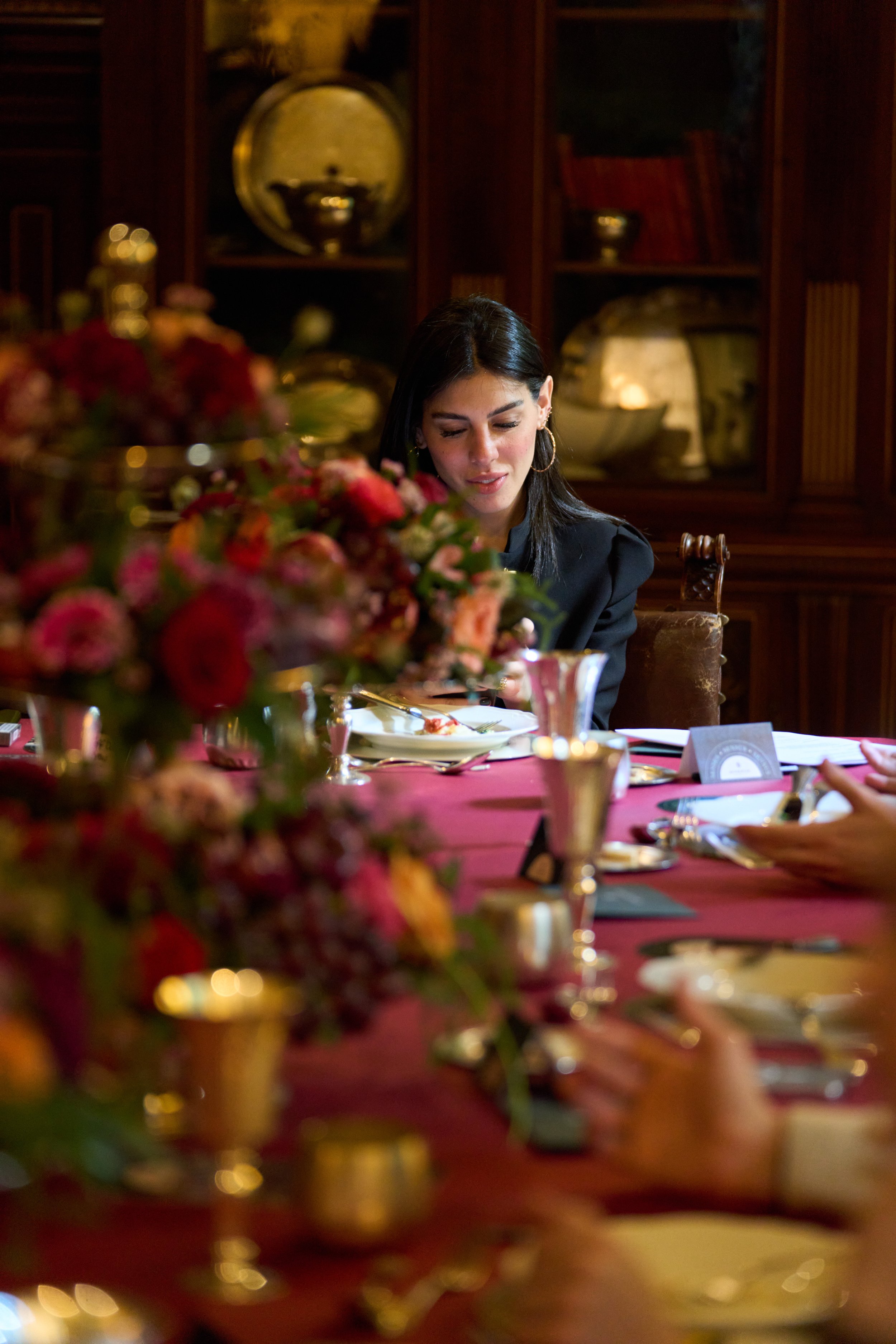
I hope they feel special, especially enough to say that they were intelligent and they were brave enough to be in a place where we were, because they don't know what they're going to be talking about before they come.
But I create the table in such a way that I value their point of view and what they're going to bring to the table. So, if they feel it was a special day, then that is more than enough for me.
But apart from this, I hope that they would be super grateful to be at a Minerva table for what they contributed, because everything is documented either way. And I feel that they're super special in that way.
Credits Minerva Collective