Returning to Meaning: An Evening with MYNE at Carousel in London
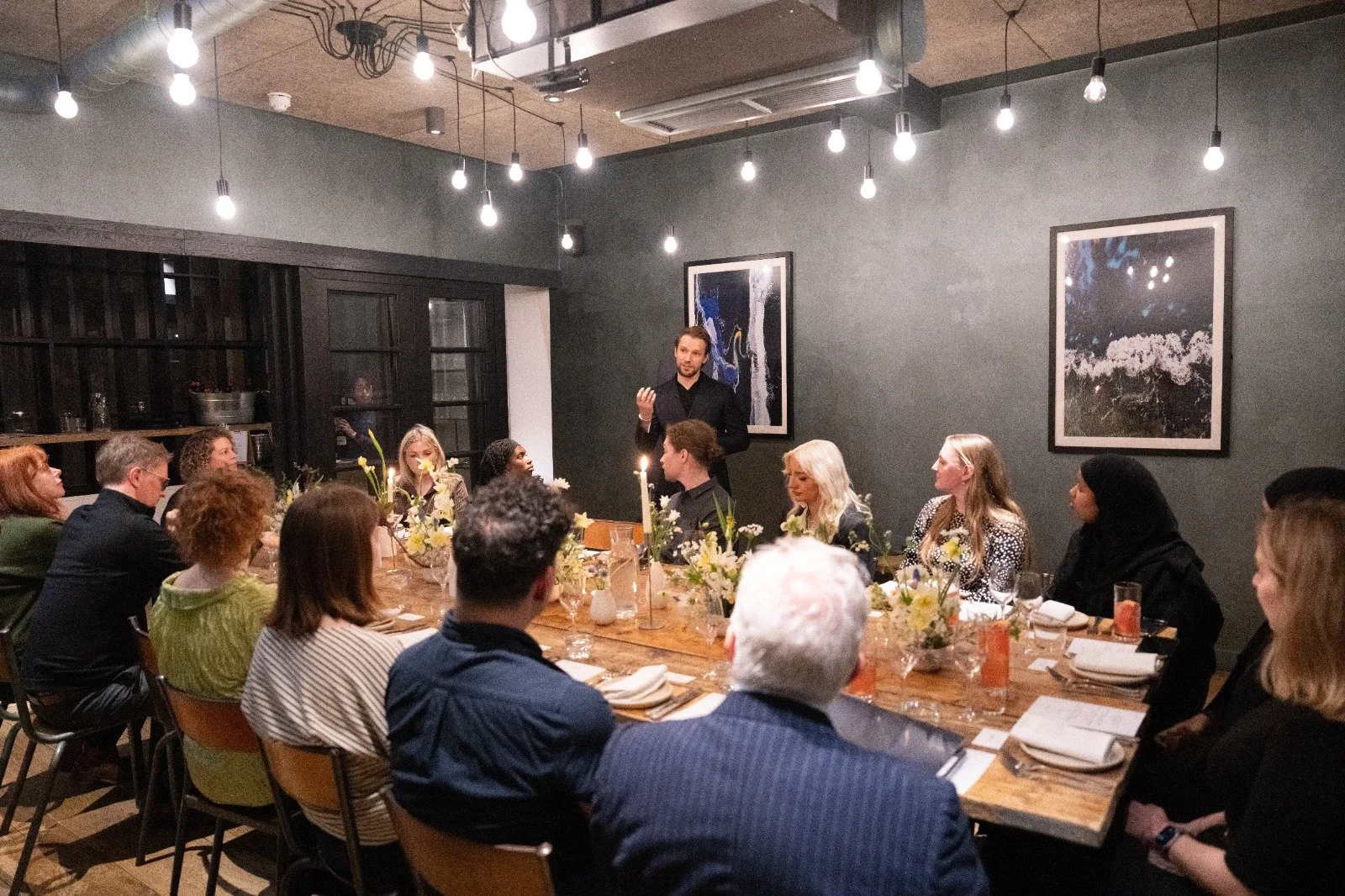
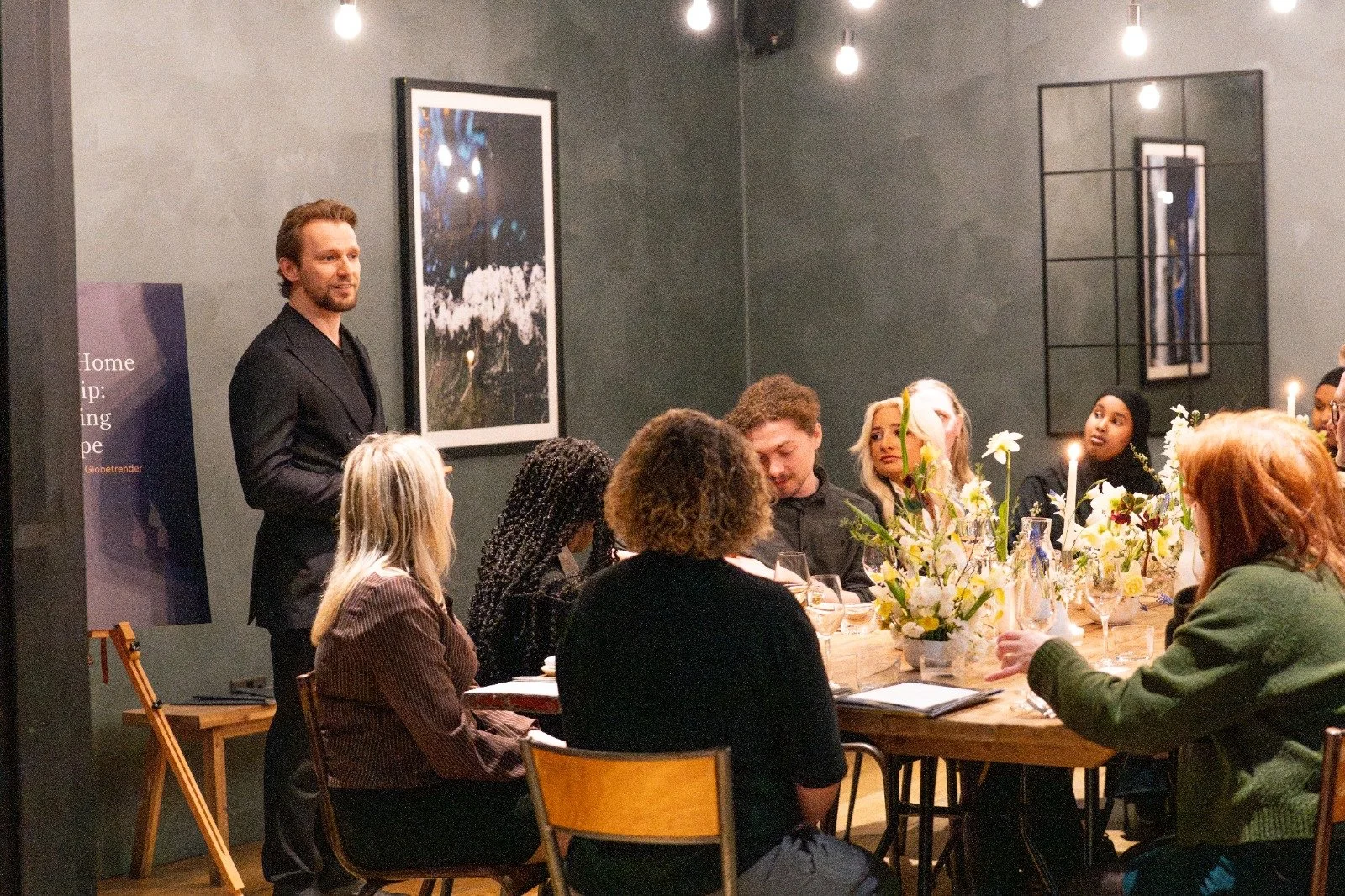
There is something quietly revealing about a dinner table. Not the kind that dazzles through excess, but one that invites conversation, reflection and, occasionally, a reconsideration of what we thought we knew. On a soft London evening in Fitzrovia, at Carousel, a space known for its ever-evolving culinary residencies, I joined a small group gathered around a long wooden table. The setting was intimate, almost disarmingly so. A handwritten place card. A carefully composed seasonal menu. A sense that what mattered here would unfold not only on the plate, but in the dialogue that accompanied it.
Credits: Anaïs O’Donoghue Photography
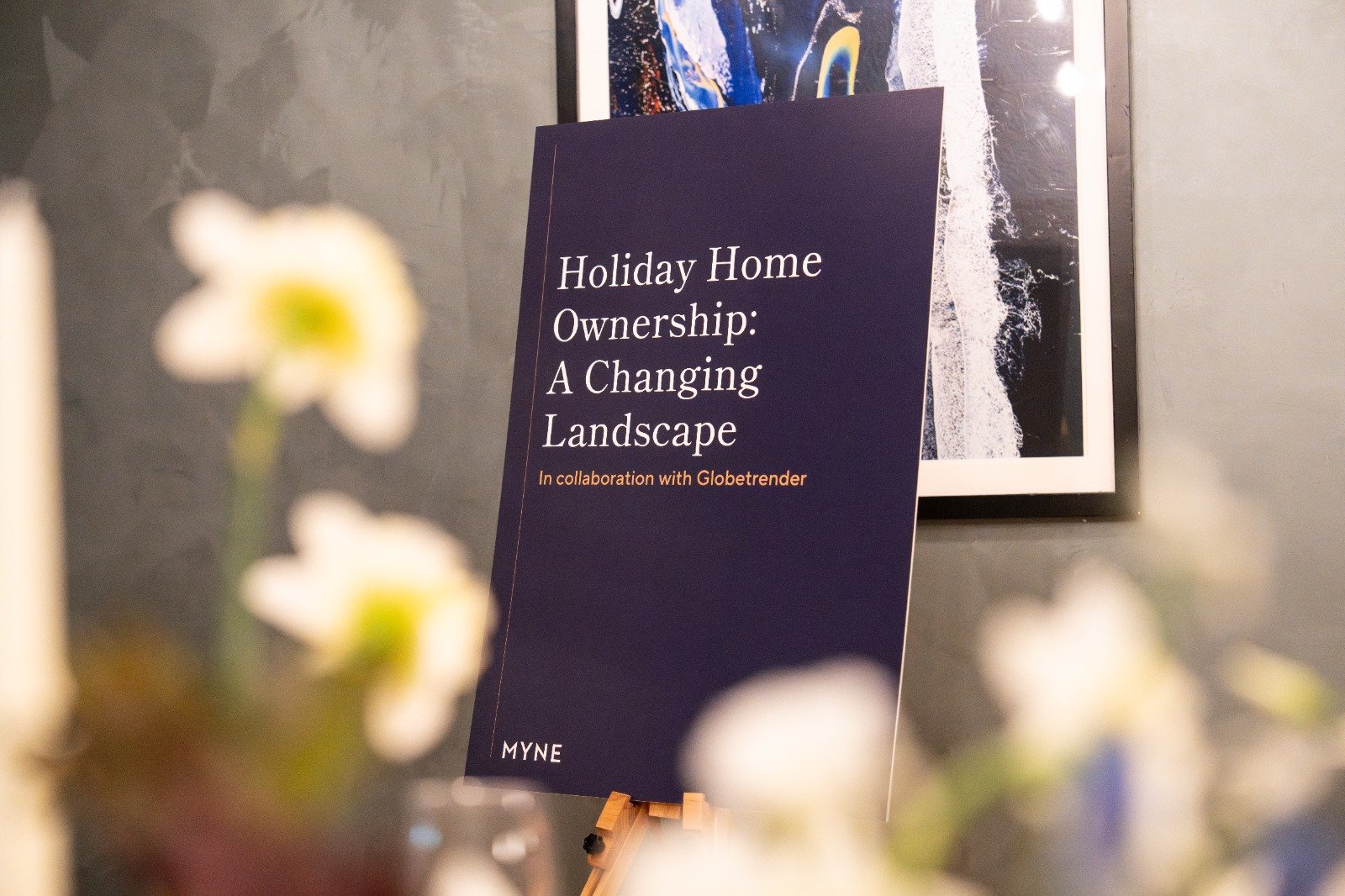
The occasion marked the launch of MYNE’s latest report on holiday home ownership and the changing nature of luxury. Yet the evening felt less like a presentation and more like a collective inquiry. What does luxury mean today, and perhaps more importantly, what does it no longer mean?
The Table as a Lens to Redefine Luxury
The menu itself offered a quiet prelude to the themes of the evening. Sourdough with cultured butter, followed by dishes designed for sharing. White bean purée with pickled tomatoes. Grilled leeks with pumpkin and hazelnut. Smoked beef rib with mole negro. Ingredients that felt grounded, intentional, rooted in seasonality rather than spectacle.
There was an evident restraint in the composition. Nothing excessive, nothing performative. It was food that invited attention rather than demanded it. In many ways, it mirrored the conversation that followed. For decades, luxury has been defined by accumulation. More space, more destinations, more possessions. Yet as the discussion unfolded, it became clear that this definition is quietly dissolving. What emerged instead was a language of simplicity. Efficiency. Ease.
There is a growing reluctance to pay not only for ownership, but for the invisible labour that accompanies it. Maintenance, management, distance. These are no longer accepted as necessary burdens, but as friction points to be removed. Luxury, in this sense, is becoming less about what is acquired and more about what is simplified. A seamless experience. A life that flows without unnecessary complexity.
The Desire to Return
One of the most resonant ideas shared during the evening was the notion of the home away from home. It is a phrase that has long existed in the vocabulary of travel, yet its meaning feels newly charged. There is an increasing desire not simply to visit, but to return. To inhabit a place repeatedly, to build a relationship with it over time.
Credits: Anaïs O’Donoghue Photography
This aligns with a broader shift in travel behaviour. The appeal of the unfamiliar is giving way, at least in part, to the comfort of the known. Travellers are seeking destinations that offer continuity. Places where they understand the rhythm of daily life, where they can move without the constant negotiation of newness. It is not a rejection of discovery, but a recalibration of value. To return is to deepen.
Conscious Presence
Alongside this desire for familiarity sits a heightened awareness of impact. Conversations around overtourism, housing pressure and underutilised properties are no longer confined to policy circles. They have entered the consciousness of travellers themselves. The image of the empty holiday home, unused for much of the year, carries a different weight today. It raises questions not only of efficiency, but of responsibility.
Credits: Anaïs O’Donoghue Photography
There is an emerging discomfort with excess that does not serve a purpose. This awareness is shaping choices. Travellers are beginning to consider not only where they go, but how their presence interacts with local communities. Whether their stay contributes to a place or simply extracts from it.
It is within this context that MYNE’s model begins to make sense. The idea was born from a recognition of inefficiency. Homes that remain largely unoccupied, yet demand continuous maintenance and cost.
The traditional model of ownership, once aspirational, now appears increasingly misaligned with contemporary lifestyles. What replaces it is not the abandonment of the dream, but its reconfiguration. Access over ownership. Flexibility over permanence. A system that allows individuals to return to a place without the burden of managing it. It is a response that feels less like disruption and more like adaptation.
Living Between Places – A Quiet Evolution
As the evening progressed, the conversation turned towards a broader cultural shift. The way in which people live is becoming more fluid. Work, leisure and identity are no longer confined to a single geography. In this context, the idea of having a base abroad takes on a different meaning. It is not about escape, but about integration. A place that becomes part of one’s life, rather than a temporary departure from it.
This is perhaps where the concept of belonging becomes most relevant. To belong to more than one place. To move between them with ease. To carry a sense of continuity across geographies. There was no grand conclusion to the evening. No definitive statement that sought to resolve the question of what luxury is.
Credits: Anaïs O’Donoghue Photography
Instead, there was a shared understanding that it is evolving. Luxury is becoming quieter. More intentional. Less visible. It resides in the absence of friction. In the ability to return. In the knowledge that a place can hold you, not just for a moment, but over time. As the evening drew to a close, the table remained scattered with glasses, notes and the remnants of a meal that had unfolded without urgency. Outside, Fitzrovia continued in its usual rhythm. Inside, there was a lingering sense that something had shifted, if only slightly.
Not in the world itself, but in the way we choose to move through it. And perhaps that is where the future of luxury truly lies. Not in what we acquire, but in how we choose to belong.