Soldiers of Tomorrow review : an IDF veteran’s stark anatomy of complicity
Finborough Theatre, London A former conscript balances raw autobiography and historical reckoning in a monologue that has proved too hot for most venues to handle
On the map painted across the floor of the Finborough Theatre, rows of miniature green plastic toy soldiers advance across an abstract Middle East. It is a striking image for a conflict that routinely reduces individual human lives to rigid components of a vast political machine.
Written by Itai Erdal alongside Colleen Murphy, Soldiers of Tomorrow arrives in London carrying a lot of history. Since its first staging in Vancouver, the production has faced cancellations from theatres too nervous to host its difficult themes. It is entirely typical of the tiny Finborough Theatre in Earl's Court to provide the space required for this essential hour of theatre.
The title comes from a note sent home with Erdal’s eight-year-old nephew from an Israeli school, telling children to fill gift boxes "to the soldiers of today from the soldiers of tomorrow." That tomorrow has long since arrived, and Erdal uses his own mandatory 1990s military service in the Israel Defense Forces to look at the momentum of national service.
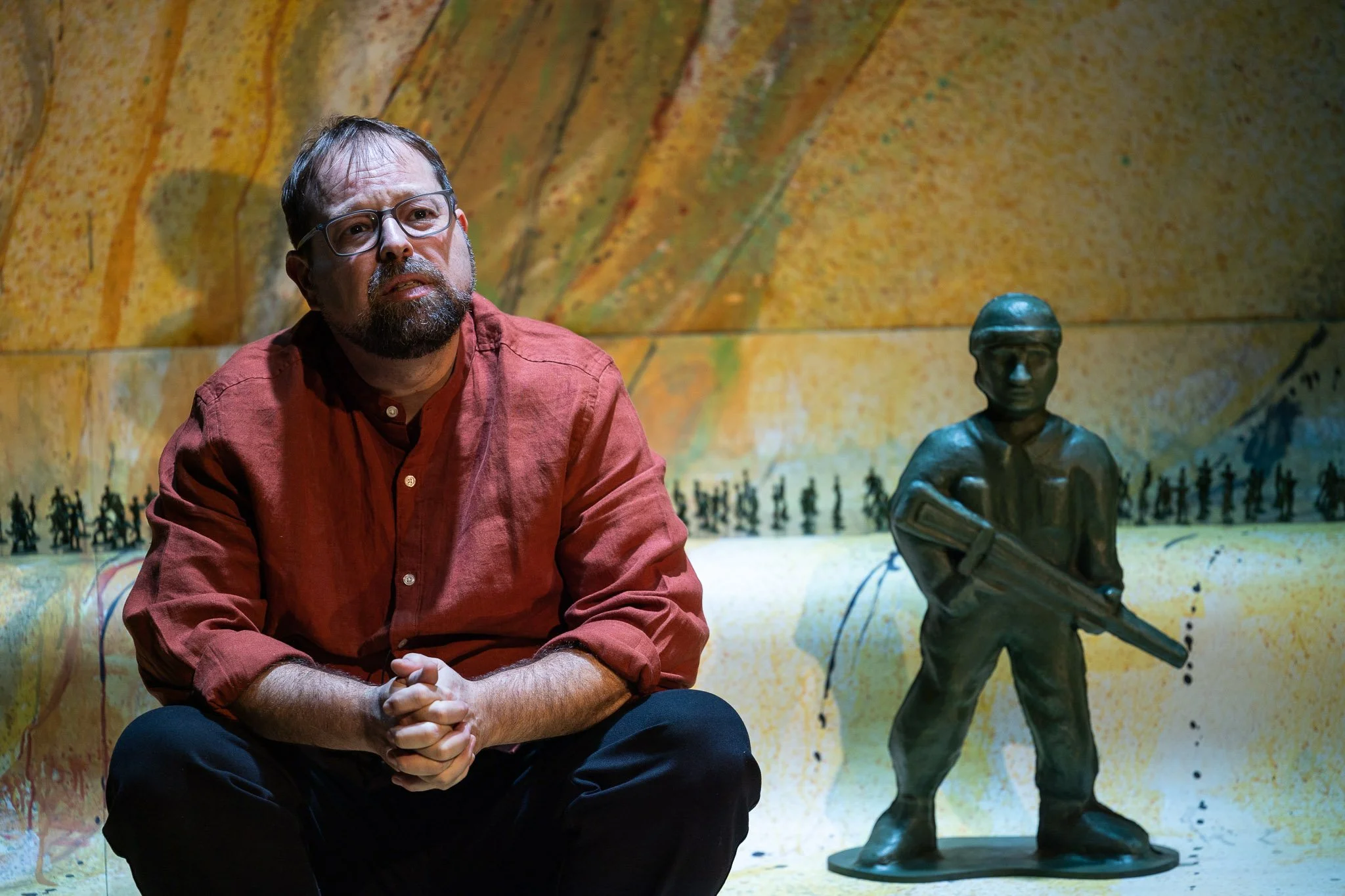
Credits: Matt Reznek
Erdal is a celebrated lighting designer rather than a conventional actor, and his delivery reflects this. He stands on stage with an unhurried manner, speaking with the relaxed ease of a storyteller in a pub.
There are no flashy theatrical gymnastics here. Instead, the production relies entirely on its raw, gripping bravery to sustain its hold over the audience. Performed as a tense monologue without an interval, the sheer honesty of Erdal’s presence makes the material completely encapsulating. It is simply impossible to look away.
The device of using toy soldiers works incredibly well during the show's most gripping scene, where Erdal recounts an agonising checkpoint encounter involving an elderly Palestinian woman, an ailing infant, and a son wanted for interrogation. He demonstrates how his left-wing friend and his rigid platoon commander pulled him in completely opposing directions. There is an admirable fairness to how this crisis is laid out, forcing us to confront the immense moral friction that occurs when individual human empathy clashes directly with military orders.
The monologue is accompanied by Syrian-born musician Emad Armoush, who sits to the side playing a delicate live score using the oud, ney flute, and flamenco guitar. For the most part, his traditional playing adds to the melancholy tone. However, a vivid description of a combat exercise set to a loud arrangement of Nirvana’s Smells Like Teen Spirit feels entirely out of place, momentarily breaking the mood of the piece.
The true weight of the evening grows during the post-show Q&A, which begins just five minutes after the performance ends. Here, Erdal detailed a turbulent saga of global cancellations following October 7, admitting that while he does not believe an ex-IDF soldier should be the centre of the story, using his specific platform to share his point of view is the only immediate action available to him.
Ultimately, these raw revelations amplify the necessity of the production. Erdal does not claim to speak for anyone other than himself, but his sober, reflective exile perspective adds a valuable chapter to the theatrical discourse. By offering a platform to a piece of art that has been systematically silenced elsewhere, the Finborough Theatre proves once again that it is one of the bravest spaces in London.
You can buy tickets to the production, which runs until July 4th, here.
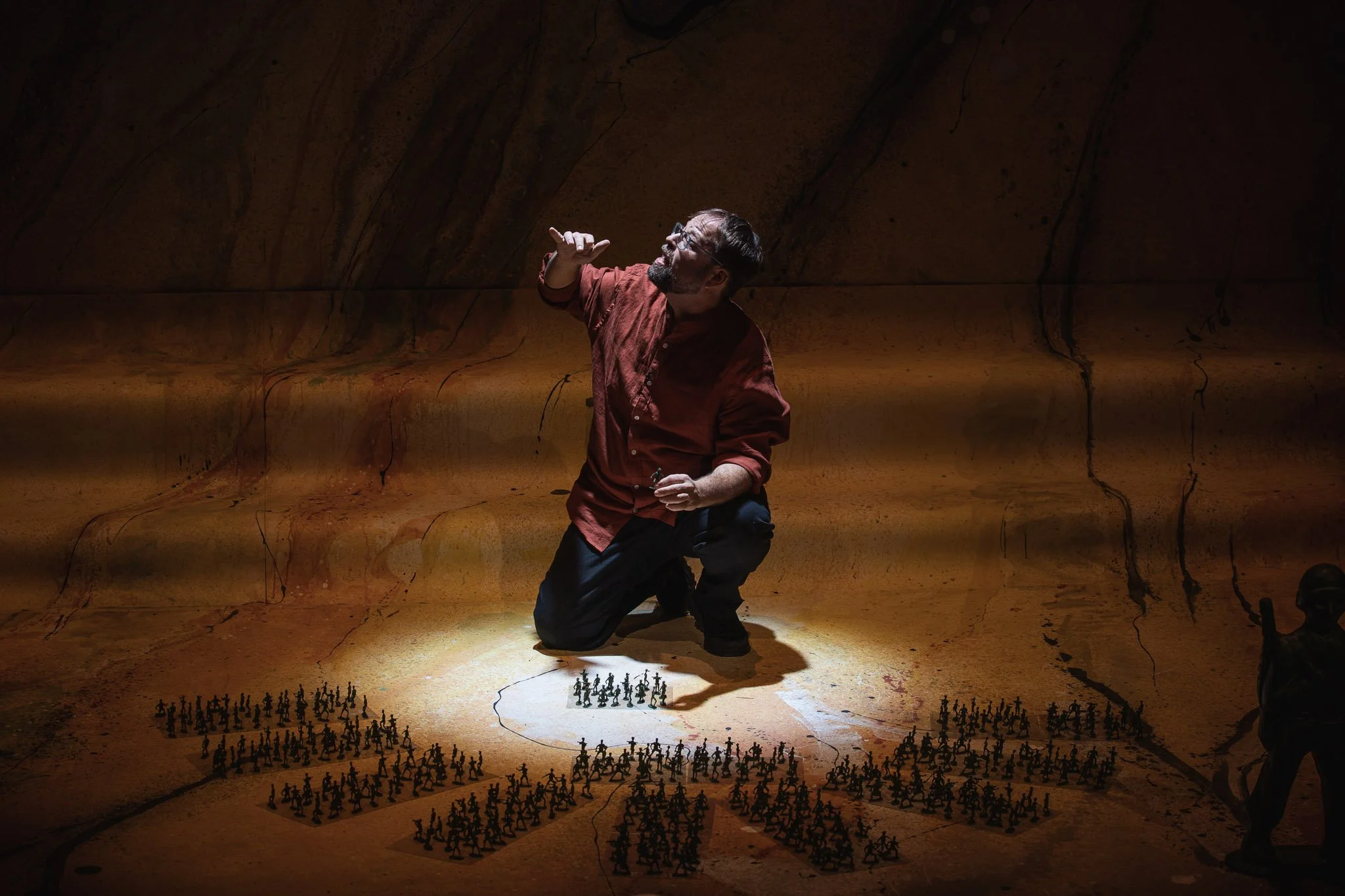
Credits: Matt Reznek