Ten c’s Permanent Wardrobe Makes a Case for Clothes That Get Better With Time
© TEN c
At a time when fashion is increasingly preoccupied with what is new, Ten c is interested in what stays. For its London Fashion Week debut, the Italian label arrived at the Mandarin Oriental Hyde Park with an idea that feels almost deliberately out of step with the traditional fashion calendar: the Permanent Wardrobe.
There was a collection, of course. But the more interesting proposition was the wardrobe around it, the idea that clothing should accumulate rather than expire, and that a jacket does not necessarily reach its full potential when it leaves the showroom. Instead, it begins a longer life, acquiring wear, memory and character along the way.
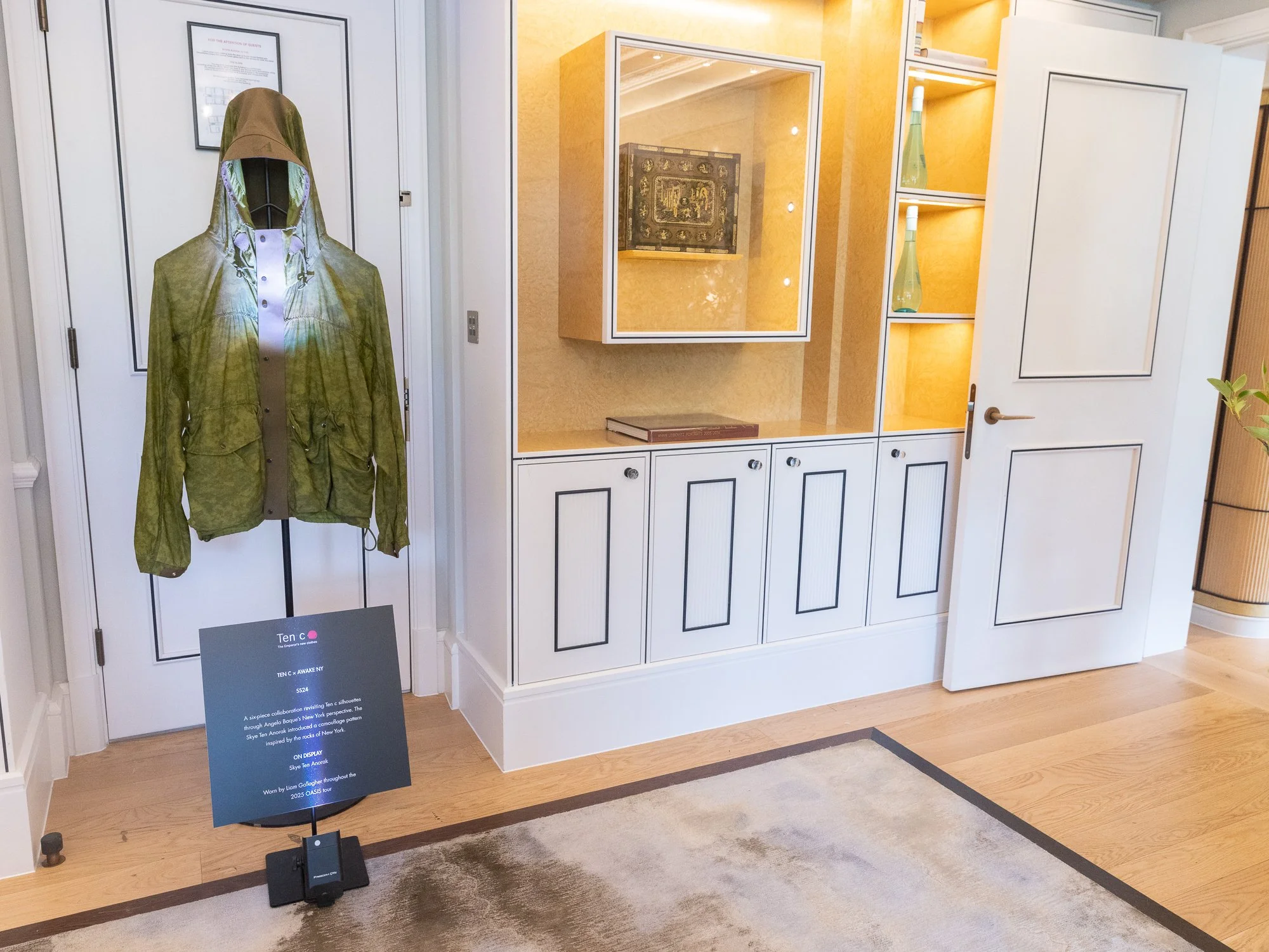
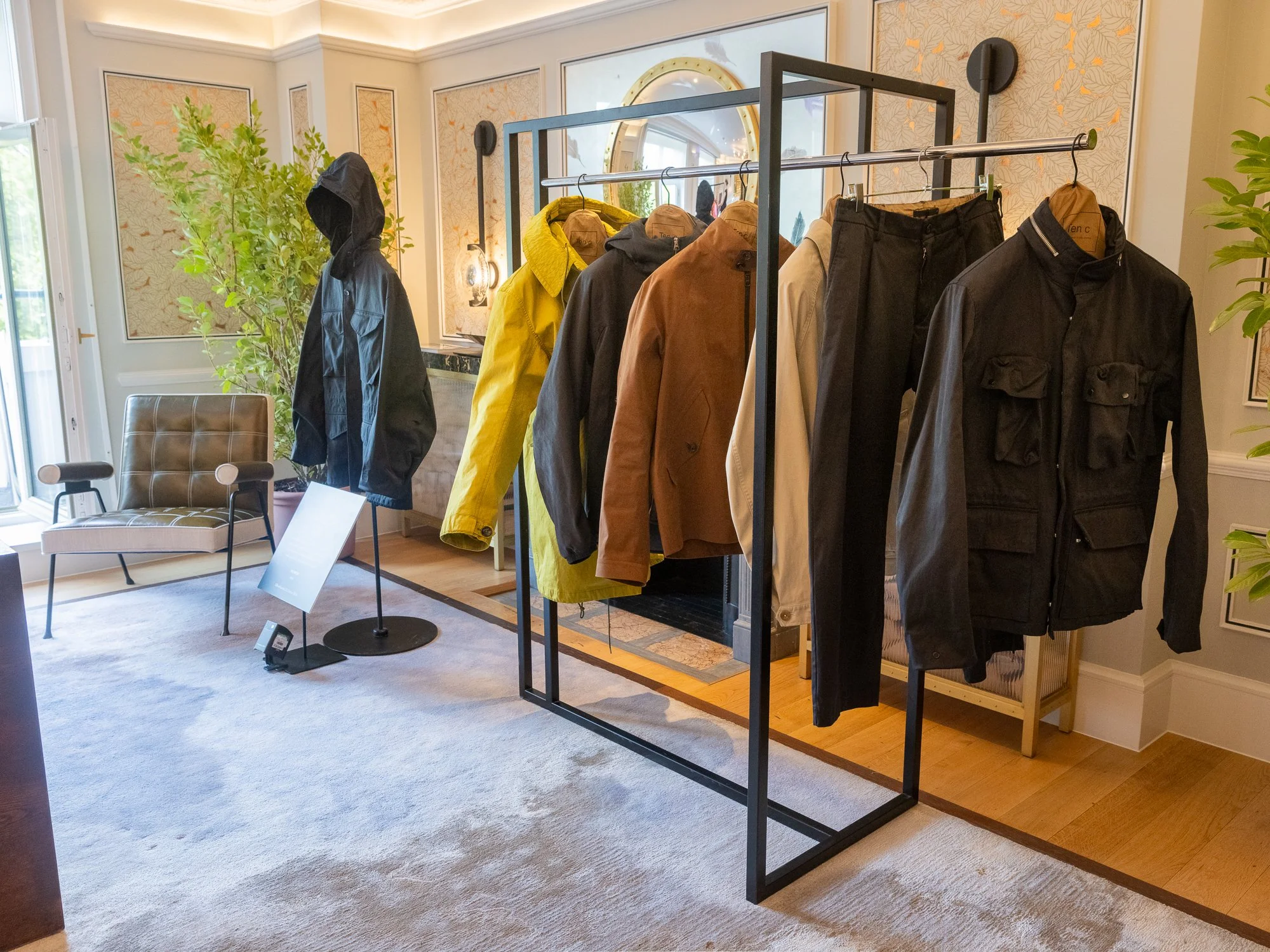
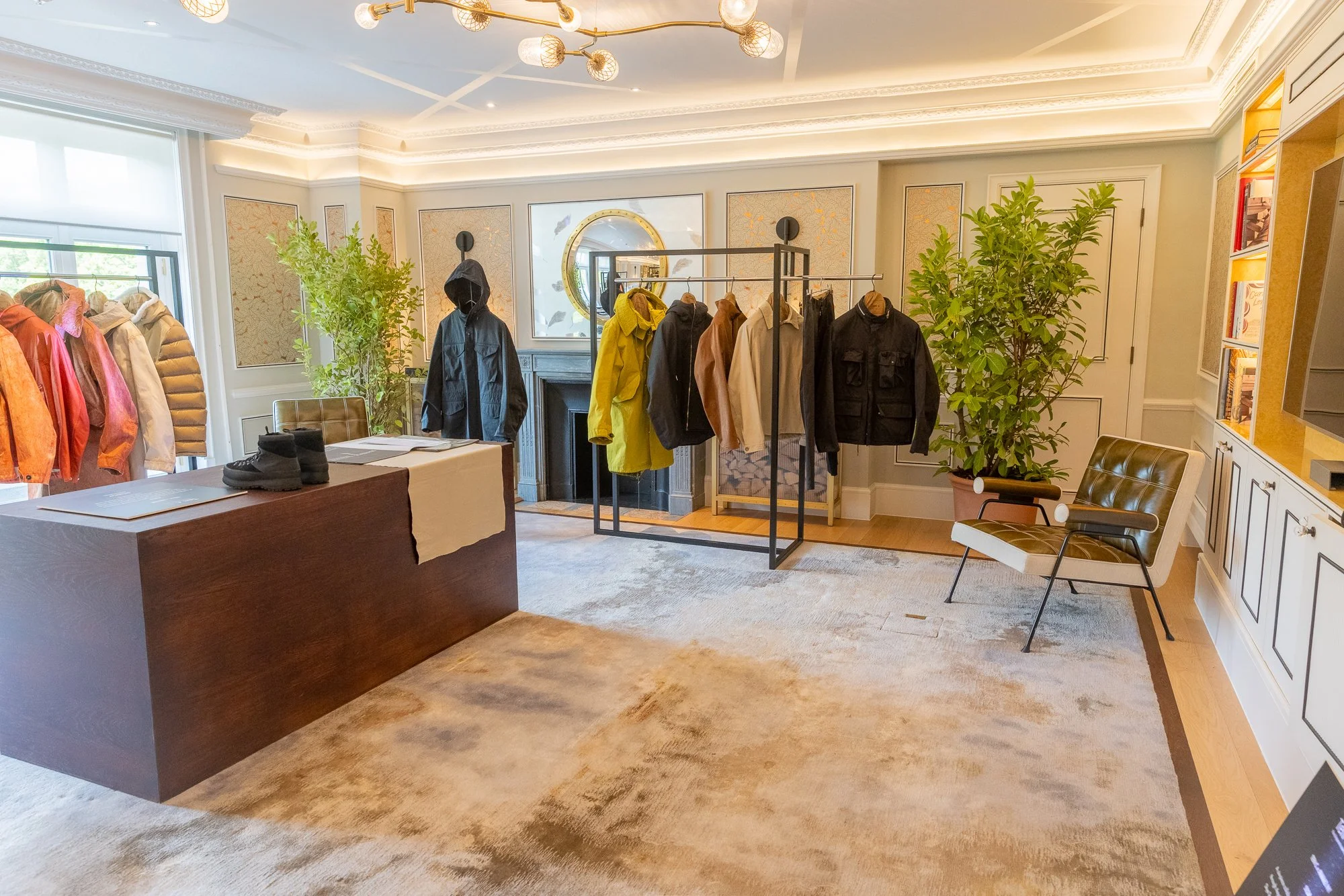
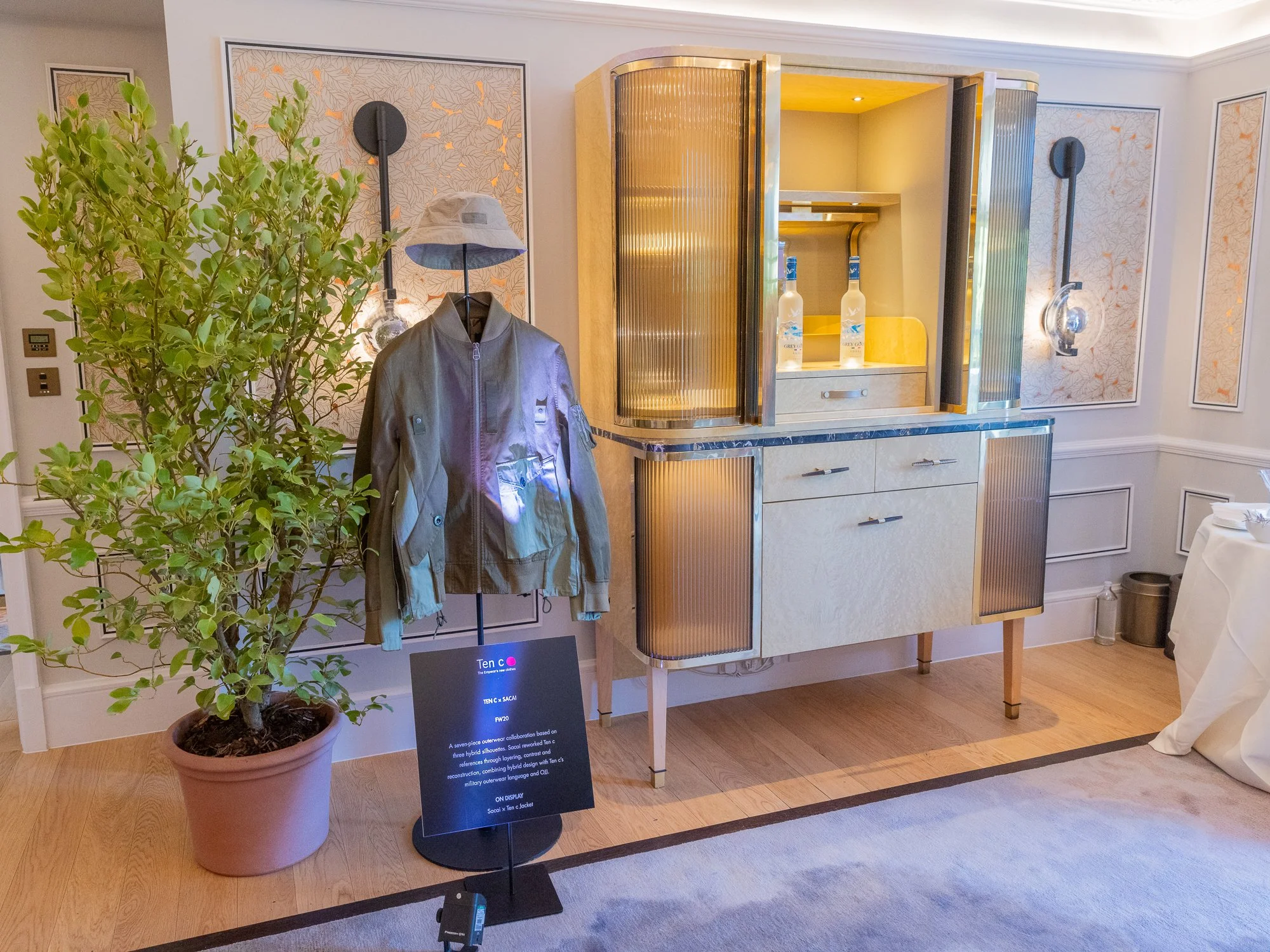
That philosophy was reflected in the presentation itself, where new pieces sat alongside garments from Ten c’s archive. Rather than separating past and present, the installation treated them as part of the same conversation. A piece from several seasons ago could exist comfortably beside something introduced for Spring/Summer 2027, creating a sense of continuity rather than nostalgia. It also offered a glimpse into how Ten c’s material language continues to evolve, taking the foundations of its signature Original Japanese Jersey and familiar outerwear and pushing them into new weights, finishes and textures. The latest collection feels less like a departure than a natural progression, with each new material adding another layer to an already established wardrobe.
© TEN c
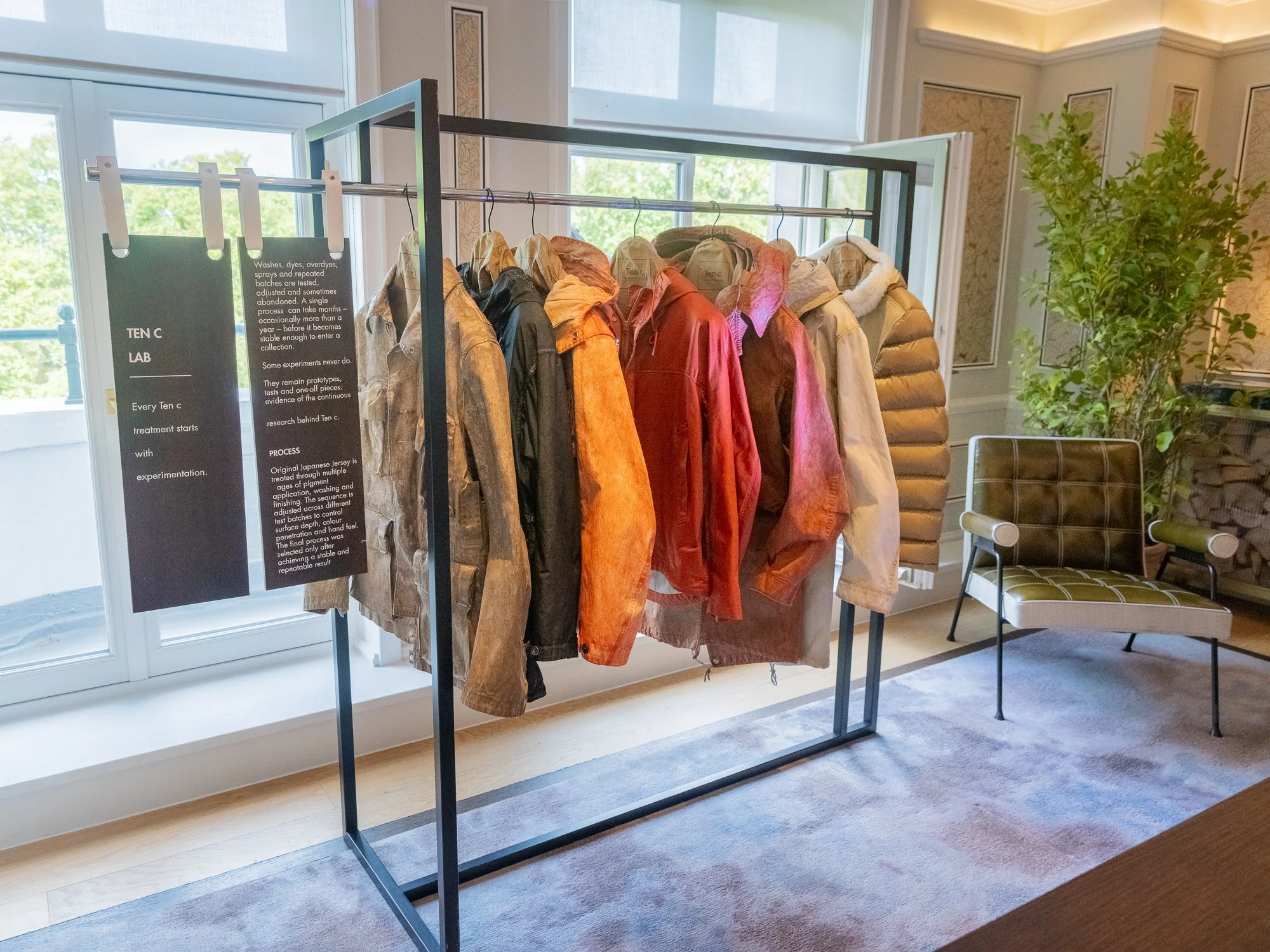
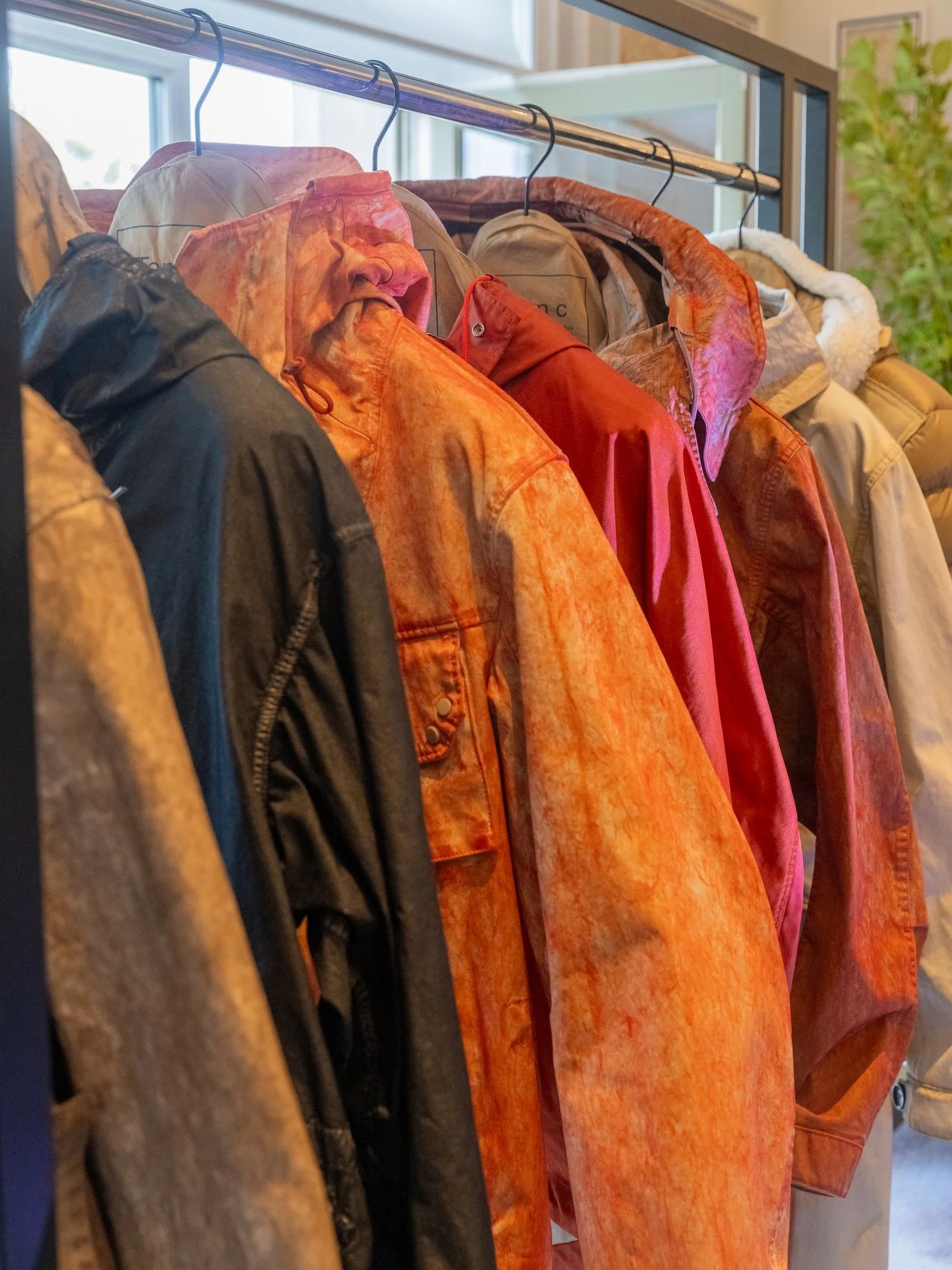
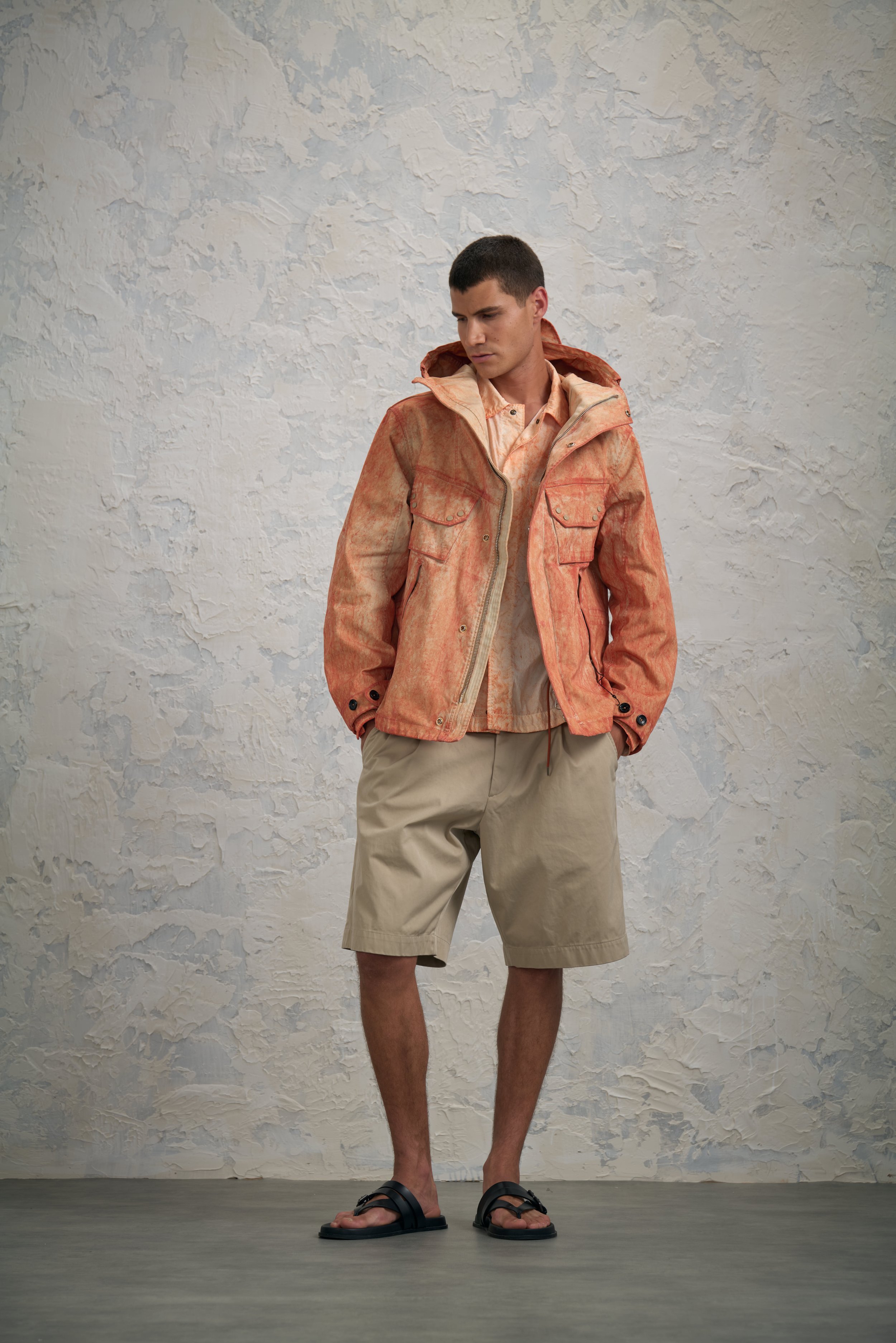
At the centre of the new collection is a garment dyed titanium nylon polyester, developed over more than a year. It appears in three of the collection’s key pieces, the Jeans Jacket, Alpen Jacket and Windproof Anorak, and is perhaps most interesting in motion. Colours inspired by Pompeii red, Sienna and sandy earth tones shift across the surface, producing flashes of iridescence as the fabric catches the light.
There is something almost geological about the effect. The colours feel familiar, but the way they sit on the technical fabric makes them strange again. Ten c has taken something that might traditionally be described as a natural palette and subjected it to an industrial process, creating surfaces that seem to change depending on how you look at them.
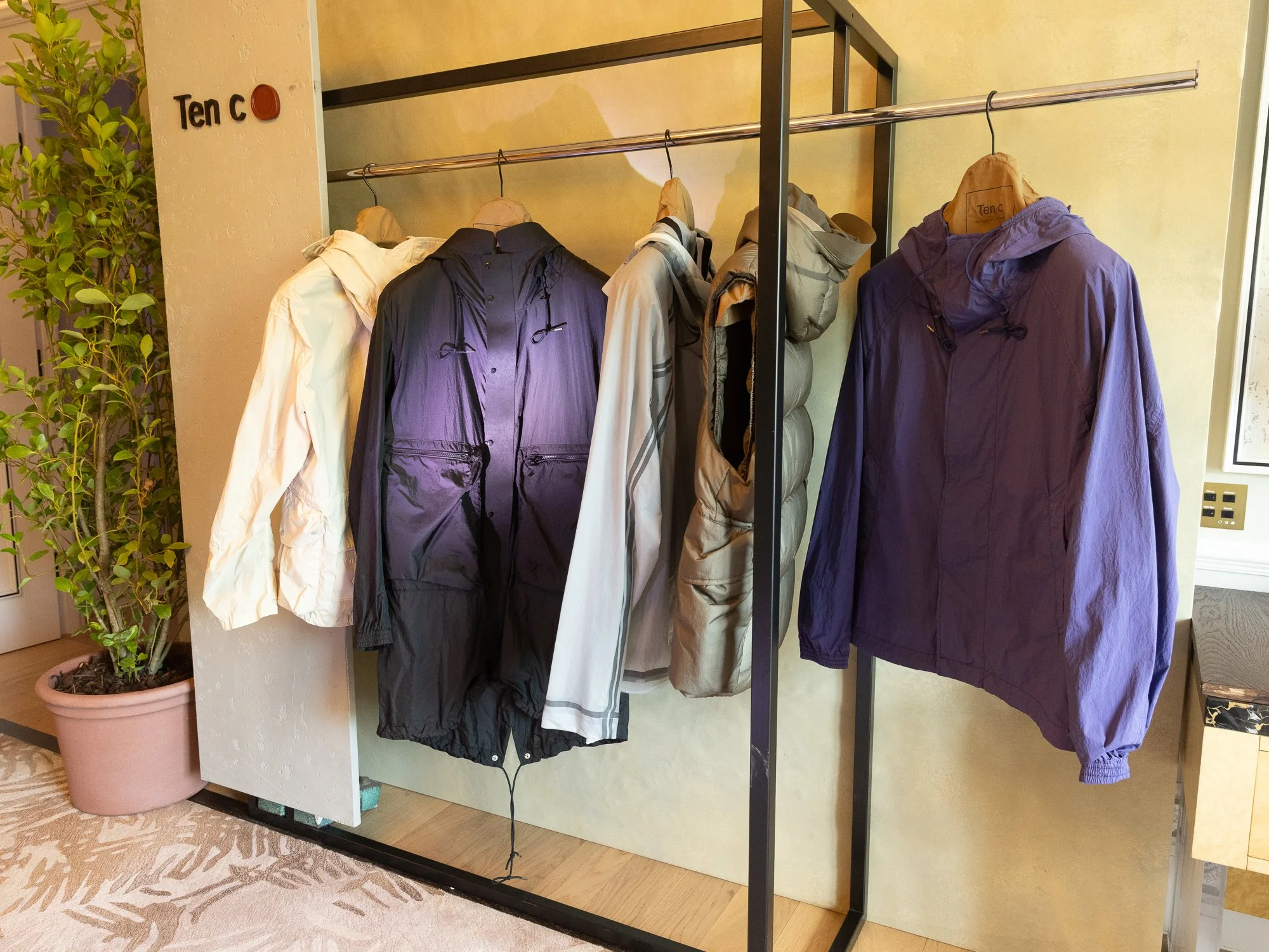
That tension between the natural and the technological runs through the collection. A new “dust” dye gives garments a dry, faded appearance, as if they have already spent years being exposed to the elements. Elsewhere, Nyfoil, a metal-coated nylon with a titanium-effect interior, allows metallic flashes to emerge beneath an otherwise matte surface. Field jackets, overshirts, bombers and trousers return throughout the collection, but they are repeatedly altered through changes in fabric, proportion and weight. It is a vocabulary of clothes that has been worn for generations, reconsidered through contemporary material research.
© TEN c
The Ten c Lab, also presented in London, offered a glimpse into how that thinking develops at the fabric level. Samples, washes, overdyes, sprays and repeated dye tests revealed a process that is as much about failure and adjustment as it is about the finished garment. The laboratory becomes a kind of backstage for the clothes, showing how much experimentation can sit behind something that ultimately looks effortless.
That sense of effort beneath simplicity has always been part of Ten c’s appeal. The clothes are not designed to announce the amount of technology inside them. Their sophistication tends to emerge slowly through the construction, the fabric and the way a surface changes after wear.
© TEN c
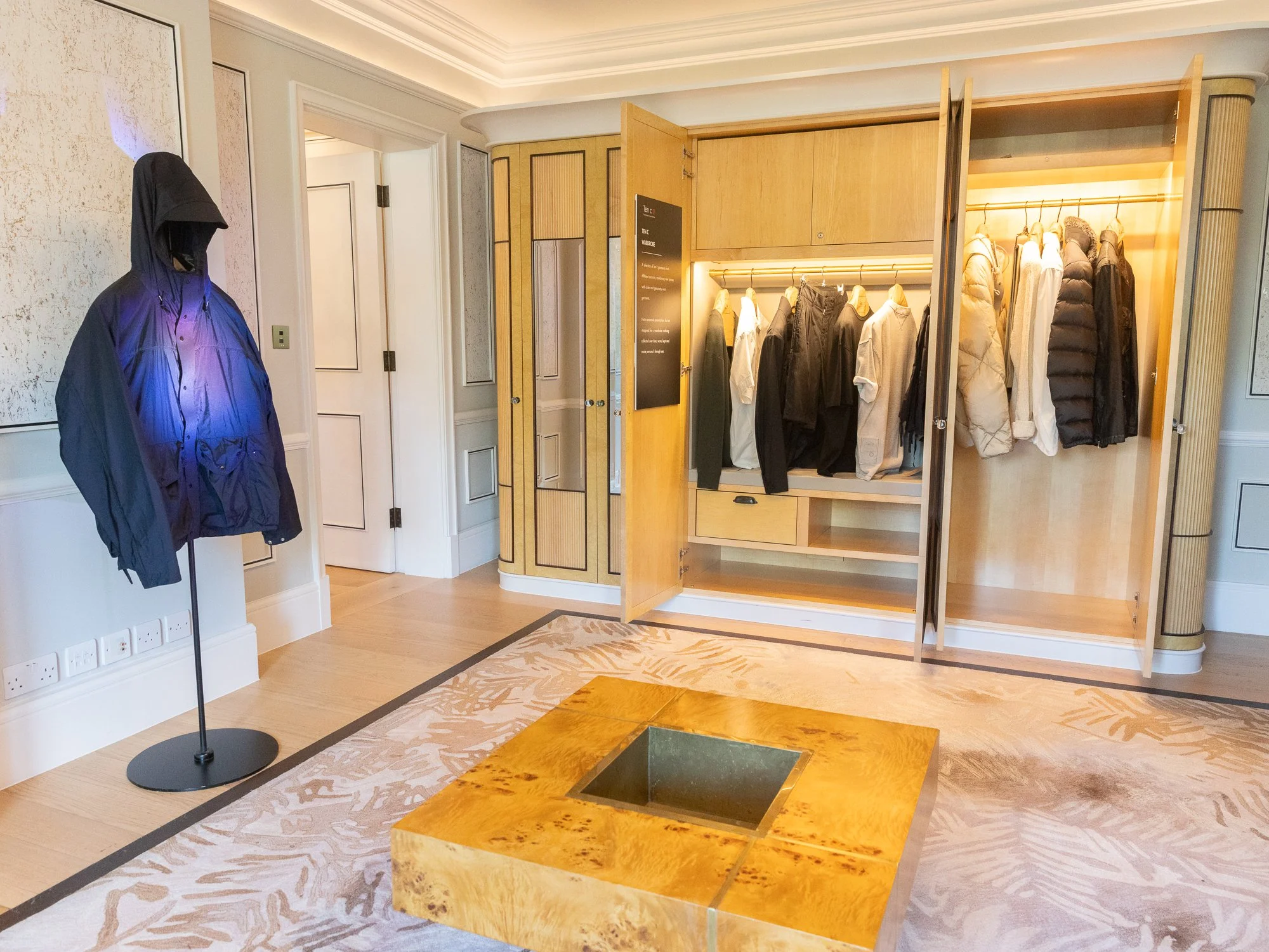
It is also why the archive pieces felt important in London. Ten c’s collaborations with Awake NY, sacai and Diemme demonstrate how its materials and functional language have been interpreted by very different creative partners. Rather than presenting these projects as historical footnotes, the installation folded them into the wider wardrobe, suggesting that collaboration can be another way of keeping an idea alive.
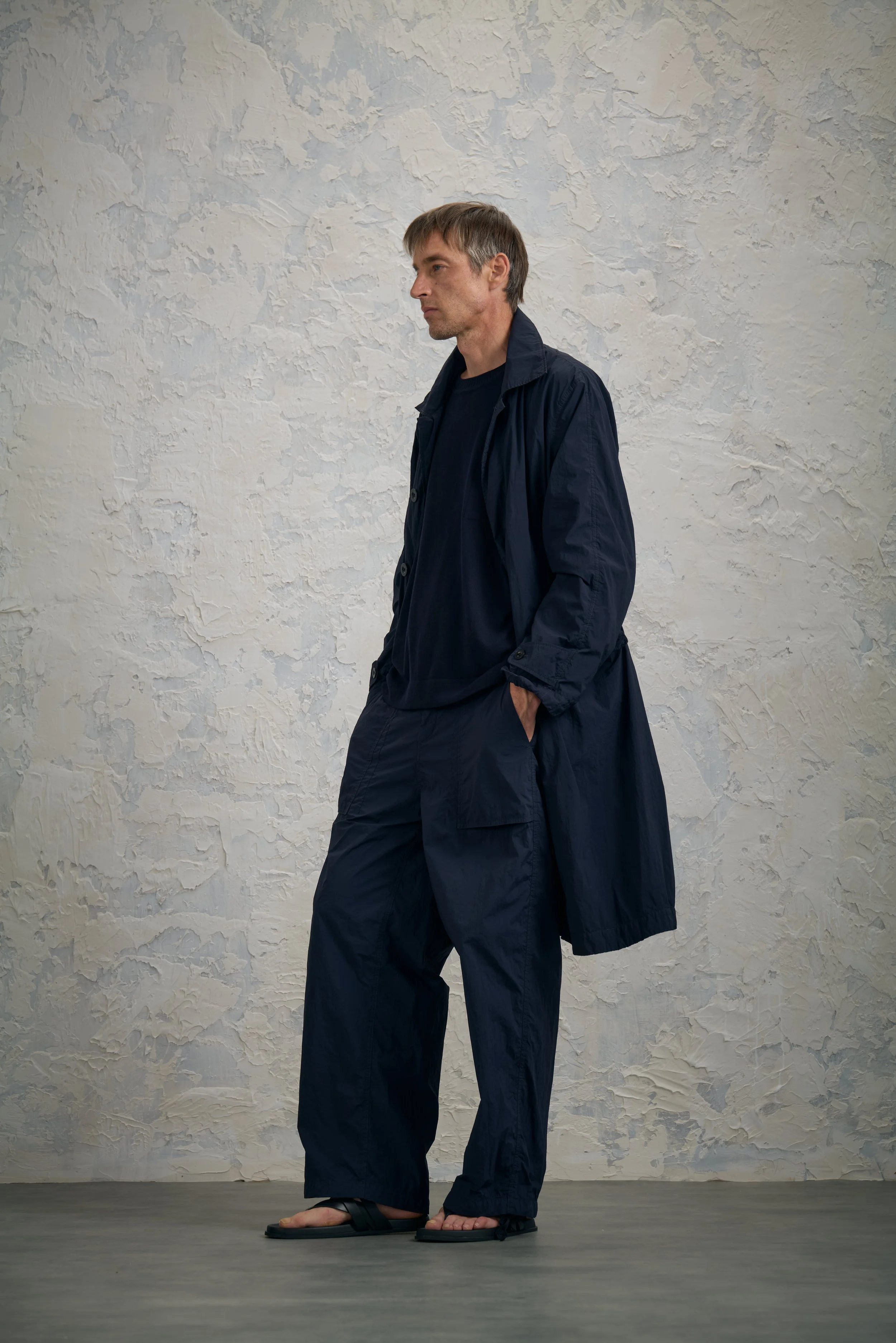
© TEN c
The next chapter arrives in the form of Ten c × COMOLI, an eight piece collaboration due to launch on October 23. The partnership brings together Ten c’s technical and functional instincts with COMOLI’s softer proportions and quiet approach to dressing. It feels less like a collision of two identities than a meeting between two different ideas of restraint.
And that is perhaps what made Ten c’s London debut more compelling than a straightforward presentation of new clothes. The collection is not trying particularly hard to convince you that it belongs to Spring/Summer 2027. Instead, it asks what might happen if the seasons became less important.
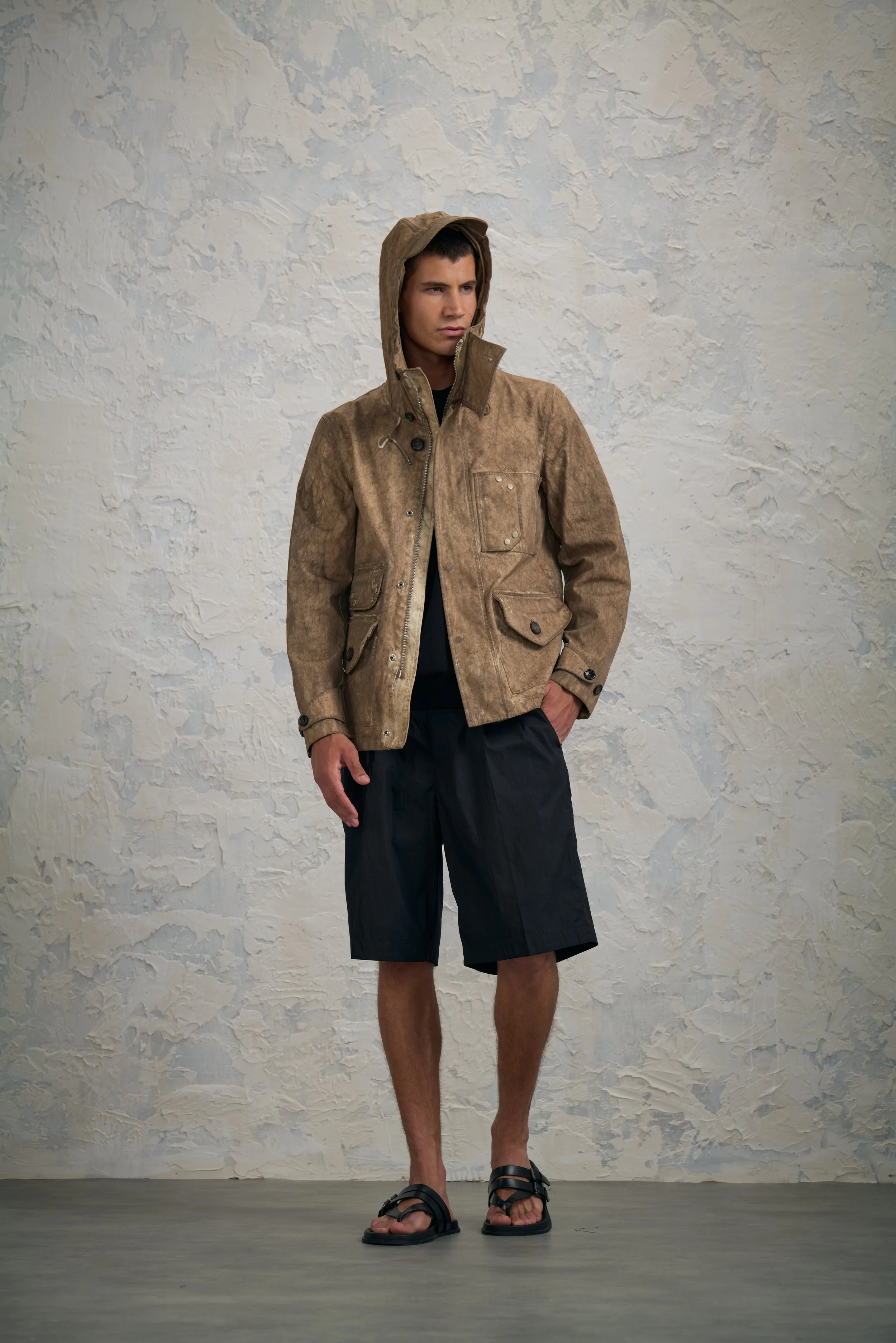
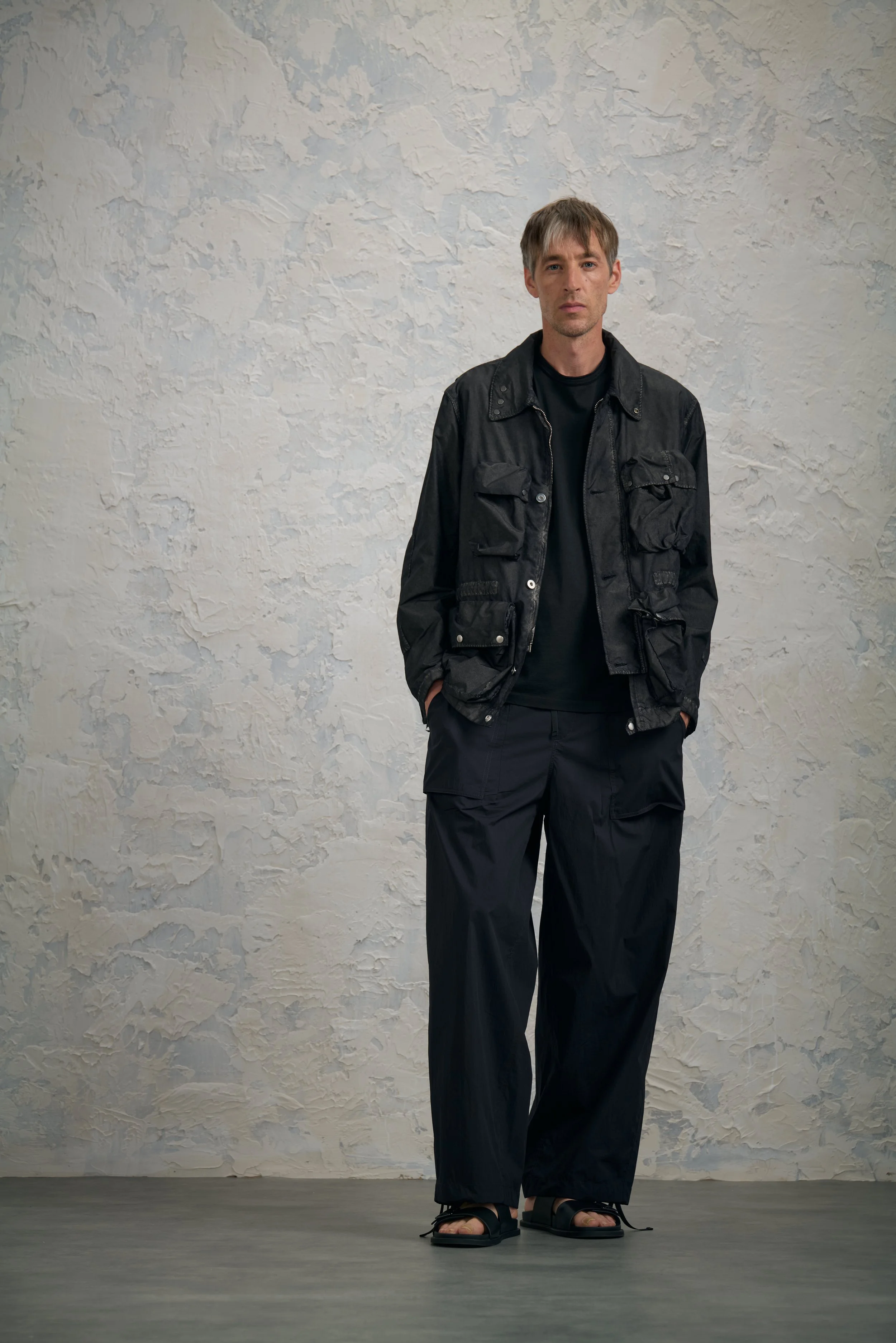
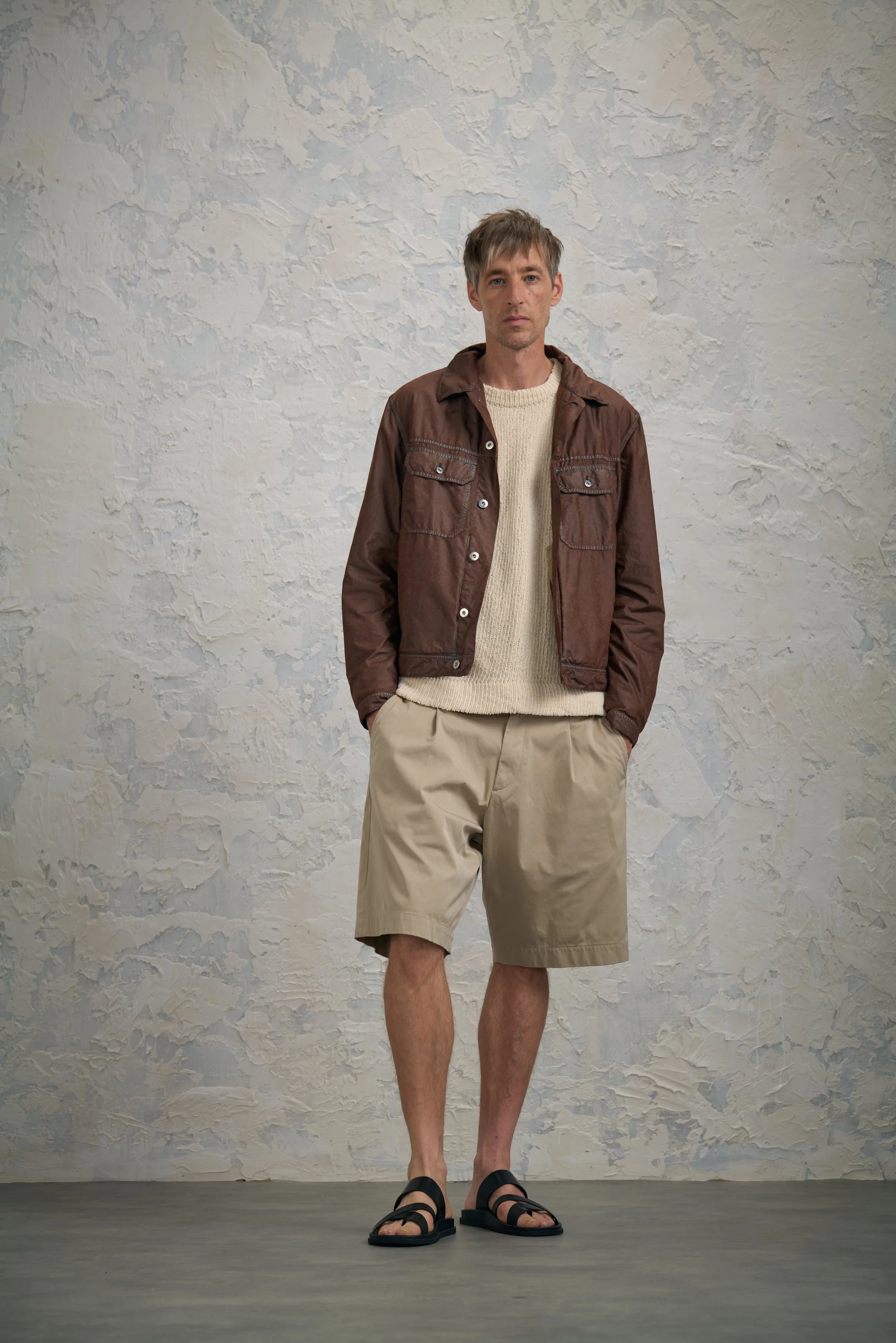
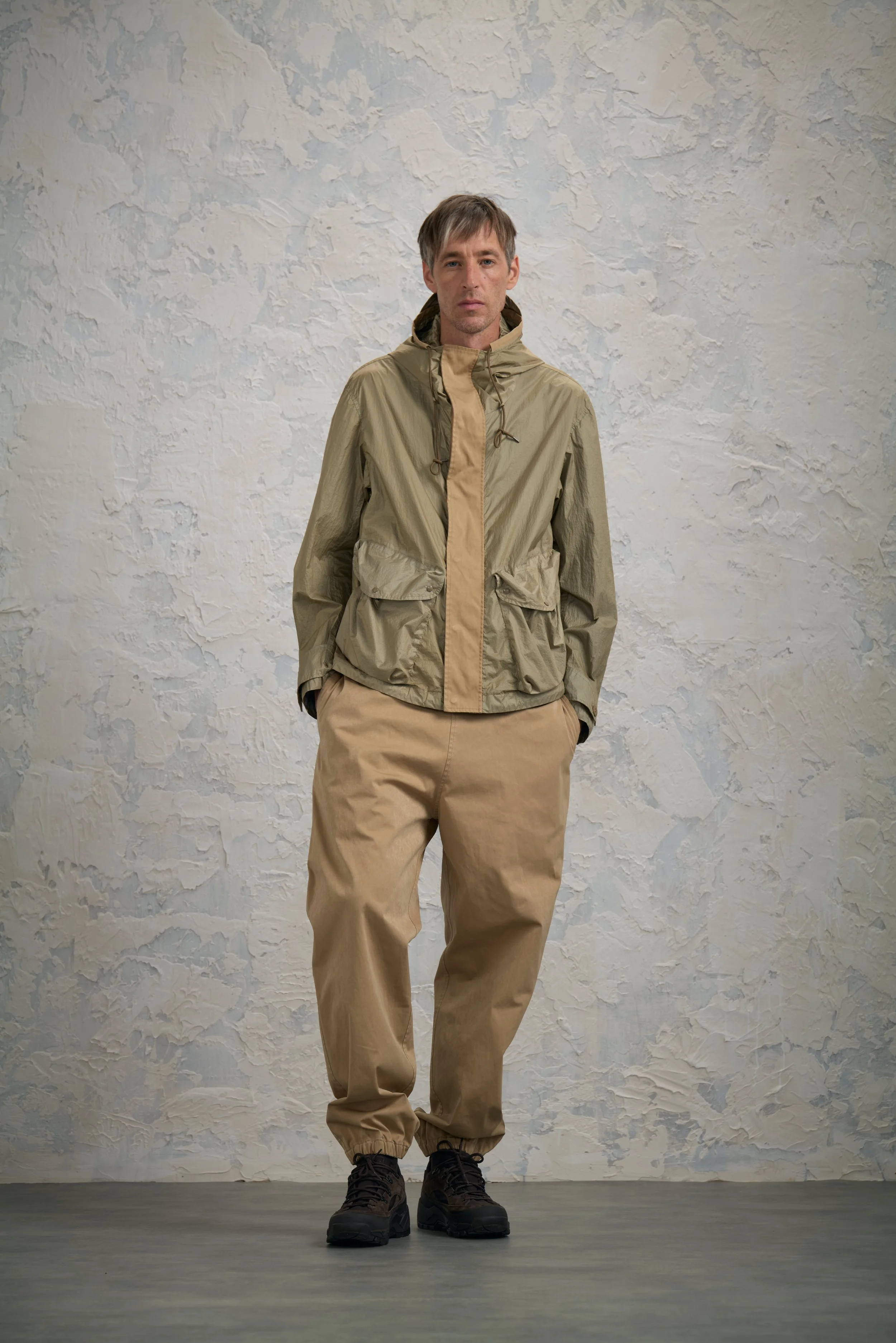
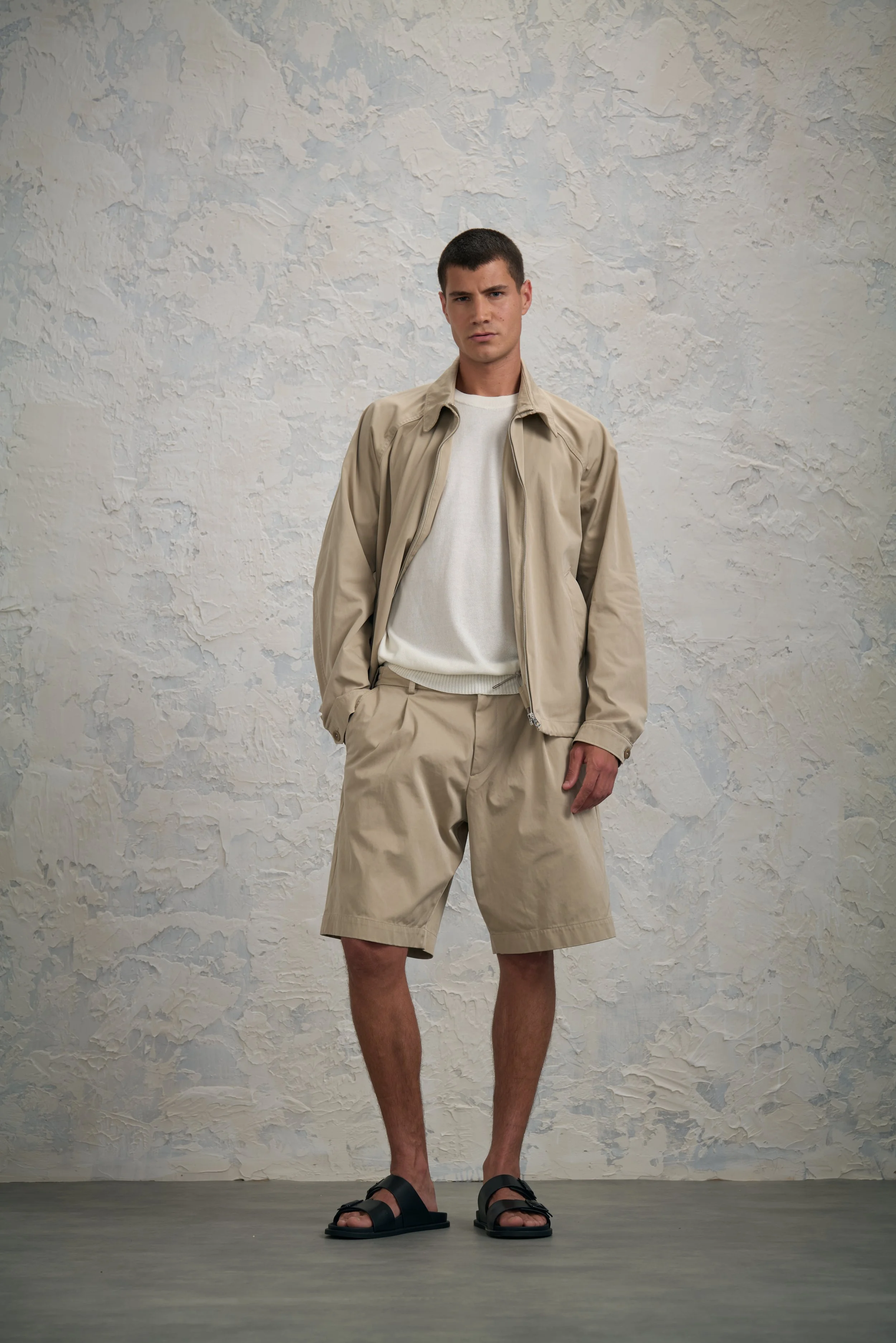
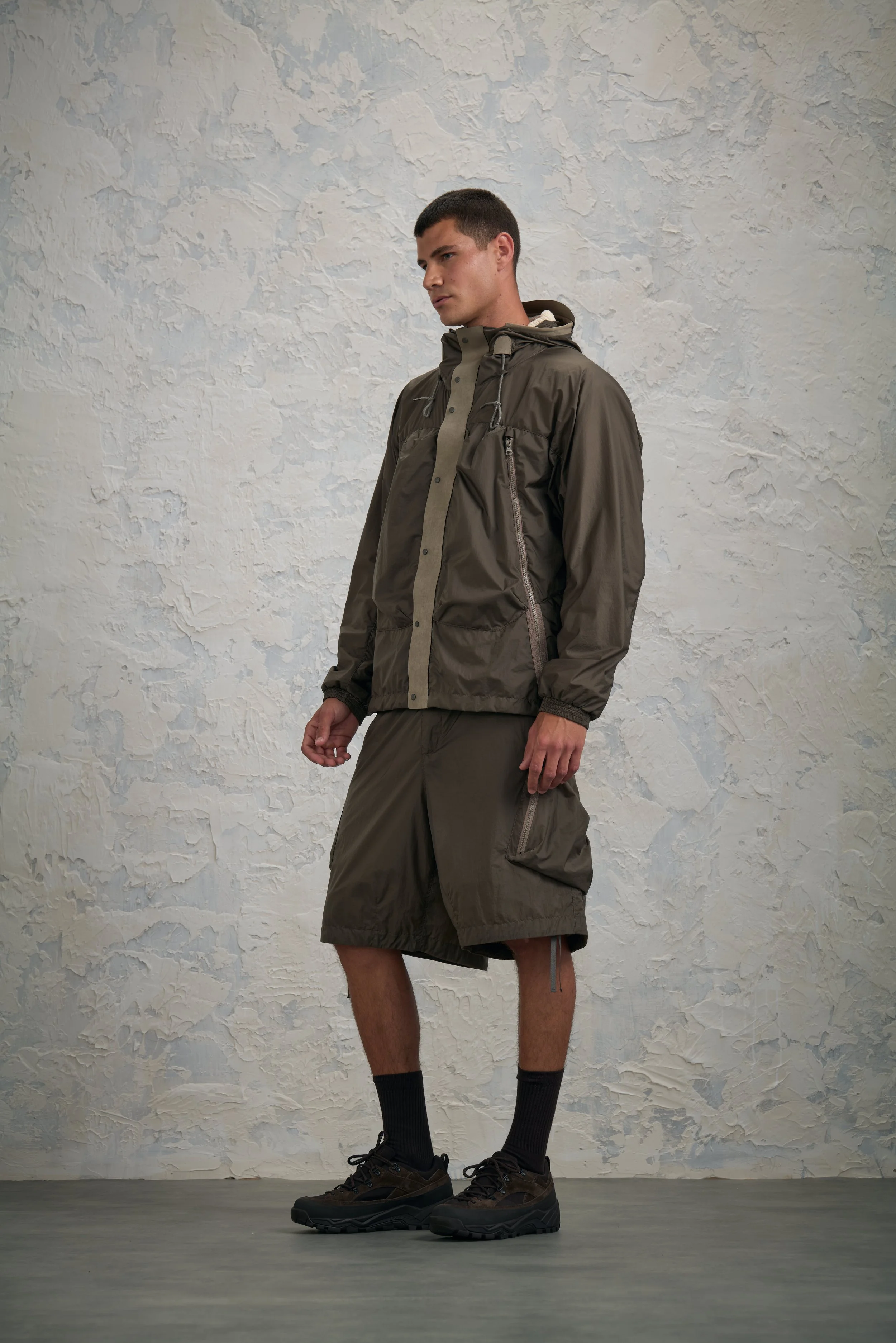
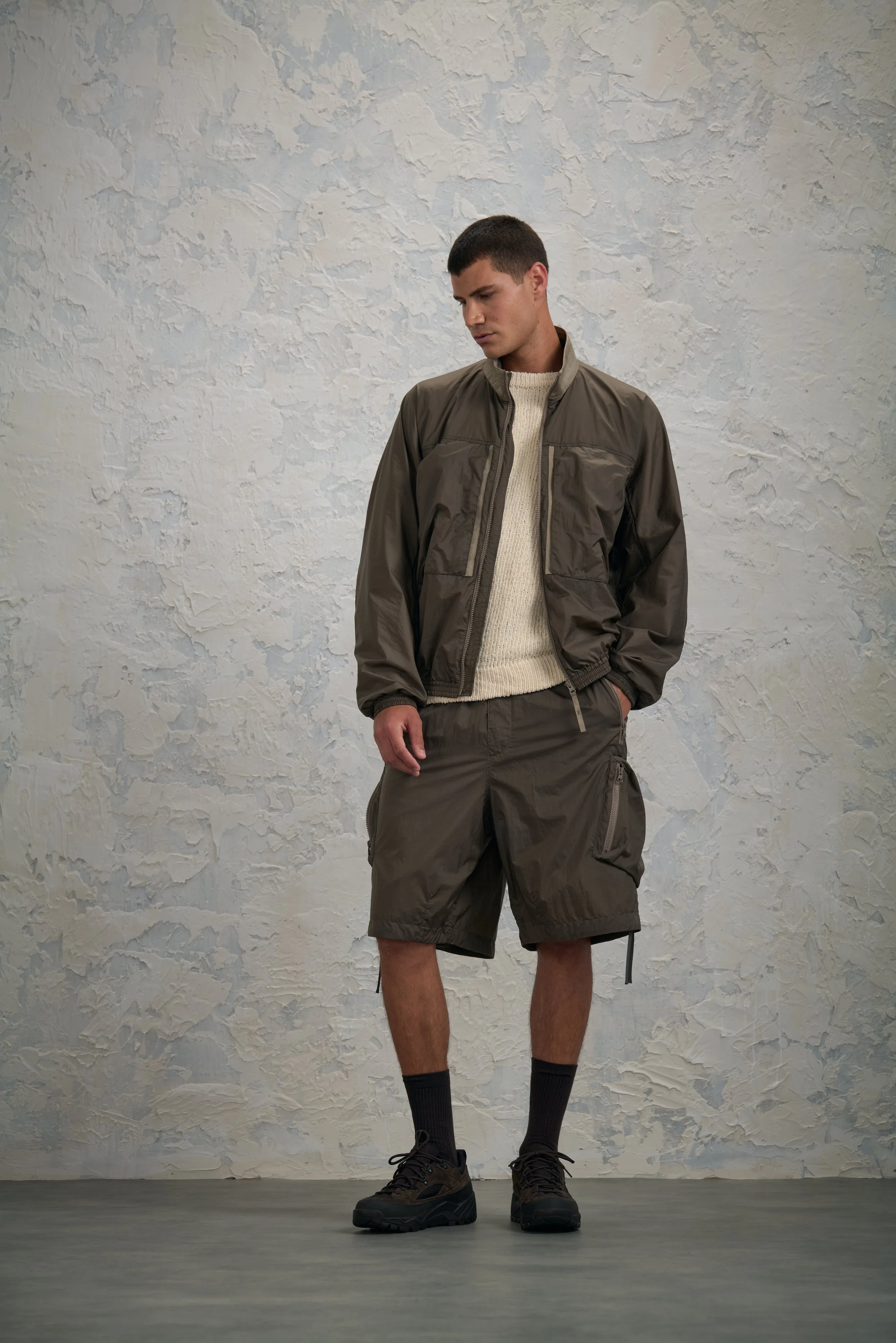
Fashion has always had a complicated relationship with time, driven by the constant desire for renewal while remaining drawn to the beauty of things that grow more meaningful with age. Ten c’s Permanent Wardrobe embraces that tension, creating clothes that may be new but are designed to evolve through wear, as fabrics fade, surfaces change and familiar silhouettes take on a different character over time. More than a statement about sustainability or a rejection of the seasonal cycle, it is an idea of clothing as something unfinished, shaped as much by the person who wears it as by the designer who made it. In a fashion landscape forever looking towards what comes next, there is something quietly radical about creating clothes designed to stay.