Asador Etxebarri takes the world’s leading position, while Tuju in São Paulo and Lasai in Rio de Janeiro bring Brazilian seasonality, design and hospitality into an international conversation about the meaning of a memorable meal.
Photos: Courtesy of The 50.
There is a particular pleasure in discovering a place through the way it feeds people. A meal can reveal the rhythm of a growing season, the movement of communities, the knowledge of a fisherman or the quiet confidence of someone who knows how to welcome a stranger. Long after the details of a dish have faded, those impressions often remain. This is what interests me most when an international restaurant ranking appears. Beyond the countdown lies a collection of decisions about ingredients, labour, architecture and belonging. Read with curiosity, the list becomes an invitation to understand how a restaurant expresses the world around it.
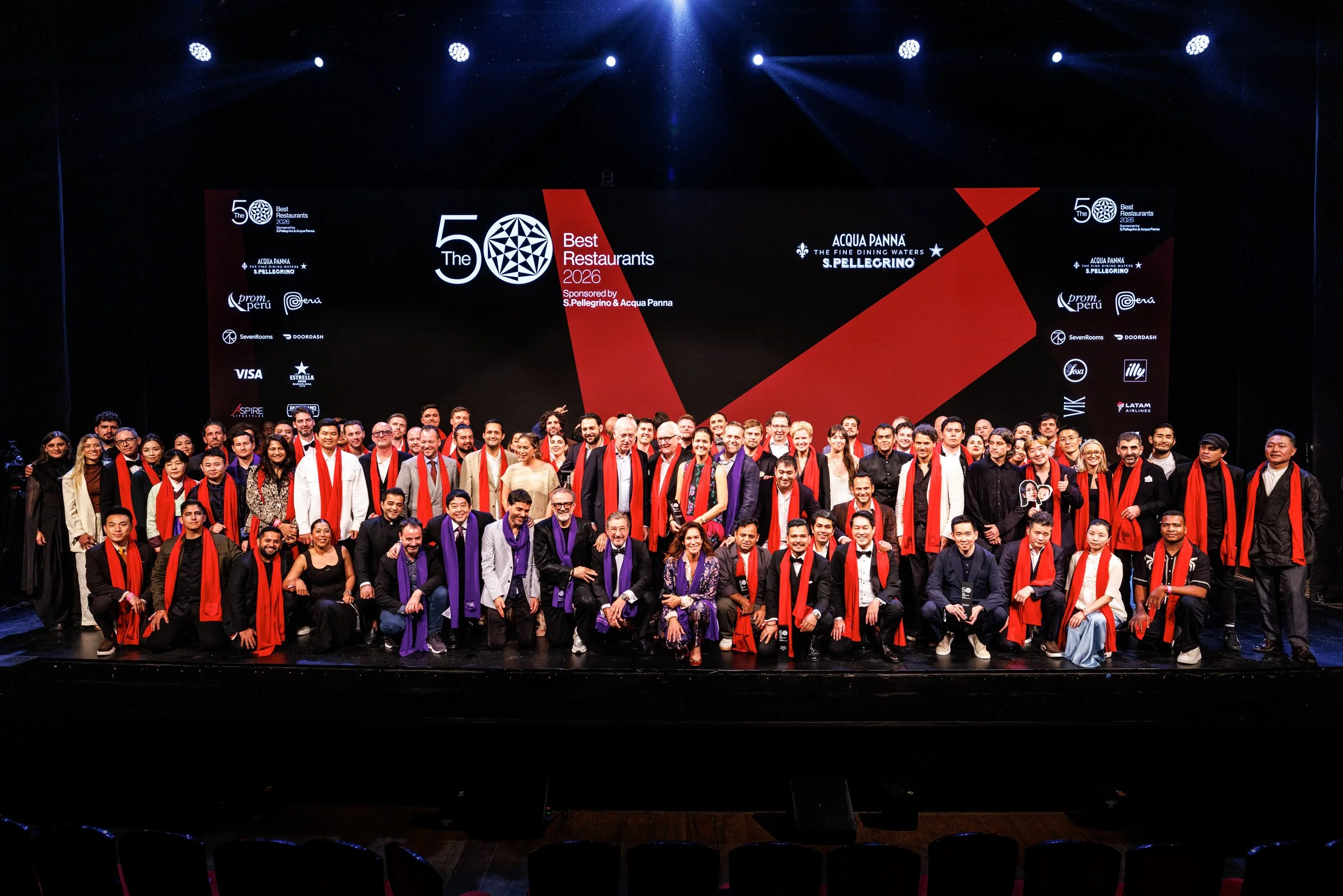
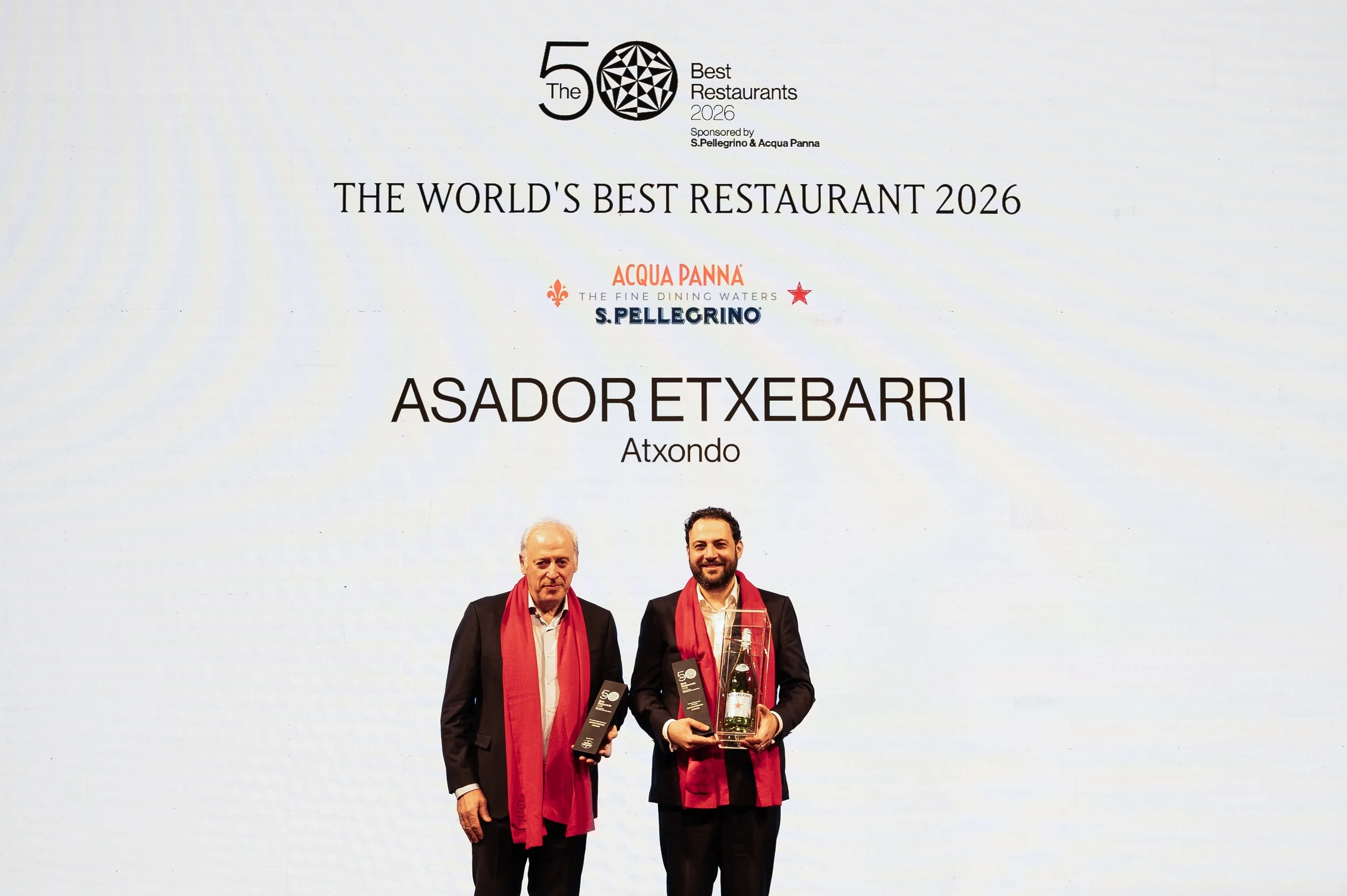
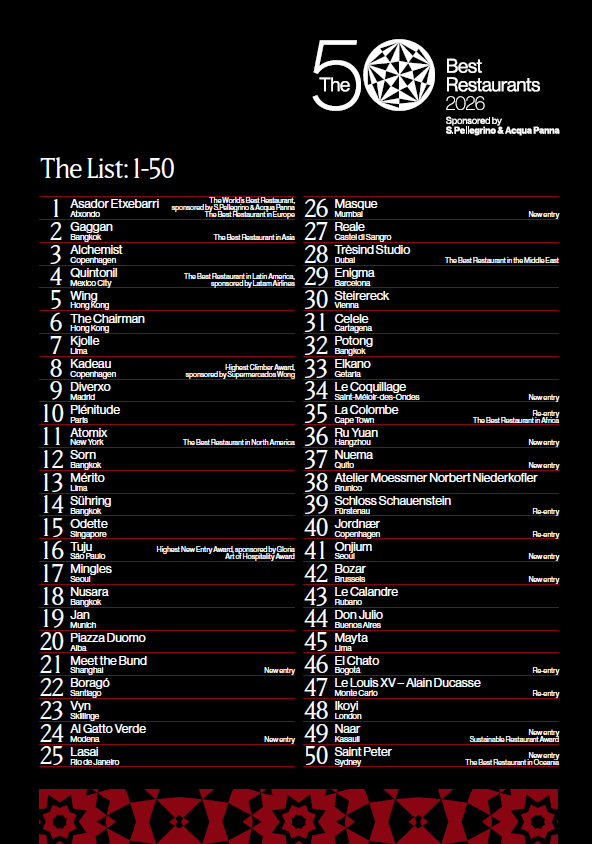
Announced on 4 November at Teatro Municipal de Lima, The 50 Best Restaurants 2026 places Asador Etxebarri in Atxondo, Spain, at No.1, followed by Gaggan in Bangkok and Alchemist in Copenhagen. Across 28 territories and six continents, the edition brings together 11 new entries and five returning restaurants. For Brazil, two names give the announcement particular resonance. Tuju, in São Paulo, enters the top 50 at No.16, receiving both the Highest New Entry Award and the Art of Hospitality Award. Lasai, in Rio de Janeiro, reaches No.25.
Their significance extends beyond national representation. Both offer ways of thinking about Brazilian food that begin with observation: what grows, when it becomes available, who cultivates it and how it might be shared. Their stories are grounded in specific places, giving international recognition something tangible to illuminate.
A Basque landscape, interpreted through fire
At Asador Etxebarri, Bittor Arguinzoniz has devoted his craft to an apparently familiar instrument: the grill. His adjustable grills, built to his own designs, allow a precise relationship between ingredient and heat. Seafood, fresh cheese and even milk ice cream enter this culinary language of fire.
Photos: Courtesy of The 50.
The setting in the Atxondo valley gives that concentration a geographical home. An unpretentious dining room and an exacting approach to cooking have made a restaurant in the Basque countryside one of the most closely followed destinations in contemporary gastronomy.
Its rise from No.2 in 2025 carries a certain poetic weight. There is patience in a practice refined through repetition, in learning how an ingredient responds to a few seconds more or less above the embers. The apparent simplicity depends on accumulated judgement.
For a traveller, such a restaurant also changes the scale of attention. A valley or village becomes a destination in its own right. The journey acquires a different pace, organised around a craft inseparable from the person who practises it.
Tuju: learning to read São Paulo’s rain
São Paulo might initially seem an unlikely place to seek the rhythm of the land. Its speed, density and vertical horizons can obscure the agricultural networks that sustain it. At Tuju, those relationships become the subject of dinner.
Led by chef Ivan Ralston, the restaurant describes its cooking as seasonal São Paulo cuisine. The phrase contains both an environmental and a cultural proposition. Ingredients are considered within the conditions of their growth, while the city’s many culinary inheritances form part of the kitchen’s vocabulary.
After researching local seasonal patterns, the team identified rainfall as a determining influence on harvests. The menus consequently follow four periods named Humidity, Rain, Wind and Drought. That choice makes seasonality unusually legible. Water becomes part of the explanation for flavour, texture and availability. The menu asks the diner to consider the conditions that precede an ingredient’s arrival in the kitchen.
Photos: Courtesy of The 50.
For me, this is one of the most compelling details in the Brazilian results. Water is so often discussed through scarcity, infrastructure or crisis that its presence in the intimate experience of eating can receive less attention. Here, rainfall connects the agricultural landscape with the dining room, making an environmental relationship part of the meal’s structure.
The kitchen’s understanding of place also allows for movement and exchange. São Paulo’s food culture has been shaped by people bringing ingredients, habits and knowledge into the city. Tuju’s interest in that plurality gives its regional identity an openness appropriate to the metropolis. The restaurant’s research work extends this thinking. Tuju Pesquisa brings food into dialogue with history, anthropology, art and social relationships through interdisciplinary activities. Its programmes include non-profit educational experiences with different participation fees and scholarships. This provides a valuable context for the restaurant’s recognition. Behind the finished plate is an effort to investigate and communicate knowledge, involving people whose work may begin far from the dining room.
Architecture that gives water a role
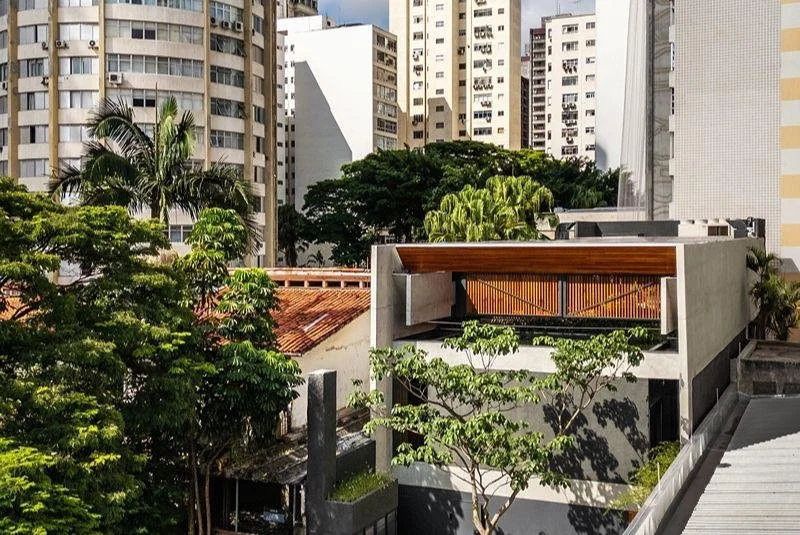
Tuju’s building makes these ideas visible through space and material. Designed by Angelo Bucci of SPBR, the restaurant uses concrete, timber and an arrangement of distinct areas to give the evening a sense of progression. A patio and bar centred on a jabuticaba tree, the main dining room and a terrace offer successive settings. Moving between them introduces pauses into the extended experience of a tasting menu. Architecture participates in the rhythm of hospitality.
The relationship with rain is practical as well as conceptual. According to the restaurant, its roof is designed to collect rainwater for garden irrigation and the cleaning of outdoor areas. Water therefore has a role in both the seasonal narrative and the operation of the building. Such details are useful when considering responsible luxury. Materials, infrastructure and maintenance deserve attention alongside the more immediately photogenic elements of a space. A garden asks how it is watered; a beautiful building invites questions about how it works. Tuju’s design is particularly interesting because these questions arise naturally from its culinary philosophy. The building and the menu attend to the same surrounding conditions.
The cultural work of welcoming
The Art of Hospitality Award adds another dimension to Tuju’s No.16 position. Ralston and Katherina Cordás, the restaurant’s hospitality and research director, have spoken about their continuing investigation into Brazilian hospitality. What does a guest feel in Brazil, in São Paulo, and specifically at Tuju? It is a deceptively demanding question.
Hospitality can be discussed through procedures, but its cultural character emerges through smaller gestures: the way someone uses a name, reads the mood of a table or makes an unfamiliar experience feel comfortable.
At Tuju, staff are invited to experience each new menu as guests. The practice gives the team a view from the other side of the table, connecting the service they provide with an experience they have shared.
It also introduces a necessary consideration into conversations about luxury. The quality of a guest’s evening depends on the people who make it possible. Their understanding, confidence and working environment belong within any serious account of hospitality. Brazil’s recognition here is especially meaningful because it directs attention towards a form of knowledge that rarely sits still for a photograph. Warmth, timing and ease are experienced between people.
Lasai: Rio through its gardens
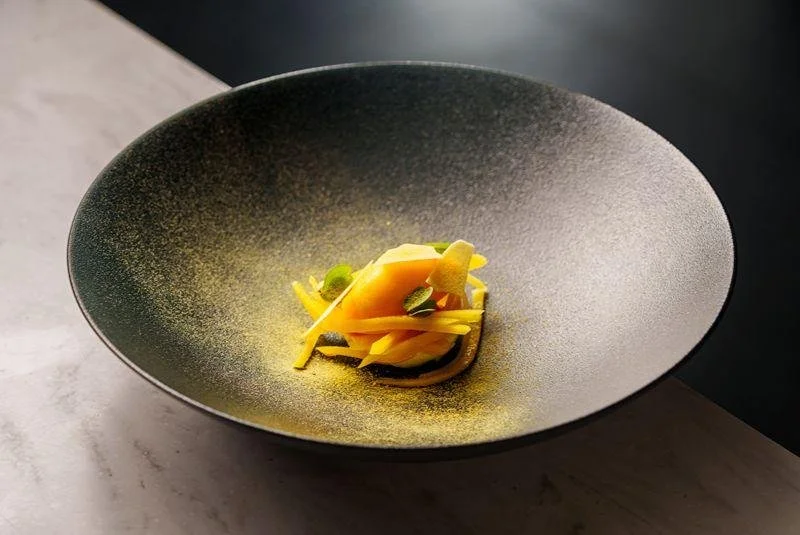
At No.25, Lasai offers a complementary perspective on Brazilian place and identity. Chef Rafa Costa e Silva and Malena Cardiel have developed a restaurant whose relationship with ingredients begins in gardens and through small producers in Rio de Janeiro. Vegetables occupy a central role, alongside seafood and meat. Its two gardens, in Itanhangá and Vale das Videiras, provide both produce and the impetus for changes to the menu. Their importance lies in the ongoing process of growing: the need to observe, respond and accept that a season will bring its own possibilities.
The name Lasai means tranquil in Basque, recalling the region where Costa e Silva spent part of his professional formation before returning to Brazil. That connection introduces a subtle thread across this year’s results, from Etxebarri’s Basque setting to a Rio kitchen shaped by an international education and a renewed attention to home.
Photos: Courtesy of The 50.
I find these journeys particularly revealing. Travel can sharpen a chef’s understanding of familiar ingredients, allowing distance to become a means of recognition. What returns is a trained eye capable of seeing new possibilities in an existing landscape. At Lasai, the emphasis on vegetables invites attention to the texture and character of ingredients that may otherwise receive less consideration in luxury dining. The garden becomes a source of complexity, and proximity a source of discovery.
Together, Tuju and Lasai suggest how much remains to be explored within Brazilian gastronomy. Their international visibility offers an opening to discuss the distinct climates, producers and cultural relationships behind their food.
A wider world of culinary expression
Brazil’s results sit within a ranking that accommodates markedly different ideas of a restaurant experience. Bangkok has five addresses in the top 50: Gaggan at No.2, Sorn at No.12, Sühring at No.14, Nusara at No.18 and Potong at No.32. At Gaggan, technical experimentation and audience participation make dinner a deliberately theatrical encounter. Lima’s role as host gives Latin America further prominence. Quintonil in Mexico City takes No.4 and the title of Best Restaurant in Latin America, while Pía León’s Kjolle in Lima reaches No.7. These results sustain attention on a region where ingredients and cultural identity remain fertile subjects for contemporary cooking.
London appears through Ikoyi at No.48. The restaurant founded by Jeremy Chan and Ire Hassan-Odukale brings its own approach to heat, spice and umami to a city whose culinary life is deeply connected to international exchange. The differences are part of the interest. A memorable restaurant can concentrate attention through restraint, performance, conversation or the careful orchestration of a room. The ranking places these approaches alongside one another, leaving the traveller to consider which experiences invite deeper exploration.
Sustainability as continuity
Naar in Kasauli, India, enters at No.49 and receives the Sustainable Restaurant Award. Chef Prateek Sadhu’s restaurant follows six Himalayan seasons and works with small-scale producers, using preservation practices including fermentation, drying, curing and smoking. The wider work associated with his foundation includes seed preservation and the documentation of recipes and traditional food practices.
These activities bring cultural continuity into the sustainability conversation. Protecting food knowledge involves keeping skills in use and maintaining relationships between generations, producers and communities. That perspective also helps illuminate the Brazilian stories. A menu shaped by rainfall, a garden influencing the kitchen and a research programme connecting different fields of knowledge all invite attention to the systems around a meal. Their value can be considered through specific practices and the relationships they sustain.
Beyond the numbered table
The ranking is based on the experiences of more than 1,100 international restaurant industry experts, each casting ten votes for meals enjoyed within the previous 18 months. Restaurants cannot apply for inclusion, and the process is independently adjudicated by Deloitte. Former No.1 restaurants become part of the Best of the Best group and are no longer eligible for subsequent annual rankings. Maido, the 2025 winner, now joins that group.
Photos: Courtesy of The 50.
Understanding the method helps give the results their proper context. This is a selective view of global dining, shaped by where its voters have travelled and eaten. Its considerable influence makes close reading worthwhile. As a Brazilian living abroad, I am particularly interested in what international recognition encourages others to notice about home. Tuju and Lasai offer a starting point rich in detail: rainfall, gardens, research, buildings and the care extended across a table.
The position provides the introduction. The deeper story begins with the people and landscapes that make the experience possible. For the curious traveller, that is where a restaurant becomes a way into a place, and where a meal acquires a meaning that lasts beyond the evening.