Threads That Bind: Memory, Movement and the Human Condition at Hayward Gallery
Source: Own archive
Immersive installations possess a particular power. They dissolve the distance between observer and artwork, inviting us to step inside the artist’s imagination. In these environments, we do not simply view art. We inhabit it. The experience is visceral and difficult to describe in conventional language. Light, space and material combine to create something that resonates on a deeper level, drawing us into a world shaped by memory, emotion and reflection.
London’s Hayward Gallery has long been a leading institution for this form of artistic exploration. Since its opening in 1968, the gallery has maintained a reputation for presenting ambitious exhibitions that challenge the boundaries between installation, sculpture and architecture. The gallery’s Brutalist structure itself feels well-suited to immersive works, with vast concrete spaces that allow artists to construct entire environments rather than individual objects.
It is therefore fitting that the gallery has brought together two installations that explore human connection through radically different visual languages. The exhibitions Heart to Heart by Yin Xiuzhen and Threads of Life by Chiharu Shiota unfold alongside one another, creating a dialogue between memory, movement and the fragile threads that bind people to place.
Memories in Transit
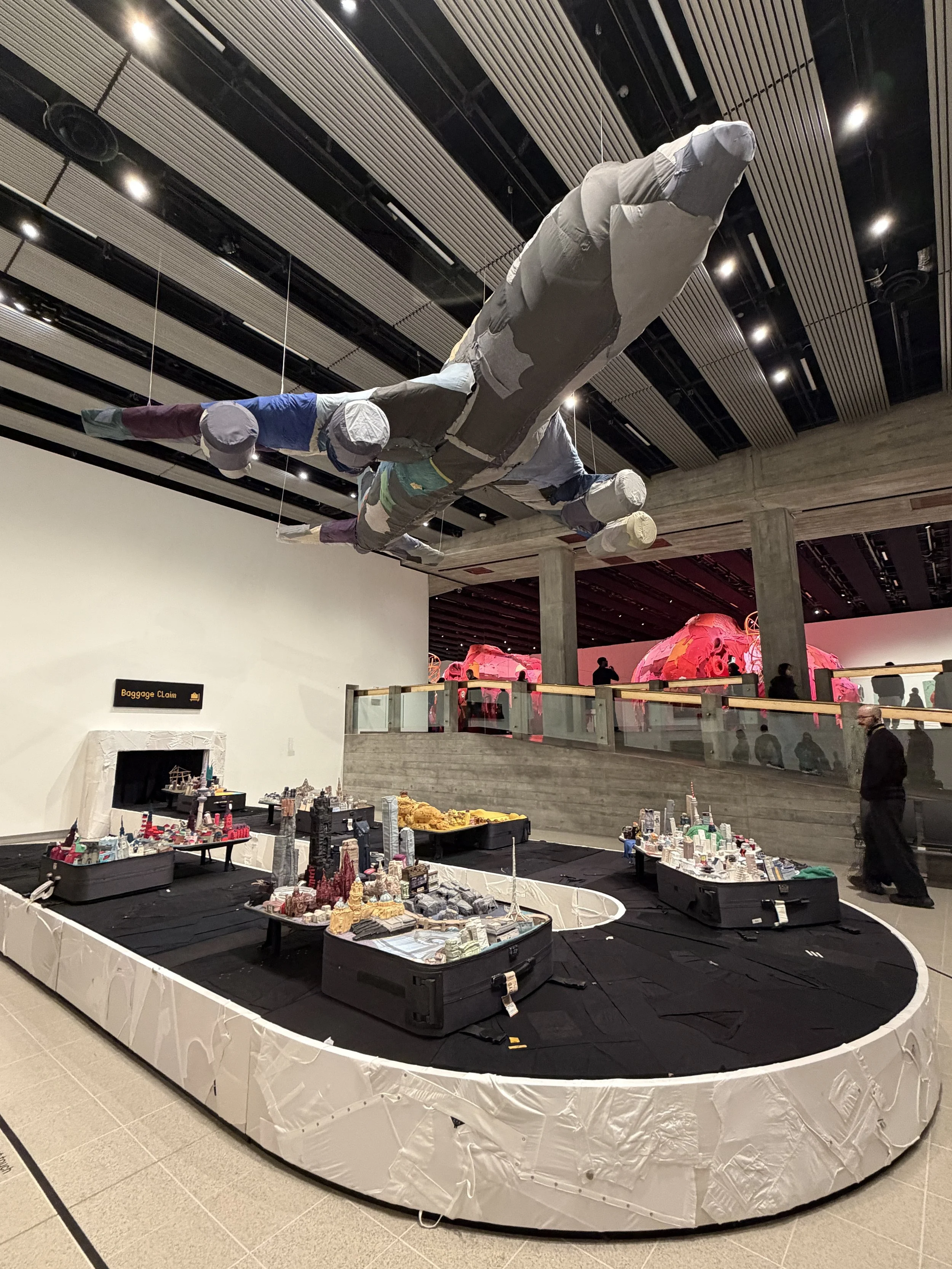
Entering Yin Xiuzhen’s installation feels like stepping into a space that is both familiar and slightly disorienting. The journey begins with an environment resembling an airport baggage claim. Luggage circulates in quiet repetition while miniature cities appear within suitcases. London, Paris and New York are amongst the cities that emerge through delicate patchwork constructions that transform everyday objects into fragments of urban identity.
Source: Own archive
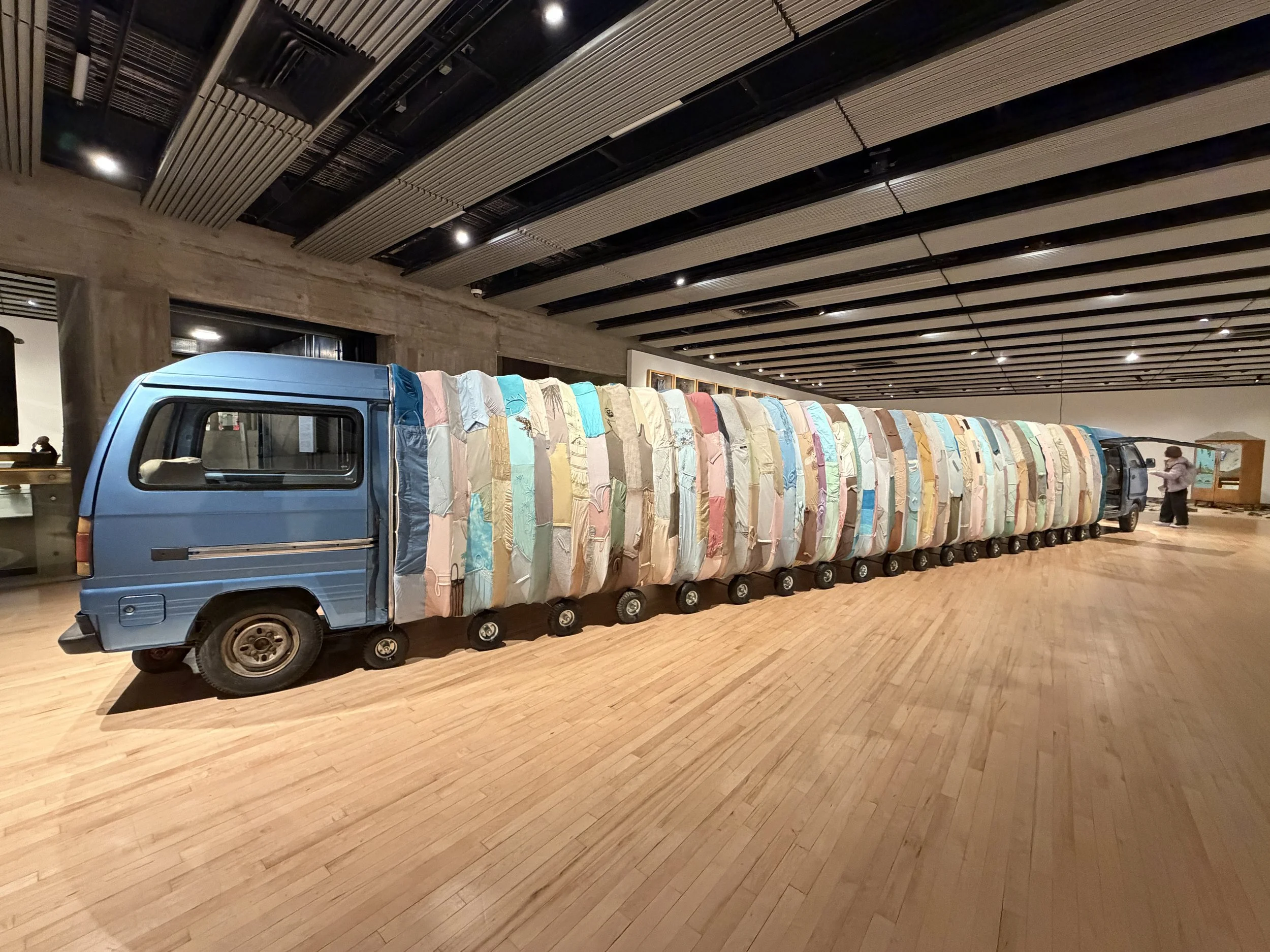
Yin Xiuzhen has long explored themes of mobility and displacement, reflecting on the rapid globalisation that has reshaped cities and societies over recent decades. Her materials are deliberately chosen. Used garments form the foundation of her installations, each piece carrying the invisible imprint of its previous owner. Clothing becomes a vessel of memory, embodying the personal histories that accompany human migration.
In this environment, suitcases become metaphors for lives in transit. Cities fold into portable worlds, suggesting the ways in which identity is shaped by movement across borders. The installation reflects the rhythms of contemporary life, where people and goods circulate continuously through global networks.
For visitors, the experience is quietly contemplative. The familiar language of travel becomes something more intimate. Each suitcase suggests a personal story, a journey taken or imagined.
Heart and Mind
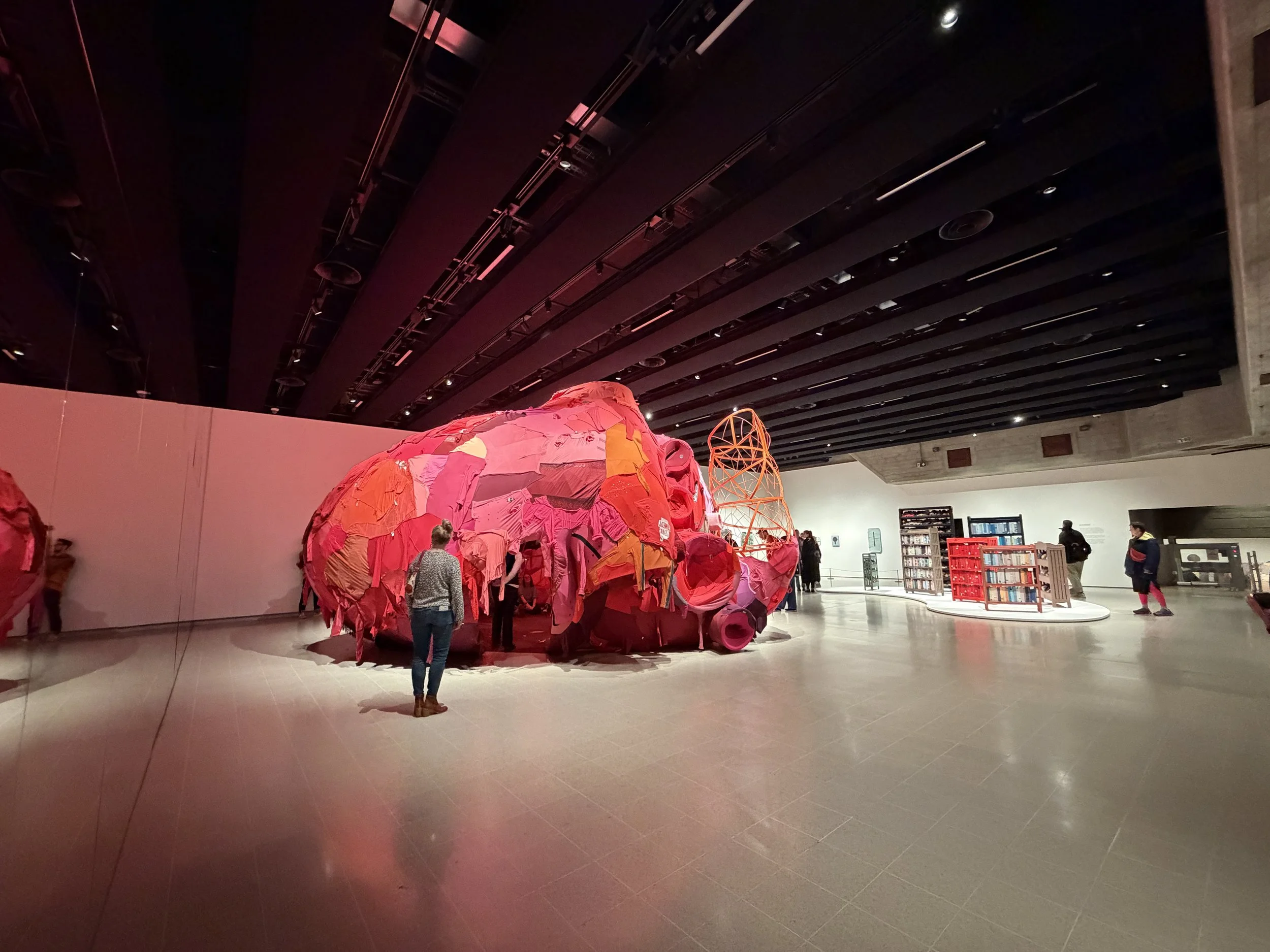
At the centre of Yin Xiuzhen’s exhibition lies Heart to Heart, an installation constructed from used clothing stretched across steel frames that resemble anatomical forms. Two monumental hearts face one another, suspended in space yet connected through delicate threads of fabric.
The work draws on the Chinese philosophical concept of Xin. Often translated as heart mind, Xin expresses the idea that emotion and intellect are inseparable aspects of human consciousness. In Western traditions, these forces are frequently portrayed as opposites. Reason is placed against feeling, analysis against intuition.
Source: Own archive
Yin’s installation proposes a different understanding. The two hearts appear distinct, yet they exist within the same conceptual body. Their dialogue suggests the constant negotiation between emotional instinct and rational thought that shapes human decision-making.
Standing between these structures, the viewer becomes part of that conversation. The garments that compose the hearts remind us that these philosophical tensions are lived experiences. Each piece of clothing once belonged to someone whose choices were shaped by both feeling and reflection.
The installation ultimately offers a gentle affirmation. The most powerful ideas often emerge from a balance between the two.
Threads That Connect Us
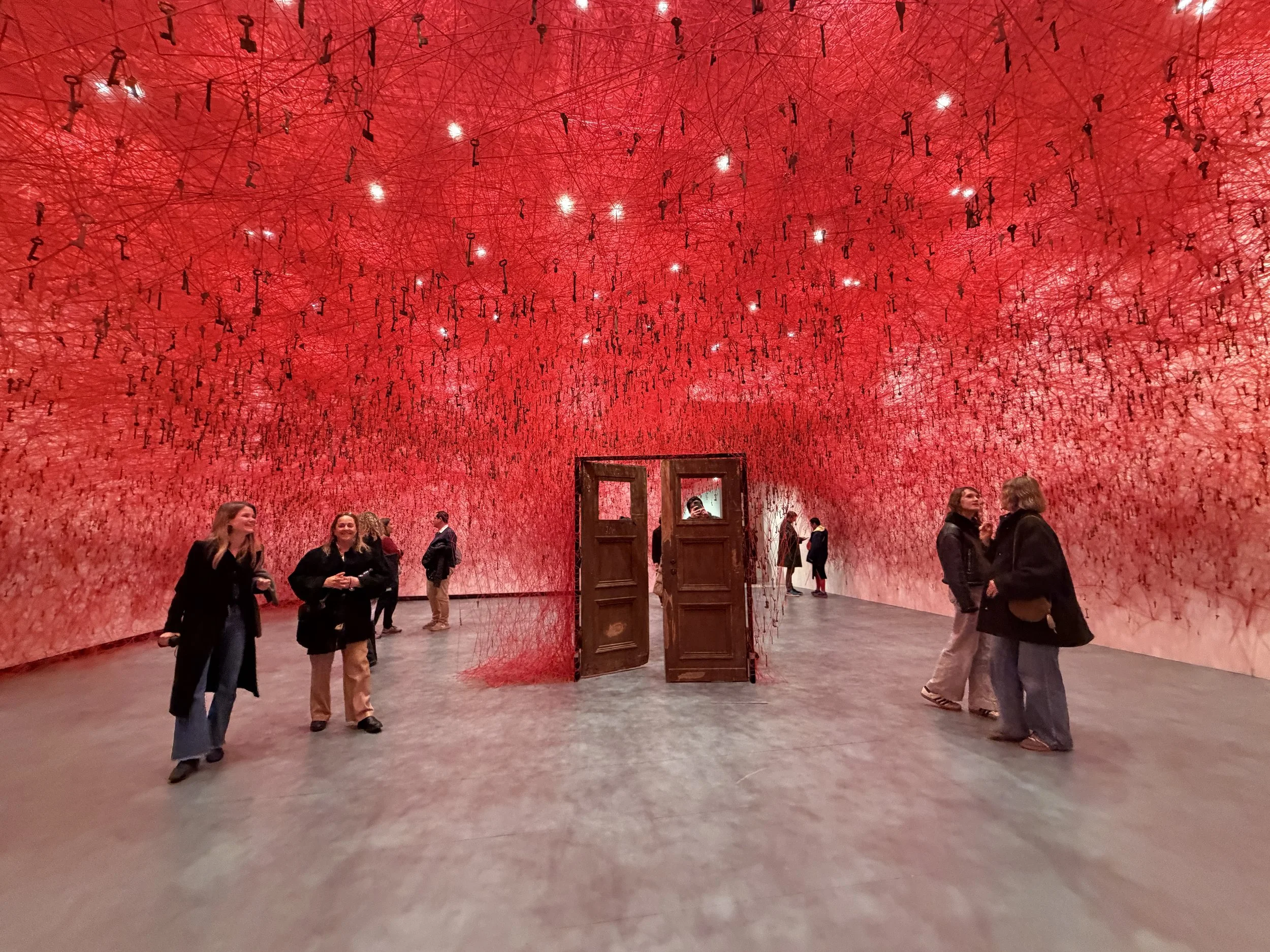
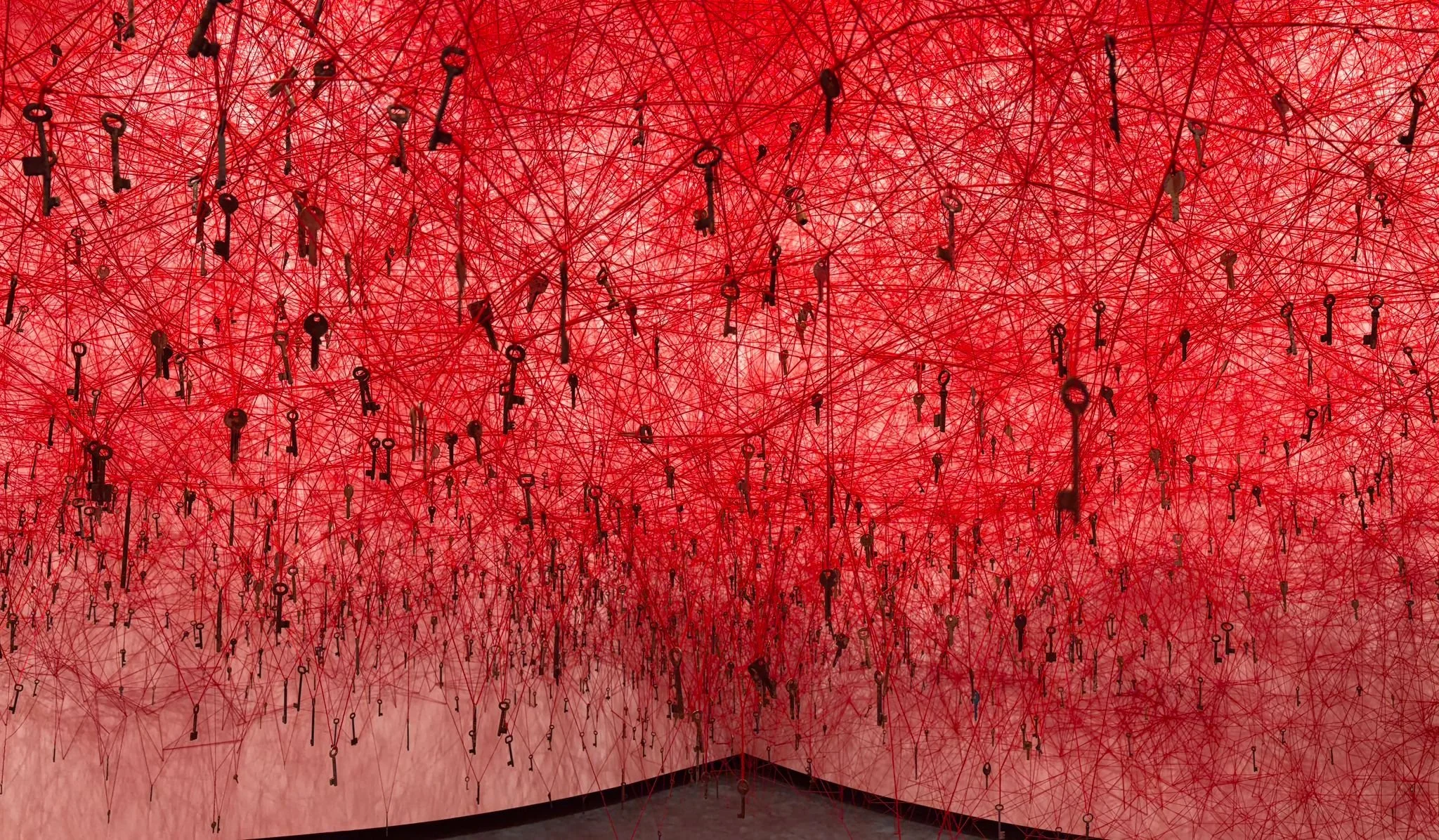
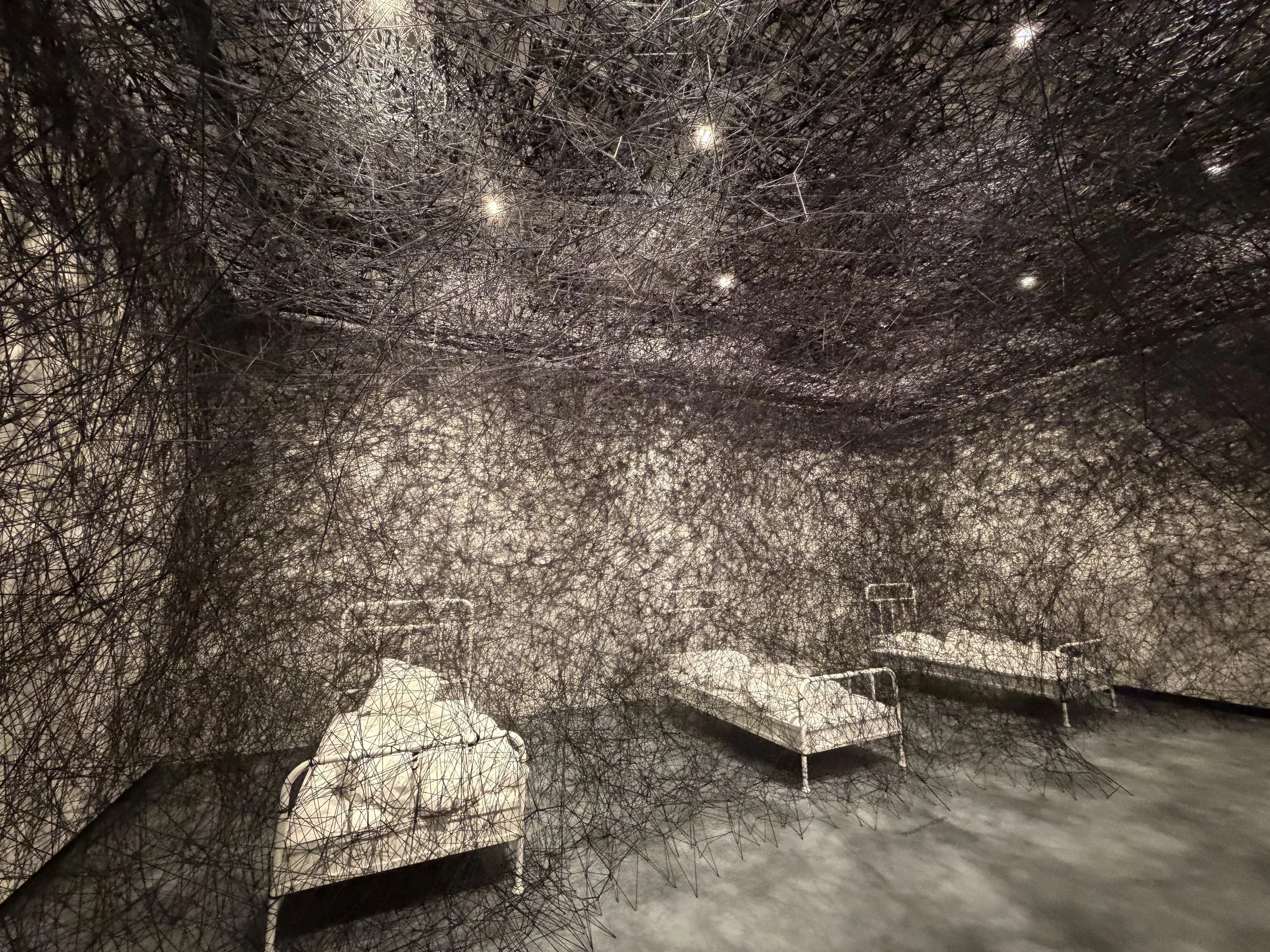
Ascending to the upper floor of the Hayward Gallery introduces a radically different atmosphere. Here, the work of Chiharu Shiota fills the vast space with an intricate network of red threads. The installation extends from floor to ceiling, weaving a dense environment through which objects appear suspended in time.
Source: Own archive
Shiota is internationally recognised for her monumental thread installations that explore themes of life, death and memory. In Threads of Life, everyday objects such as keys, doors and letters become nodes within an elaborate web. Each element suggests a story that is both personal and universal.
The colour red dominates the space. It evokes blood, vitality and the invisible bonds that connect individuals across distance. In many cultures, there exists a belief that a red thread links each person to their destined counterpart, guiding lives towards eventual encounters.
Walking through Shiota’s installation, the viewer senses both fragility and tension. The threads appear delicate, yet together they form a powerful structure. A single disturbance would ripple across the entire network, reminding us that human relationships are similarly interconnected.
Source: Own archive
One of the exhibition’s most striking elements is the installation During Sleep, a new iteration within Shiota’s evolving body of work. The piece is periodically activated through live performances that introduce movement into the static web of threads. These moments of human presence deepen the emotional atmosphere, transforming the installation into a living environment.
The Experience of Immersion
What unites these two exhibitions is their capacity to draw the viewer into a state of reflection. Yin Xiuzhen uses garments and suitcases to explore the movement of people and memories across the world. Chiharu Shiota uses threads to visualise the invisible connections that bind human lives together.
Both installations operate through scale and material. They surround the visitor, making observation impossible without participation. In this sense, immersive art echoes the complexity of contemporary life. We are never truly outside the systems that shape us.
For me, exhibitions such as these carry a particular resonance. Perhaps it stems from a life that has moved across countries and cultures, where the idea of belonging is shaped by both travel and memory. Walking through these installations, I felt the quiet recognition that movement and connection define much of our modern existence.
A Gallery of Conversations
The Hayward Gallery has always embraced ambitious artistic dialogues, and the pairing of these two exhibitions reflects that tradition. While their aesthetics differ dramatically, both artists address the same essential question. What binds human lives together across time and space?
Yin Xiuzhen answers through garments that carry traces of individual stories. Chiharu Shiota responds through threads that visualise unseen relationships.
Source: Own archive
The result is an experience that lingers long after leaving the gallery. Visitors carry fragments of these worlds with them. A thread of red. The memory of a suitcase filled with miniature cities.
Immersive installations rarely provide clear conclusions. Instead, they open spaces for contemplation. Standing within these works, one senses that art is not only about representation but also about participation.
In that moment, the boundary between artist and audience dissolves. We become part of the installation, woven into its meaning.