A Tropical Nation on Snow: Lucas Braathen and Brazil’s Olympic Shift

Brazil is in fashion.
Not as a fleeting trend, but as a structural global movement that has repositioned the country at the centre of cultural and sporting narratives. Brazilian creativity has reclaimed strategic space in major capitals, national identity has become an international asset, and sport is increasingly understood not only as competition, but as positioning, image and soft power.
It is within this broader context that the name Lucas Pinheiro Braathen acquires even greater significance ahead of the Milan Cortina 2026 Winter Olympic Games.
The 25 year old athlete is among the names to watch, identifying him as a potential protagonist and a true candidate to make history for Brazil. The Games officially open on February 6th, with competitions running until February 22nd, and for Brazil, the spotlight is on alpine skiing, a discipline in which Braathen stands out as the country's leading figure.
World Cup champion in 2023 while competing for Norway, Braathen officially began representing Brazil in 2024. Since then, he has collected ten medals for the country, five of them in the current international season alone. His performances have elevated him to second place overall in both the slalom and giant slalom World Cup standings, the very disciplines he will contest in Bormio between 14 and 16 February.

In justifying his inclusion among the standout names at the event, emphasis was placed not only on Braathen’s technical consistency, but also on the symbolic weight of his decision to change nationality. He was described as charismatic and perceptive, with particular note made of the surprise often expressed by rivals and spectators upon learning that he represents Brazil in a sport traditionally dominated by European powers.
The historic potential is undeniable. Braathen possesses the technical credentials and competitive maturity to secure Brazil’s first ever Winter Olympic medal, and potentially the first for South America in alpine skiing.
Yet there is another layer to this narrative.
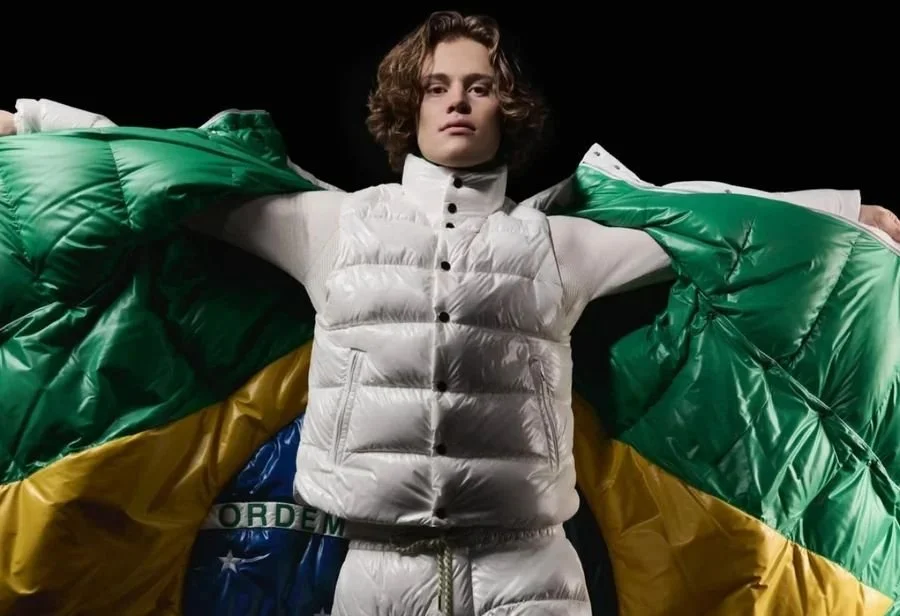
At Avesso Magazine, we previously highlighted the strategic relevance of Braathen’s partnership with Moncler. This alignment is not merely sponsorship, it is global positioning. The imposing technical jacket associated with the collaboration, engineered with alpine precision and refined sophistication, has quickly become an object of desire and a symbol of a new reading of Brazilian sport, one that is cosmopolitan, competitive and visually authoritative.
The convergence of high performance, luxury and national identity mirrors Brazil’s current trajectory. A nation historically celebrated for football and summer sport is now challenging established narratives in winter disciplines long considered geographically improbable.
Besides Braathen, other global icons such as Mikaela Shiffrin, Lindsey Vonn, Chloe Kim and Ilia Malinin are among the top names at Milan-Cortina 2026, highlighting the level of competition awaiting the Brazilian.
Still, for Brazil, the focus is clear.
Braathen arrives in Italy at the height of his career.

Should a medal materialise, it will be historic. If not, the transformation is already underway.
Brazil is no longer a peripheral presence in the Winter Olympic landscape.
It is a narrative in ascent.
And unquestionably, it is in fashion.