Beyond the Bridge: The Royal Ballet School turns 100

Royal Ballet Schools on stage at Royal Opera House, July 2026 - Courtesy from Royal Ballet School Special Collection - Photography by ASH-2
As The Royal Ballet School celebrates its centenary, a limited-edition tour opens the doors to one of ballet’s most influential institutions from its historic studios to the Bridge of Aspiration and the Royal Opera House beyond.
There are some corners of London that most of us pass by without ever knowing what is happening behind their doors. In Covent Garden, above the crowds of Floral Street, young dancers cross an extraordinary twisting bridge between two buildings. On one side is The Royal Ballet School. On the other, the Royal Opera House. It is called the Bridge of Aspiration, and its name could hardly be more appropriate.
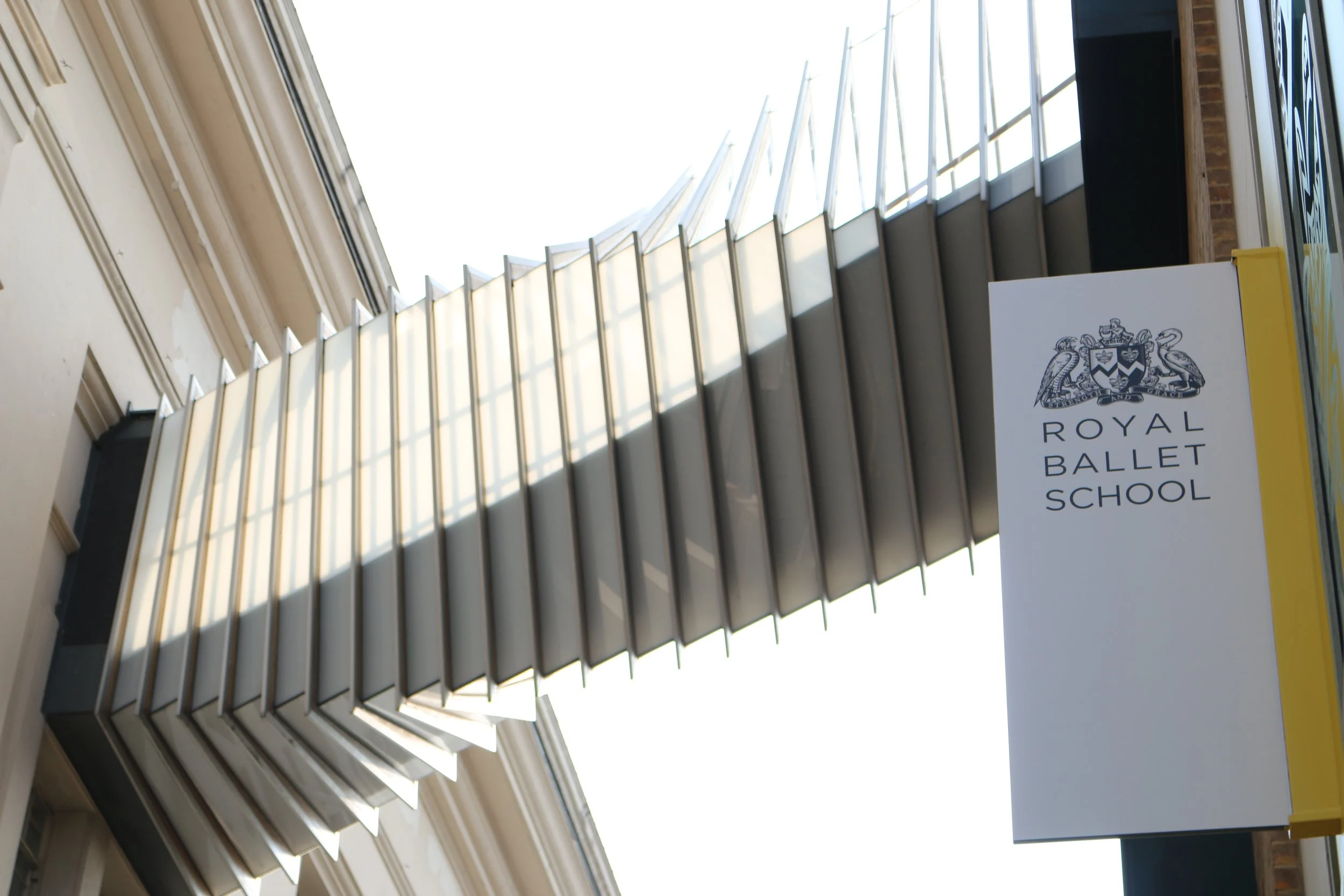
The Bridge of Aspiration - Courtesy from Royal Ballet School Special Collection
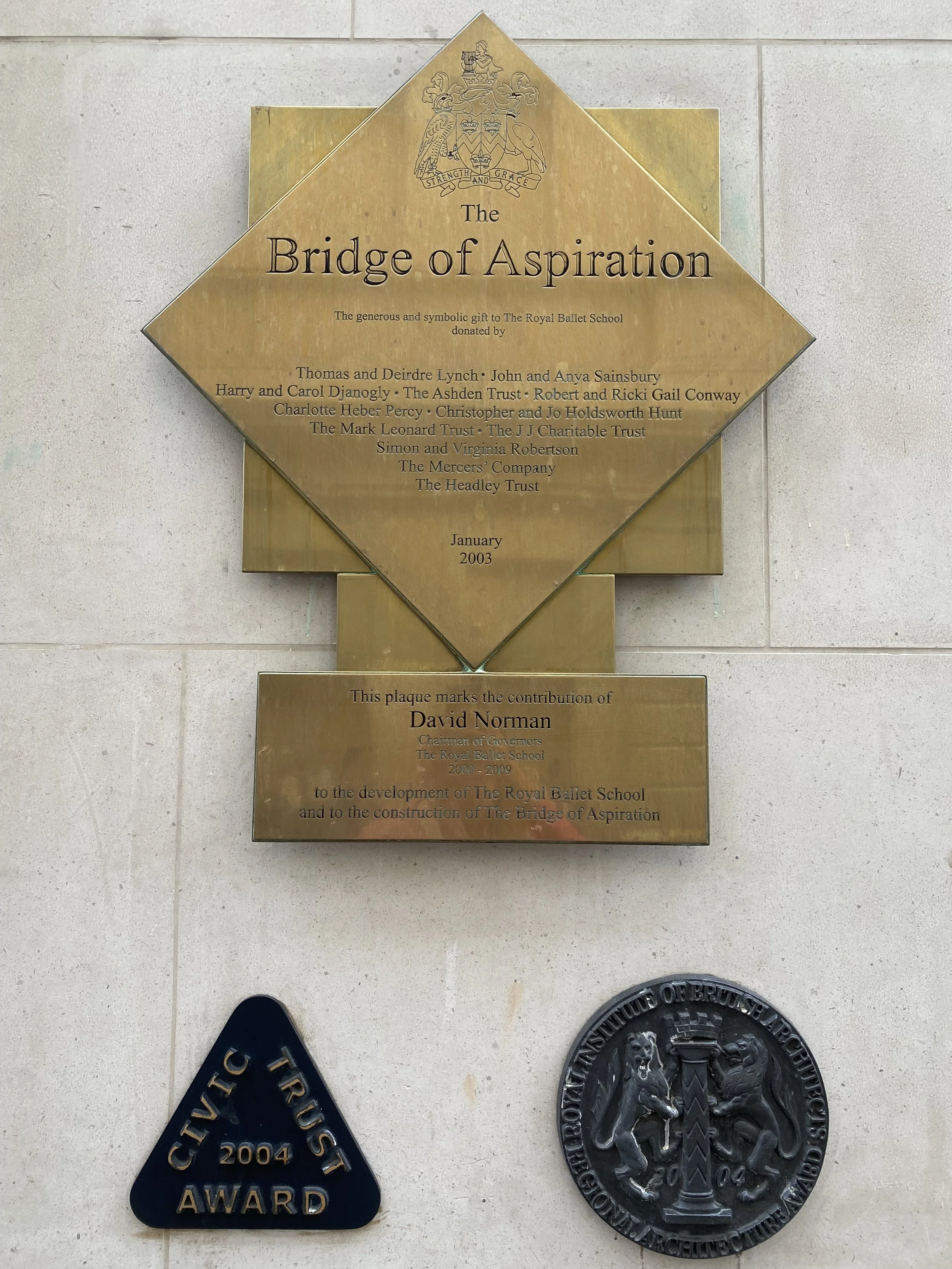
Own archive, 2026
For the students who cross it, the few metres between school and stage represent much more: the journey from learning the steps to one day performing them professionally.
This year, as The Royal Ballet School celebrates its 100th anniversary, visitors have the rare opportunity to make that crossing themselves. And I can assure you, it is amazing!
The limited-edition Beyond the Bridge Tour, created for the centenary, takes visitors inside the Covent Garden school, through spaces normally occupied by some of the world's most promising young dancers, across the Bridge of Aspiration and into the Royal Opera House itself. It is less a conventional backstage tour than a journey through a century of British ballet. And that story begins with one woman.
A school that changed British ballet
In 1926, Irish-born dancer Dame Ninette de Valois founded the Academy of Choreographic Art in London. Her ambitions were to establish a permanent British tradition of classical ballet complete with its own school, dancers and repertoire.
Her academy would eventually become the Vic-Wells Ballet School and, decades later, The Royal Ballet School. The performing companies that grew alongside it evolved into The Royal Ballet and Birmingham Royal Ballet.
But de Valois’ vision extended beyond producing technically accomplished dancers. From the beginning, she imagined a school that would also nurture choreographers and creative leaders, with students exposed not only to ballet but to dance composition, theatre design and the wider arts.
“Somebody must always be doing something new, or life would get very dull,” she once said. De Valois consistently saw the School as the foundation of the companies that would grow around it, nurturing both dancers and choreographers for the future.
De Valois did not build that vision alone. Among her closest early collaborators was Ursula Moreton, a dancer, teacher and ballet director who taught at the Academy of Choreographic Art from its foundation in 1926 and remained closely involved with the School for decades. She later became Ballet Principal and, from 1965 to 1968, Director of The Royal Ballet School. Her influence is still remembered today through the School’s choreographic programme established in her name.
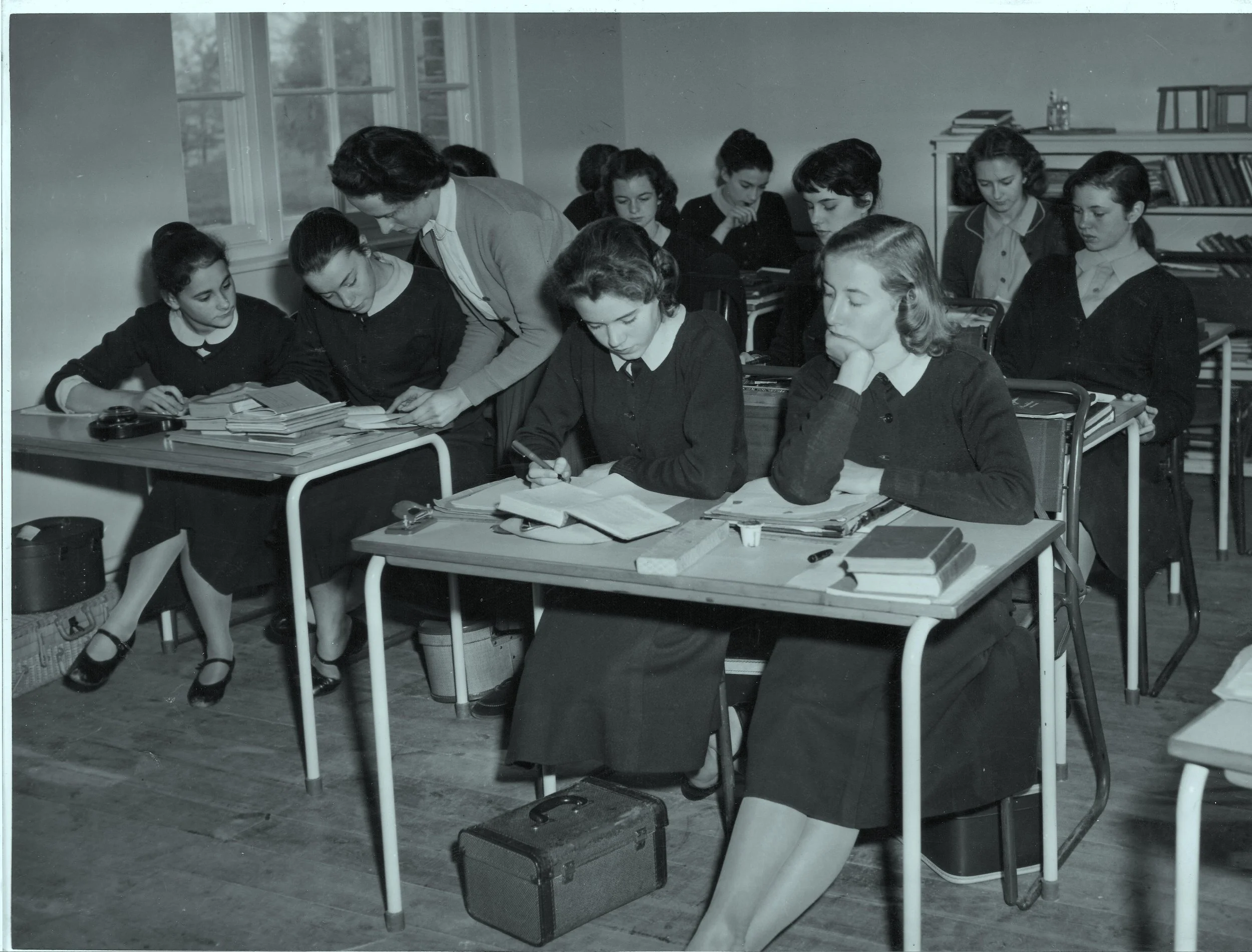
Students in class - Courtesy from Royal Ballet School Special Collection
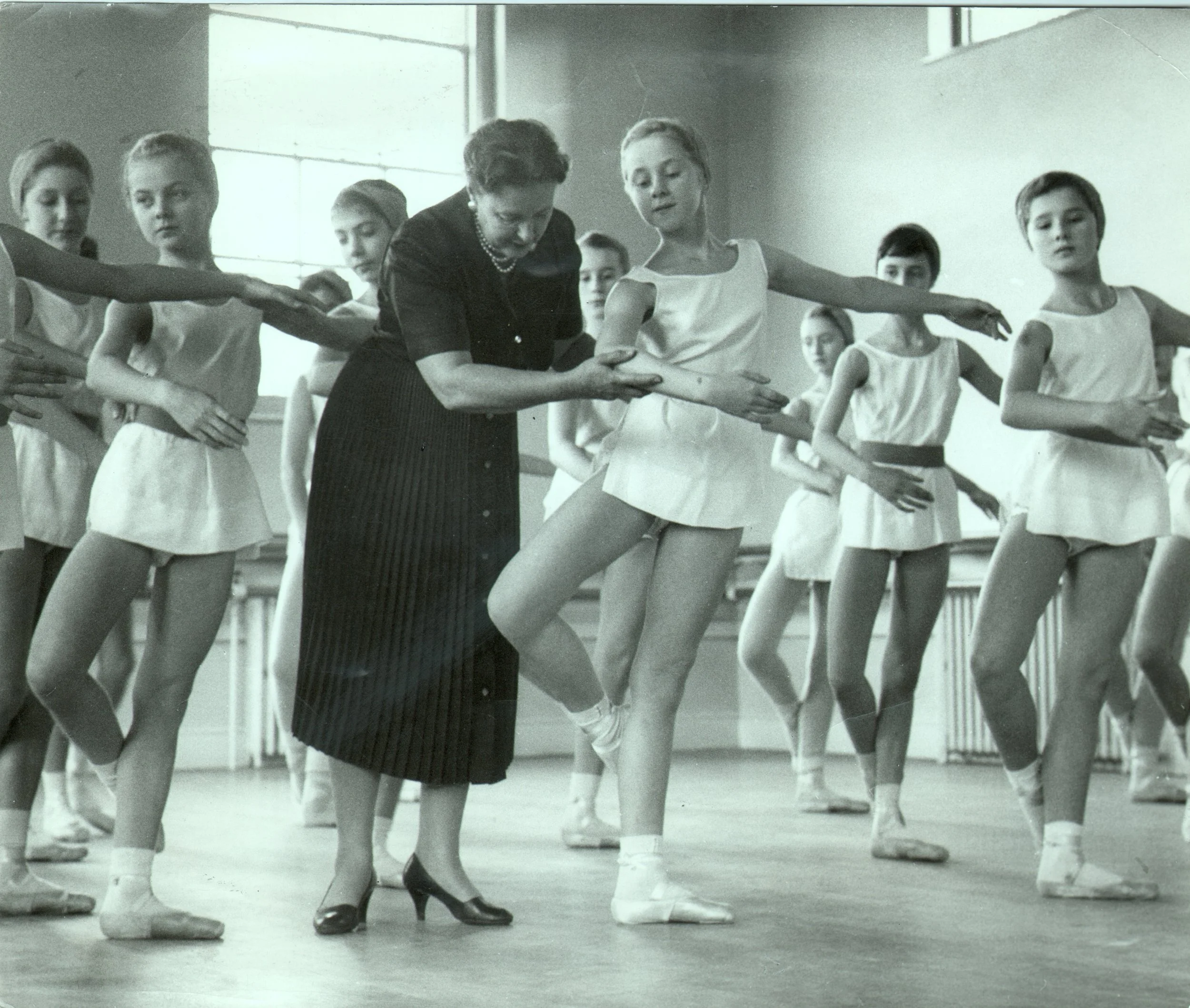
Ursula Moreton teaching students - Courtesy from Royal Ballet School Special Collection
A century later, walking through the School, we can still observe this philosophy.
Today, around 200 students train within The Royal Ballet School, surrounded by an infrastructure built almost entirely around dance. Ballet training here is accompanied by live music so consistently that pianos (57 in total!!) seem almost as fundamental to the building as barres and mirrors.
The School's history is equally present in the names surrounding you. Among its most celebrated former students is Margot Fonteyn, who joined the then Vic-Wells School in the 1930s and would become one of the defining ballerinas of the 20th century. One phrase attributed to her and shared during the tour “Work consistently and shine occasionally”, feels particularly fitting in a place where the glamorous performances seen by audiences are built on countless hours of repetition that they never see.
That contrast between discipline and spectacle is one of the most fascinating things about stepping inside the School.
Through studio windows, visitors can catch glimpses of students at work. There are no costumes, sets or theatrical lighting here: just dancers, teachers, pianists and the process of turning tiny corrections into movements that will eventually appear effortless on stage.

Upper School students in class with Zenaida Yanowsky - Courtesy from Royal Ballet School Special Collection - Photography by ASH-2
Training the whole dancer
What also becomes clear during the visit is how much the idea of ballet training has evolved. The School takes a distinctly holistic approach to developing its students, both male and female. Classical technique remains central, but it sits alongside strength and conditioning, physiotherapy, rehabilitation, nutrition and wider wellbeing support.
Rather than treating injury prevention or recovery as something separate from artistic training, these elements are integrated into the students’ development. The dancers are being prepared to perform at the highest level, and also to understand their bodies, recover well and sustain physically demanding careers over time.
That makes the School feel very much of the present. The centenary is not simply about preserving tradition, but also about how elite ballet training has changed and its role evolving in the century ahead.
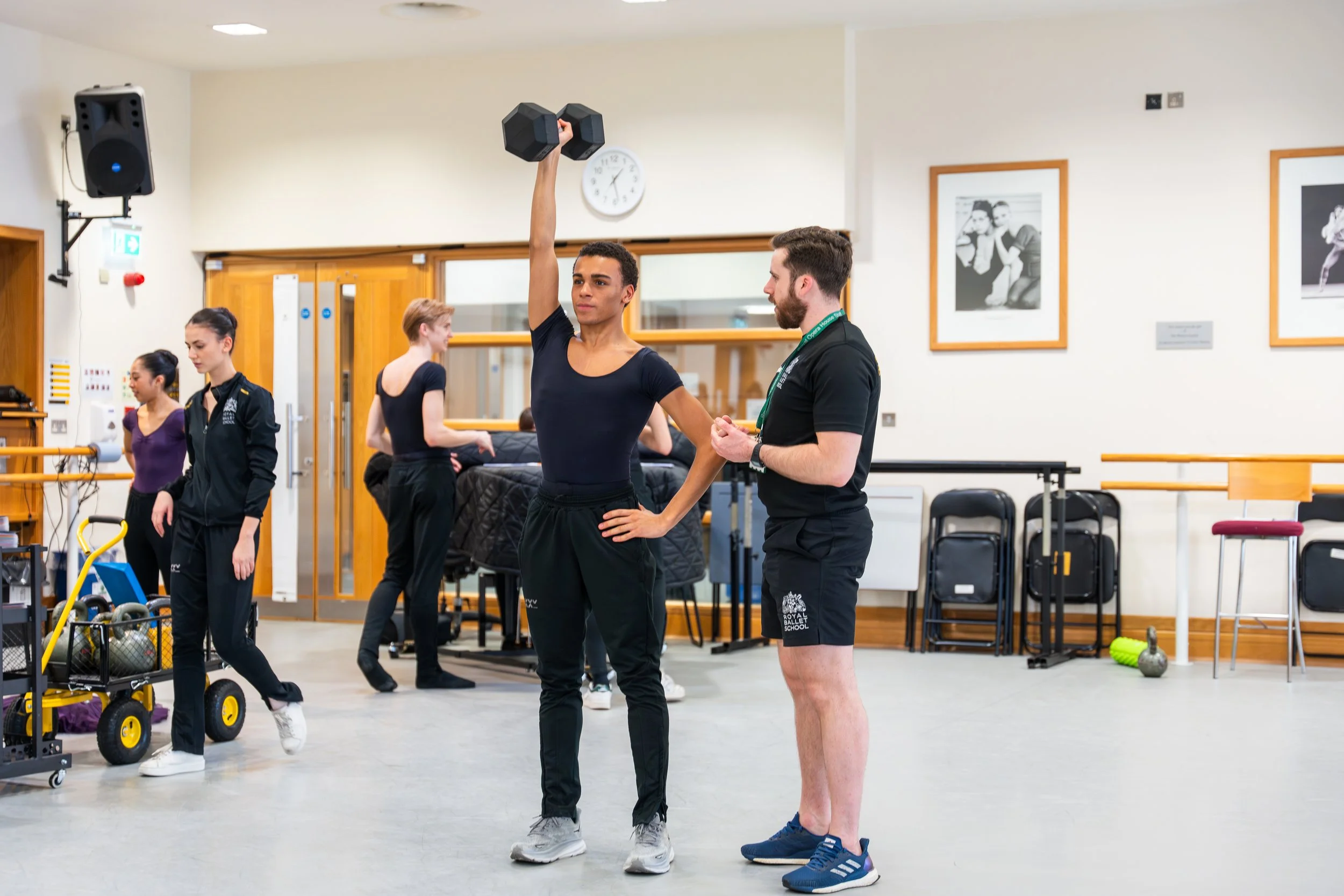
Upper School students in strength and conditioning class - Courtesy from Royal Ballet School Special Collection - Photographed by Henry Cutis

Upper School students in class with ballet teacher Sarah Kundi - Courtesy from Royal Ballet School Special Collection - Photography by ASH
Ballet and royalty
The School became formally “Royal” in 1956, when Queen Elizabeth II granted a Royal Charter. That same year, Princess Margaret became President of The Royal Ballet School, a role she held until her death in 2002. A lifelong ballet enthusiast, her connection with the School went considerably beyond an honorary title. She attended performances and events, and her enthusiasm for ballet and longstanding support for the School formed part of a close royal association that continues today.
The Royal Charter formalised the relationship Dame Ninette had spent decades constructing: school and companies conceived not as separate worlds, but as parts of the same artistic ecosystem. And nowhere is that relationship expressed more beautifully than several floors above Floral Street.
Crossing the Bridge of Aspiration
Seen from the street below, the Bridge of Aspiration is already one of Covent Garden's most distinctive architectural details. Inside, it is even more intriguing.
The enclosed bridge twists as it moves between The Royal Ballet School and the Grade I-listed Royal Opera House, its changing angles creating the impression of movement even when nobody is crossing it. Its design itself evokes movement: the structure appears to spiral through the air, echoing the fluidity of dance while physically linking the place where dancers train with the place where many hope one day to perform.
Crossing it is easily one of the highlights of the experience.
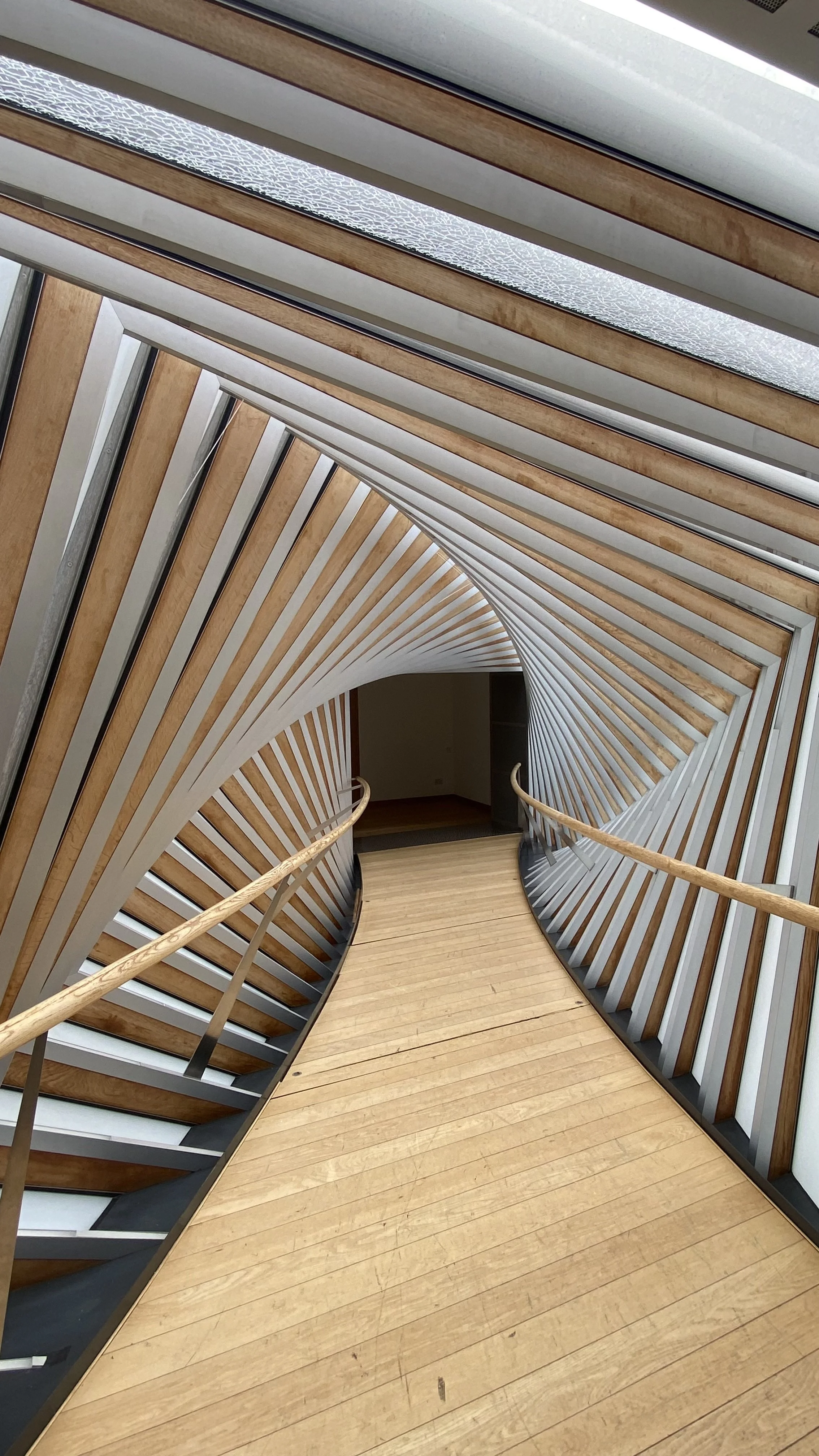
Own archive, 2026.
There is something symbolic about walking from classrooms and rehearsal studios towards one of the world's great stages. For a student, this may be a familiar corridor. For a visitor, it feels almost ceremonial.
And that symbolism is intentional. The tour itself describes the bridge as representing the journey “from student to professional performer.” Once across, the School gives way to the Royal Opera House: rehearsal areas, backstage corridors and, depending on what is happening inside this very much working theatre, different glimpses into the machinery behind the performances audiences eventually see.
No two tours are necessarily identical for precisely that reason. Rehearsals, productions and daily activity determine which spaces can be visited. On ours, that unpredictability produced perhaps the loveliest moment of all.
Watching the centenary take shape
Towards the end of the visit, I was able to watch part of a rehearsal for A Centenary Celebration: The Royal Ballet School, the special production created to mark the School’s 100th anniversary. (No picrures are allowed, so go see it for yourself! )
The production brings together dancers from The Royal Ballet School, The Royal Ballet and Birmingham Royal Ballet, turning the centenary into something more than a historical commemoration. It becomes a living connection between generations of dancers and the institutions that grew from de Valois’ original vision.
Seeing a few minutes of rehearsal after spending the previous hour hearing about the School’s history, watching students train and crossing the Bridge of Aspiration gave the tour an unexpected sense of completion.

Royal Ballet students performing at the Royal Opera House - Oct 2026 - Courtesy from Royal Ballet School Special Collection - Photography by ASH

Royal Ballet School students performing Checkmate at the Royal Opera House - Oct 2026 - Courtesy from Royal Ballet School Special Collection - Photography by ASH
It also reinforced how much the centenary extends beyond a single event. The anniversary is being marked through performances, talks, tours and other opportunities to encounter the School from different perspectives, giving audiences several ways to engage with its history and its present.
One hundred years and the next step
The Royal Ballet School's centenary celebrations are deliberately looking in both directions. Its year-long programme explores the institution's archives and the figures who built its reputation, while also focusing on access, education and the generations of dancers who will determine what ballet looks like next. The School has described its centenary as both a celebration of its legacy and an opportunity to shape its second century.
That past, present and future are also being explored through the School’s 100 stories project, which is unfolding throughout the centenary year. The series brings together dancers, teachers, choreographers and alumni whose lives illustrate the many ways the School’s influence has travelled beyond its studios.
For anyone wanting to explore the centenary beyond the tour, the School’s dedicated 100 Years programme also brings together performances, exhibitions, talks, archival material and other events taking place throughout 2026.
Perhaps that is why the Bridge of Aspiration feels like such an appropriate place from which to understand The Royal Ballet School at 100. Behind you are Dame Ninette de Valois, Margot Fonteyn and a century of ballet history.
Around you is a school still defined by studios, pianists and daily discipline, but also by physiotherapists, rehabilitation, nutrition and a more holistic understanding of what a dancer needs to thrive.
Ahead is the Royal Opera House. And every day, another young dancer makes the crossing.
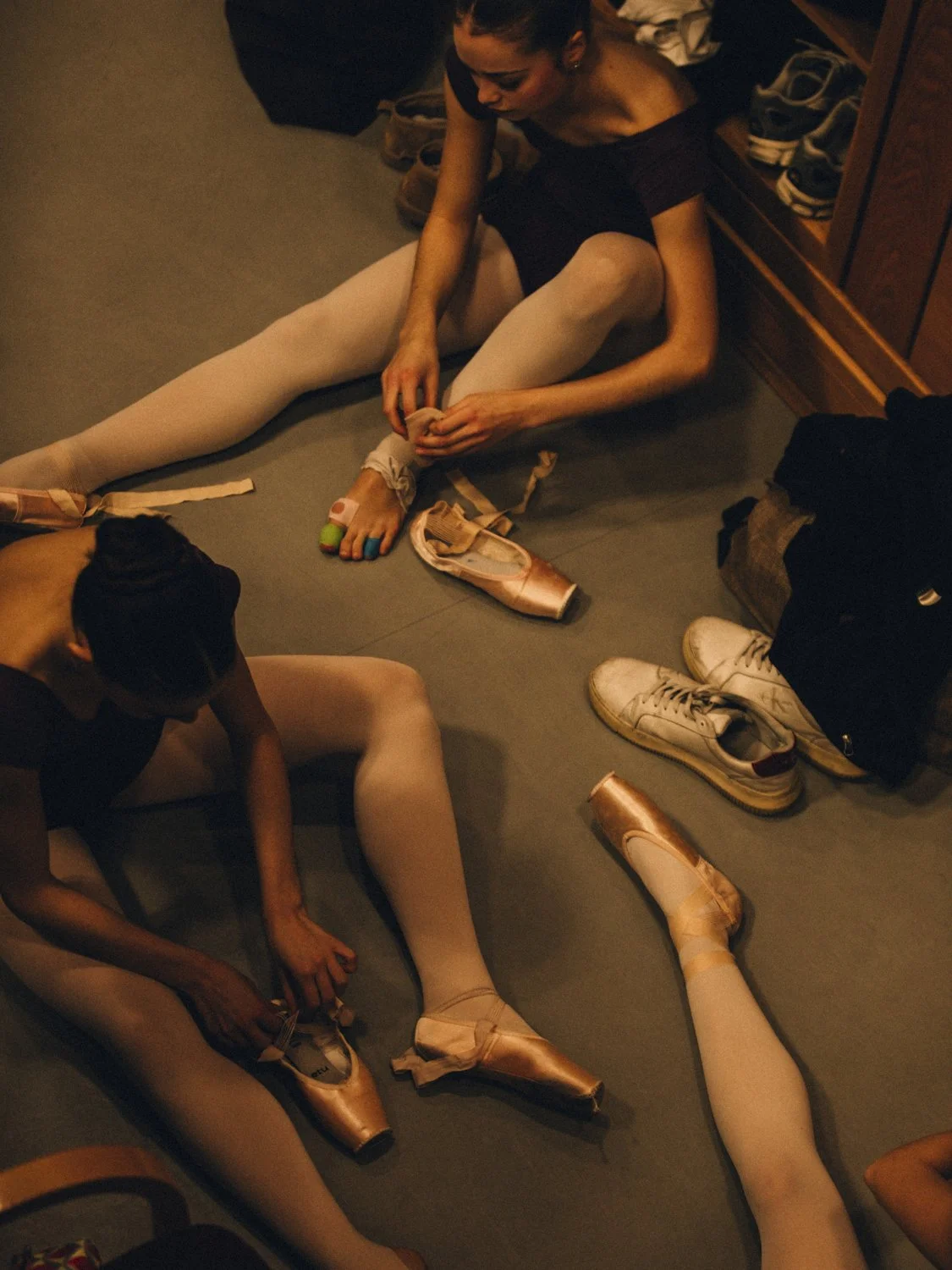
Students preparing for class - Courtesy from Royal Ballet School Special Collection - Photography by Robbie Lawrence