THE RETURN TO THE WIND CHANEL CROISIÈRE IN BIARRITZ
Under the salt-laced sky of the Atlantic, in Biarritz, Chanel chose to return to its point of origin, as one returns to the sea after years of sailing, to present its Croisière 2026/27 collection.
More than a century ago, Gabrielle Chanel found in Biarritz both a refuge and a rupture. It was there that she began to loosen the rigid codes of dressing and to imagine a female body in motion, breathable, free.
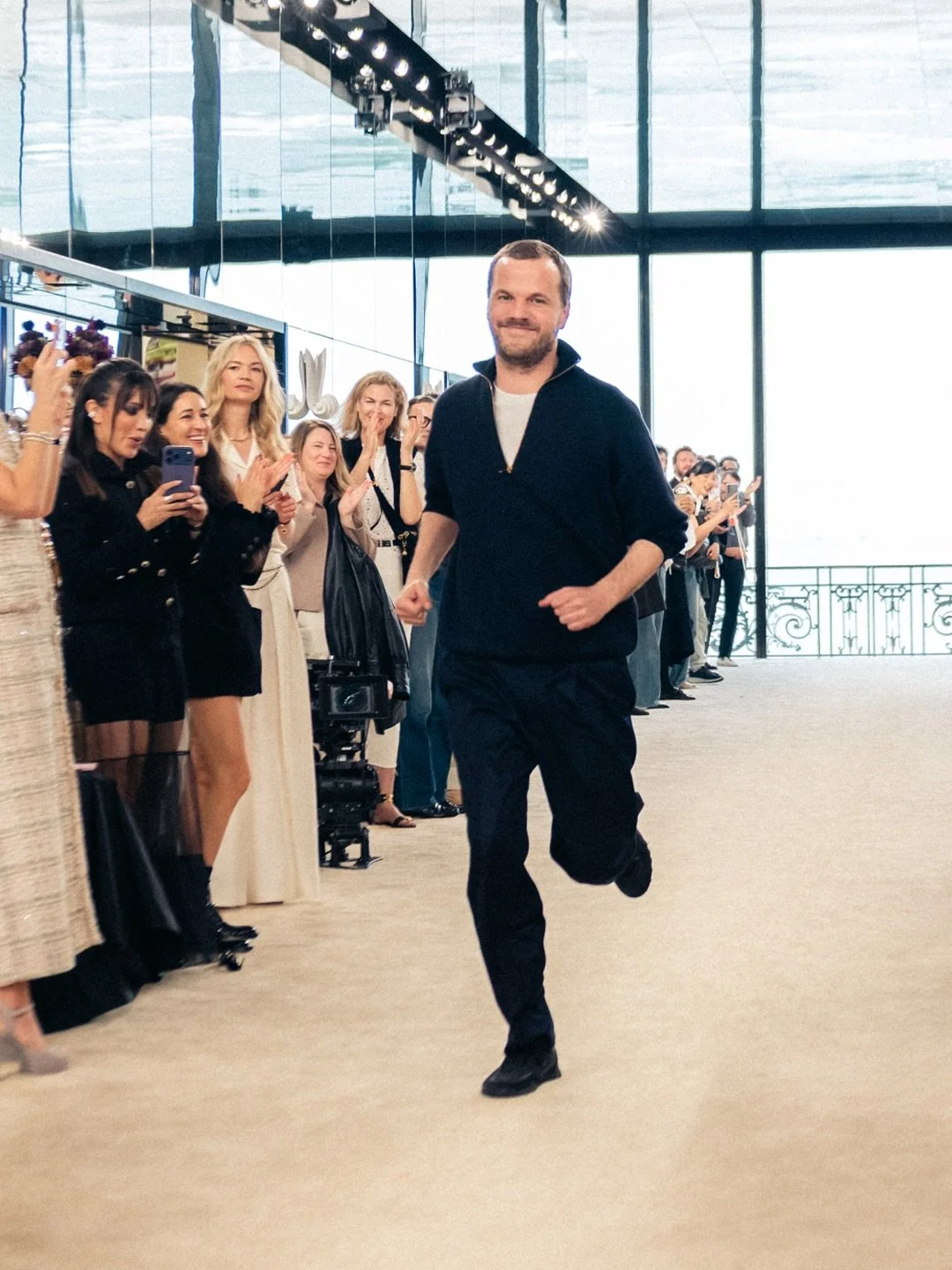
This spirit was summoned once again. Not as nostalgia, but as living matter. Under the direction of Matthieu Blazy, the show took place in the mirrored salons of the Casino Municipal, facing the restless horizon of the sea. A setting where past and present seemed to coexist, endlessly reflected on the walls, as if each look were also a memory.
THE LITTLE BLACK DRESS
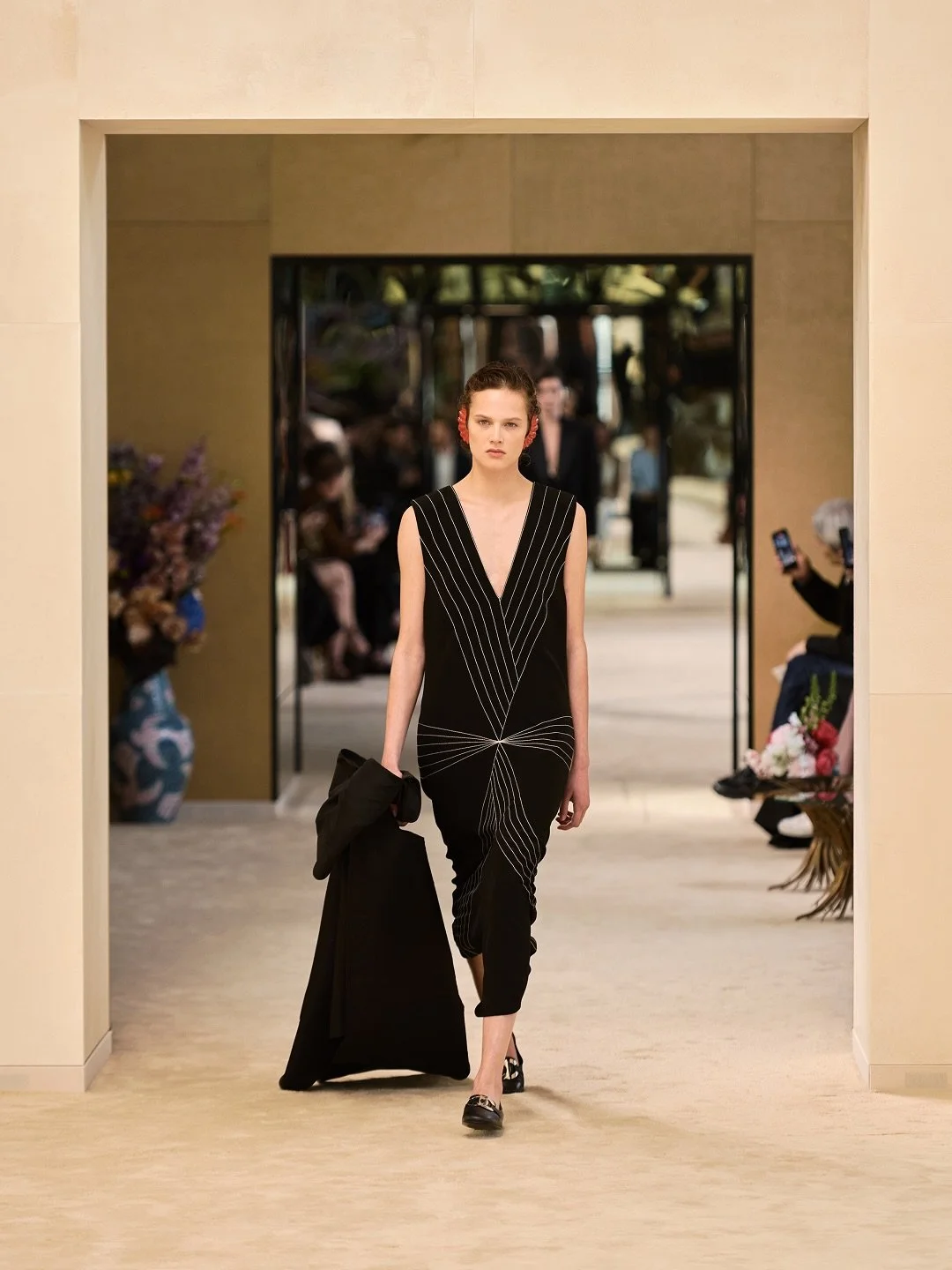
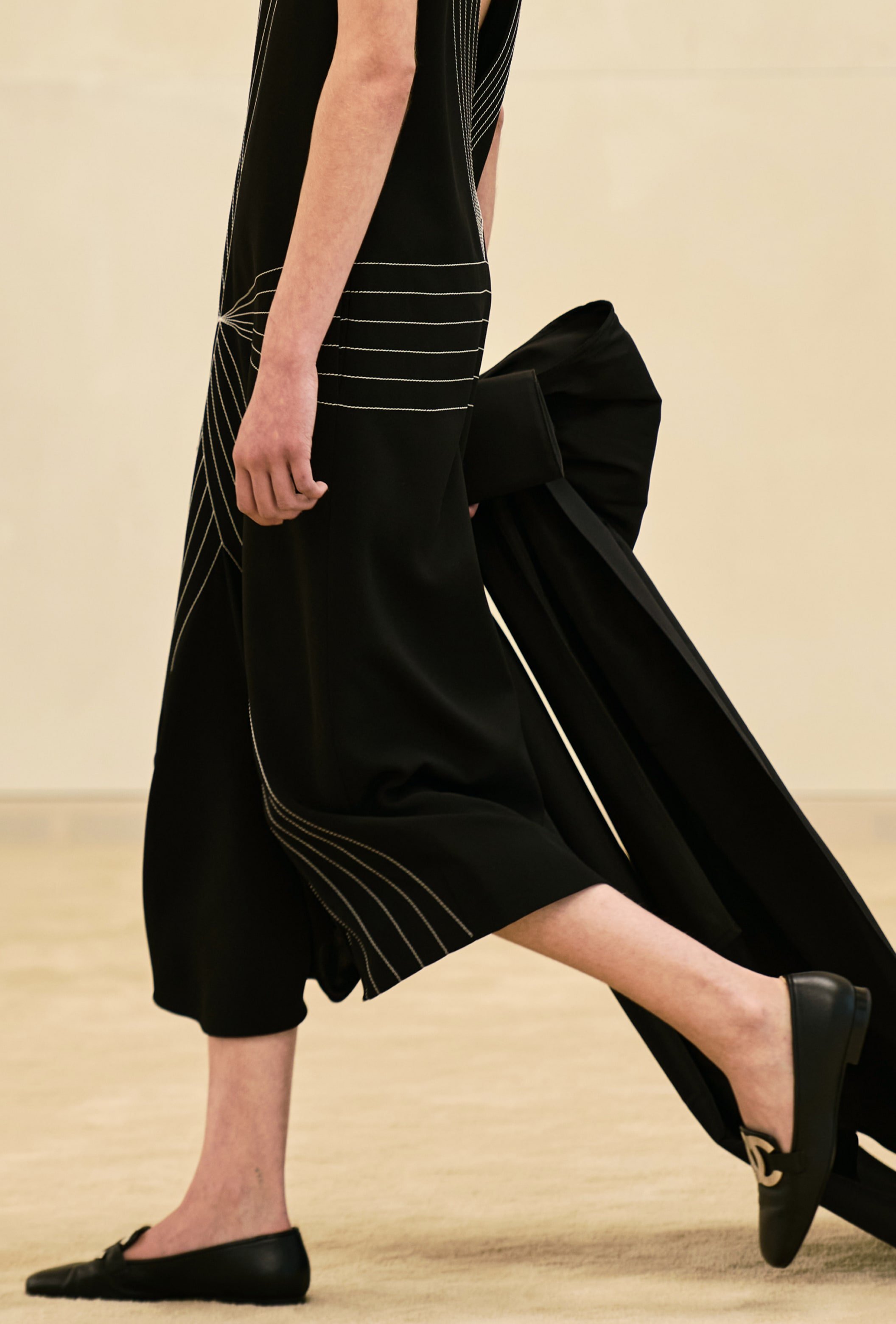
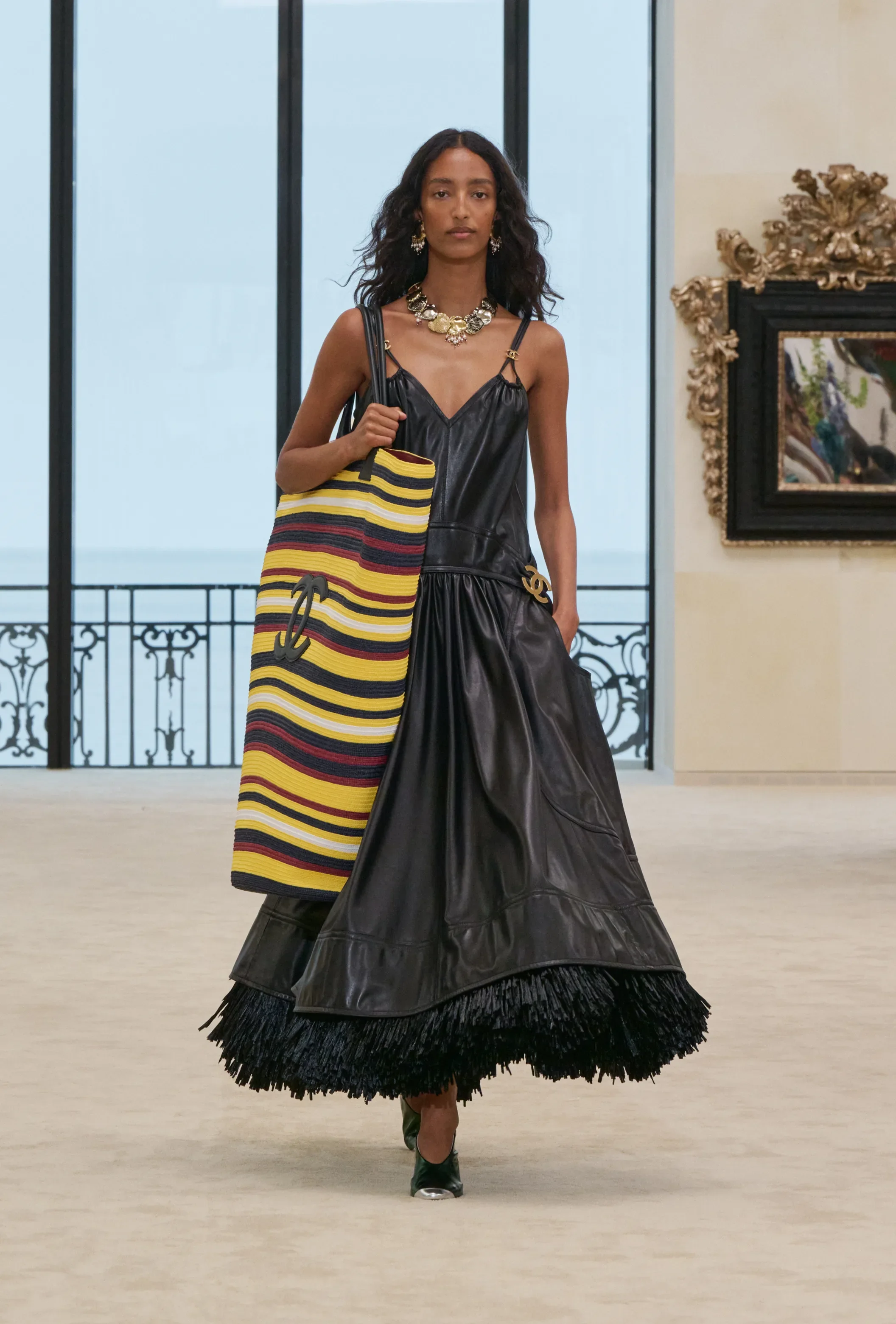
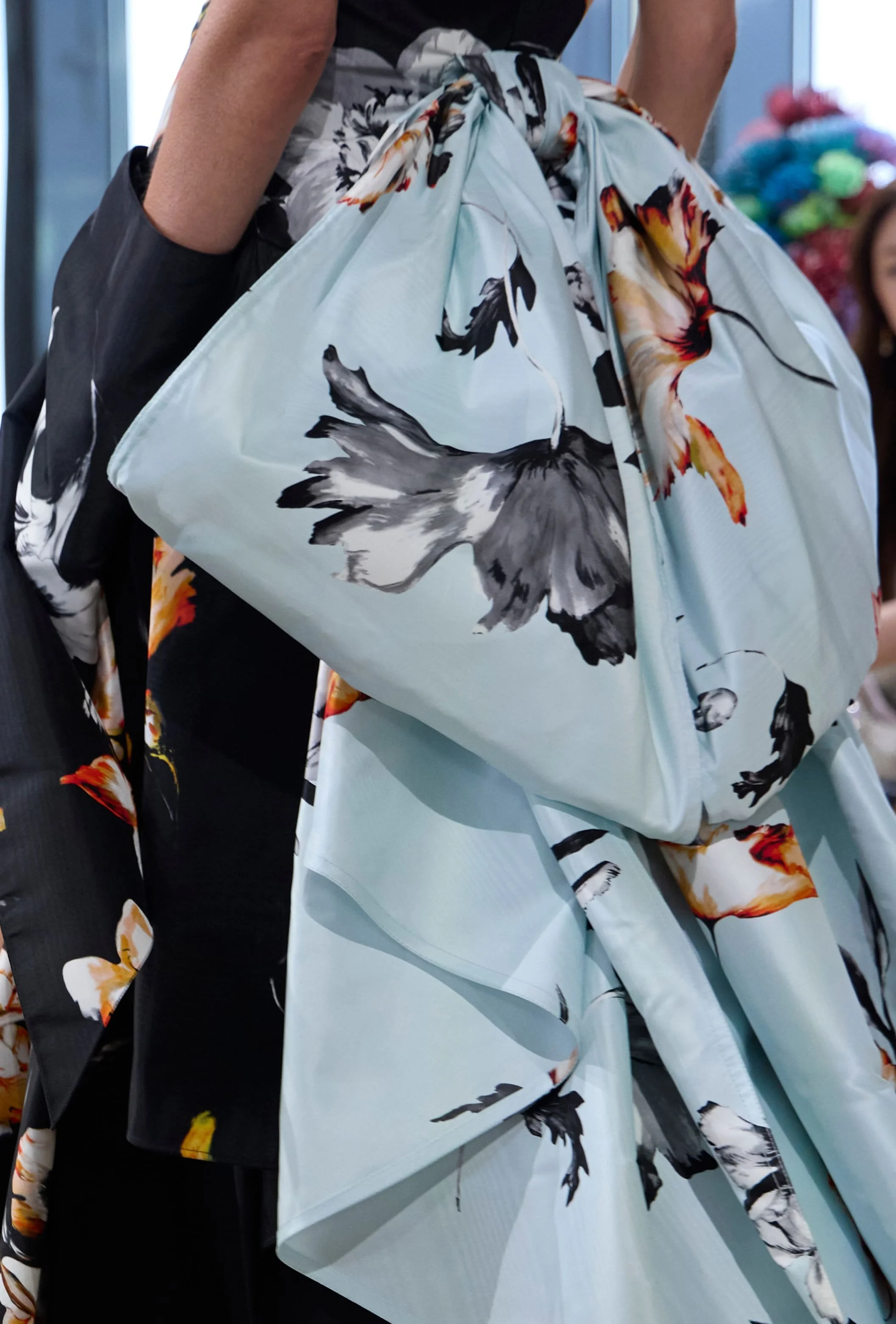
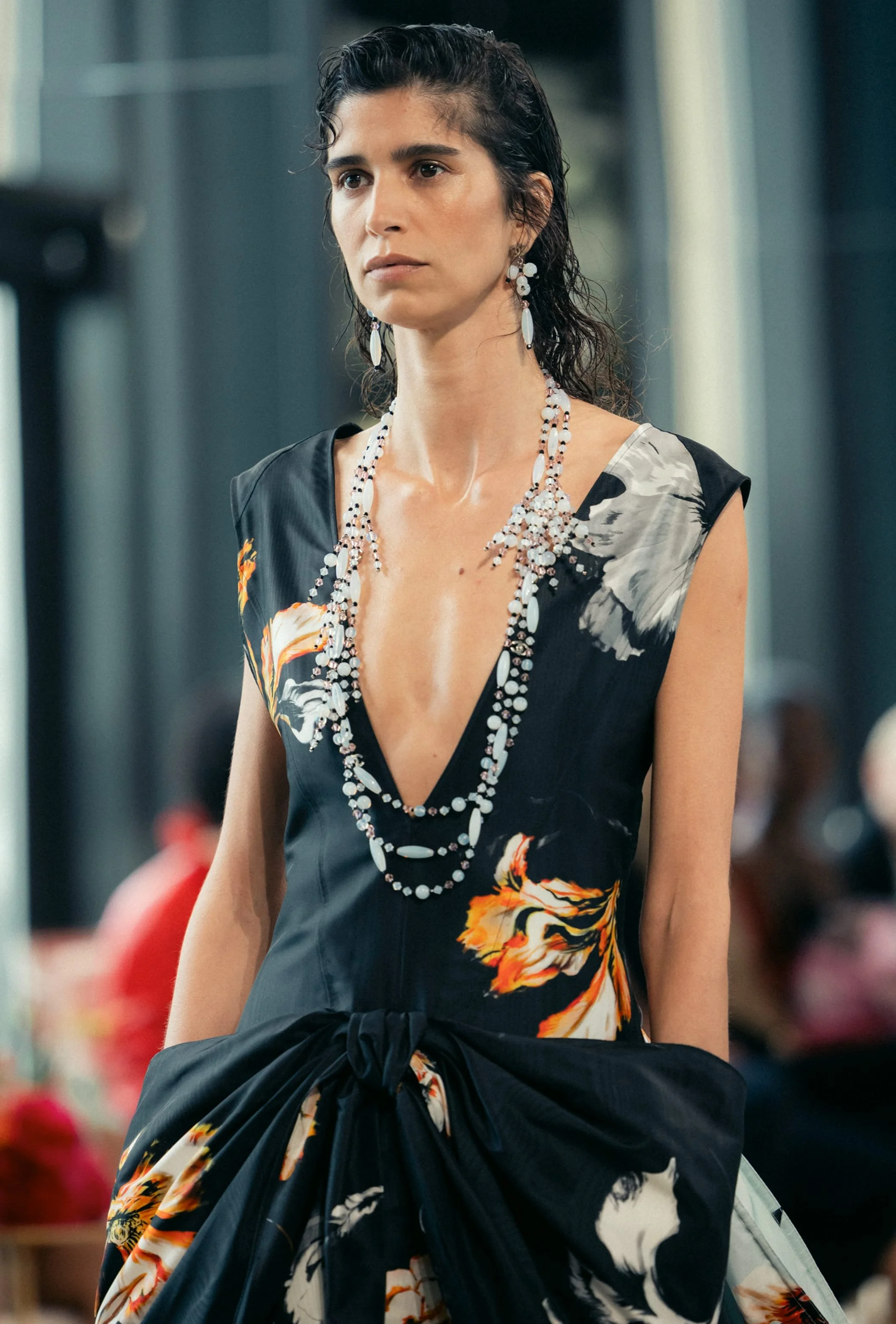
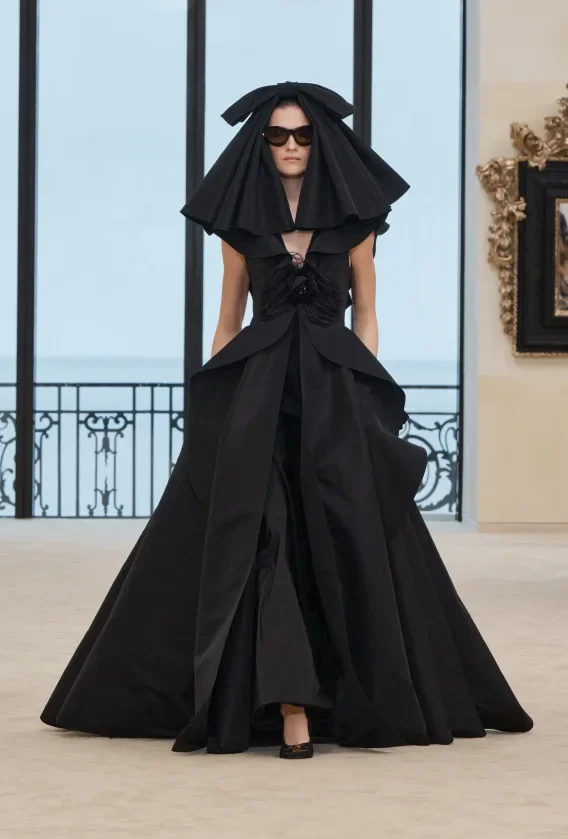
To open the show, Matthieu chose something deeply symbolic in the history of the Maison Chanel: the little black dress. It is not merely a simple dress, after all it was in Biarritz that Gabrielle Chanel designed her iconic piece. Blazy, in fact, may have drawn inspiration from a 1926 sketch found in the house archives.
The dress appears as a fixed point in the middle of the tide. The eternal black dress resurfaces, reinvented. The model held a maxi bow in her hands, acting as a bag, yet it was attached to the dress like a kind of tail, while remaining intact in its meaning. A silent gesture that crosses decades.
THE SEA AS LANGUAGE
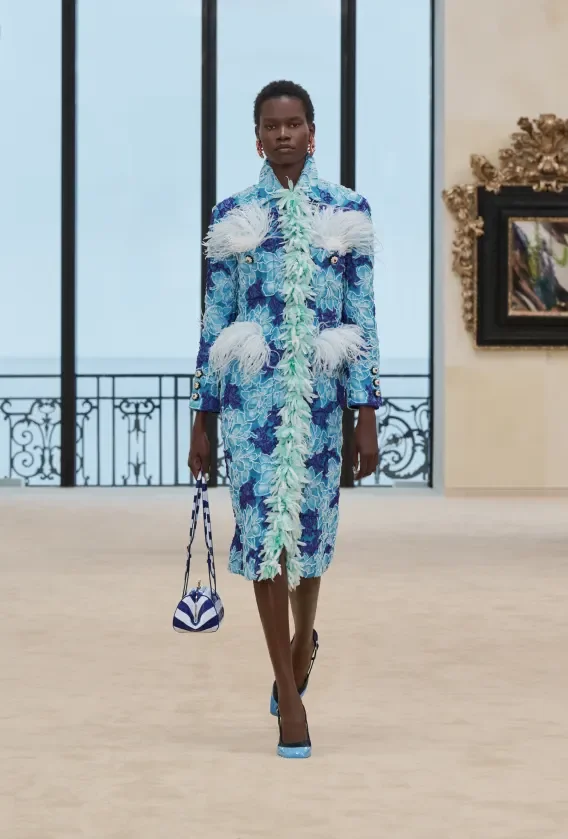
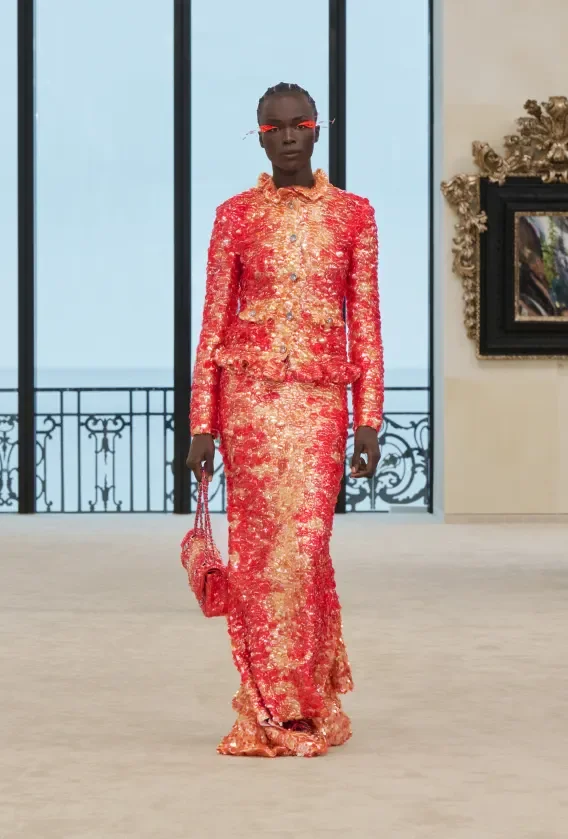
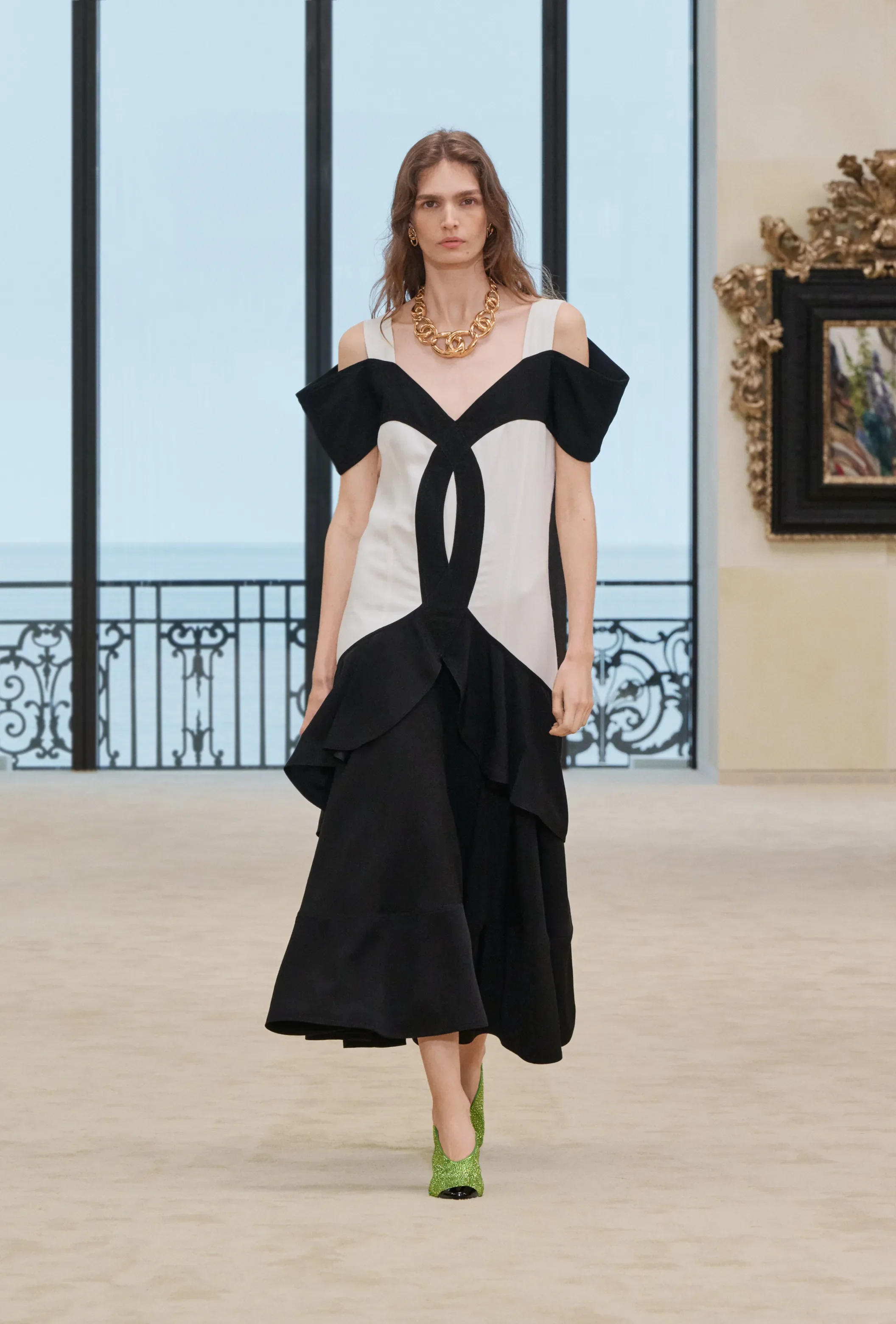
The sea, inevitable in Biarritz, was not referenced, it was translated. In surfaces that captured light like water, in transparencies suggesting depth, in a palette oscillating between mineral tones and fleeting luminosities. Nothing literal, everything sensory. The collection seemed less inspired by the ocean and more constructed from it.
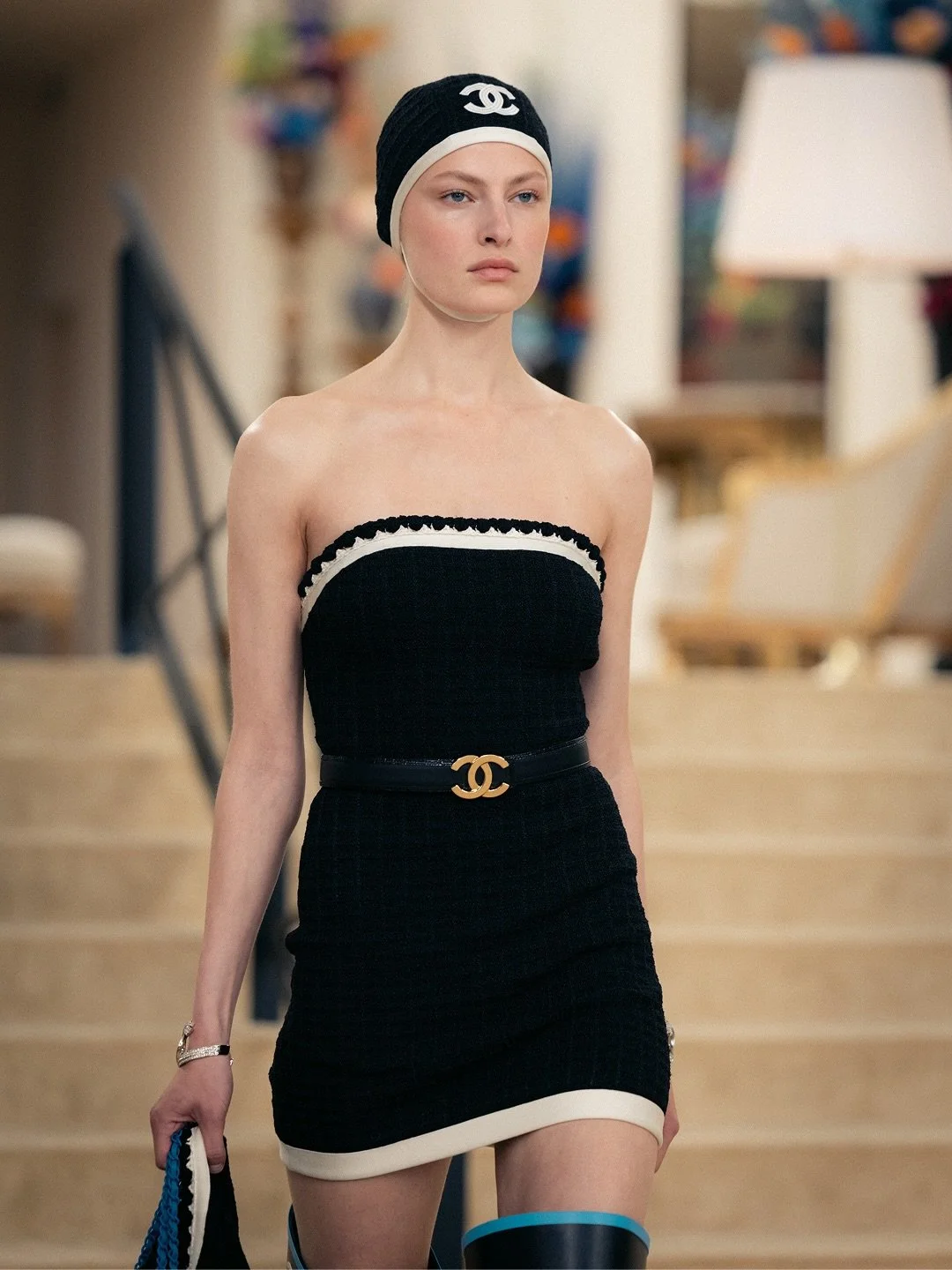
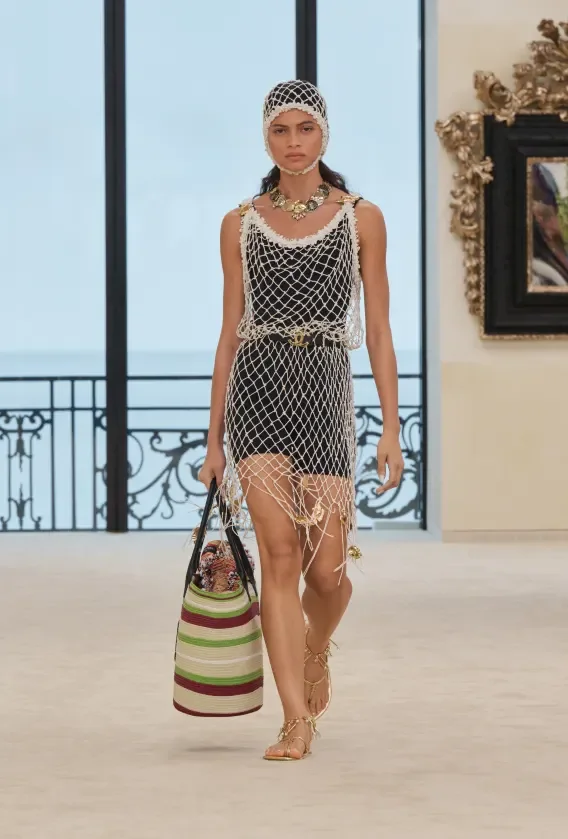
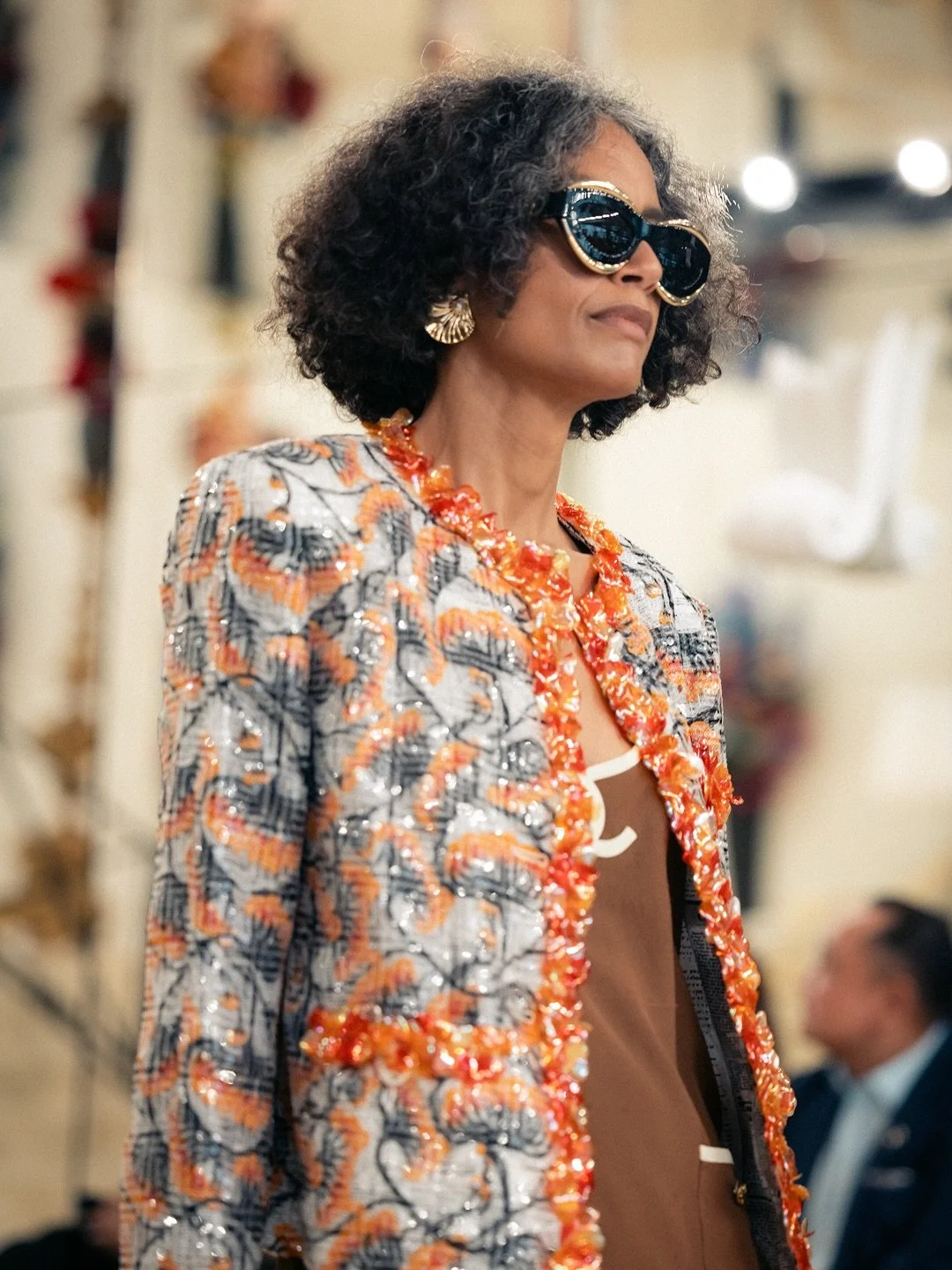
Fishing nets transformed, glimmers that resemble scales, tones of coral and turquoise that appear to capture underwater light, shell-shaped earpieces, algae embroideries, alongside the iconic marinière.
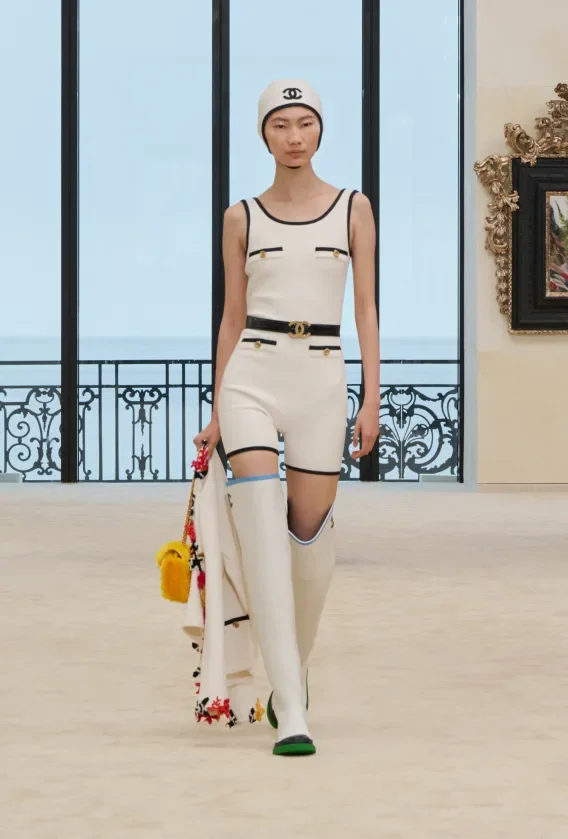
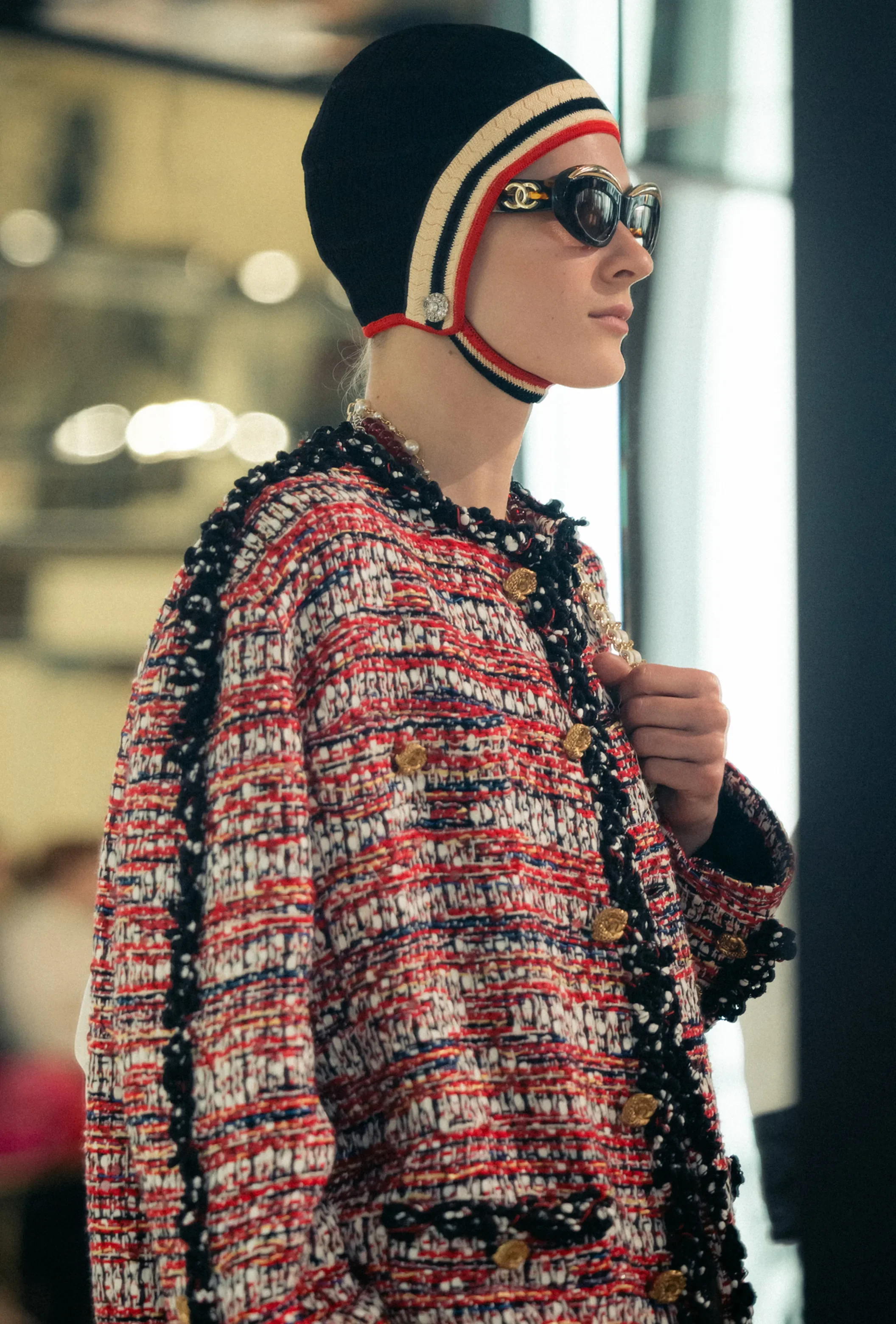
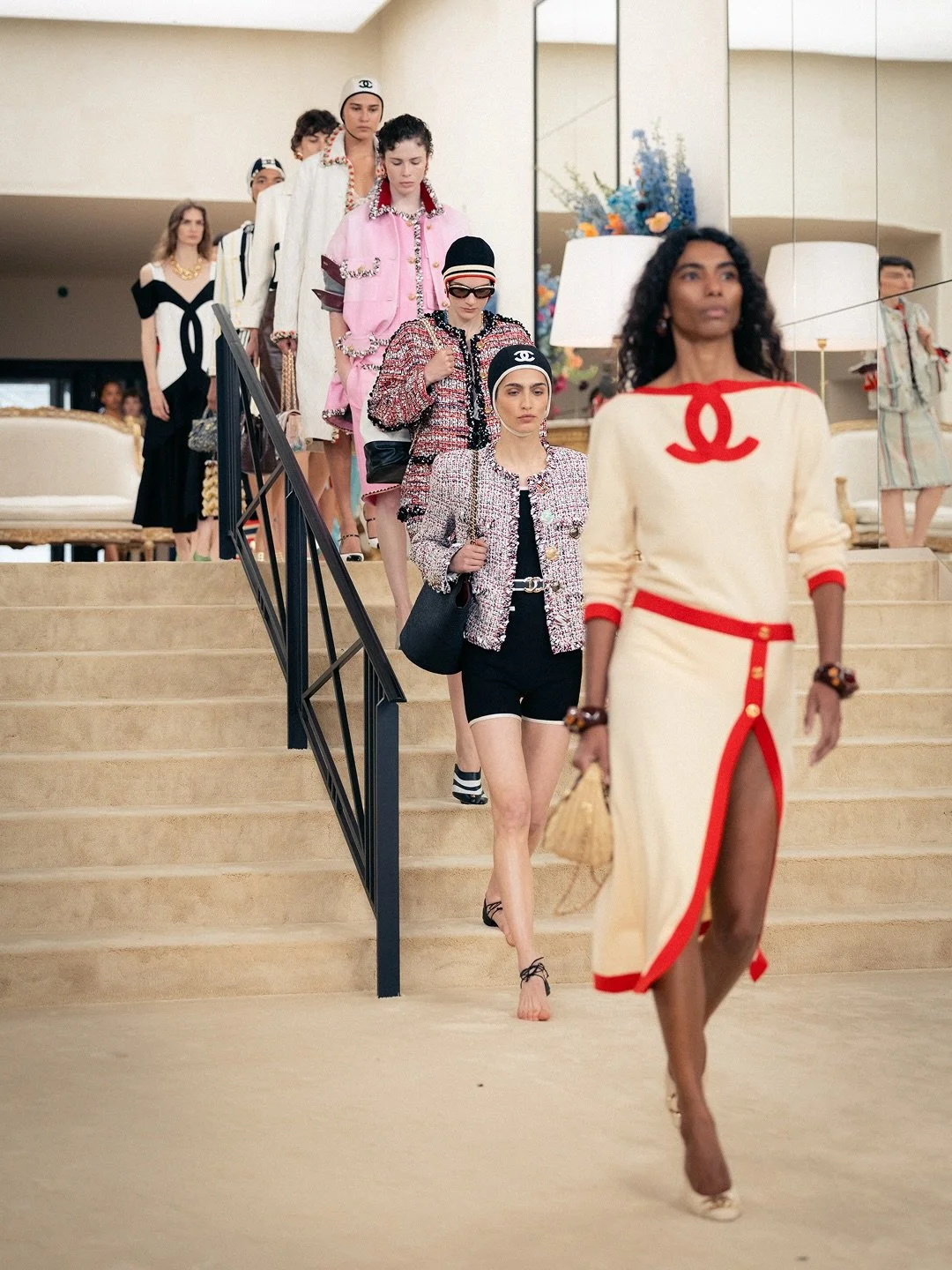
There were bikinis and swimming caps, some alluding to the back of a fish, but also evening dresses that glide across the body like sirens. Sportswear, a hallmark of Chanel’s revolution, reappears with lightness, reminding us that elegance can be movement, not rigidity.
THE TAILLEUR IN A STATE OF LIGHTNESS
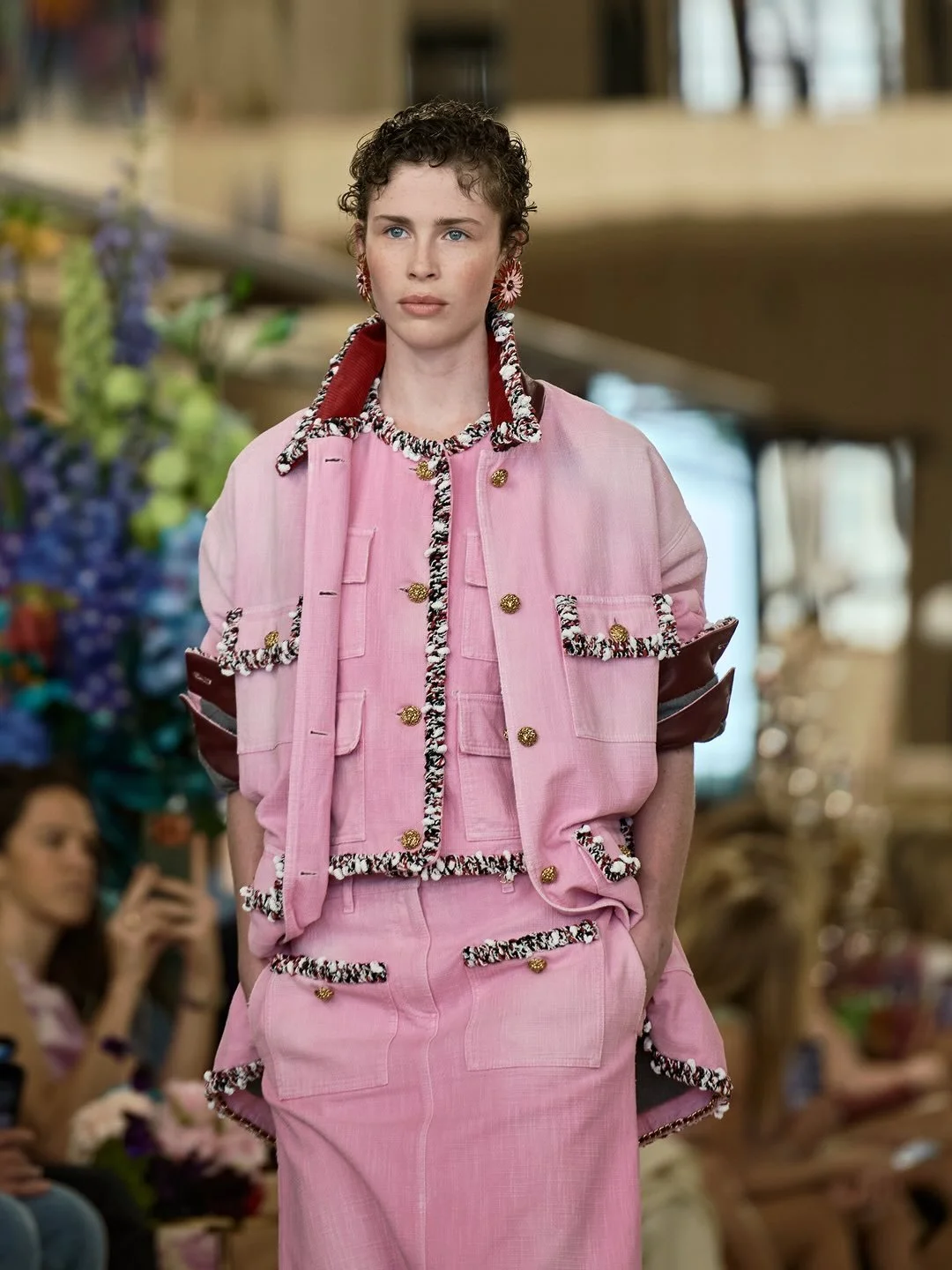
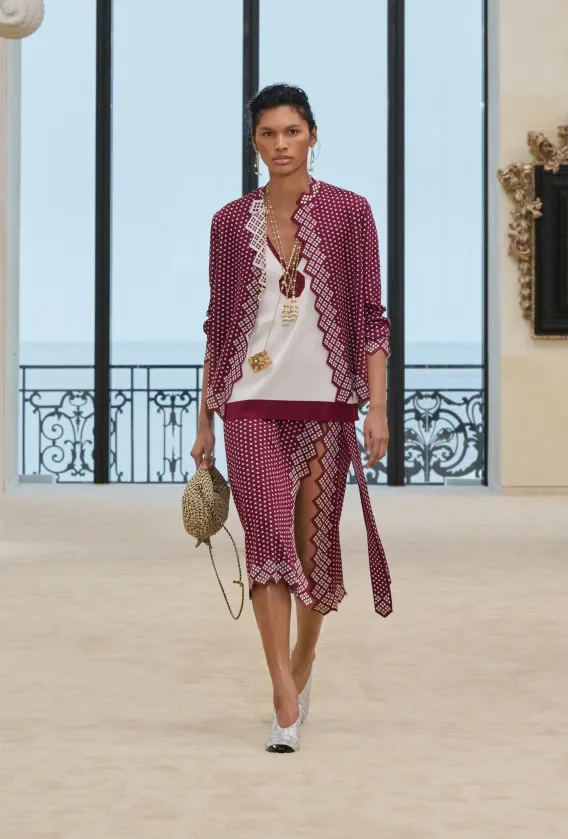
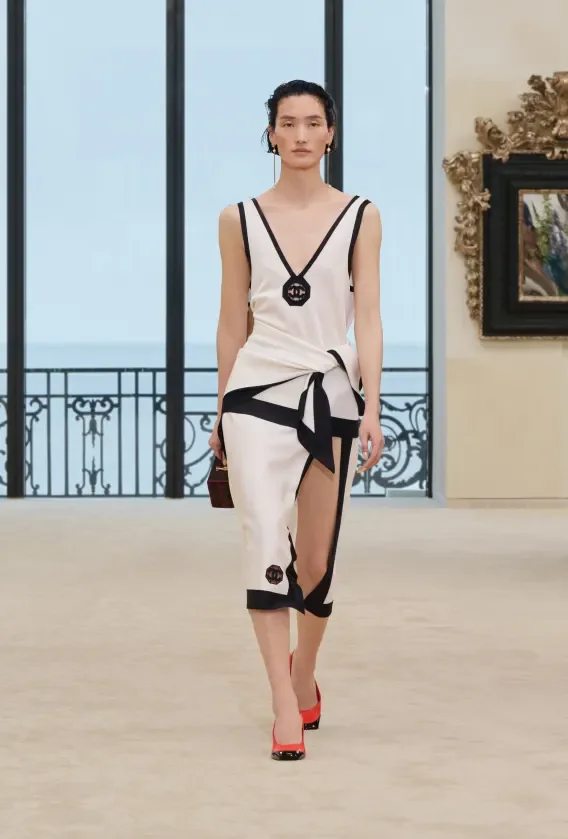
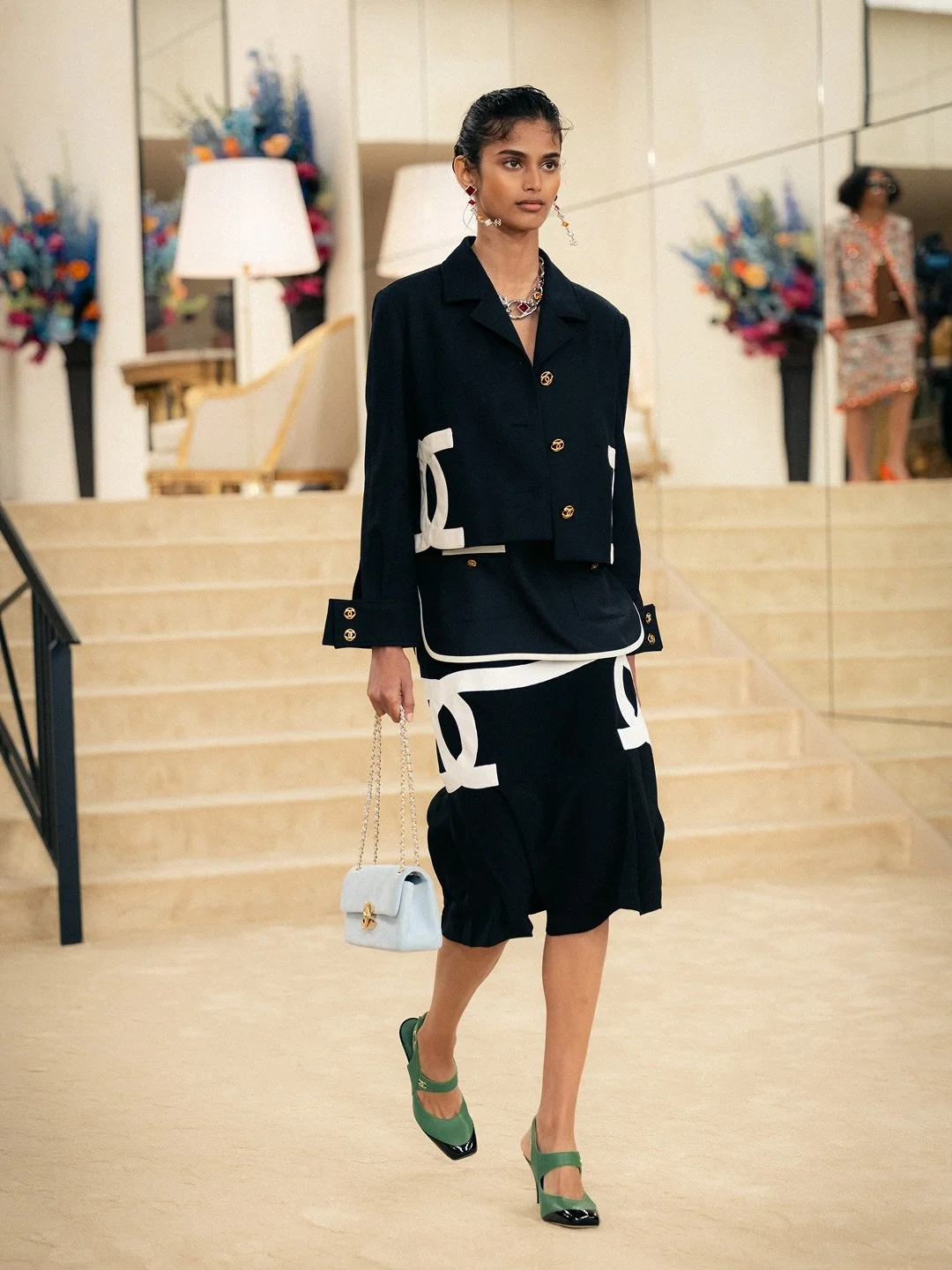
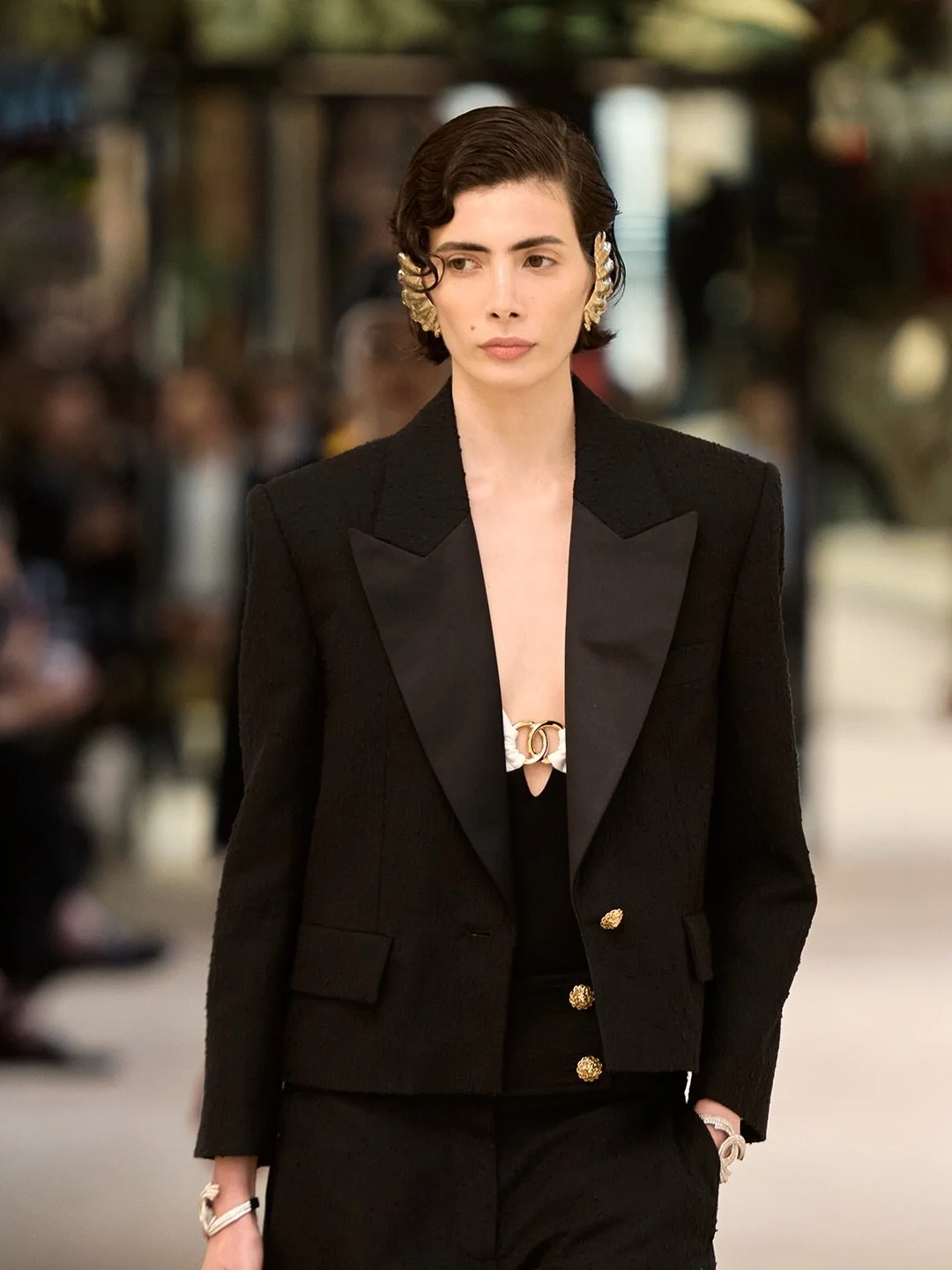
The tailleur, a founding piece of the Chanel imagination, appears here transformed. The lines are softened, the fabrics gain flexibility, and structure gives way to movement, with the presence of high slits.
Still recognisable, it moves away from rigidity to follow the body naturally. It is an evolution consistent with Gabrielle Chanel’s thinking: to liberate, never to restrict.
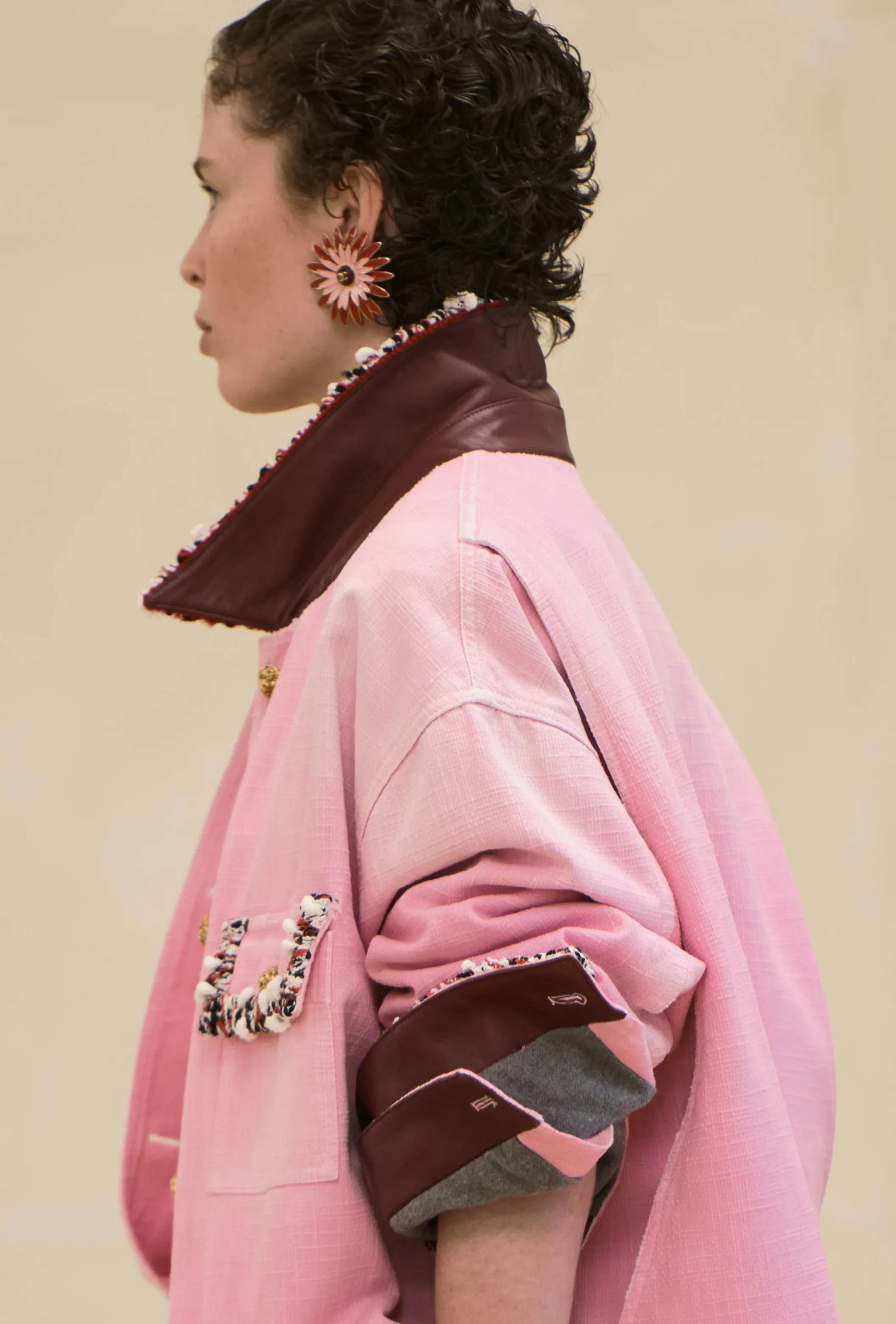
ACCESSORIES IN A STATE OF TIDE
The accessories in this collection do not appear as statements, but as extensions. They do not interrupt the gaze, they do not compete with the silhouettes, they do not claim protagonism.
Instead, they move with the body, as if they had always belonged to that movement.
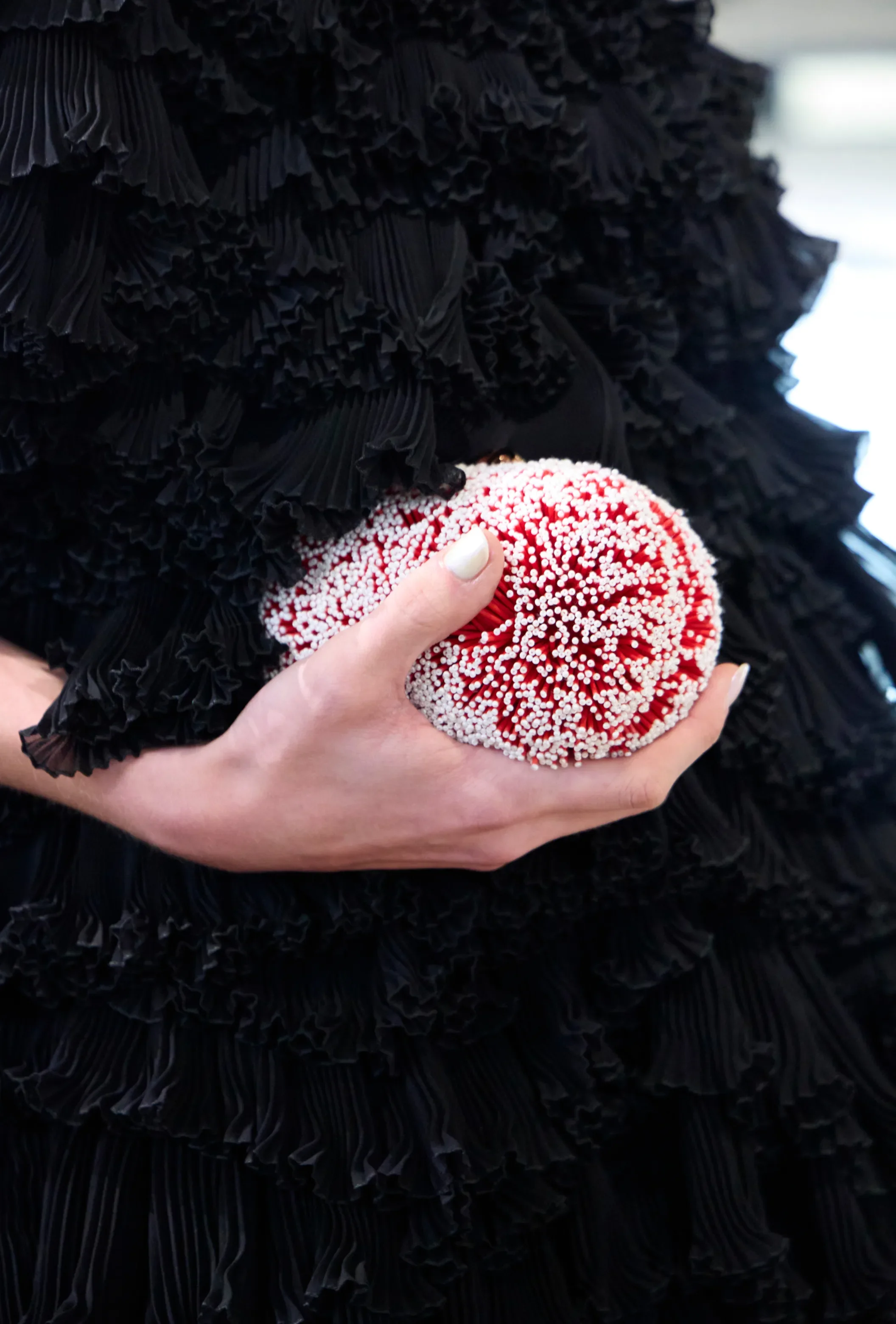
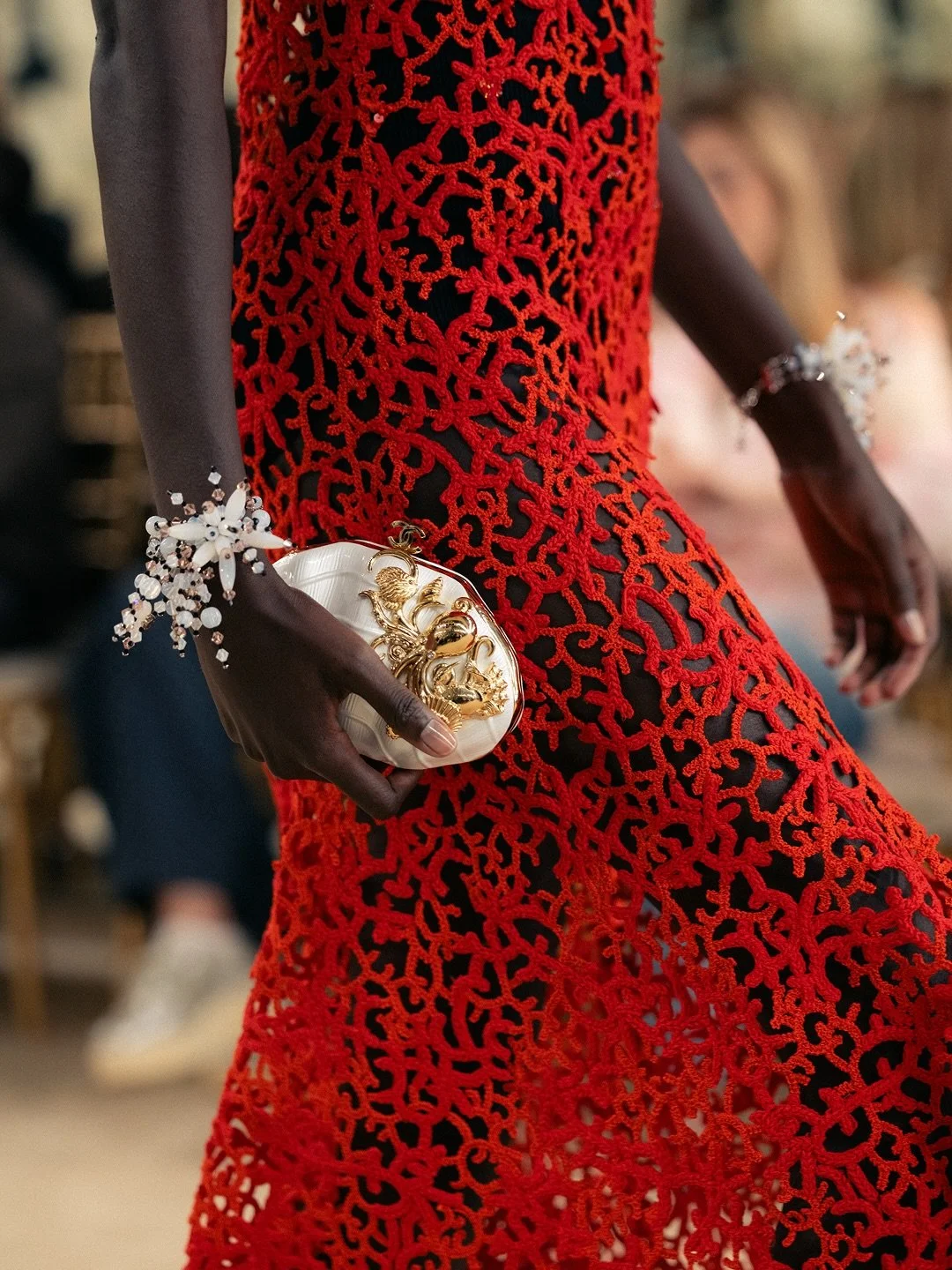
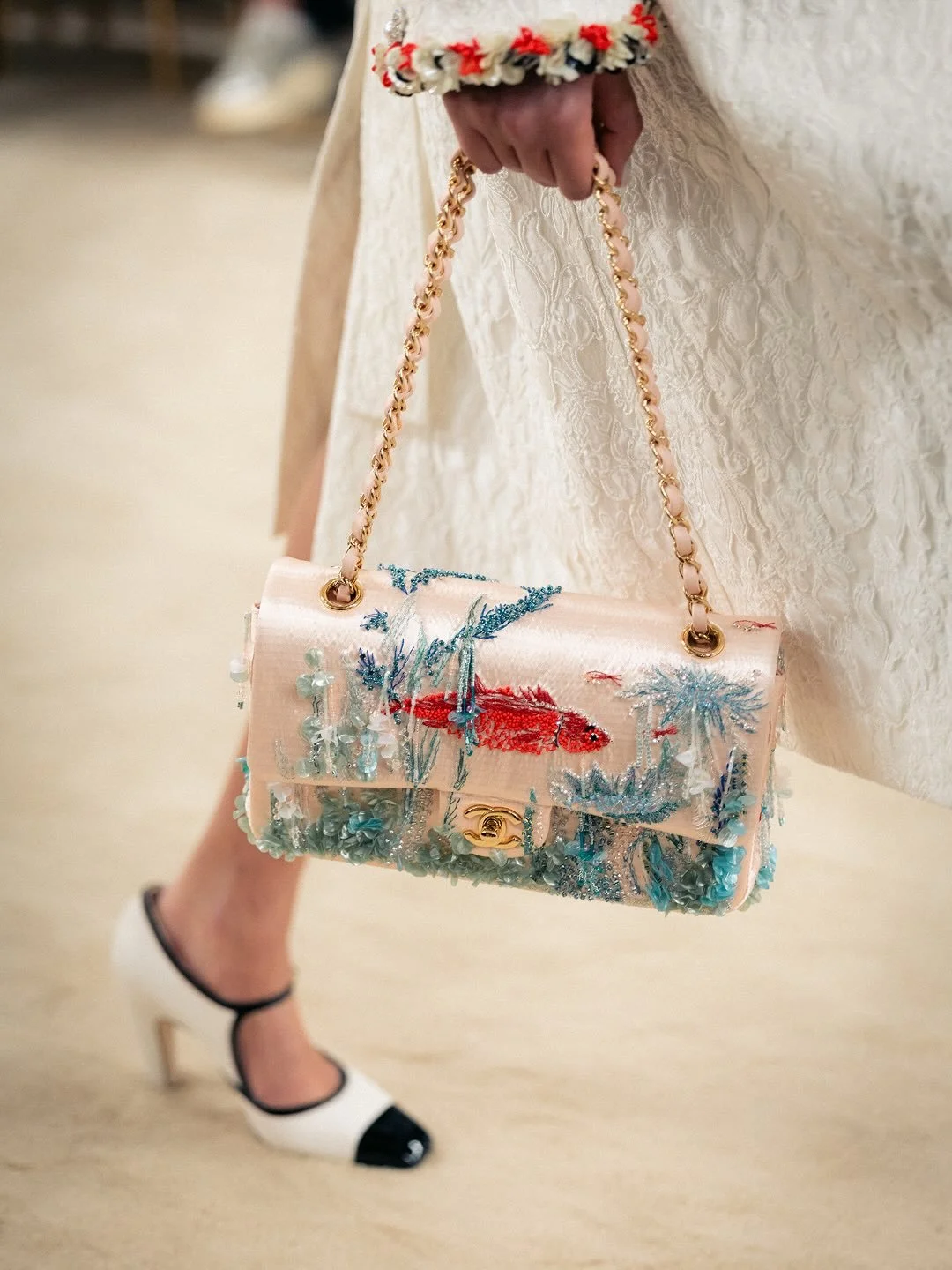
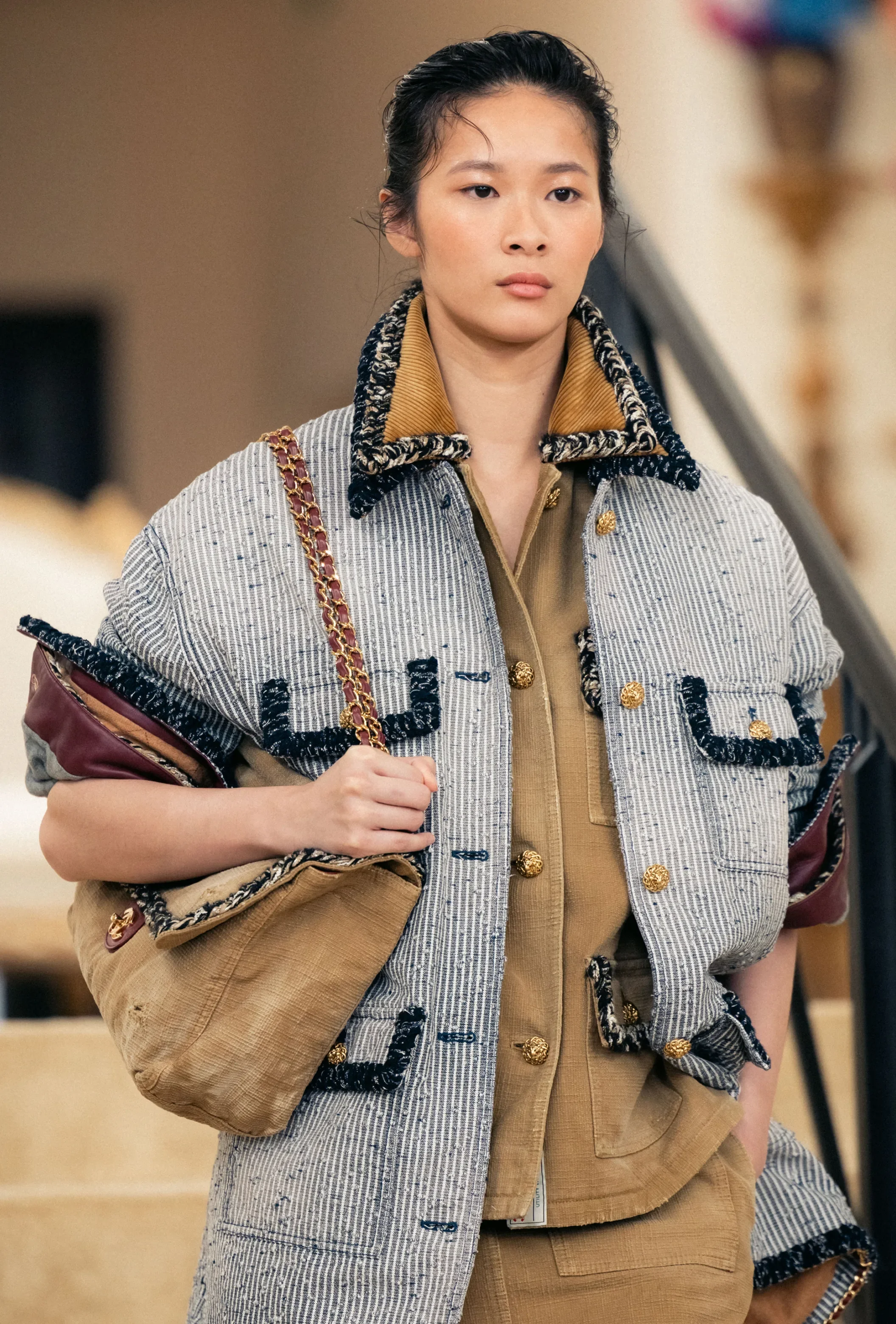
There is, in the bags, an intimate relationship with light. Some seem to capture it, hold it for a moment, before releasing it softly.
Others absorb the surrounding environment, becoming almost diffused mirrors of everything around them. More than functional objects, they resemble fragments of landscape, small surfaces where time seems to slow down.
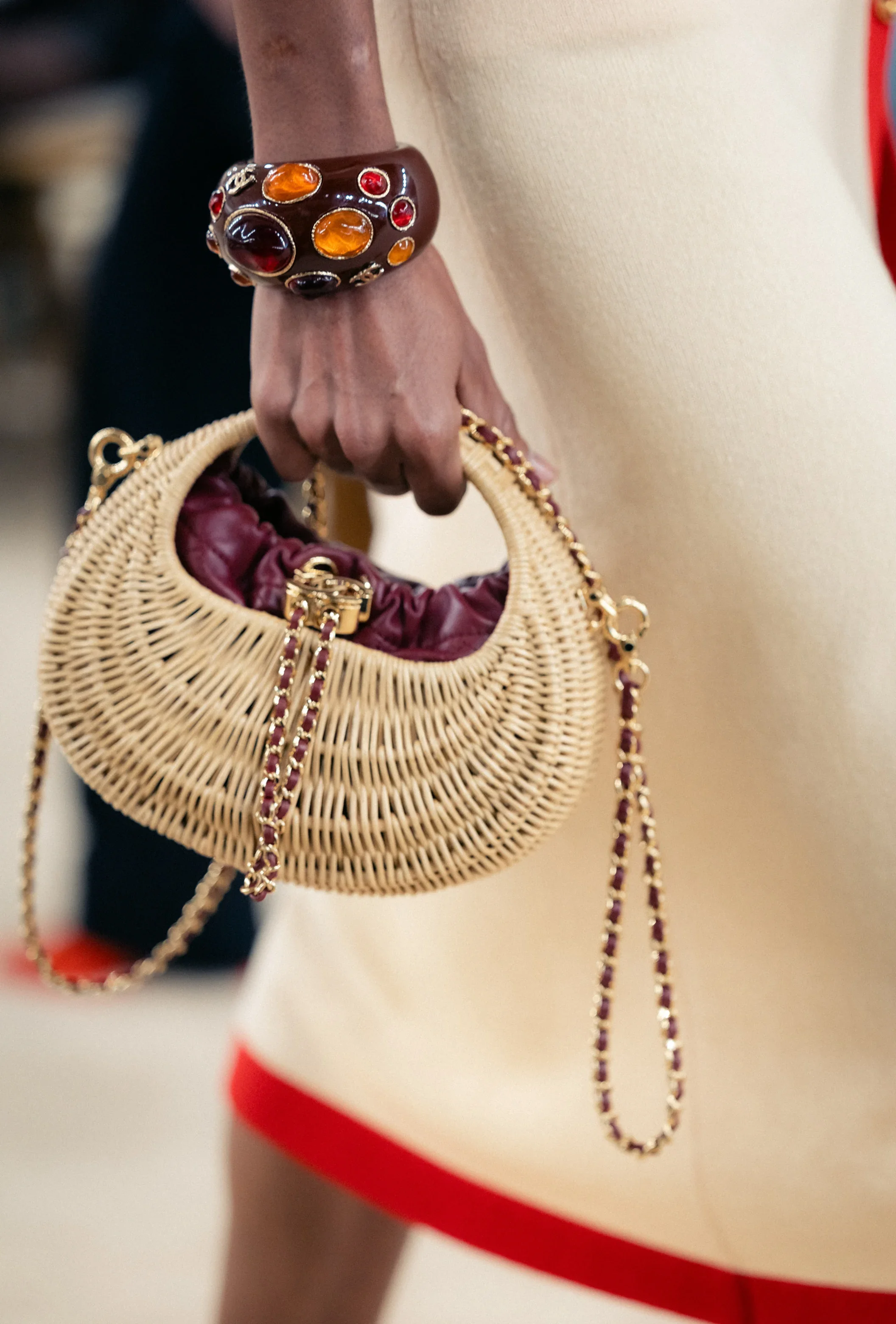
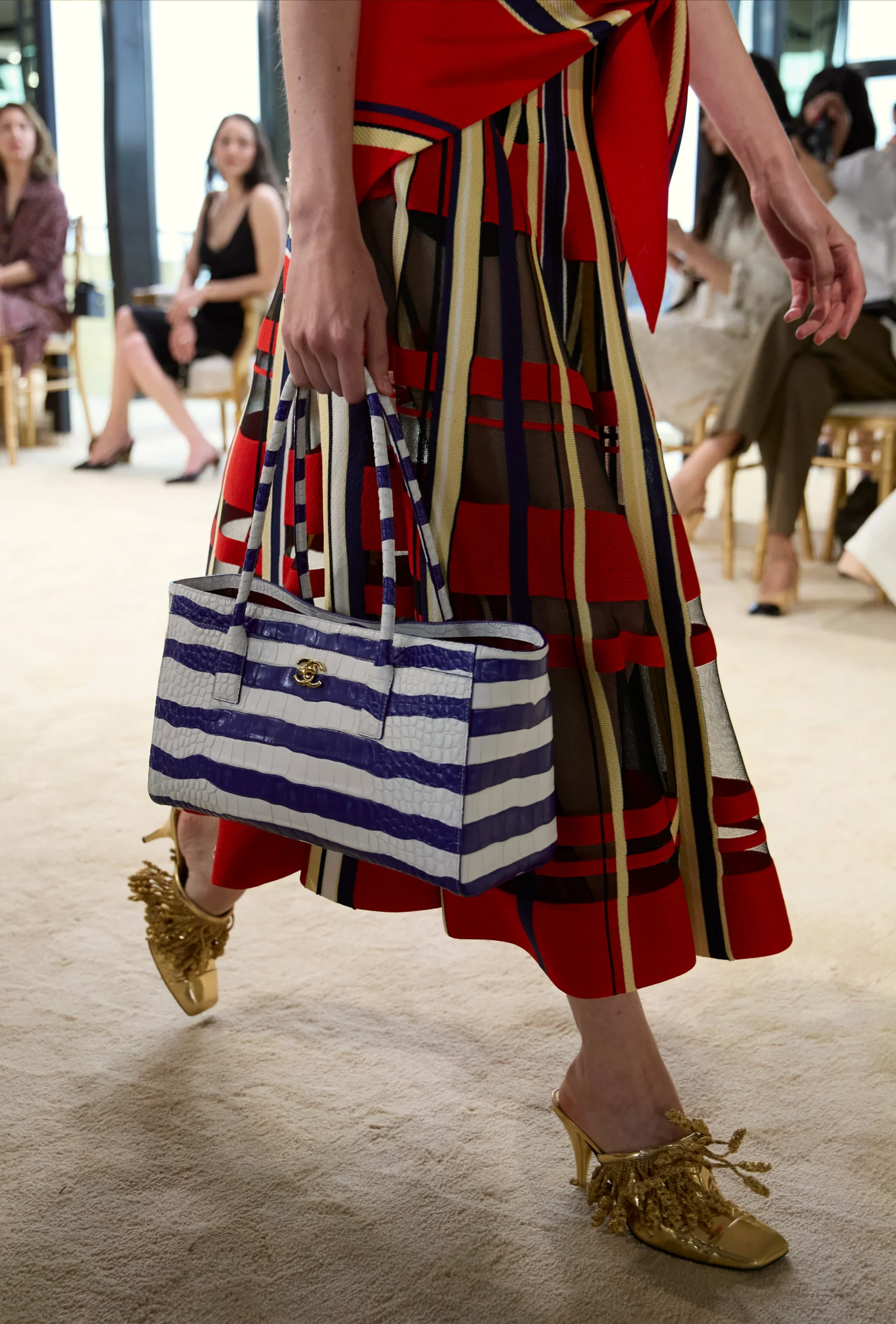
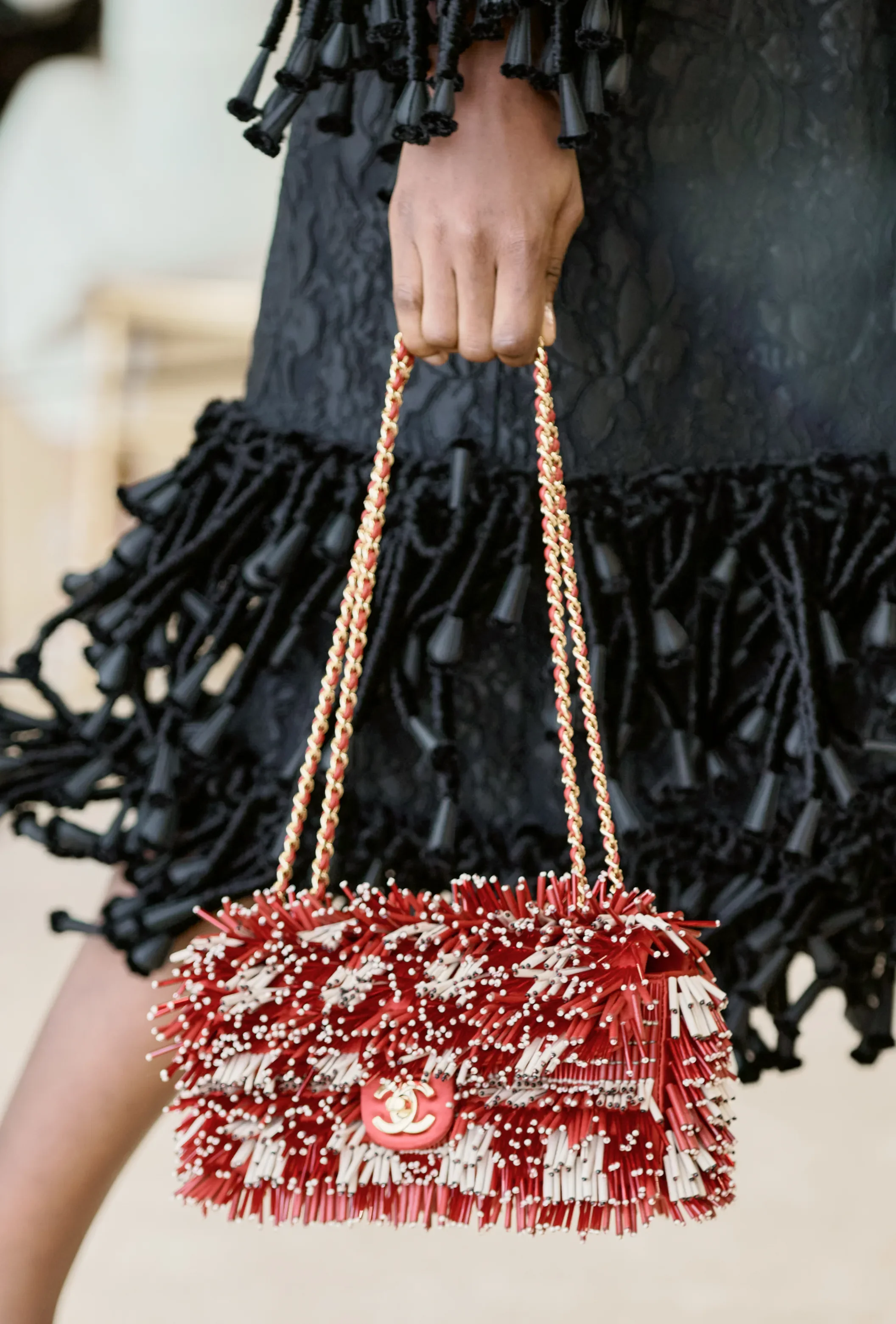
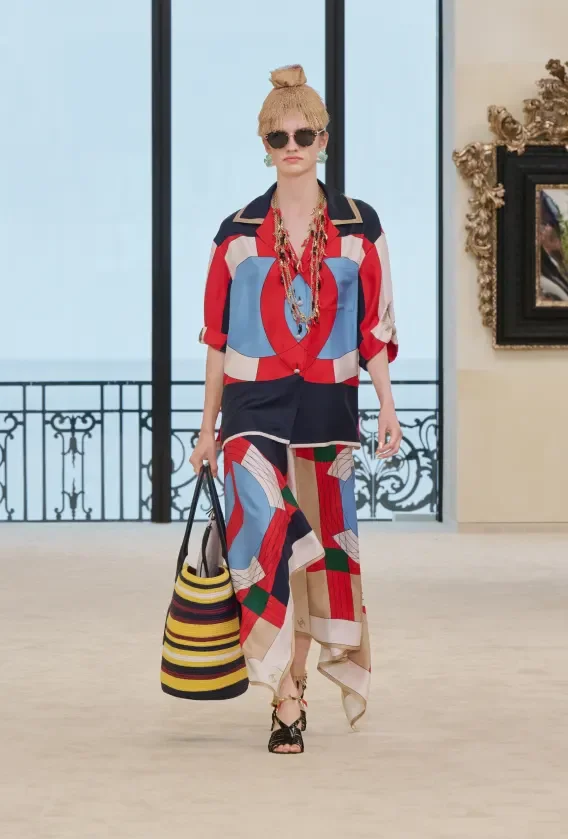
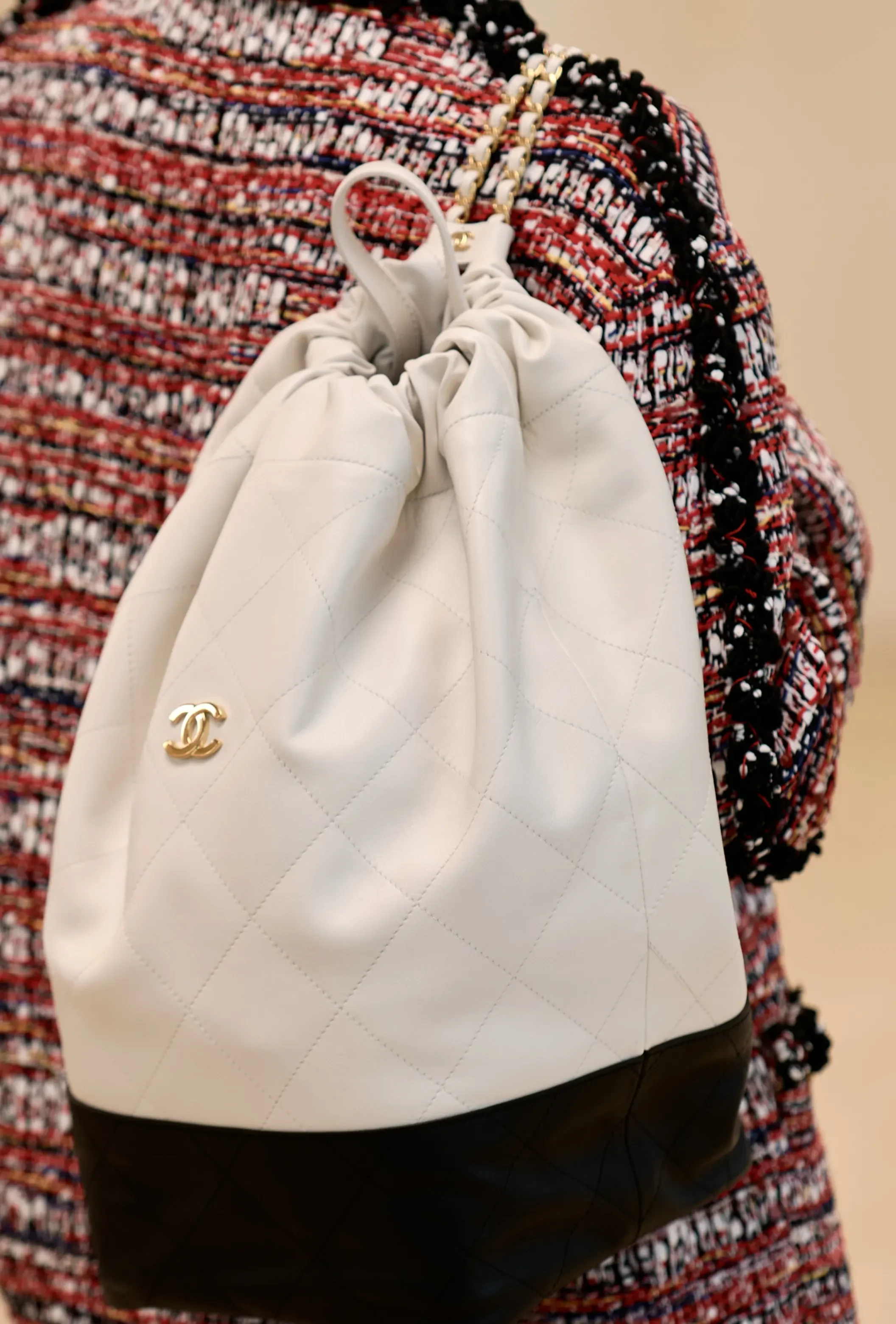
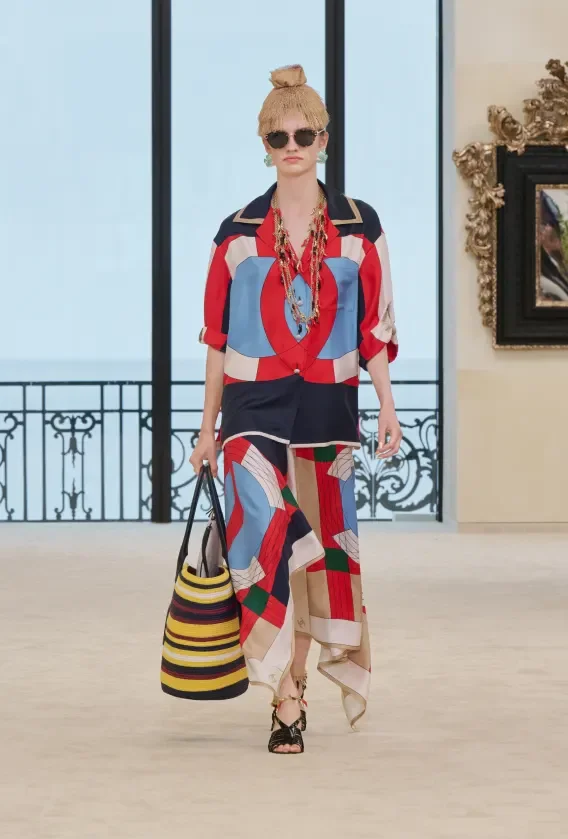
The footwear almost disappears, reduced to the essential. Open sandals, minimal structures, lines that do not imprison. Walking, here, is not about asserting presence, but about crossing space with delicacy. Nothing weighs, nothing fixes, everything follows.
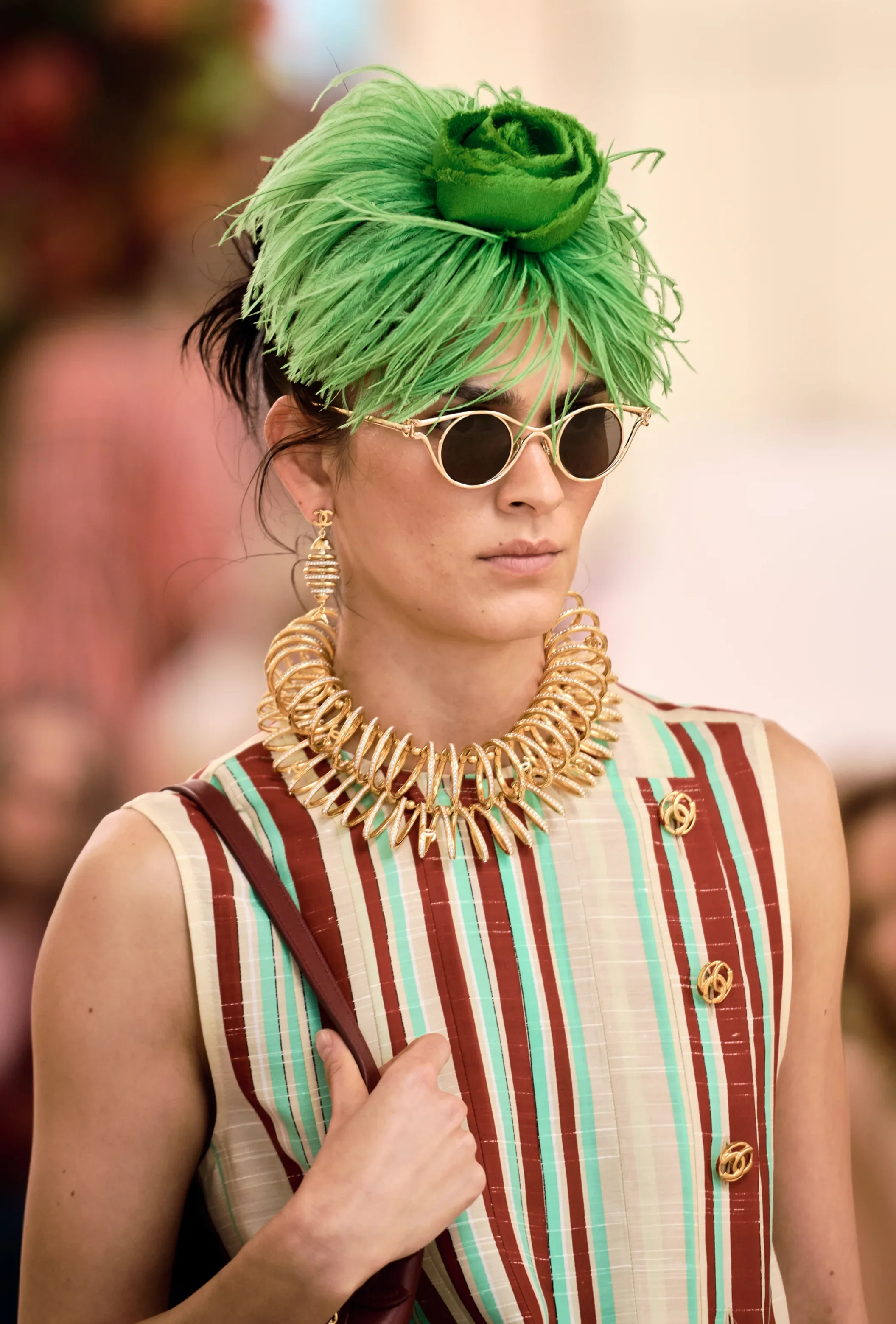
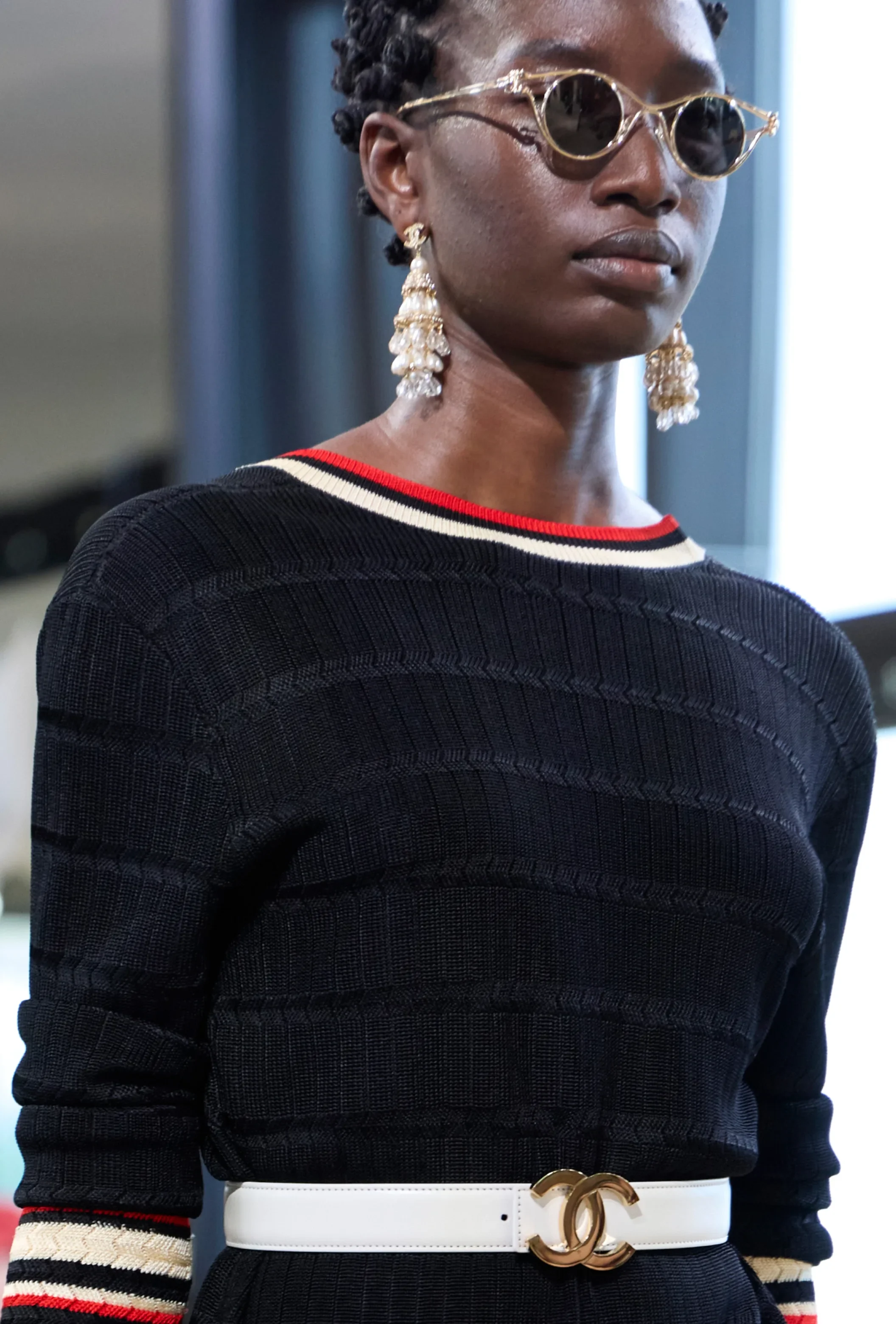
Elements such as scarves and eyewear reinforce this atmosphere. They evoke summer, wind, a suspended time between one gesture and another. They are not just accessories, but signs of a state of mind: light, open, in constant movement.
DRIFTING STRIPES
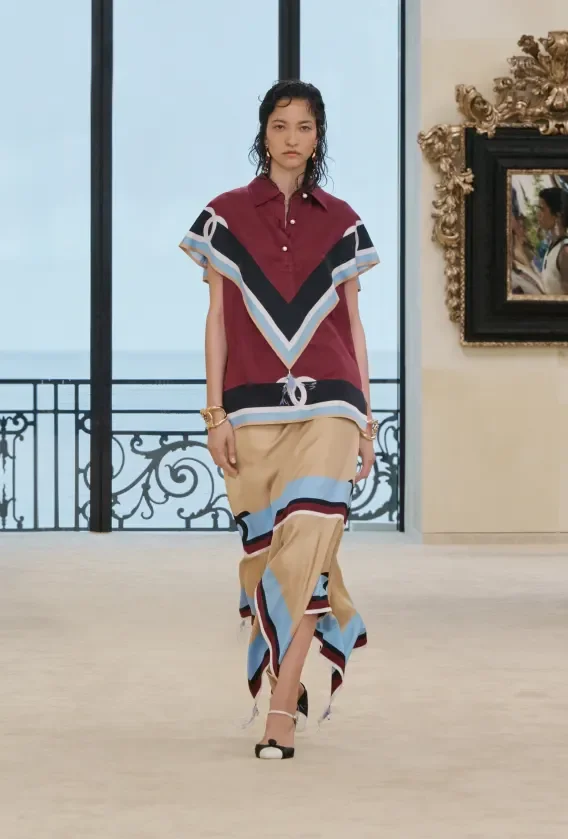
Throughout the collection, stripes appear as a continuous trace, almost like a direction. In Biarritz, where everything seems guided by invisible lines between sky and sea, they emerge almost naturally.
There is no rigidity in these markings. They do not frame the body, nor do they divide it. On the contrary, they follow movement, elongate, sometimes dissolving into the very fabric itself. These are lines that breathe.
Within them lies a distant echo of the maritime world, a subtle memory that recalls the language that Gabrielle Chanel helped transform into a symbol of modernity.
On the body, they first appear in lighter expressions, fine knits, fitted tops, resort inspired sets. Here, the line follows movement without imposing direction. It elongates, suggests, dissolves.
In dresses, the stripes shift behaviour. They become vertical, shaping the silhouette, creating rhythm.
But it is in the accessories that this motif gains a new reading.
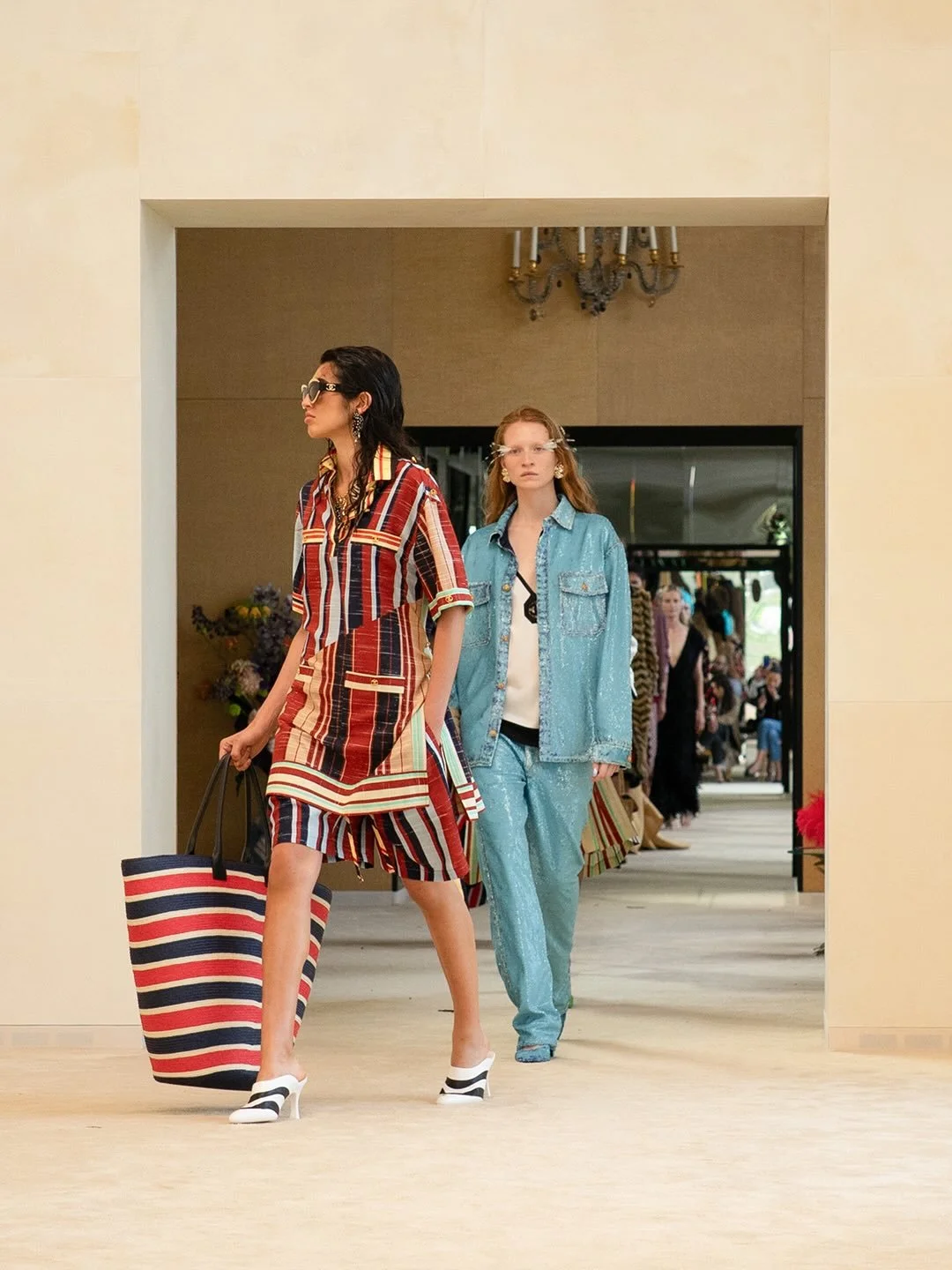
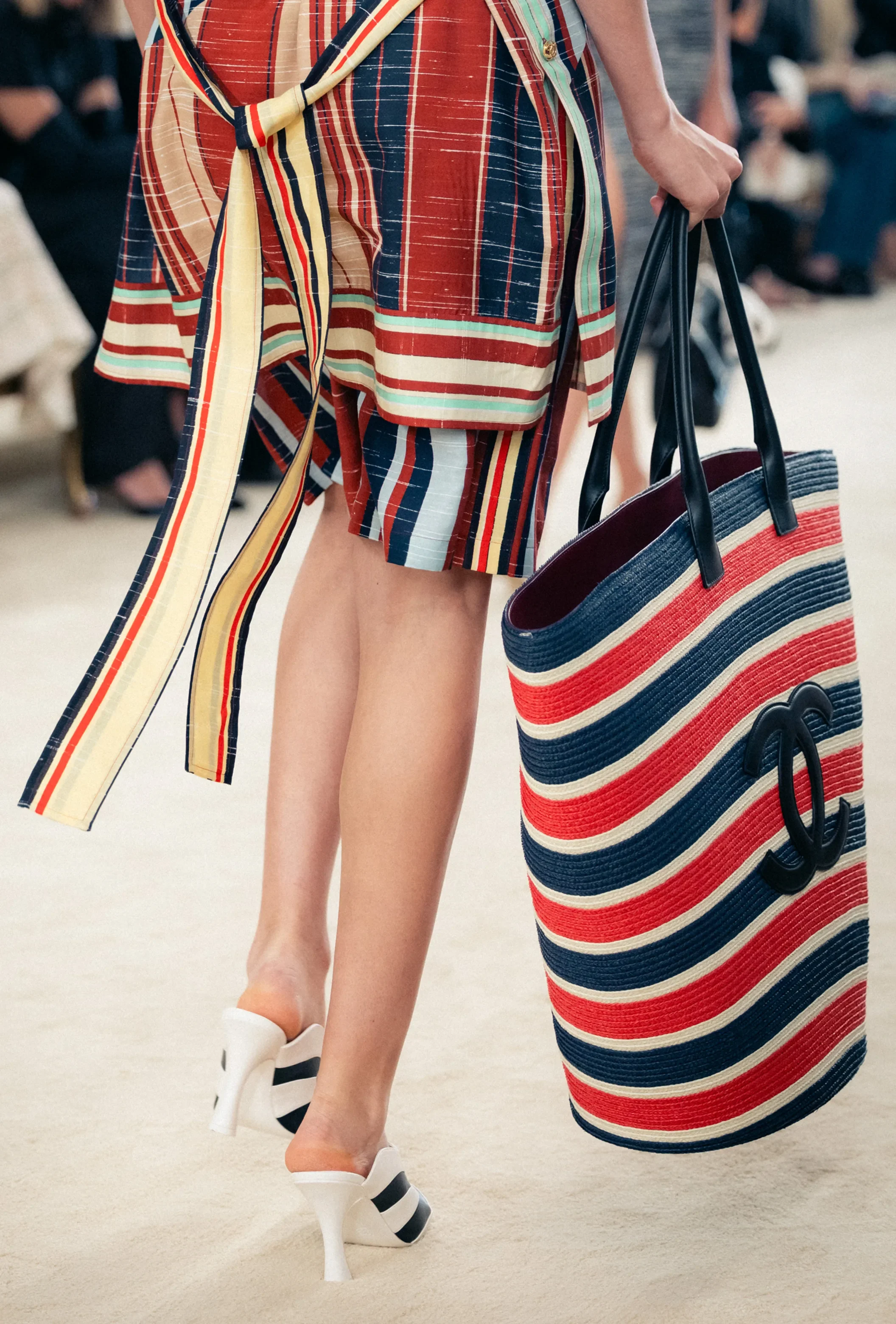
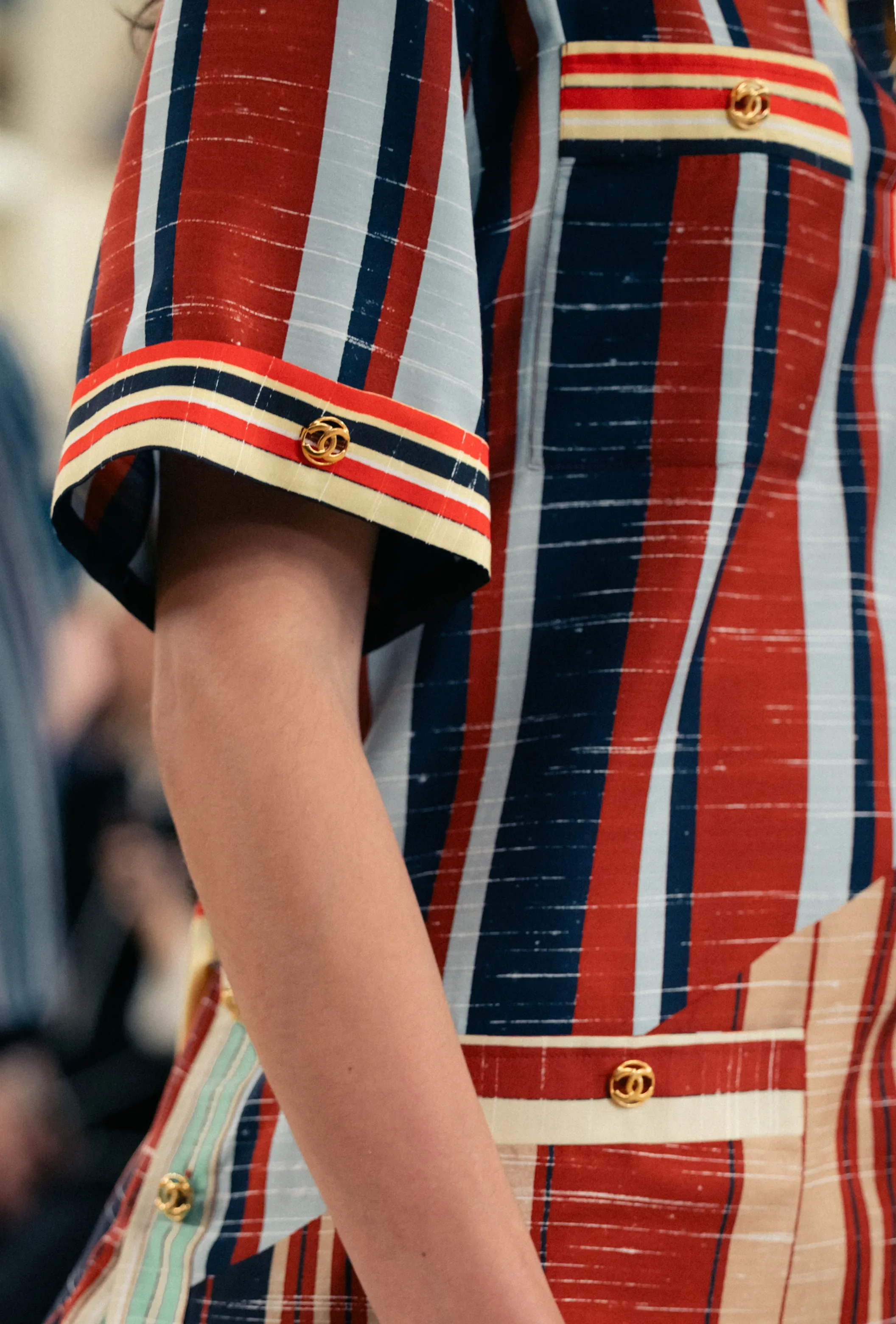
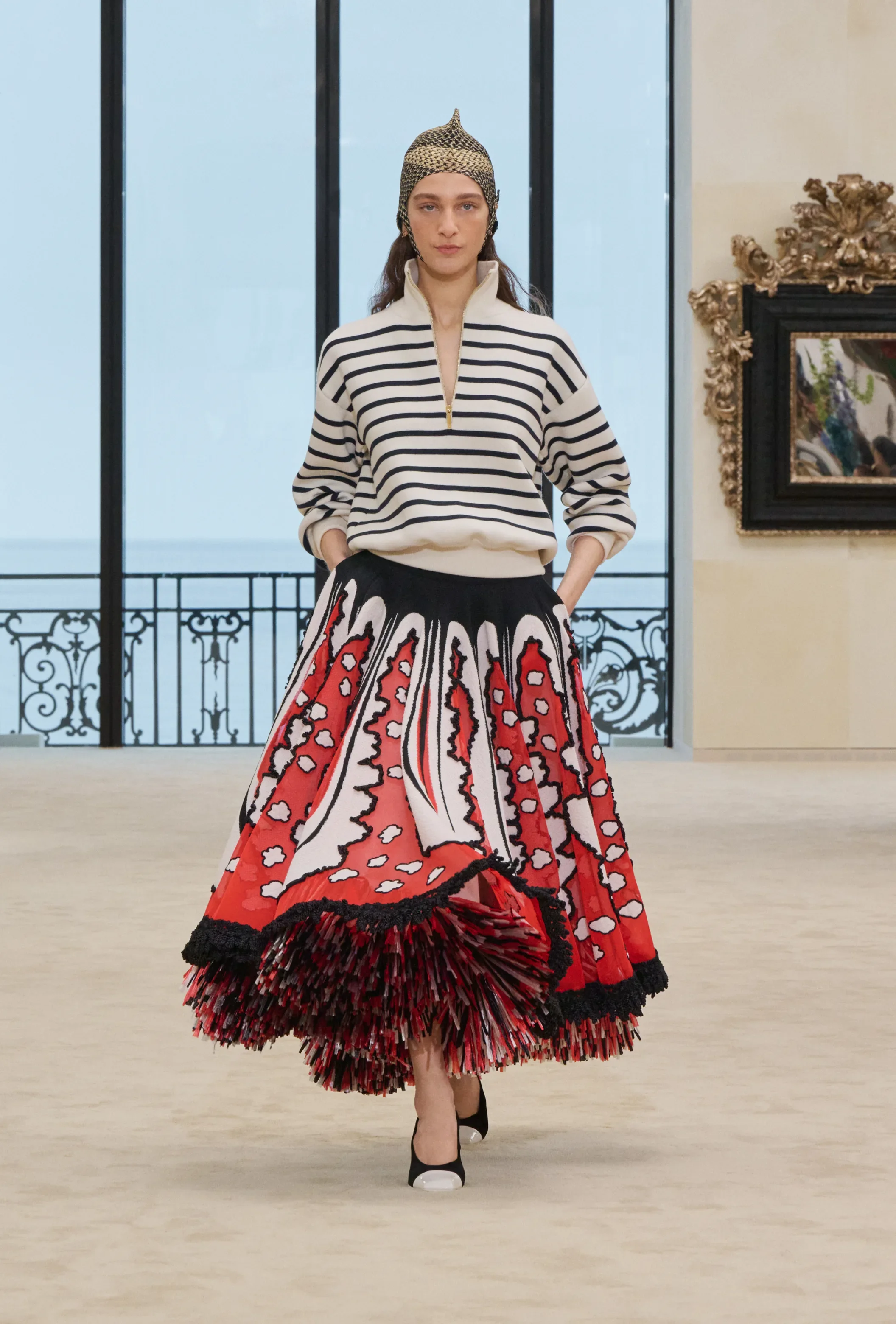
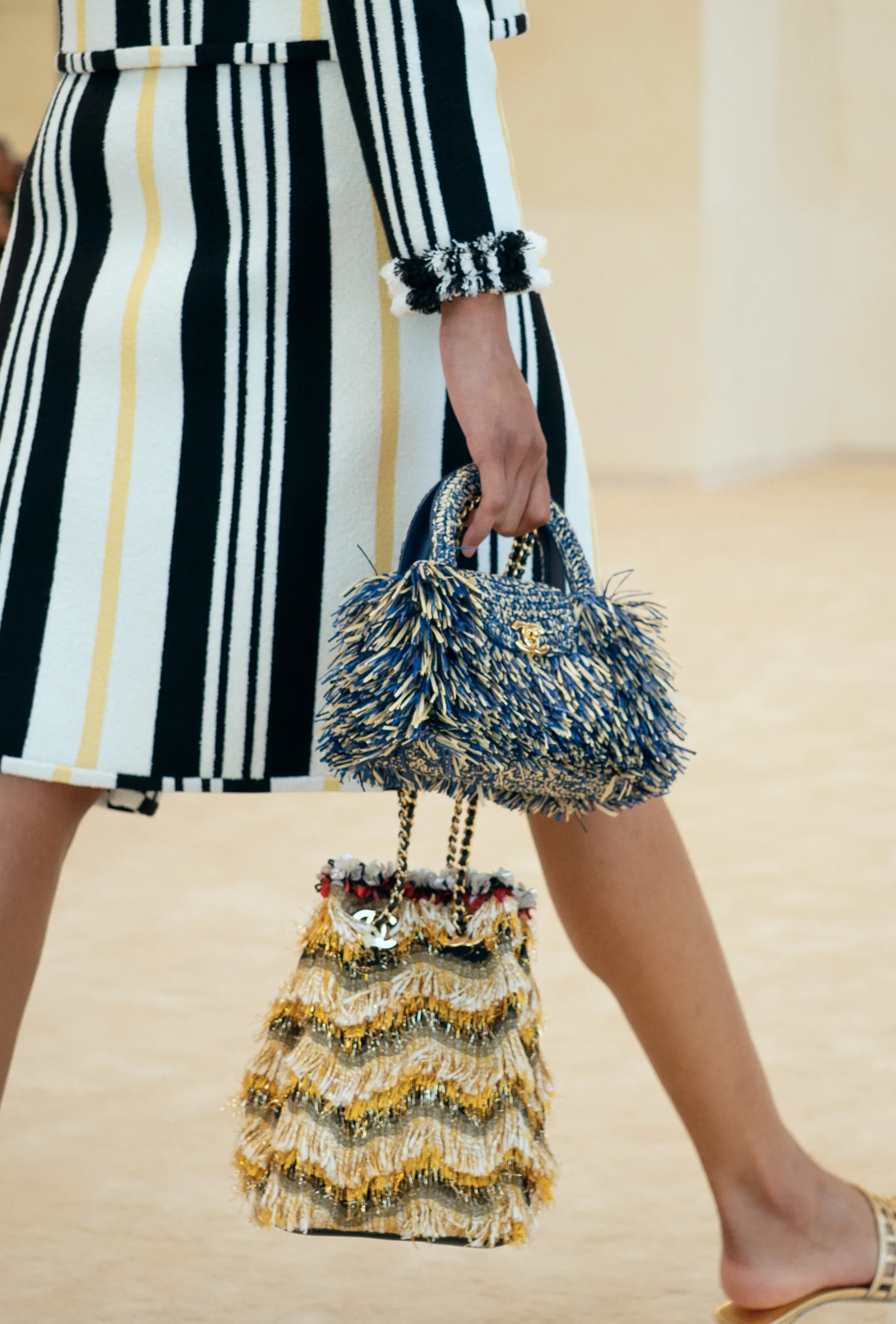
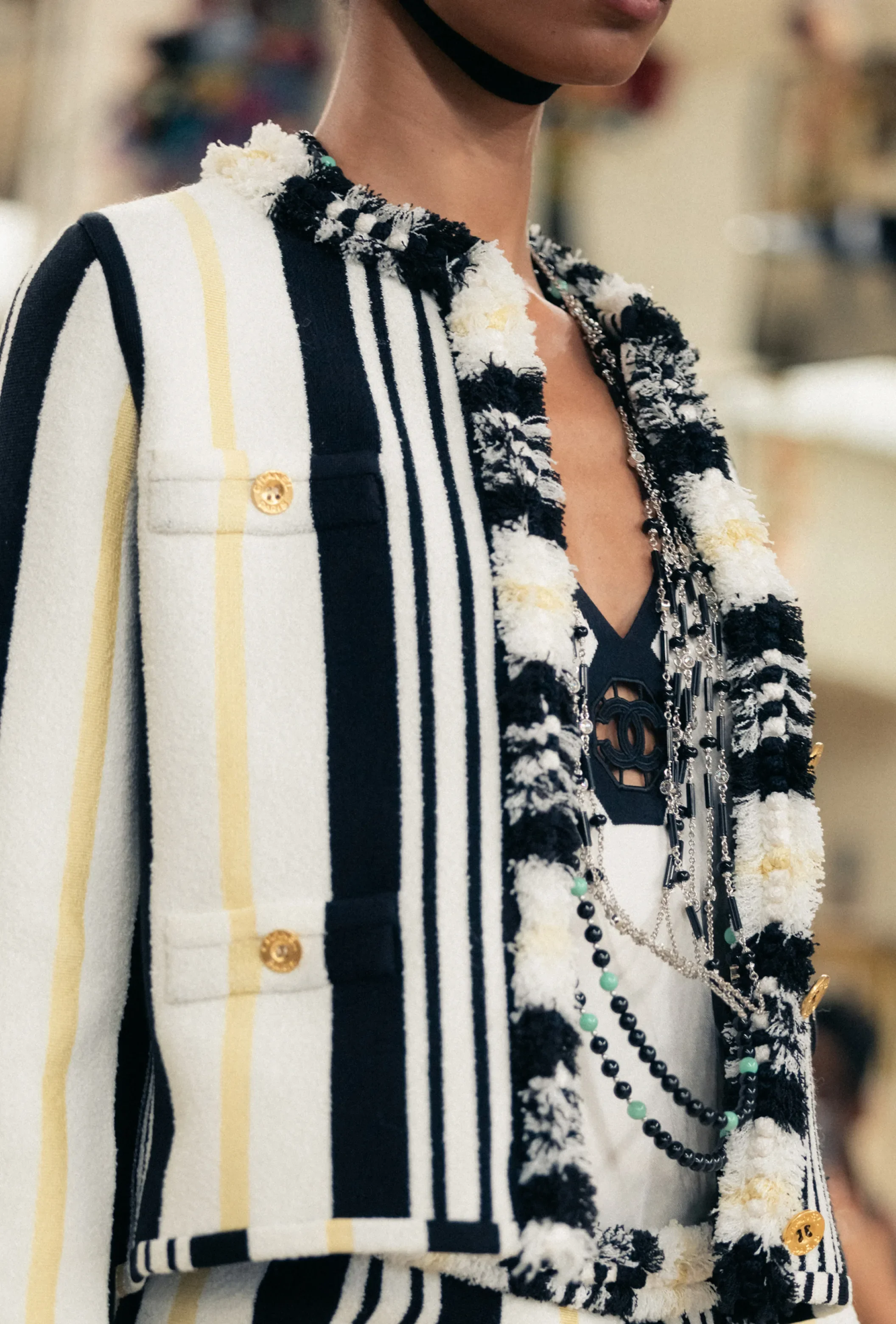
Striped bags appear as small fragments of portable architecture, or at the opposite extreme, in oversized raffia pieces in XXXL proportions. Some feel almost nautical, evoking an imaginary of travel without literal references, as if they were memories of the sea condensed into form.
In hats, scarves, and even finishing details, the stripes become more discreet. In some cases, they appear only as a suggestion, interrupted or partially visible, as if always on the verge of disappearing.
Lines that do not delimit, only guide.
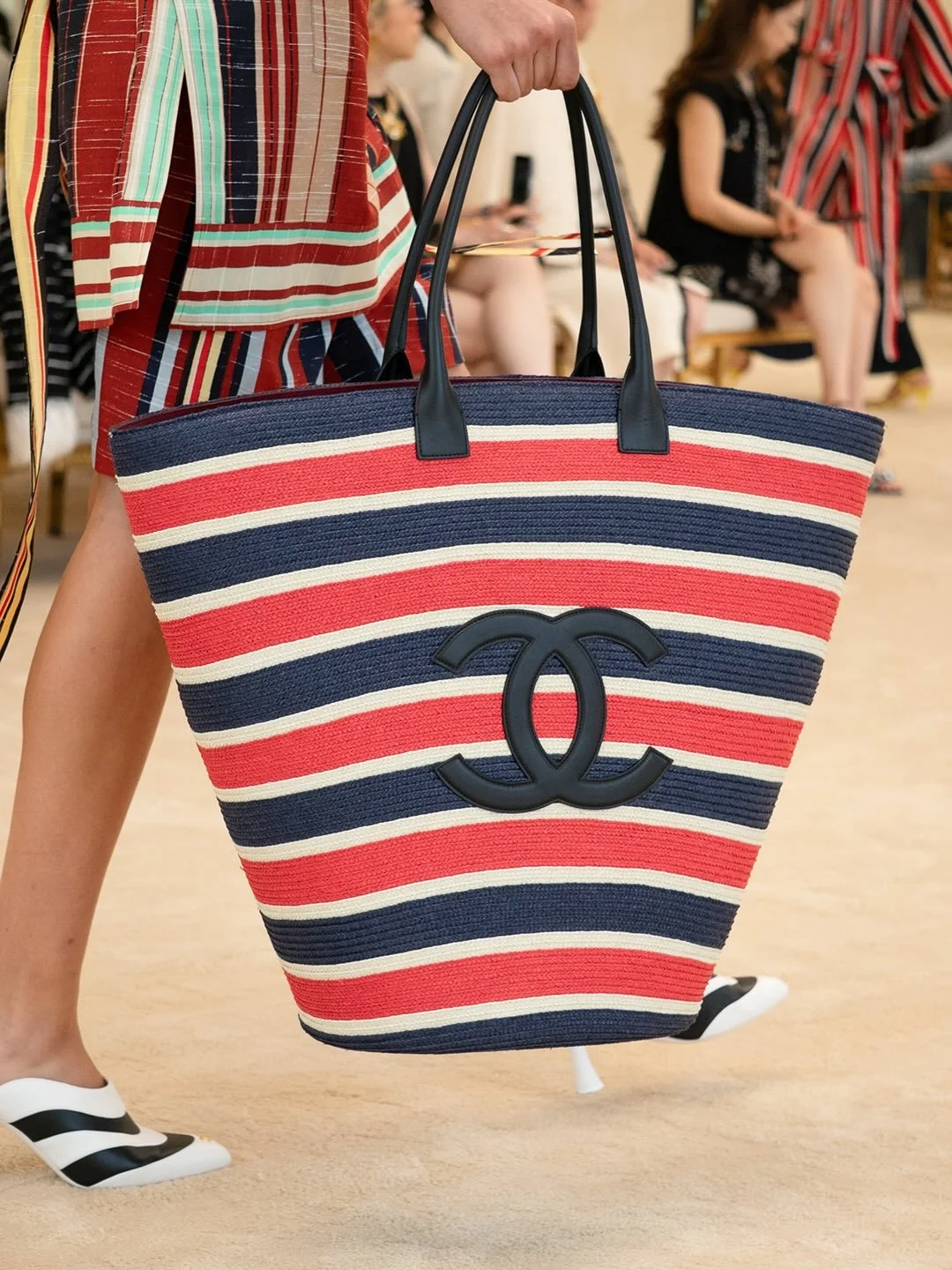
LOGO AL MARE: THE DOUBLE C
When the symbol ceases to be a mark and becomes a presence.
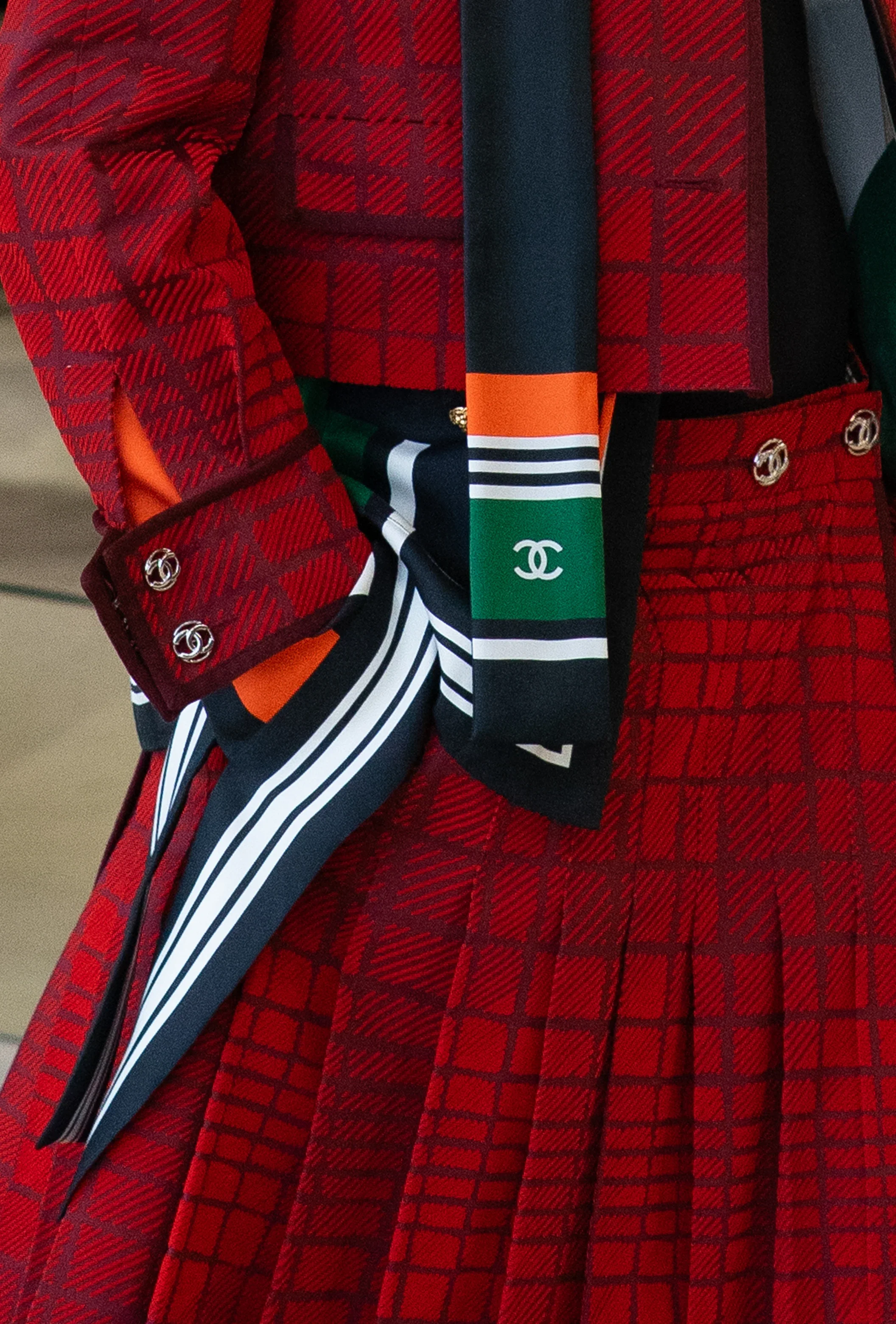
Amid the almost ethereal fluidity of the collection, there is an element that returns as a point of recognition: the Chanel double C.
But it does not appear as a rigid statement or automatic repetition. On the contrary, it appears diluted, integrated, at times almost hidden, a trompe l’œil.
There is intelligence in this gesture. Instead of marking territory in an obvious way, Chanel allows its symbol to circulate with the same lightness as the garments. It follows movement, adapts to material, and becomes part of the collection’s sensory language.
A SHOW THAT IS MORE SENSATION THAN FASHION
What we saw was not only clothing, but a state of mind. An invitation to exist with lightness, to walk barefoot between luxury and simplicity, just as Gabrielle herself did, holding her shoes as she crossed the beach.
Blazy did not try to reinvent Chanel. He did something more subtle: he listened. And by listening, he translated wind, salt, and freedom into fabric.
In the end, there was the impression that the show did not end when the lights went out. It remained there, in the sound of the waves, as if fashion had finally returned home.
Whether to the sound of Come Into My World by Kylie Minogue, Beached by Orbital, Aquarela do Brasil by Ary Barroso, or Emmenez-moi by Charles Aznavour, Chanel promises to soundtrack the coming summer.
Photos courtesy of Chanel