Celebrate the Diversity: Discovering Spain Through Its Wines
Credits: Isabela Espindola / Courtesy of Celebrate the Diversity
There are countries whose wine identities can become condensed into a handful of familiar names. For Spain, Rioja may be the first that comes to mind. Perhaps Albariño follows, then Cava or Sherry. Yet trying to define Spanish wine through its most internationally recognisable styles is rather like trying to understand Spanish gastronomy through a single dish. Spain's vineyards stretch across dramatically different landscapes, from the green, Atlantic-influenced north to the Mediterranean coast, the elevated vineyards of the interior and the sun-drenched south. Different climates, soils, indigenous grape varieties and centuries of regional winemaking traditions have created not one Spanish wine identity, but many.
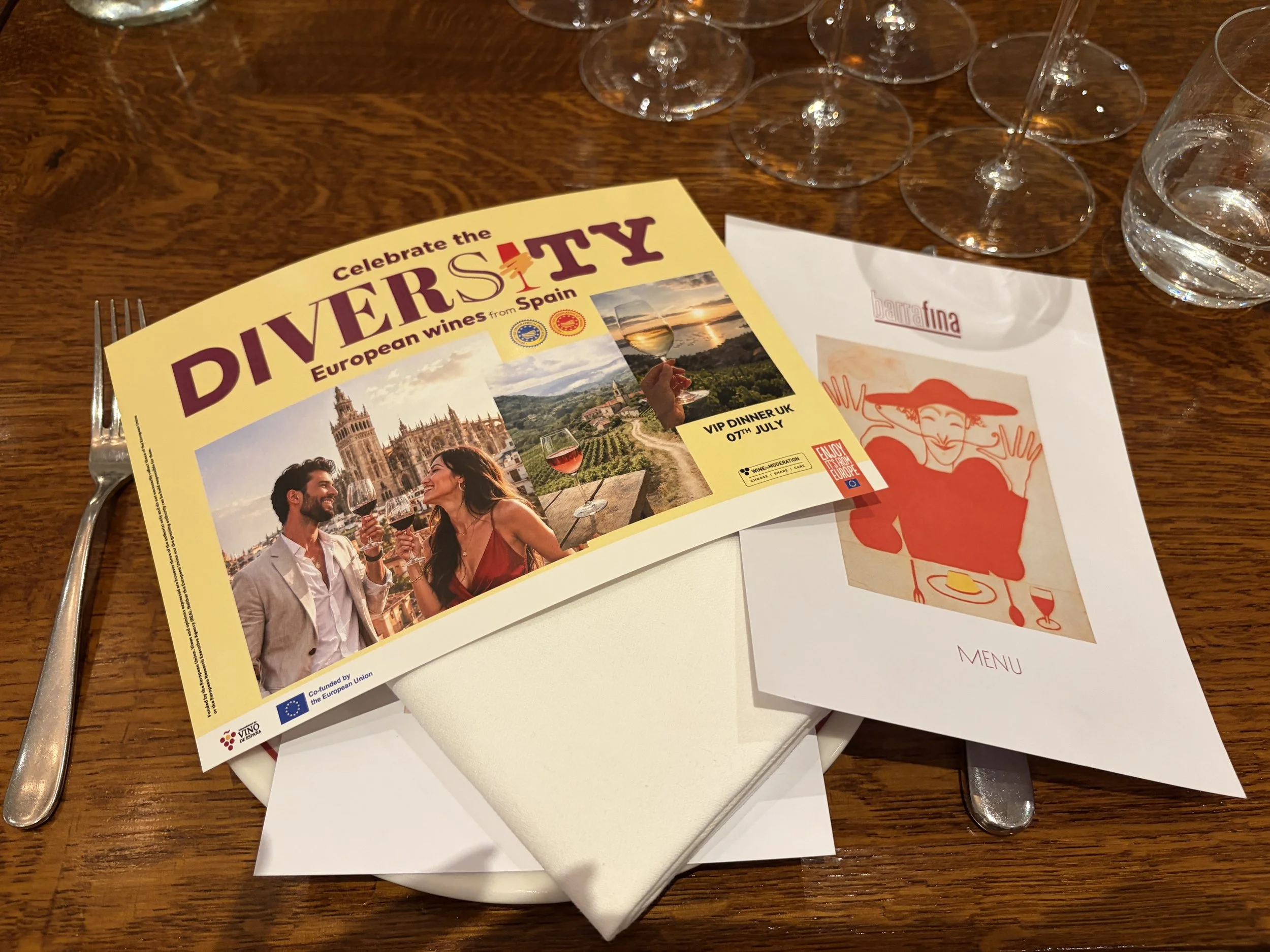
This was the premise behind an intimate dinner I attended at Barrafina on Adelaide Street in London, organised as part of Celebrate the Diversity, a campaign dedicated to showcasing the diversity, quality, authenticity and provenance of Spanish wine. Presented alongside a specially curated dinner, the tasting transformed what could have been a conventional introduction to Spanish wine into something far more interesting: a journey across the country, one glass at a time.
A country shaped by wine
At the beginning of the evening, representatives of the Spanish wine sector offered a reminder of just how deeply wine is embedded within the country's geography, economy and culture. Spain has more than 100 wine Designations of Origin, alongside a much wider network of protected geographical indications. More importantly, wine is produced across the country, reflecting landscapes and traditions that can differ enormously from one region to another.
Spain also has the world's largest area under vine. But statistics alone cannot explain its wine culture. Wine in Spain belongs to gastronomy, agriculture, family traditions and regional identity. It is part of how landscapes have been cultivated and communities sustained over generations. And that relationship between wine and food was particularly important to the evening at Barrafina. Rather than tasting each wine in isolation, renowned sommelier Jonathan Kleeman guided us through a series of pairings designed to reveal how different Spanish wines behave at the table. It was here that the concept of diversity became tangible.
Beginning beside the Atlantic
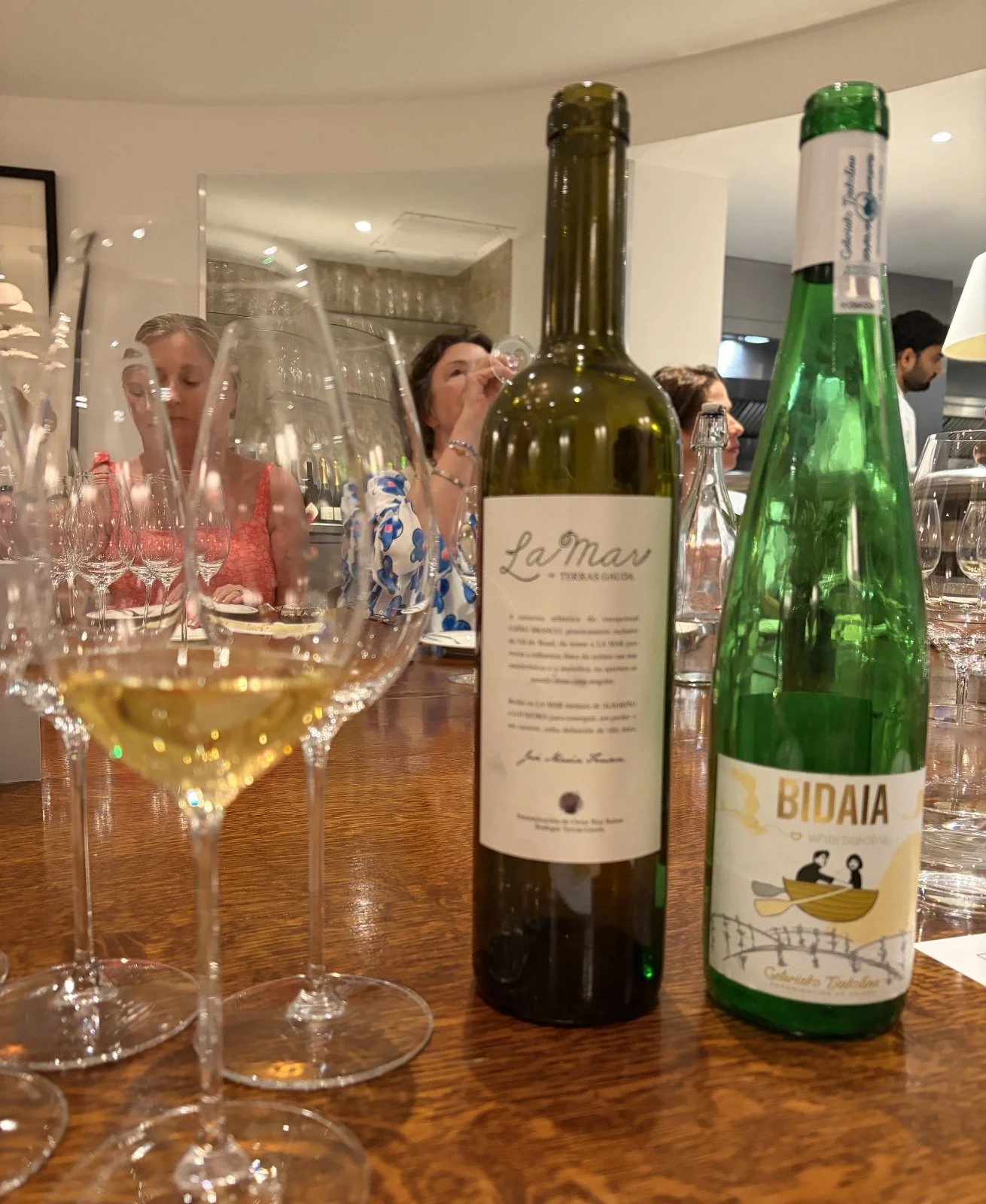
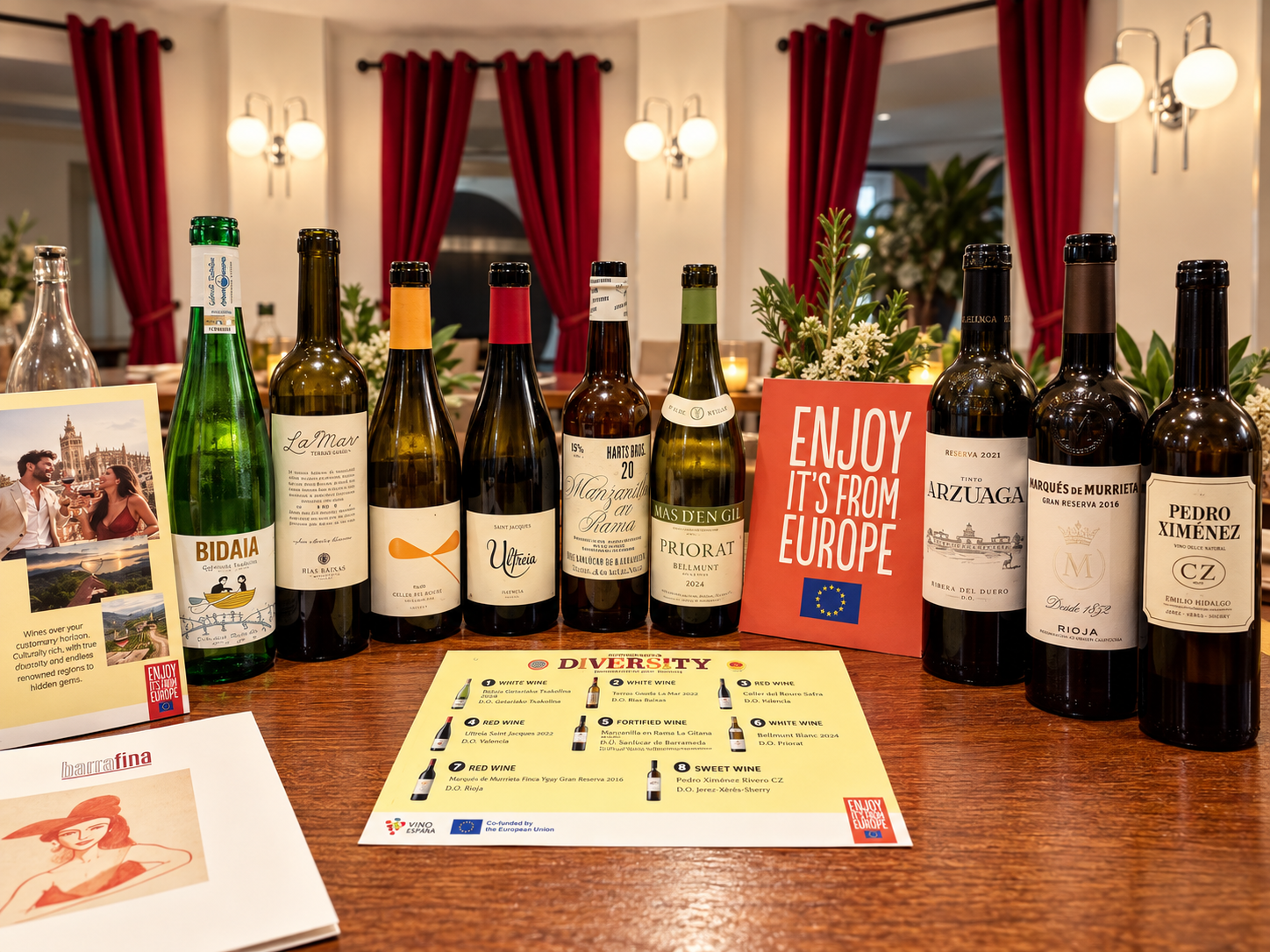
Our journey began in the Basque Country with Bidaia Getariako Txakolina 2024, made from Hondarrabi Zuri and Gros Manseng. Txakoli is a compelling place to begin challenging assumptions about Spanish wine. Fresh and lively, it immediately evokes a very different Spain from the warm landscapes often associated with the country's vineyards.
Credits: Isabela Espindola / Courtesy of Celebrate the Diversity
It was paired with pimientos de Padrón on the principal menu. As someone who follows a strict gluten-free diet, I was served an adapted menu throughout the evening, with the Txakoli accompanying paletilla Ibérica de bellota instead. From the Basque Country, we travelled west to Galicia. Terras Gauda La Mar 2022, from DO Rías Baixas, brought together Caíño Blanco, Albariño and Loureiro. Its pairing with a gilda on the principal menu reinforced the connection between Atlantic wine and the flavours of northern Spanish gastronomy, while my alternative pairing featured white anchovy. By the second glass, the evening had already established an important point: even neighbouring regions can tell markedly different stories.
Beyond the grapes we already know
The journey then turned towards Valencia with Celler del Roure Safra 2023, made with Arcos and Mandó. These are precisely the encounters that make exploring Spanish wine particularly rewarding. Beyond internationally recognised varieties lies an extraordinary collection of grapes closely connected to particular regions and local winemaking histories.
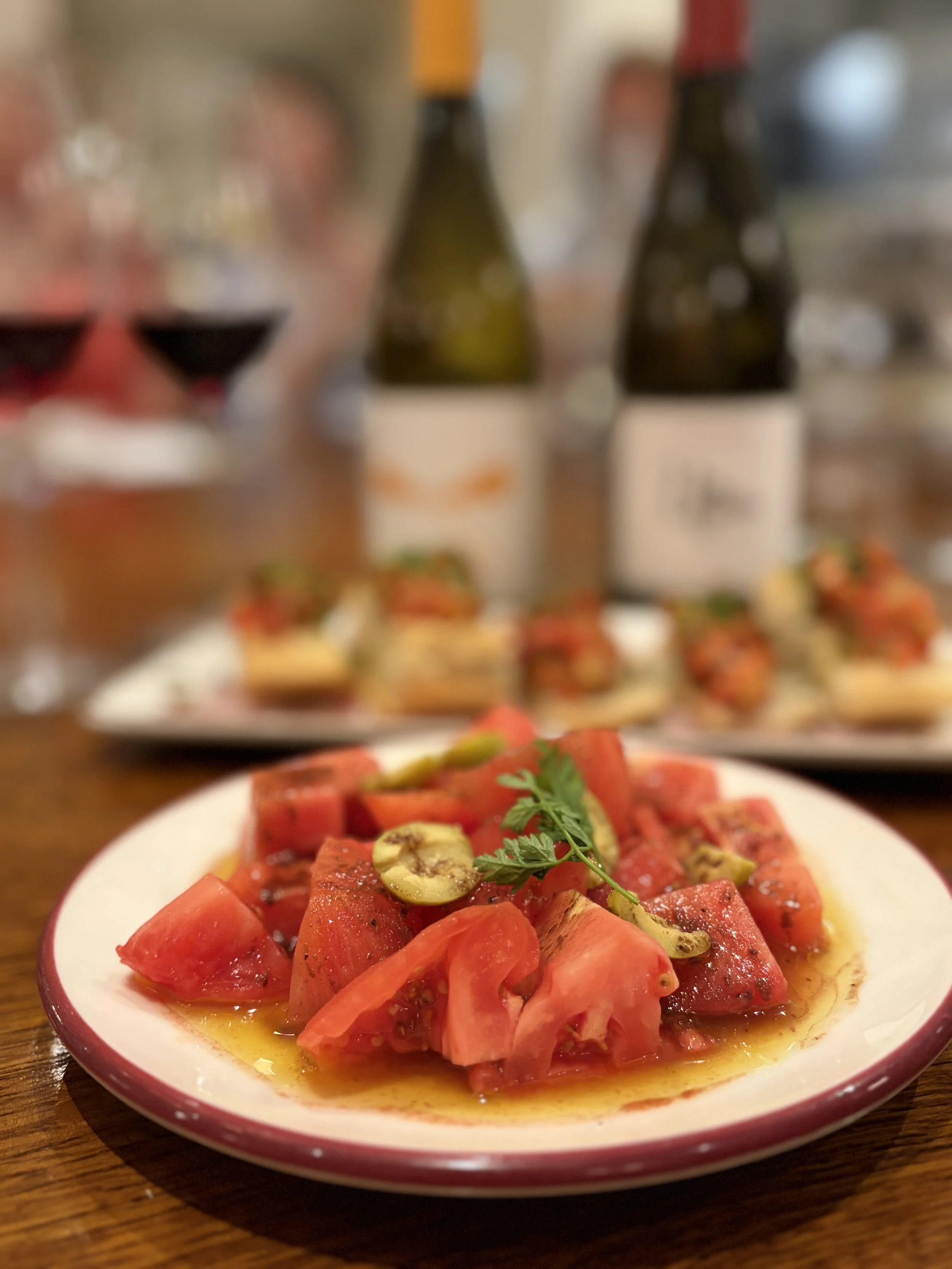
Safra was followed by Ultreia Saint Jacques 2022 from Bierzo in Castilla y León, made entirely from Mencía. On the principal menu, it was served with ham and mushroom croquetas, while my gluten-free pairing was aubergine tempura with honey. As the glasses accumulated, so did the names: Hondarrabi Zuri, Caíño Blanco, Loureiro, Arcos, Mandó and Mencía. For someone accustomed to seeing the same handful of international grape varieties repeated across wine lists, Spain offers an invitation to become curious again.
Credits: Isabela Espindola / Courtesy of Celebrate the Diversity
And perhaps that is one of the most valuable aspects of Celebrate the Diversity. Wine education does not need to begin with memorising classifications or tasting terminology. Sometimes it begins simply by discovering a grape whose name you have never encountered before.
When geography appears in the glass
Wine is, in many ways, geography that can be tasted. Climate influences ripening. Altitude changes growing conditions. Proximity to the Atlantic or Mediterranean matters. So do soil, rainfall and temperature. Human decisions then enter the equation through grape selection, harvesting, fermentation, ageing and generations of accumulated knowledge. Spain's system of Designations of Origin helps formalise that connection between wine and place.
At the dinner table, however, the concept becomes considerably easier to understand. Taste wines from several parts of Spain alongside one another and the differences begin to speak for themselves. One of the clearest shifts of the evening arrived with Manzanilla en Rama La Gitana, produced from Palomino Fino in Sanlúcar de Barrameda, Andalucía. After travelling through northern and eastern Spain, suddenly we were in an entirely different wine tradition.
Served with artichoke fritura and alioli, the Manzanilla demonstrated another dimension of Spanish wine culture, one in which biological ageing, coastal conditions and generations of winemaking tradition create something unmistakably connected to place.
Priorat and Rioja
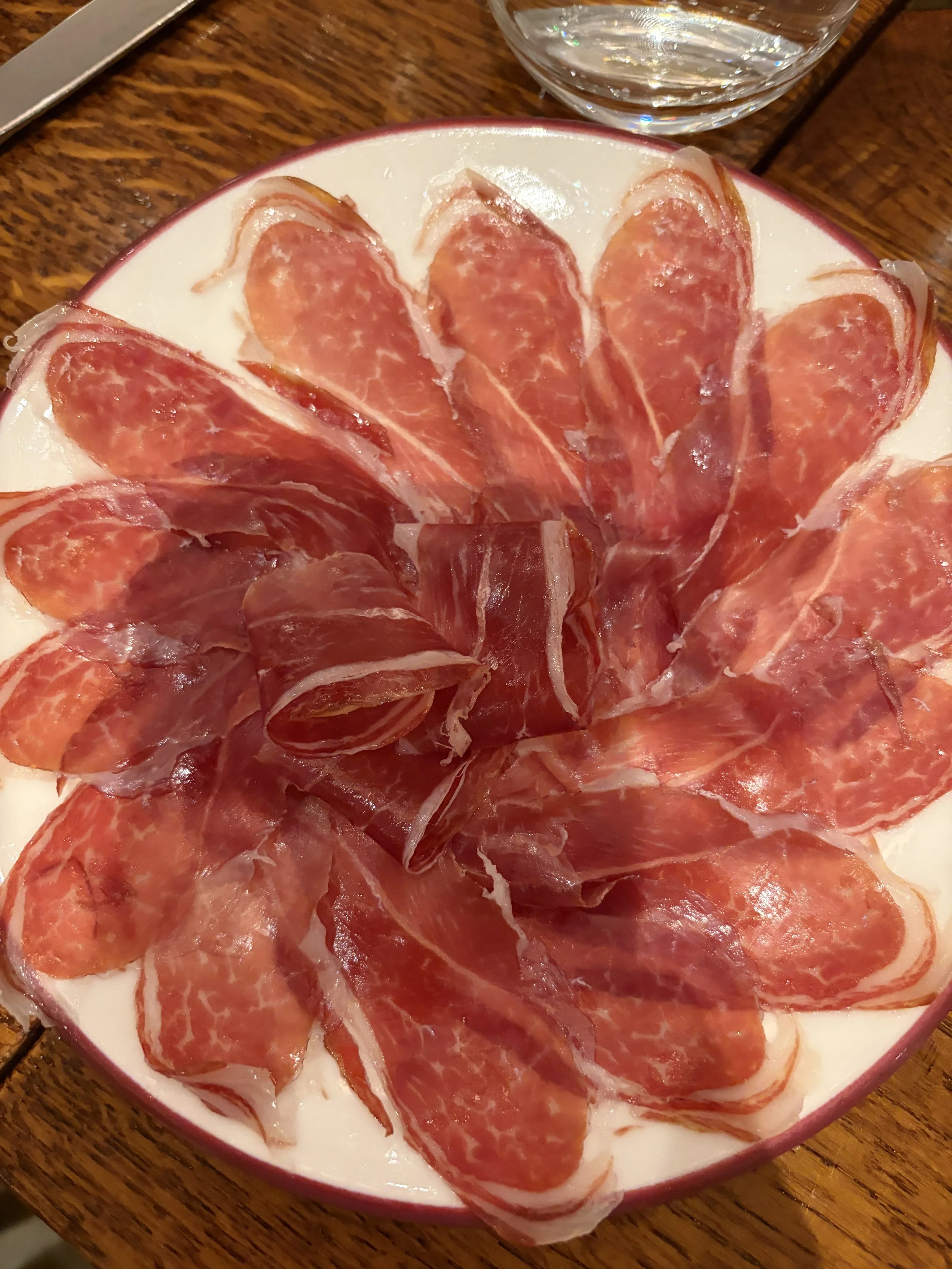
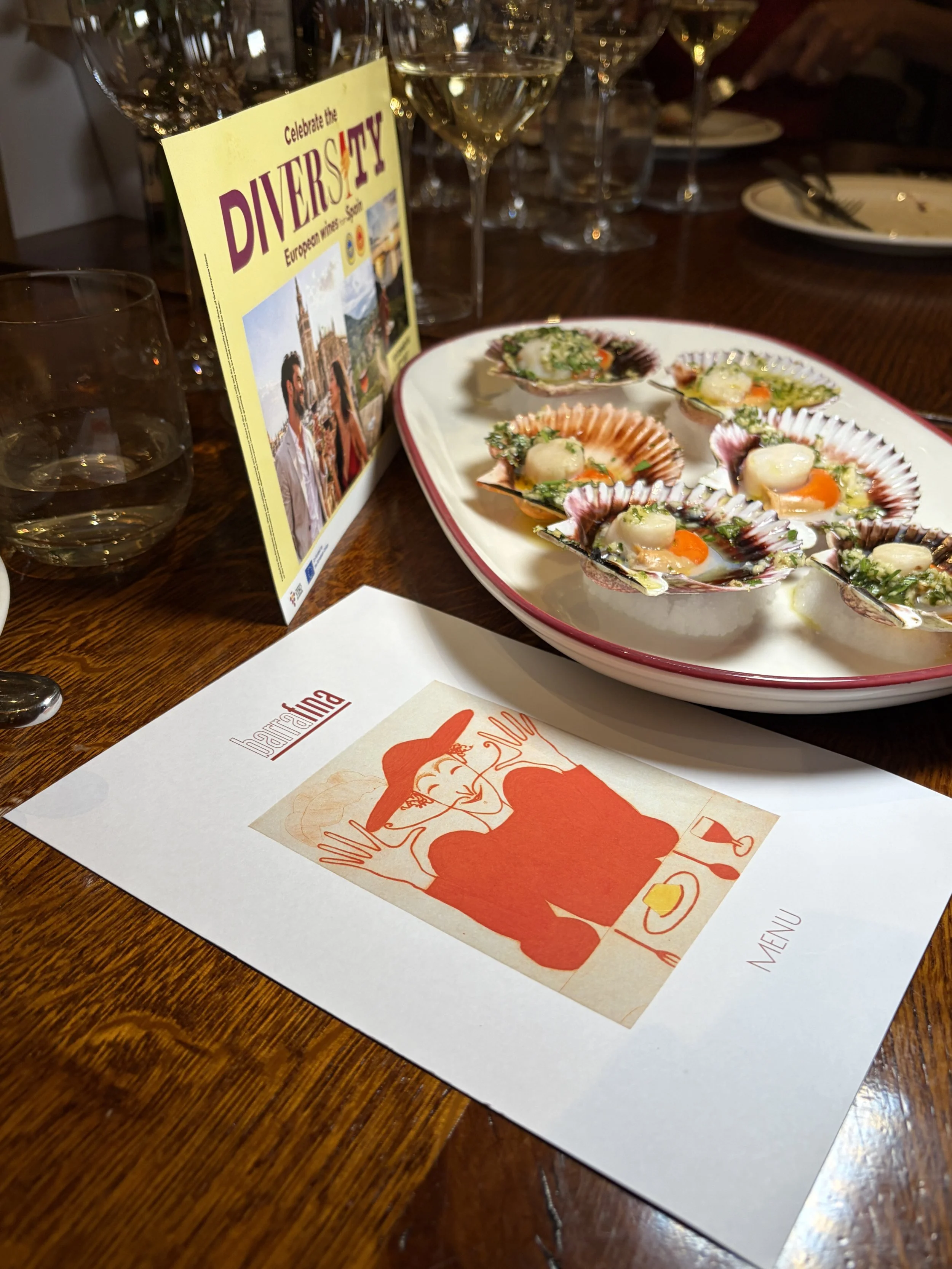
From Andalucía, our glasses took us to Catalunya. Bellmunt Blanc 2024, from DOQ Priorat, combined Macabeo, Garnacha Blanca and Viognier. It accompanied tortilla on the principal menu, while my gluten-free version was served with queen scallop ajillo. Then came one of the most recognisable names of the evening. Marqués de Murrieta Finca Ygay Gran Reserva 2016, from Rioja, brought together Tempranillo, Graciano, Mazuelo and Garnacha and was paired with lamb moruno. There was something particularly effective about encountering Rioja relatively late in the dinner.
Credits: Isabela Espindola / Courtesy of Celebrate the Diversity
For international consumers, Rioja can sometimes become synonymous with Spanish red wine. Yet after travelling through the Basque Country, Galicia, Valencia, Bierzo, Andalucía and Priorat, it arrived not as the definition of Spanish wine but as one important expression within a much larger landscape. That distinction matters.
Celebrating lesser-known regions does not require diminishing the great names that helped establish Spain's international reputation. Instead, familiar regions can become gateways into discovering everything that exists alongside them.
Finishing in Jerez
Our final destination returned us to Andalucía, this time to Jerez. Emilio Hidalgo Pedro Ximénez accompanied Tarta de Santiago on the principal menu and frozen lemon on my gluten-free menu. It was difficult to imagine a greater contrast with the Txakoli that had opened the evening. We had begun with freshness and Atlantic influence and finished with the concentration and sweetness of Pedro Ximénez. Between those two glasses lay reds and whites, indigenous grapes, different climates, different methods of production and an equally varied collection of dishes. And we had never left Spain. That contrast perhaps communicated Celebrate the Diversity more successfully than any slogan could.
Wine belongs at the table
Holding the dinner at Barrafina was particularly appropriate because understanding Spanish wine also means understanding its relationship with food. The two have developed alongside one another. The evening demonstrated how a pairing can reveal characteristics that might otherwise be overlooked. Acidity becomes more pronounced against richness. Salinity finds an echo in seafood. Sweetness can soften spice. Texture becomes as important as aroma.
Credits: Isabela Espindola / Courtesy of Celebrate the Diversity
There was also something inherently social about the format. Wine was discussed, tasted, compared and questioned around a shared table. That matters because for all the technical language surrounding wine, it remains fundamentally connected to hospitality. It is made to be opened.
Heritage and the future
The campaign also places sustainability alongside heritage, provenance and quality, and these ideas are more interconnected than they may initially appear. Viticulture depends directly on natural resources and environmental conditions. Changes in temperature, rainfall and water availability affect vineyards in ways that are increasingly difficult to ignore.
At the same time, preserving indigenous grape varieties and regional winemaking knowledge can be part of maintaining the diversity that makes Spanish wine so distinctive. Heritage, therefore, should not simply mean preserving the past. It can also mean understanding what generations of growers have learnt about particular landscapes and considering how that knowledge can contribute to the future of wine production. The diversity being celebrated is not merely stylistic. It is agricultural, geographical and cultural.
The luxury of knowing where something comes from
Across contemporary gastronomy and hospitality, provenance has become increasingly important. There is a different kind of pleasure in drinking a wine when you begin to understand where it comes from, which grape created it and why it tastes different from something produced hundreds of kilometres away. Wine has always contained these stories. A bottle carries geography. A grape carries history. A vineyard represents years of decisions made long before the wine reaches a restaurant table in London. But wine culture can occasionally make those stories unnecessarily intimidating.
Credits: Isabela Espindola / Courtesy of Celebrate the Diversity
The Barrafina dinner suggested another approach. You do not need to recognise every appellation before ordering a bottle. You do not need to identify every aroma in a glass. Curiosity is enough. Try the grape you cannot pronounce. Ask about the region you have never visited. Compare it with something familiar. Notice what changes when food arrives. Knowledge can follow pleasure, rather than becoming a condition for it.