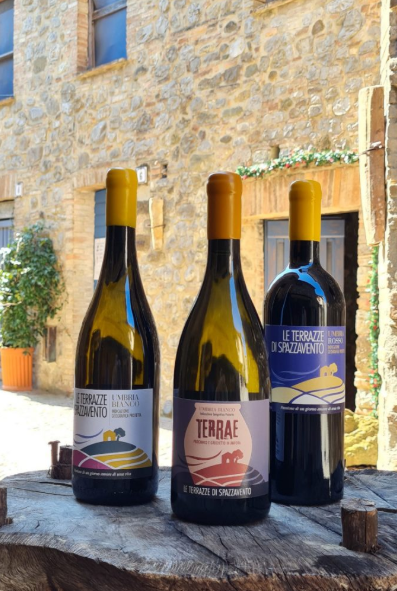
For the love of the process: The soul of an Umbrian winery
The best way to understand Umbria is to stop rushing through it. The immediate instinct in these hills is to simply slow down and listen, letting the frantic pace of the modern world slip away entirely.
This is a landscape where the borders of Tuscany and Lazio blur into a tapestry of clay and volcanic tufa rock, and for the unhurried traveller, it reveals a completely different definition of luxury.
It is not the shiny, manufactured opulence found in corporate tasting rooms, but rather the luxury of absolute rarity, silence, and time.
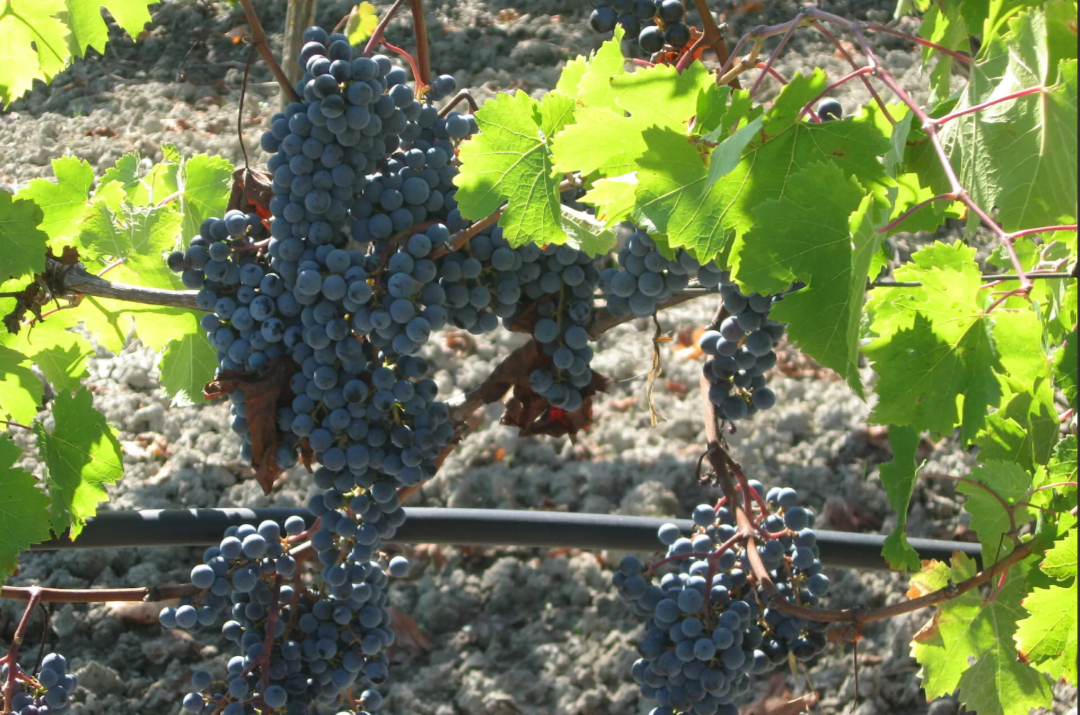
Here, the cooling northern breezes sweep across a specific hill that the locals call Spazzavento, a place where forty-year-old vines grow on steep terraces high above the sea.
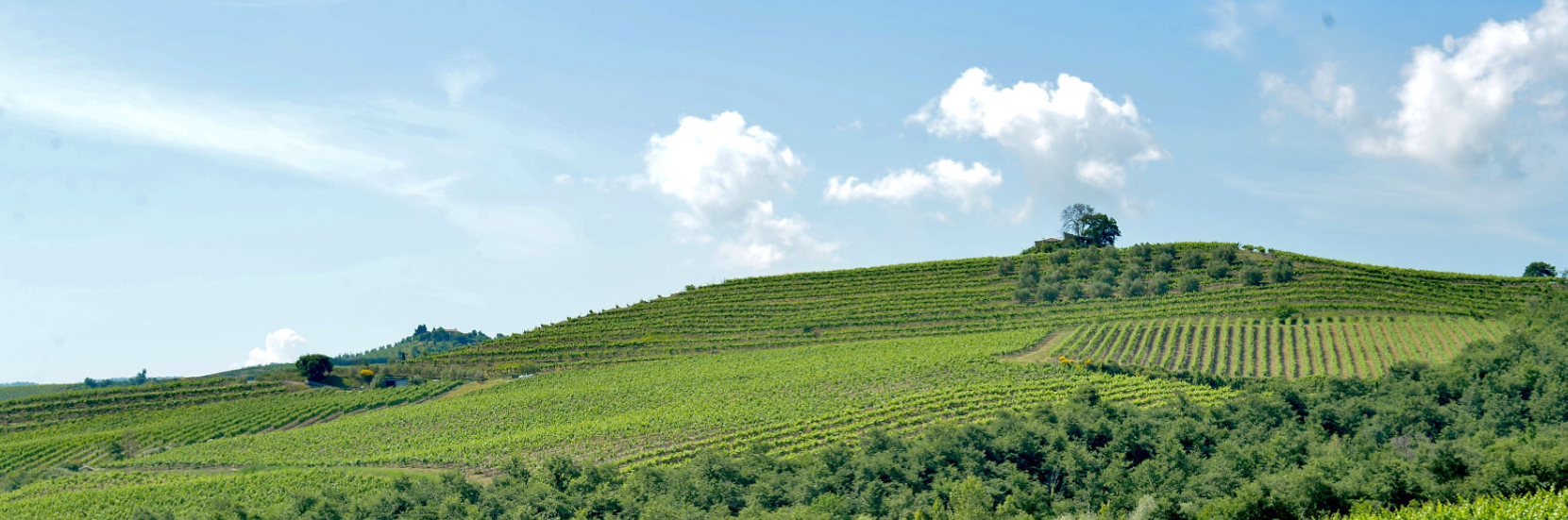
A quiet rebellion on the hill
Arriving here on a wonderfully slow travel trip with Villaggio Tours, using the quiet sanctuary of the Six Keys guest house in nearby Allerona as a base, the true rhythm of the region quickly becomes clear.
This is the home of Terrazze di Spazzavento, an independent winery where Paolo rejects the polished performance of modern wine snobbery in favour of something far more exclusive: complete independence.
In a world where luxury brands constantly scramble to expand, Paolo intentionally limits his production to just six thousand bottles a year. He does not exhibit at massive commercial expos, nor does he court the conventional networks of global distribution.
Instead, his craft is an intimate, quiet conversation with the land, designed solely for those who appreciate the nuances of unfiltered history.
For Paolo, the recent transformation of wine into a pretentious middle-class hobby is a source of quiet amusement. He remembers a childhood where wine was a simple, honest staple of daily life, enjoyed at lunch and dinner by families who worked the soil.
Decades later, the culture shifted, and suddenly it became fashionable. Paolo notes the irony of a world where individuals are made to feel foolish if they do not perform the synchronised rituals of swirling a glass, even though the corporate consultants giving the advice have often never held a pair of pruning shears in their lives.
“When I was a boy there wasn’t this wine culture, like the snob wine culture they have now,” Paolo reflects. “If you drank wine you drank wine at lunch, and wine at dinner. They were considered to be on the margins. Then wine became posh and all of a sudden if you didn’t swish your wine you were a cretin. I just don’t have any patience for this,” he laughs.
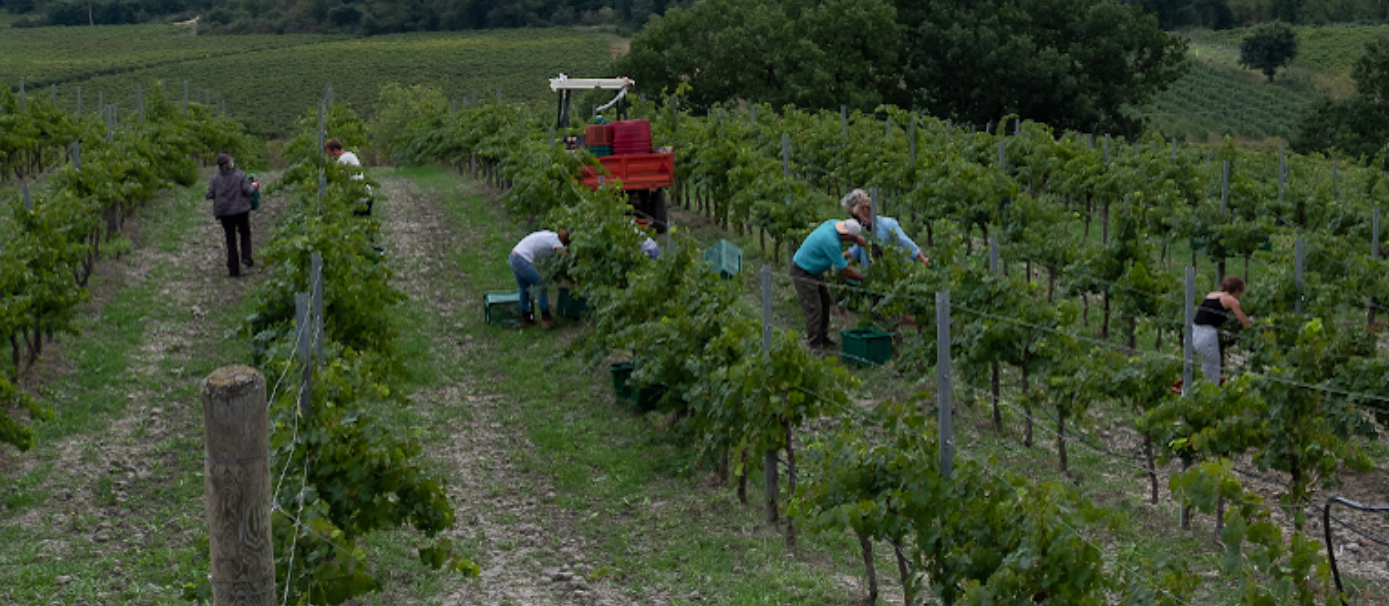
Roots, scars, and village songs
His respect is reserved entirely for the liquid inside the glass and the honesty of the process. This dedication is a family legacy. Paolo comes from generations of farmers, a lineage deeply tied to his mother's generation when families raised livestock to maintain complete self-reliance.
He grew up immersed in the seasonal rhythms of the village, where everyone made their own wine down in the basement, a time he remembers fondly through the melody of song and the rich aroma of fermentation.
To illustrate this lifelong bond with the soil, Paolo points to a visible mark on his hand, a scar from a work injury sustained on the land when he was just six years old. It is a physical testament to a tradition that began to fade around 1979 when the village cellars grew quiet and small growers began selling their harvest to large commercial cooperatives.
Paolo worked with those cooperatives for years before breaking away twelve years ago to establish his own independent winery, driven by a desire to restore small-scale artisanal craft to his community.
This deep sense of empathy and community runs through Paolo's entire history, rooted in memories of his childhood school days. He speaks tenderly of a time when children from Rome were sent to his village as boarders, often coming from families who lacked resources.
Seeing how those children suffered being sent away to boarding school left a lasting impression on him. While they were far from home, Paolo's family opened their doors, welcoming them into their household.
The young boarders would come over to eat, gathered around the table, comfortably calling Paolo’s mother “mama”. He recalls feeling a quiet sense of guilt because he was fortunate enough to sleep in his own house with his family every night, while his friends had to return to the boarding school.
Secrets carved in the dark
The true sensory experience of Terrazze di Spazzavento unfolds beneath the village itself. Every historic home in Monterubiaglio features a cellar dug deep into the subterranean earth, but Paolo’s cavern is entirely unique.
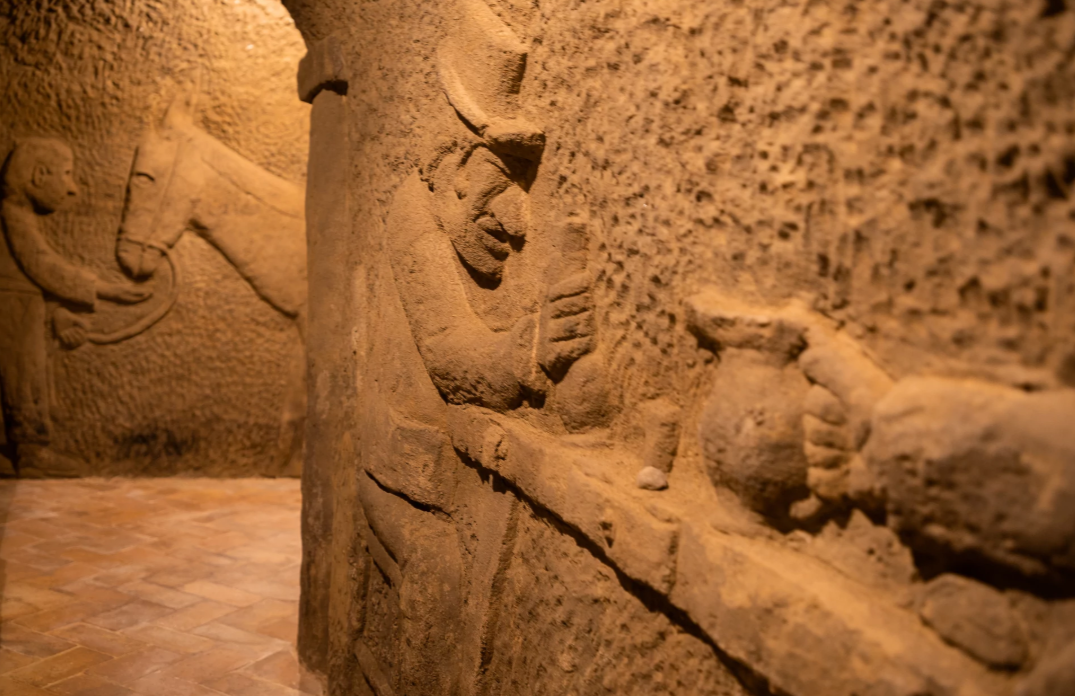
Stepping down into the cool, silent tunnels, which have remained at a constant temperature since the nineteenth century, visitors are surrounded by art. Carved directly into the volcanic stone walls are numerous figures and scenes of peasant life, sculpted over the course of two months by Paolo’s eighty-three-year-old father, Franco.
Franco, who recently celebrated his seventy-fifth harvest, created these pieces simply to express himself artistically in the last century. The underground gallery feels less like a production facility and more like a hidden sanctuary where family history and fine art intersect.
Inside this subterranean dark, the wine ages in unlined, Roman-style clay amphorae. This architectural choice of vessel is a deliberate return to an archaic, pure form of viticulture, rooted in a material that connects the family directly back to their youth.
Unlike oak barrels, which leave a distinct woody taste on the vintage, the porous clay breathes naturally, allowing for micro oxidation while leaving the flavour completely unadulterated. Paolo explains that this absence of wood allows for the expression of taste, capturing the exact minerality of the Umbrian clay.
The art of knowing how to lose
The experience concludes not in a commercial reception room, but around a private dinner table inside Paolo’s home, where he prepares a feast for his guests, served alongside his family vintages.
After dinner, Franco makes an appearance, proudly showing guests his collection of vibrant original paintings. It is here, among original artwork and shared stories, that the philosophy of Spazzavento becomes clear.
Paolo speaks openly about the emotional resilience required to survive in this landscape, sharing the lessons he passes on to anyone looking to enter the trade. He stresses that the first few years must be spent entirely in the fields, learning the true weight of the profession.
“You have to temper your interest and experience how it feels when there is a thunderstorm in August that wipes out the crops," Paolo explains.
He adds: “You have to experience the highs and lows of the whole growing cycle. You have to survive a lot of disappointment as the experience helps you grow. If you still have your passion after the season that goes bad, that's how you know it's for you.”
For Paolo, this resilience is rooted in an old-fashioned, beautiful sense of perspective.
“If you want to make wine you need to know how to lose," he says. “People will doubt you, they won't believe in your wine, but if you have this in your heart, if this is the best part of you that you pull forward from your heart, continue down that road.”
True luxury cannot be rushed or mass-produced. It requires an individual to survive disappointment, hold firm to their convictions, and maintain an enduring patience.
As Paolo observes, you have to germinate in your heart a sense of waiting. The only way you can o down the road is if you know how to wait. On the terraces of Spazzavento, that patience is rewarded with a spirit that can quite literally be tasted