Marilyn Monroe: A Portrait of a Woman Beyond the Myth
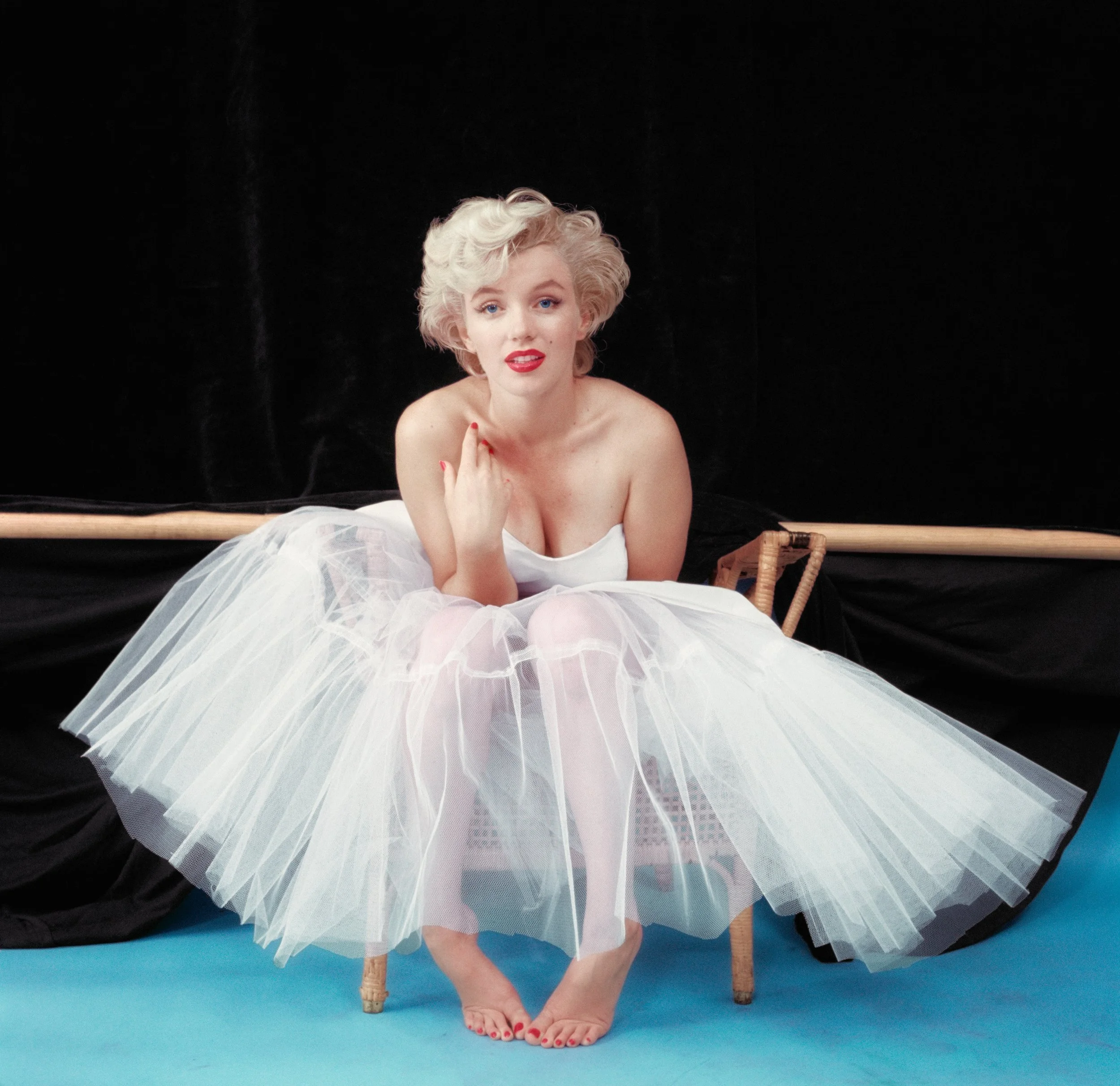
Credits: Marilyn Monroe, Ballerina Sitting, 1954, by Milton H. Greene, Milton H. Greene © MHG Collective, LLC.
There are some people whose image becomes so embedded in popular culture that it eventually detaches from the person behind it. Marilyn Monroe is one of them. Long before I visited Marilyn Monroe: A Portrait at the National Portrait Gallery, I thought I knew her. Like millions of people around the world, I had grown up with fragments of Marilyn. The white dress billowing above a New York subway grate. The platinum blonde curls. The red lipstick. The smile. The glamour.
Marilyn Monroe exists almost everywhere, yet somehow remains elusive. Walking through the exhibition, however, I found myself encountering someone different. Not the icon. Not the fantasy. Not even the Hollywood star. What emerged instead was the portrait of a woman. And perhaps that was the exhibition's greatest achievement.
Presented during the centenary year of Monroe's birth, the exhibition brings together photographs, portraits and artistic interpretations spanning decades, tracing her evolution from Norma Jeane, the young aspiring model, to one of the most recognisable faces in modern history. Works by some of the twentieth century's most influential photographers sit alongside responses by artists including Andy Warhol and Pauline Boty, revealing not only Monroe's extraordinary visual legacy but also society's ongoing fascination with her image. Yet what stayed with me most was not the fame. It was the fragility.
Looking Beyond the Photograph
Portraiture has always occupied a curious space between truth and performance. Every portrait reveals something while concealing something else. Every photograph captures a moment while leaving an entire life outside the frame. Marilyn understood this better than most.
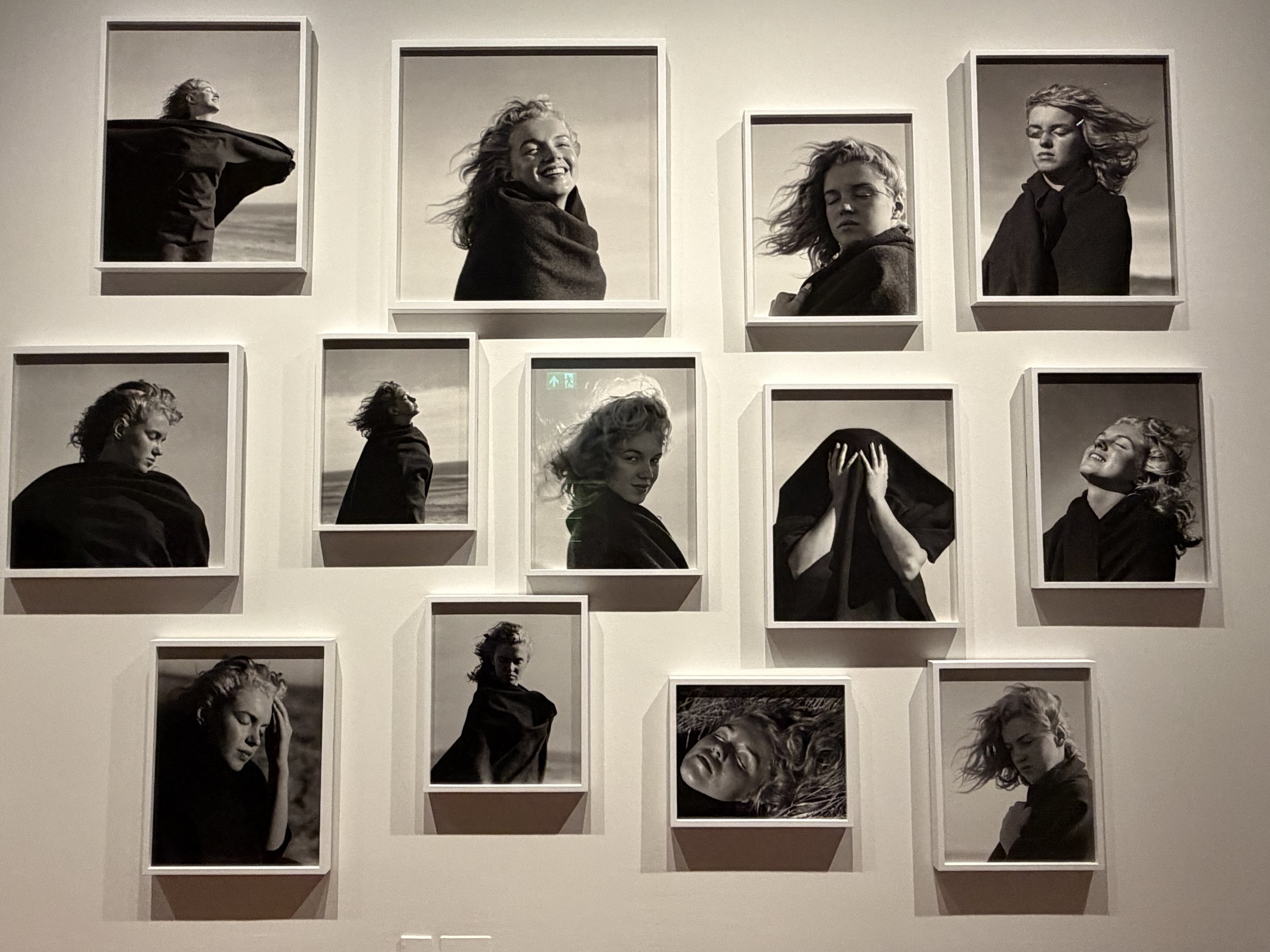
Source: own archive
One of the most fascinating aspects of the exhibition is its emphasis on her role as an active collaborator in the creation of her public image. Far from being a passive subject, Monroe worked closely with photographers, directed photo sessions and insisted on approving images before publication. She was not merely being photographed. She was consciously participating in the construction of Marilyn Monroe. This distinction feels important.
For decades, public narratives often portrayed her as a victim of celebrity culture, overwhelmed by an image imposed upon her by others. The exhibition complicates that narrative. It reveals a woman who understood the power of visual storytelling and sought to shape it on her own terms. Yet there is also an undeniable tension running through the galleries. The more successful she became at creating the image of Marilyn Monroe, the more difficult it seemed for the world to see Norma Jeane.
Thirty-Six
Then came the moment that stopped me. A simple fact. Marilyn Monroe died at thirty-six years old. The same age I am now. Or almost. My birthday is just around the corner. It is one thing to know a date intellectually. It is another to feel its weight. Standing among those photographs, I found myself recalculating everything.
Thirty-six. At thirty-six, she had already become one of the most famous women on earth. At thirty-six, she had transformed herself from a childhood marked by instability and uncertainty into an international symbol recognised across continents. At thirty-six, she had experienced extraordinary success, profound loneliness, passionate love affairs, failed marriages, public adoration and relentless scrutiny. And at thirty-six, her story was over.
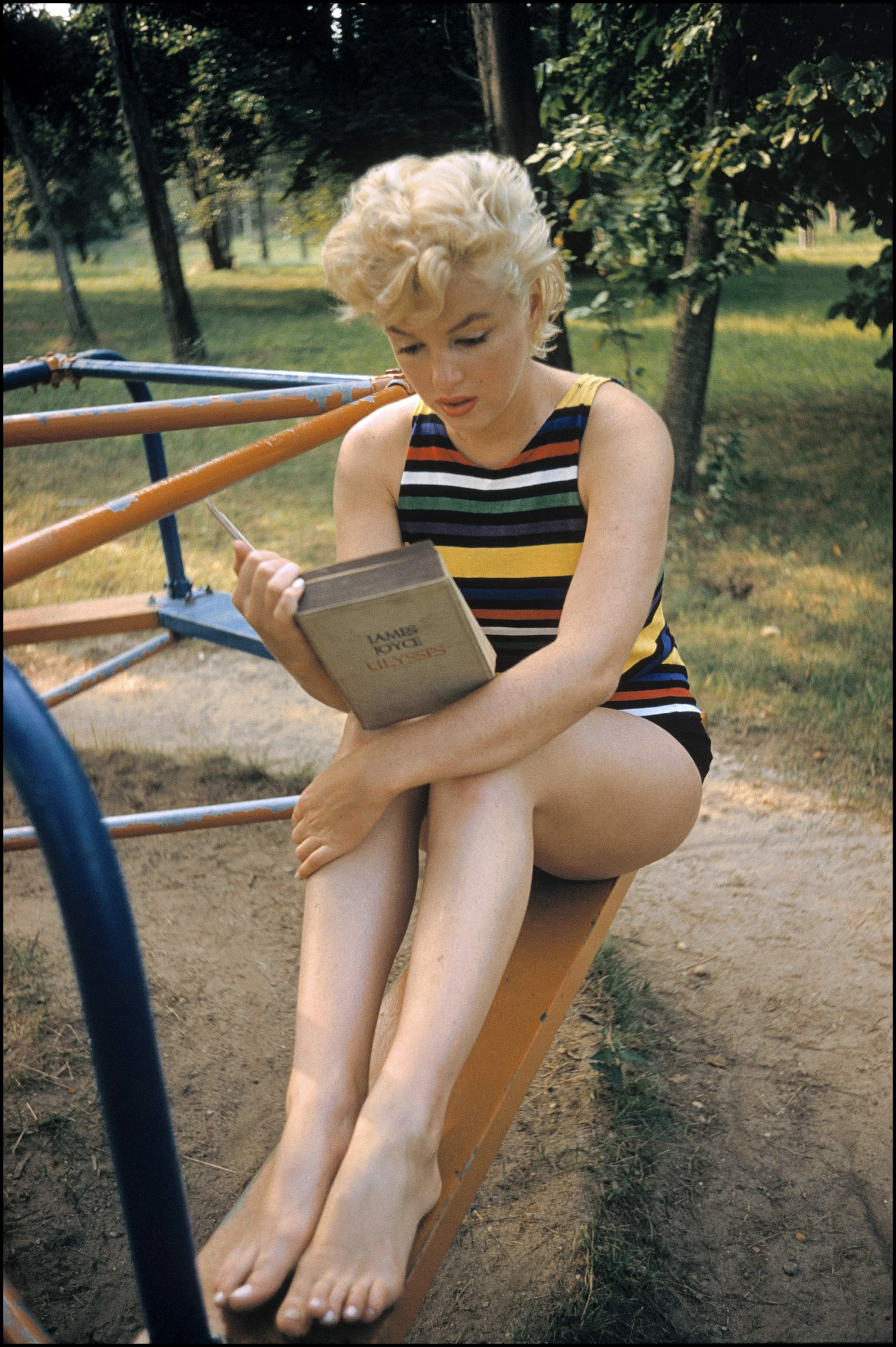
Credits: Marilyn Monroe, Mount Sinai, Long Island, 1955, by Eve Arnold, © Eve Arnold Estate.
For the first time, the distance between Marilyn Monroe and the rest of us seemed to disappear. Not because our lives were comparable. But because age has a way of making history personal. Suddenly, she was no longer a figure frozen in black-and-white photographs. She was simply a woman trying to navigate adulthood, ambition, relationships and identity while the entire world watched.
The Cost of Being Seen
Walking through the exhibition today, it is impossible not to reflect on the contradictions that shaped Monroe's life. The same industry that elevated her into a global phenomenon frequently underestimated her intelligence.The same culture that celebrated her beauty relentlessly criticised her appearance. The same audiences who adored her often reduced her to a caricature. She was expected to embody an impossible ideal while simultaneously being judged for failing to achieve it.
As women, that paradox feels remarkably familiar. The details may have changed, but the underlying tensions remain. Women continue to navigate competing expectations around appearance, ambition, success, ageing, vulnerability and self-worth. Society still rewards visibility while punishing those who become too visible. It still celebrates confidence while questioning women who display it too openly.
In many ways, Marilyn's story feels strikingly contemporary. Not because she was ahead of her time. But because many of the pressures she faced remain unresolved. The exhibition never states this explicitly. It does not need to. The photographs speak for themselves. Behind every carefully constructed image stands a person attempting to reconcile who she was with who the world wanted her to be.
Marilyn Through the Eyes of Others
The exhibition also explores how Monroe's image continued to evolve after her death. Artists such as Andy Warhol transformed her into something larger than life, elevating her beyond celebrity and into the realm of cultural mythology. His iconic screen prints reduced her image to colour, repetition and symbol, creating a version of Marilyn that would become almost as famous as the woman herself. Pauline Boty's works, meanwhile, reveal a more emotional response, reflecting the grief and fascination Monroe inspired among her contemporaries.

Credits: Marilyn Monroe, 1962, by Allan Grant, © 1962 MM LLC (Photographs by Allan Grant), www.marilynslostphotos.com.
These artistic interpretations are fascinating because they reveal as much about society as they do about Monroe. Each generation seems to discover its own Marilyn. For some she represents glamour. For others, tragedy. For others still, resilience, reinvention or female agency. The exhibition allows these multiple interpretations to coexist without forcing a definitive conclusion. Perhaps that is because Monroe herself resisted simple categorisation.
She was ambitious yet vulnerable. Confident yet insecure. Powerful yet constrained. Intelligent yet frequently underestimated. She contained contradictions, just as all people do.
The Humanity Beneath the Legend
Among the most moving works in the exhibition are the intimate photographs taken shortly before Monroe's death. In these quieter images, far removed from the spectacle of Hollywood, she appears thoughtful, introspective and deeply human. The performance falls away. What remains is a woman alone with herself.
Those photographs linger long after leaving the gallery. Not because they solve the mystery of Marilyn Monroe. But because they remind us that no photograph ever can. There will always be aspects of her life that remain unknowable. There will always be tension between the public figure and the private individual. Yet perhaps understanding her completely is not the point. What matters is recognising her humanity.
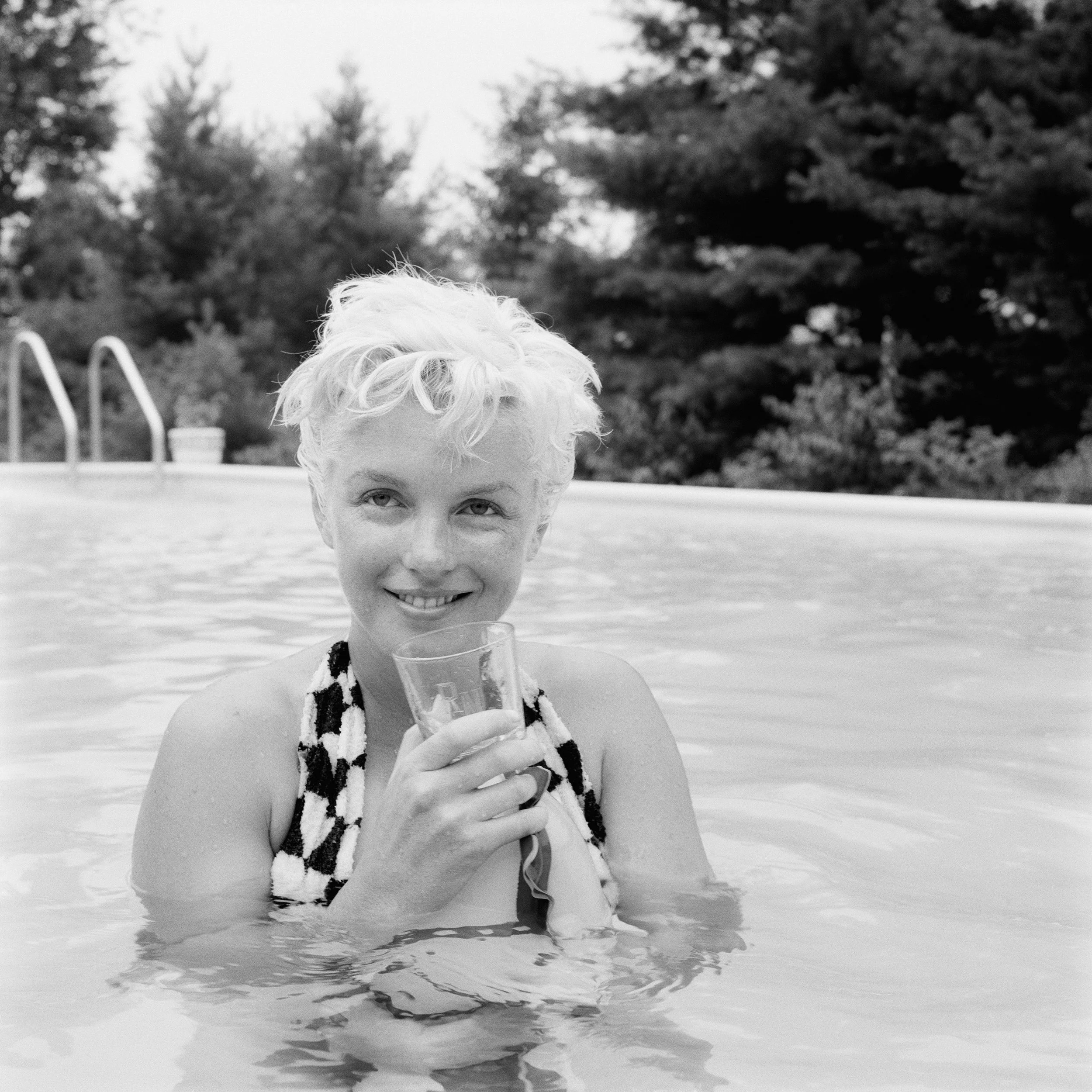
Credits: Marilyn Monroe, 1955, by Milton H. Greene © MHG Collective, LLC.
For all the glamour, all the fame and all the mythology, Marilyn Monroe experienced many of the same fears, hopes and uncertainties that shape ordinary lives. She wanted to be taken seriously. She sought connection. She struggled with self-doubt. She longed to be seen for who she truly was.
More Than a Star
Leaving the National Portrait Gallery, I found myself thinking less about Marilyn Monroe the icon and more about Marilyn Monroe the woman. A woman who pursued her ambitions with determination. A woman who repeatedly reinvented herself. A woman who refused to remain confined by the expectations others placed upon her.
A woman who lived intensely, imperfectly and publicly. Perhaps that is why she continues to resonate more than six decades after her death. Not because she was flawless. Not because she was glamorous. Not because she became a legend.But because beneath all the photographs, all the headlines and all the mythology, she remained unmistakably human. And sometimes, recognising our humanity in someone else's story is what makes their story endure.