Oltre: Paradiso Goes Beyond the Cocktail
Credits: Courtesy of Paradiso
There are bars you visit for a cocktail, and there are bars that make you reconsider what a cocktail can be. Paradiso belongs firmly to the latter. I visited the Barcelona bar for the first time during the fifth edition of the Barcelona Cocktail Festival, held at Palo Alto on 18 and 19 April 2026. It was an interesting moment to discover a venue whose reputation extends far beyond the city itself. During the visit, I had the opportunity to experience cocktails from Paradiso's previous menu while also getting an early taste of Oltre, its new creative chapter.
For a first visit, experiencing both menus offered something more interesting than simply trying a selection of drinks. It provided a glimpse into how one of the world's most recognised cocktail bars continues to evolve without losing the identity that made it distinctive in the first place.
Behind the fridge door
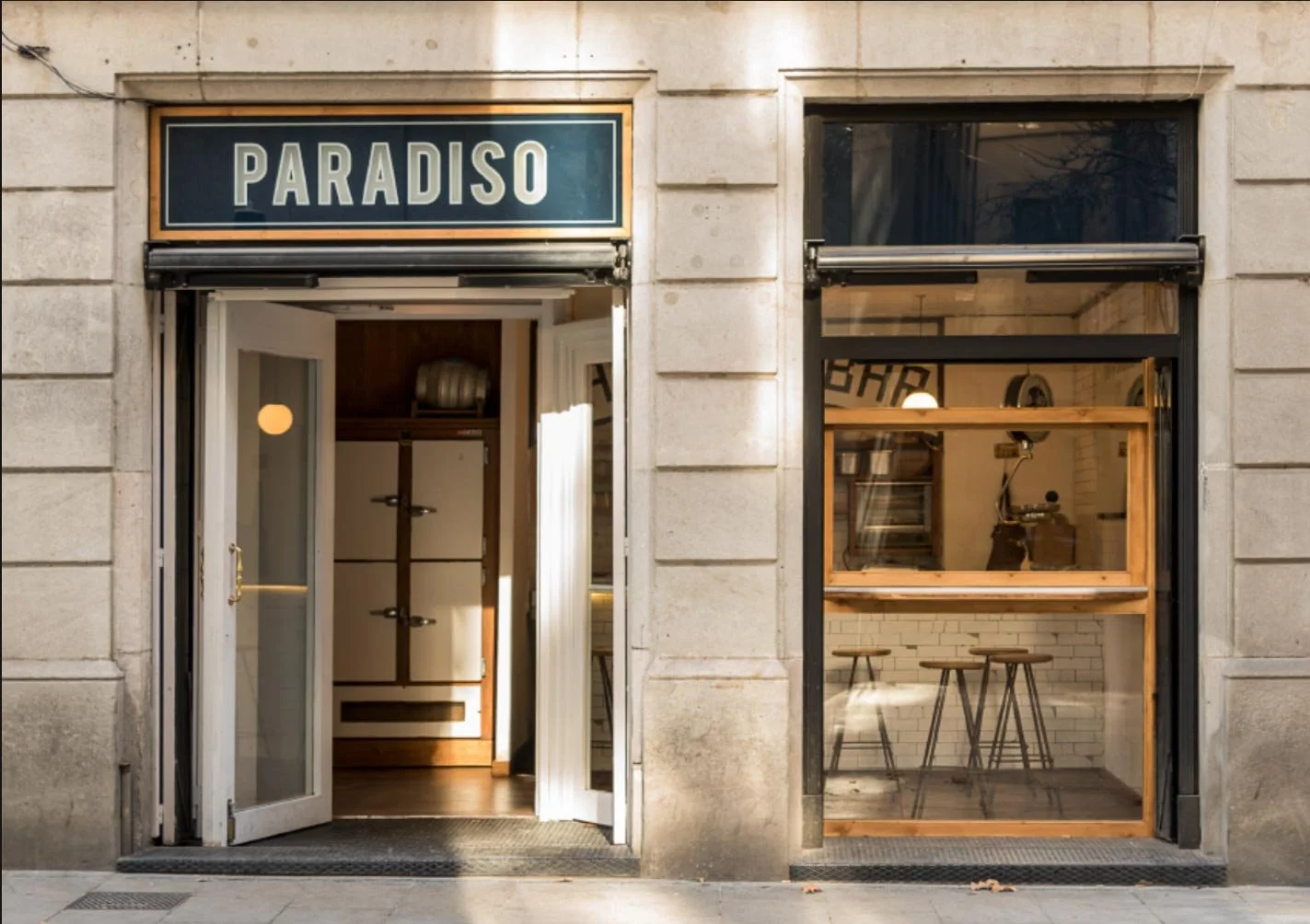
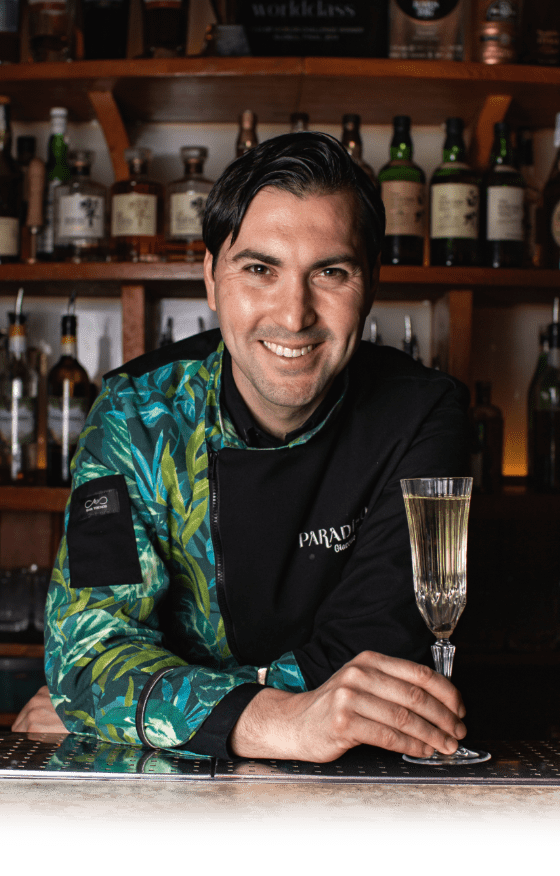
Paradiso opened in 2015 in Barcelona's El Born district, concealed behind the refrigerator door of a pastrami shop. Founded by Tuscan-born bartender Giacomo Giannotti, it has since become one of the defining addresses of contemporary cocktail culture, reaching the top of The World's 50 Best Bars ranking in 2022. Yet rankings only tell part of the story. Paradiso's appeal lies in its ability to transform drinking into something closer to an immersive experience, bringing together mixology, design, gastronomy and performance. Its latest menu takes this philosophy further.
Giacomo Giannotti. Credits: Courtesy of Paradiso
Meaning "beyond" in Italian, Oltre is Paradiso's first new menu in two years. Created by Giannotti and his team, it introduces 18 signature cocktails, including four non-alcoholic creations, alongside seven established Paradiso classics. Inspired by surrealism and particularly the dreamlike universes associated with Salvador Dalí and Joan Miró, the menu explores illusion, transformation and the sometimes unreliable relationship between what we see and what we taste.
In Barcelona, this artistic reference feels particularly fitting. Surrealism was built around challenging conventional perceptions of reality, turning familiar objects into something strange, unexpected or dreamlike. At Paradiso, those ideas are translated into flavour, glassware and ritual.
Surrealism in a glass
What makes Oltre interesting is that the artistic references are not confined to presentation. Alba, created in collaboration with local artist Nicole Vindel, combines tequila and mezcal with mustard, tejete, wasabi flowers, local honey and ginger. The cocktail arrives as a two-part experience, beginning with a savoury Margarita-style base. A warm infusion of cacao husks and forest berries is then poured over delicate edible paper, which gradually unfolds like a flower opening at sunrise.
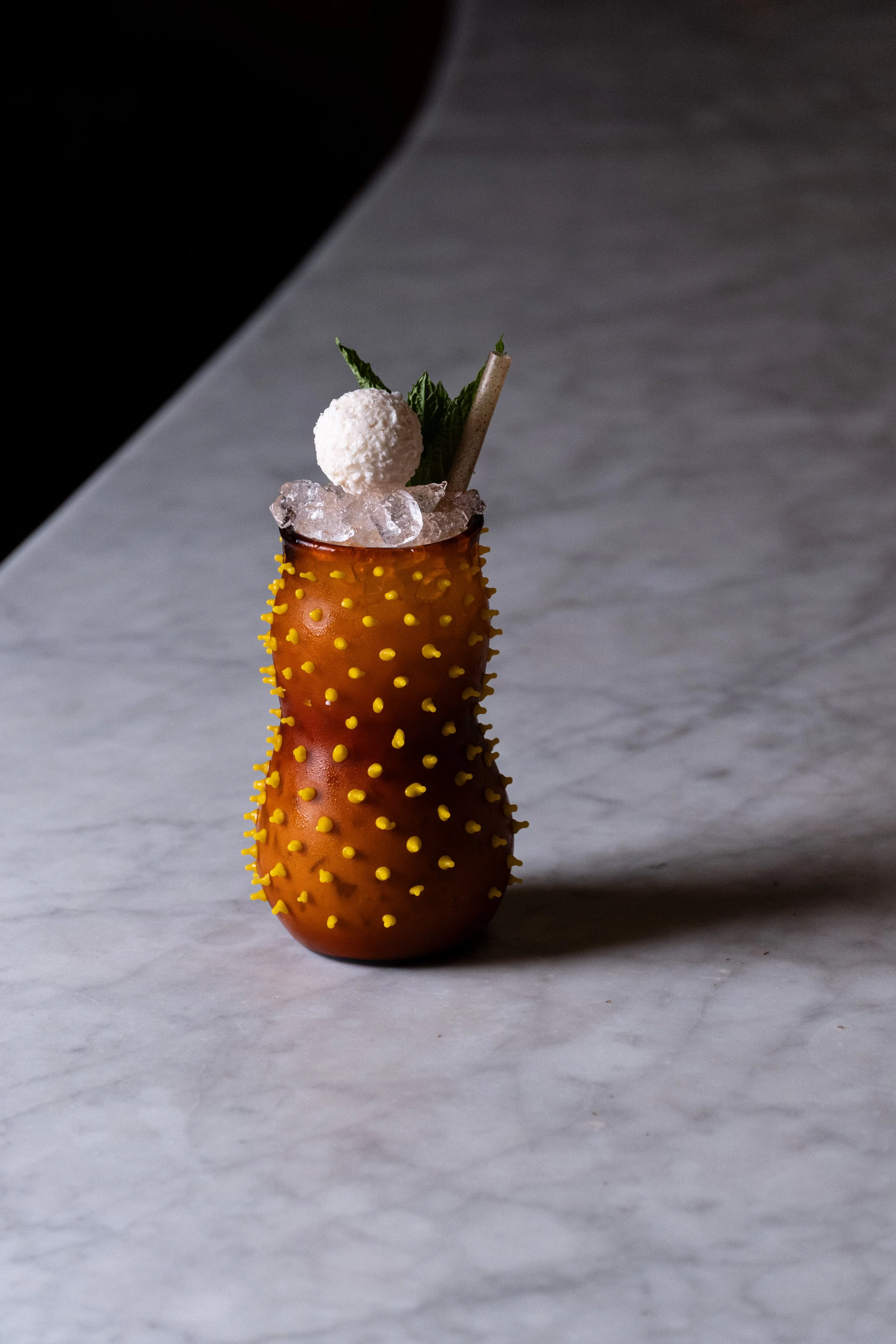
Fantasy & Gala Colada cocktails. Credits: Courtesy of Paradiso
Elsewhere, Illusion combines whisky with banana, coffee, sherry and topinambur bitters, served in a vessel that changes from white to black as part of the experience. Pimpollo, meanwhile, plays with the opposite relationship between appearance and flavour, presenting a savoury visual language before revealing sweeter notes of pisco, fig, salted pistachio, mandarin and grapefruit.
There is plenty of theatre, but the strongest creations use spectacle to reinforce an idea rather than simply attract attention. That distinction matters in contemporary cocktail culture, where increasingly elaborate presentations can sometimes overshadow what is actually in the glass.
A sense of place
Perhaps the most compelling aspect of Oltre is its connection to Barcelona and Catalonia. Paradiso collaborated with local artists, artisans, farmers, cooperatives and creative companies, extending the concept beyond the bar team itself. Bespoke ceramics and glassware become part of the storytelling, while Catalan traditions appear in unexpected forms.
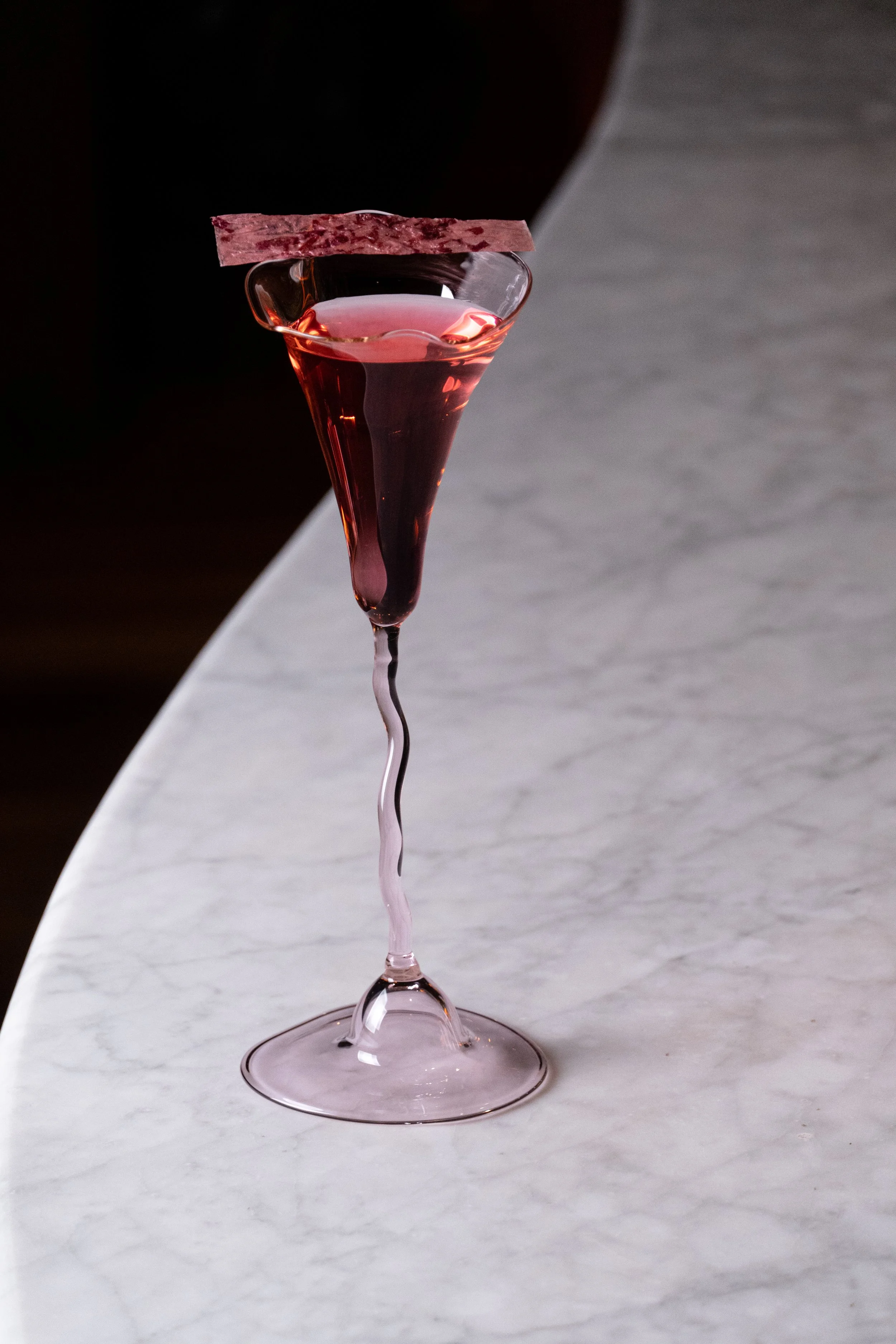
Fantasy, for example, takes inspiration from the traditional porrón, transforming the communal Catalan drinking vessel into a theatrical tableside experience. Its vodka base is combined with peach, yuzu, St-Germain and verjus.This relationship with local craftsmanship gives the menu a sense of place that is increasingly valuable in international hospitality. At a time when luxury experiences can sometimes feel interchangeable between global cities, Paradiso's approach is rooted in its surroundings without becoming nostalgic. The bar looks outward while remaining connected to where it comes from.
Beyond alcohol
The same attention is given to the menu's non-alcoholic drinks. One of the most conceptually interesting is Source, another collaboration with Nicole Vindel. Combining fig leaf distillate, white tea and Vichy Catalan mineral water, it is served in a vessel with an opening at its centre. The guest must cover the aperture with a finger to hold the liquid inside.
The gesture is simple, but its message is contemporary. In an age of divided attention, Source forces the drinker to interact physically with the experience.Paradiso has also introduced lower-alcohol serves across the menu, reflecting a broader change in drinking habits. More importantly, the non-alcoholic cocktails receive the same conceptual and aesthetic consideration as the rest of the collection. They are not presented as secondary alternatives, but as part of the same creative language.
Where the bar meets the kitchen
The boundaries between cocktails and gastronomy become increasingly blurred throughout Oltre. Asparagus brings together tequila, mezcal, Yellow Chartreuse, goat's cheese, asparagus and herbs. Perception combines corn-infused Singani with tomato, celery water, lulo, pickles and fruit mustard. Somni moves towards toasted bread, fig leaf, citrus cold brew coffee, warm matcha foam and white chocolate popcorn. These are combinations that could almost belong to a tasting menu.
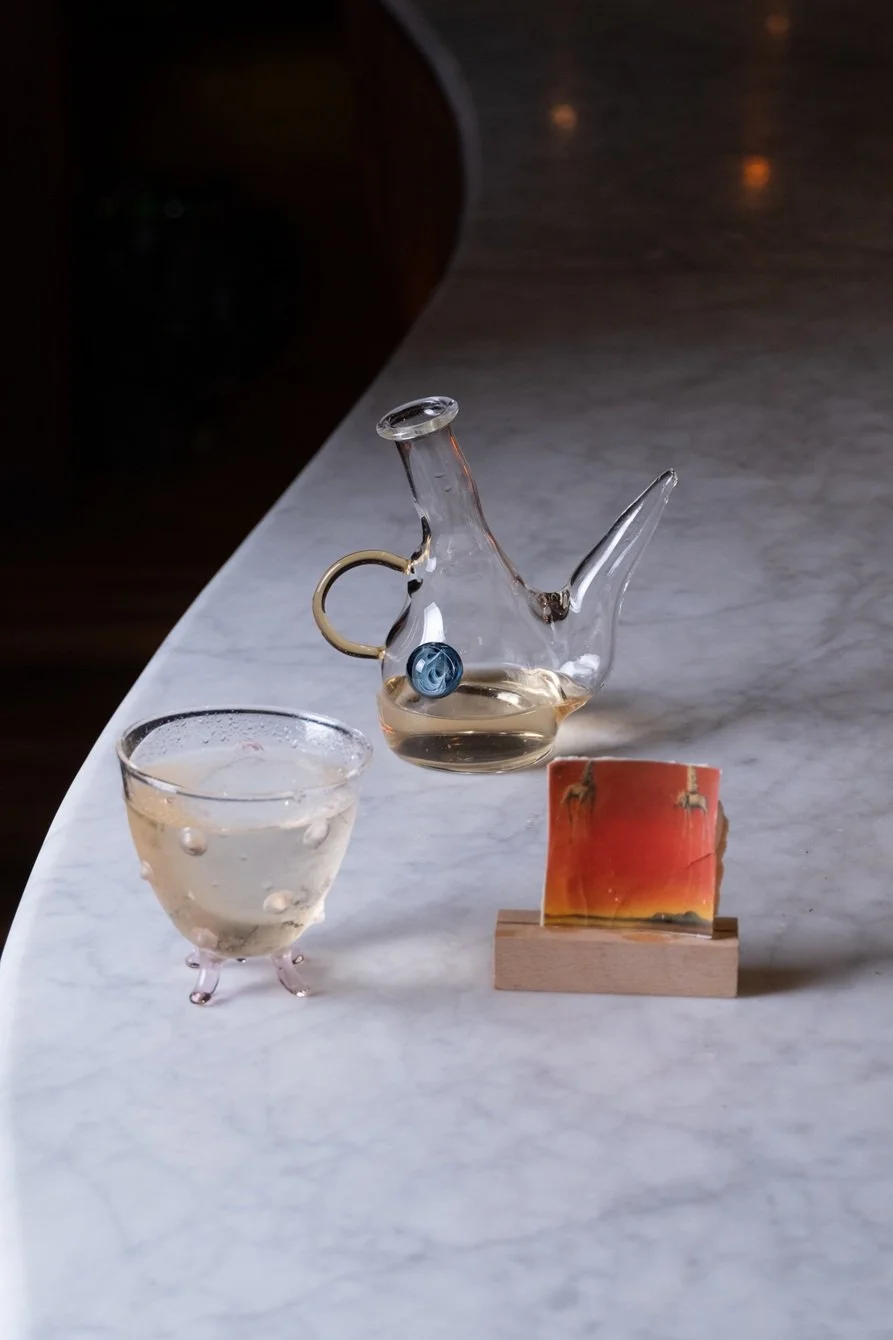
Picolo & Grande. Credits: Courtesy of Paradiso
Much of Paradiso's experimentation is developed through its own laboratory, and the influence of culinary techniques is evident. Yet technique works best when it remains in service of flavour. The most memorable drinks are those where the conceptual framework, presentation and liquid feel inseparable.
Going beyond
Experiencing cocktails from Paradiso's previous menu alongside Oltre made the evolution particularly visible. The new collection does not abandon the theatricality for which the bar has become known. Instead, it gives that spectacle a stronger narrative framework. The question seems to be less about how to surprise the guest and more about what that surprise might make them notice.
A flower unfolds. A vessel changes colour. Something that appears savoury tastes sweet. Another drink cannot be held without your direct participation. These moments encourage curiosity, but also attention. For me, discovering Paradiso during the Barcelona Cocktail Festival was therefore about more than finally visiting one of the names that has shaped the international bar conversation. Trying elements of two menus offered a rare opportunity to see a creative identity in transition.
With Oltre, Paradiso demonstrates that evolution does not necessarily require abandoning what made a place recognisable. Sometimes it is about taking an established language and finding new ways to speak it. Behind that now-famous fridge door in El Born, Paradiso continues to blur the boundaries between bar, kitchen, laboratory and artistic studio. And perhaps that is the most fitting interpretation of Oltre: not simply going beyond the cocktail, but reconsidering how much a cocktail can communicate.