When MotoGP Takes Over London and Silverstone
The closest title battle in MotoGP history arrived at one of its fastest and most unpredictable circuits, bringing motorcycles, riders and immersive experiences from central London to Silverstone.
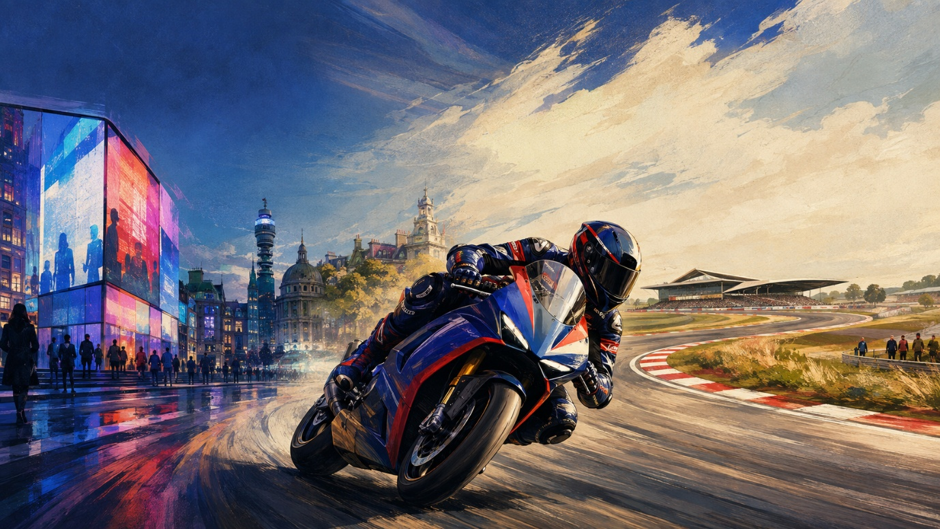
Illustration created for Avesso Magazine, 2026.
For a few hours this Thursday, central London looked and sounded rather different. At Outernet, beside Tottenham Court Road station, floor-to-ceiling screens recreated the speed of a lap around Silverstone. Racing motorcycles and the MotoGP championship trophy stand beneath the lights, while riders usually seen behind helmets and visors appear amid one of the West End's busiest cultural spaces.
An immersive film ran for precisely one minute and 57 seconds - the circuit's previous MotoGP lap record - carrying viewers through London as Silverstone's corners, straights and braking zones are translated into the visual language of the capital. The contrast is deliberate: before the British Grand Prix begins at Silverstone from 7-9 August, MotoGP is using London as its opening stage. Marco Bezzecchi, Pedro Acosta, Ai Ogura, Cal Crutchlow and Brazilian rookie Diogo Moreira are among the riders appearing at Outernet. For one day, the paddock comes to the city.
Silverstone reshapes the championship
MotoGP returns from its summer break with the closest title contest ever recorded at this point in a season: only 24 points separated the five leading riders.
Silverstone delivered exactly the uncertainty it had promised. Starting from second, Raúl Fernández seized the lead at Turn 1 and never relinquished it. He crossed the line ahead of Jorge Martín, with Marco Bezzecchi finishing third to complete an all-Aprilia podium. It was Fernández’s first Grand Prix victory of 2026 and the second of his MotoGP career.
Fernández’s victory also extended one of Silverstone’s most remarkable sequences: he became the 12th different winner across the past 12 British Grands Prix. The weekend also produced new speed records. Jorge Martín set Silverstone’s all-time MotoGP lap record during qualifying, securing pole position with a time of 1:56.160, while Fernández established a new race lap record on Lap 3 of Sunday’s Grand Prix.
At 5.9 kilometres, with 18 corners and a 770-metre longest straight, Silverstone is one of the longest and fastest tracks on the calendar. Its flat, exposed position brings rapidly changing wind and weather, while its succession of high-speed corners demands precision, confidence and a motorcycle able to change direction without losing momentum.
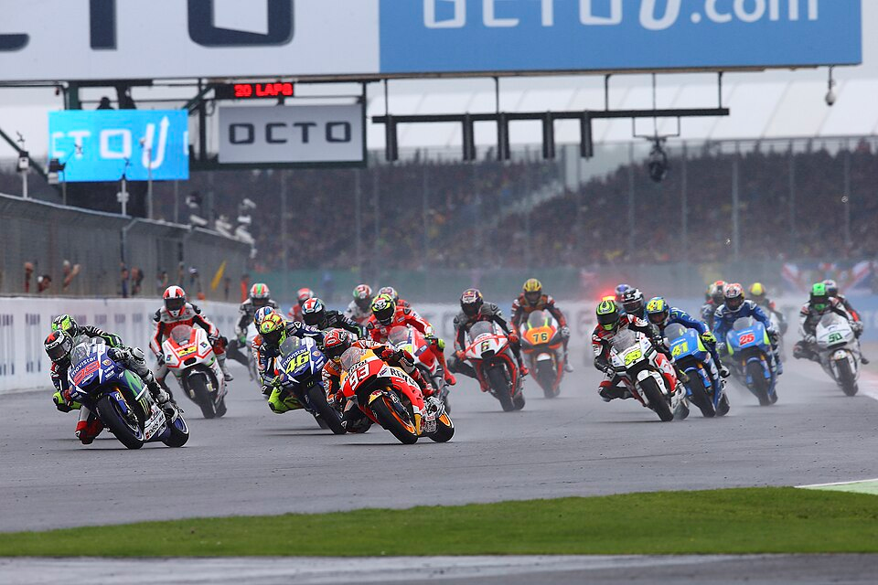
Jorge Lorenzo leads the opening lap of the 2015 British Grand Prix at Silverstone. Photo: Box Repsol/Wikimedia Commons, CC BY 2.0.
From bomber station to racing landmark
Long before motorcycles and Formula One cars raced here, Silverstone was an RAF bomber station. It operated between 1943 and 1946, with its three runways forming the foundations of the circuit that followed. After the war, local enthusiasts began organising races across the abandoned airfield.
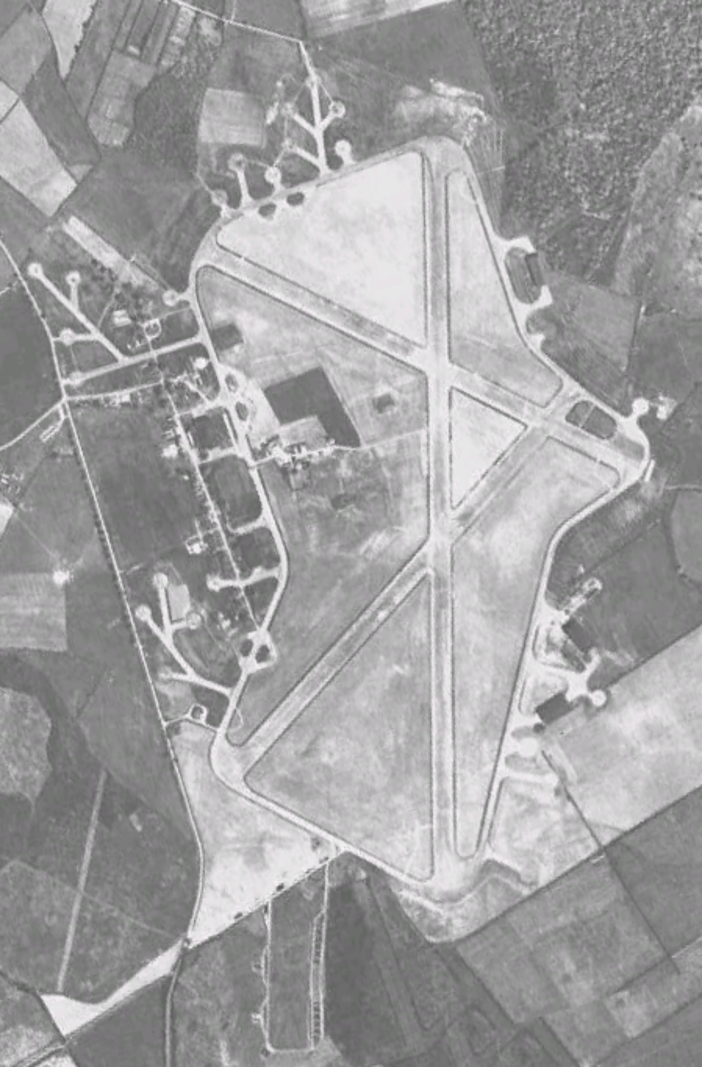
RAF Silverstone, 1945. National Collection of Aerial Photography/Wikimedia Commons, public domain.
The first official race took place in 1948. Two years later, Silverstone hosted the first Formula One World Championship Grand Prix, securing its place in the history of four-wheel racing.
Its importance to motorcycling arrived later. Until 1976, Britain's round of the motorcycle world championship was held on the Isle of Man's formidable public-road course. Growing concern about racing over more than 60 kilometres of roads prompted riders and federations to press for a safer venue.
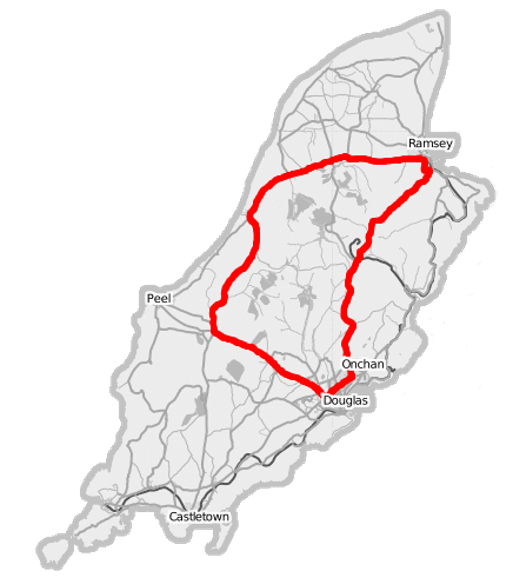
The Isle of Man TT Mountain Course, where the British motorcycle Grand Prix was held until 1976. Map: OpenStreetMap contributors/Dankarran via Wikimedia Commons
In 1977, Silverstone hosted the first British motorcycle Grand Prix on a purpose-built circuit, marking a decisive move away from the traditional public-road course. It did not host the championship continuously: the British Grand Prix moved to Donington Park in 1987 and returned to Silverstone in 2010. A new agreement now keeps the event at the circuit through 2028.
Beyond Sunday's race
The British Grand Prix is now presented not simply as a sporting fixture, but as a three-day festival. Alongside the MotoGP, Moto2 and Moto3 sessions, visitors found rider conversations, autograph sessions, simulators, museum exhibitions, charity events and concerts.
General Levy headlines Friday evening, former World Superbike champion and musician James Toseland performed on Saturday, and the Rick Parfitt JNR Band closed the programme after Sunday's racing.
The GP of Champions, organised by Two Wheels for Life, also returns. Paddock experiences, auctions and a simulator challenge raise funds for programmes that provide motorcycles and reliable transport to health workers serving isolated communities across Africa.
The Silverstone Museum offers a quieter encounter with racing history, including Barry Sheene's championship-winning motorcycles, Valentino Rossi's 1997 Aprilia and the Suzuki on which Maverick Vinales won the 2016 British Grand Prix.
After Sunday's final chequered flag, spectators will be invited onto the circuit itself. For a moment, the barrier between audience and racetrack disappears, allowing visitors to walk across the same asphalt where the world's fastest motorcycle riders had been competing only hours earlier.
A sport that travels beyond the circuit
This expansion from track to city reflects a broader change in how international sporting events occupy their destinations. This year it began among the digital screens and crowded streets of central London before moving into the countryside. Racing becomes part performance, part exhibition and part weekend festival.
For me, the return carries a small personal resonance: my earliest MotoGP experience came at the Brazilian Grands Prix of 2000 and 2001, watching Alex Barros at Rio de Janeiro's former Jacarepagua circuit, which was later demolished to build the Rio 2016 Olympic Stadiums. More than two decades later, the championship has resurfaced in a different city and a different chapter of life.
The weekend brings together a remarkably close championship, a former military airfield that helped move motorcycle racing towards safer circuits, and two very different settings. In London, MotoGP becomes a spectacle on enormous digital screens; at Silverstone, it returns to speed, uncertainty and the possibility that someone entirely unexpected will win.