Pink as a State of Mind: Why ‘Elle’ Is the Breath of Fresh Air We've Been Dreaming Of
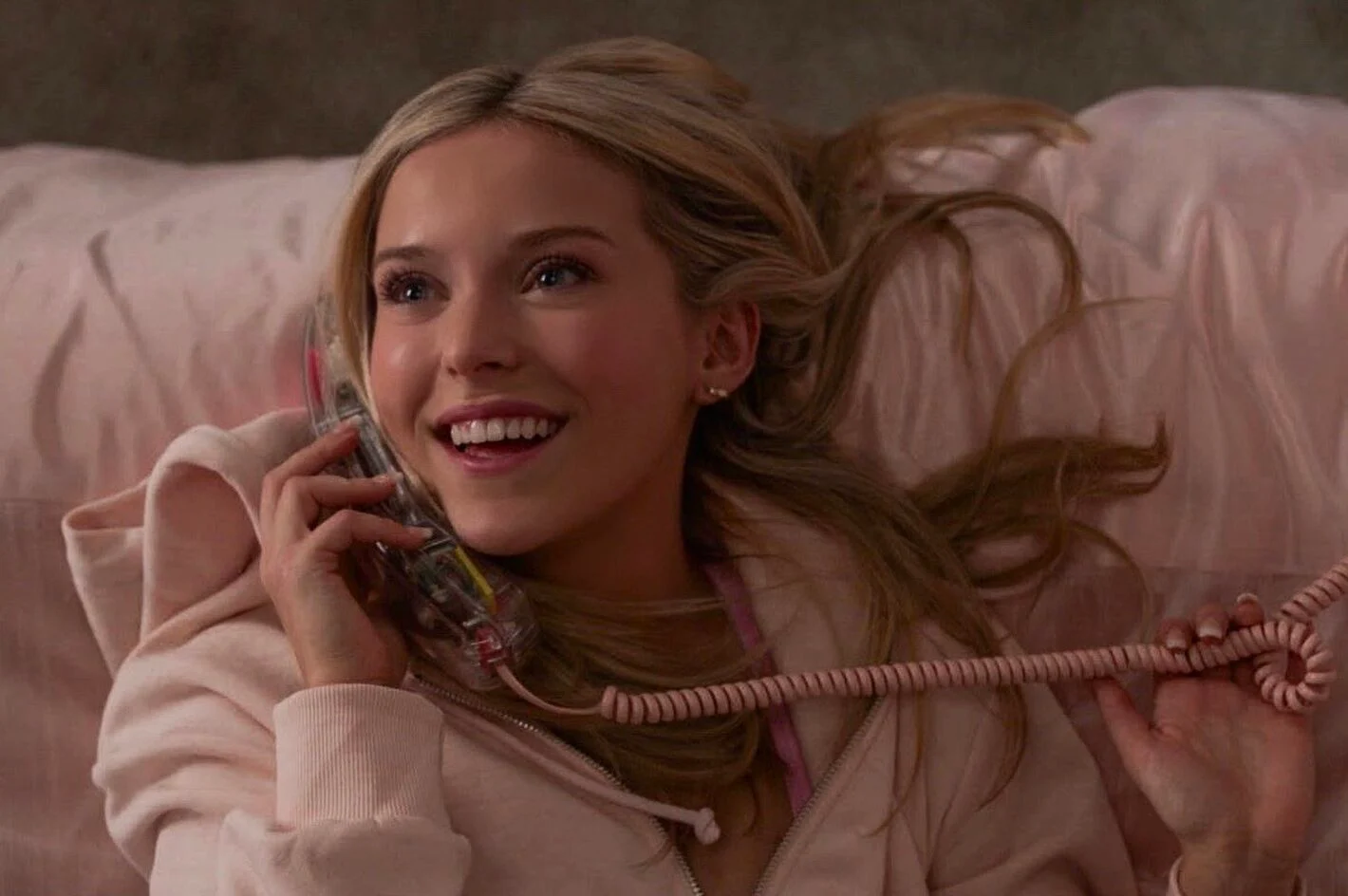
Lexi Minetree on set as Elle Woods in Prime Video’s Elle (Courtesy photo).
There is a certain kind of magic that unfolds when pop culture decides to look back. We find ourselves in an era driven by nostalgia, yearning to revisit the touchstones that helped shape the very essence of who we are. Enter Elle, the Legally Blonde prequel series, waltzing through this landscape with an infectious optimism, a glamorous pen in hand, and the unwavering certainty that levity is, in fact, one of the highest forms of intelligence.
I’ve always believed that our little daily obsessions—the perfect shoe (and "perfect" depends entirely on what your feet desire that day), the flawless beverage, or the way a fleeting hallway conversation can alter the trajectory of an entire day—are, at their core, the very fabric of life. Elle understands this with millimeter precision. The series transports us back to the ‘90s, but not as some merely fetishized portrait. This is the real decade of delicious, tactile, and beautifully perfumed nostalgia!
The script wraps us in an effervescent atmosphere where the soundtrack acts as an emotional time machine, pulling us into a world where everything was simply lived in technicolor. It offers an aesthetic coziness that sets the stage for something remarkably profound: a journey of self-discovery that refuses to apologize for its own sweetness.
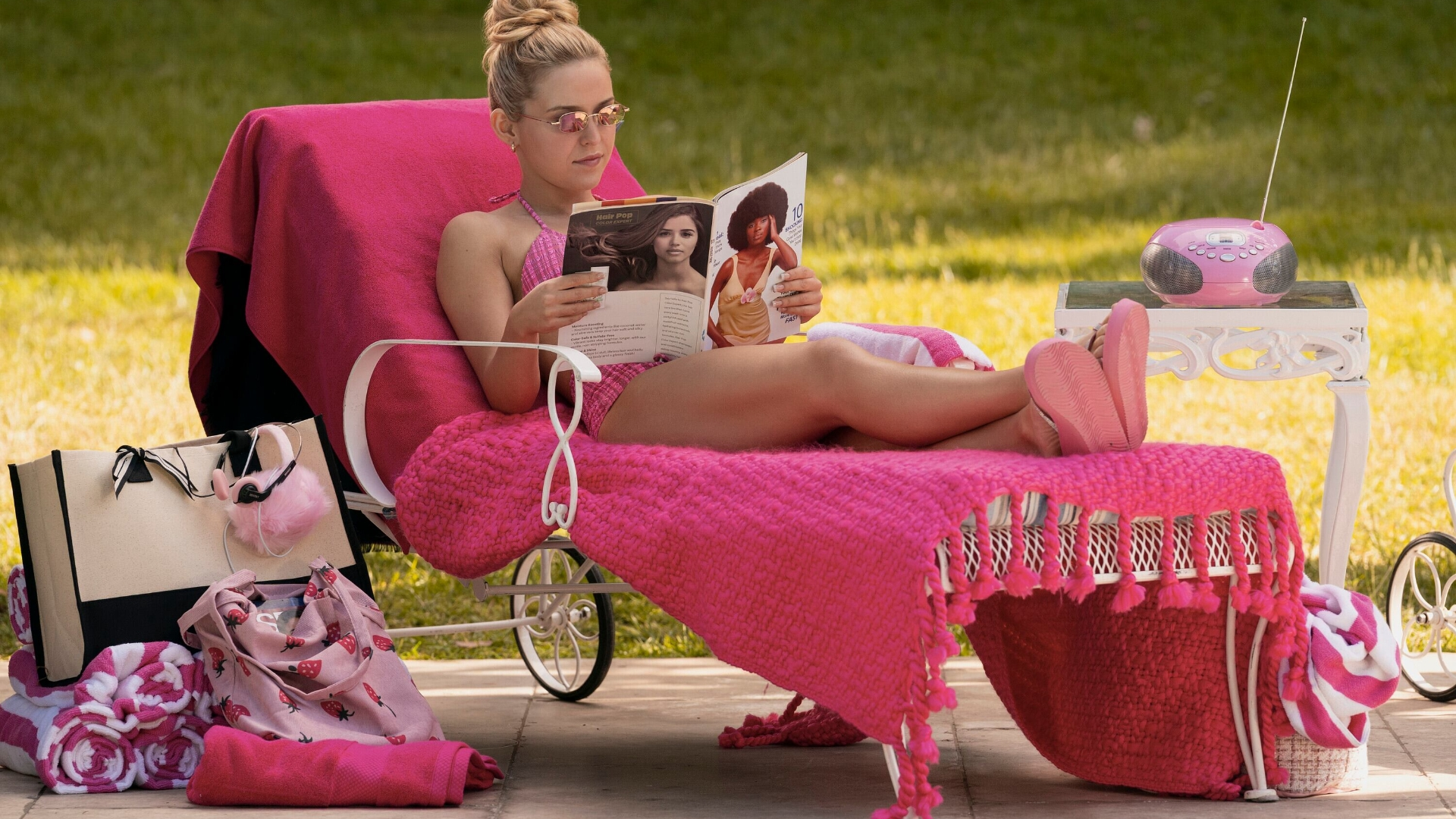
Lexi Minetree plays the teenage Elle Woods in Elle, the Legally Blonde prequel series (Courtesy photo).
The Lexi Minetree Phenomenon and the Miracle of Continuity
The greatest peril of any classic's prequel lies in the looming shadow of the original. Reese Witherspoon didn’t just play Elle Woods, she etched the character into our collective consciousness in permanent ink (pink, naturally). How, then, does one revisit this youth without descending into caricature or hollow imitation?
The answer has a first and last name: Lexi Minetree.
Minetree’s work in Elle is nothing short of a triumph of observation and affection. She pulls off a rare acting feat: capturing the quintessential essence of Witherspoon’s Elle—the impeccably timed pauses, the melodic intonation of certain syllables, the optimistic mannerisms, and the flawless posture—without ever surrendering her own artistic signature. We aren’t watching a replica, but rather the blossoming of the same soul in a different timeline. There is an invisible, incredibly magnetic connective tissue between the two performances. Lexi gives us an Elle under construction, a girl whose convictions are still being tested by the world, but whose moral compass and authenticity already point dead north.
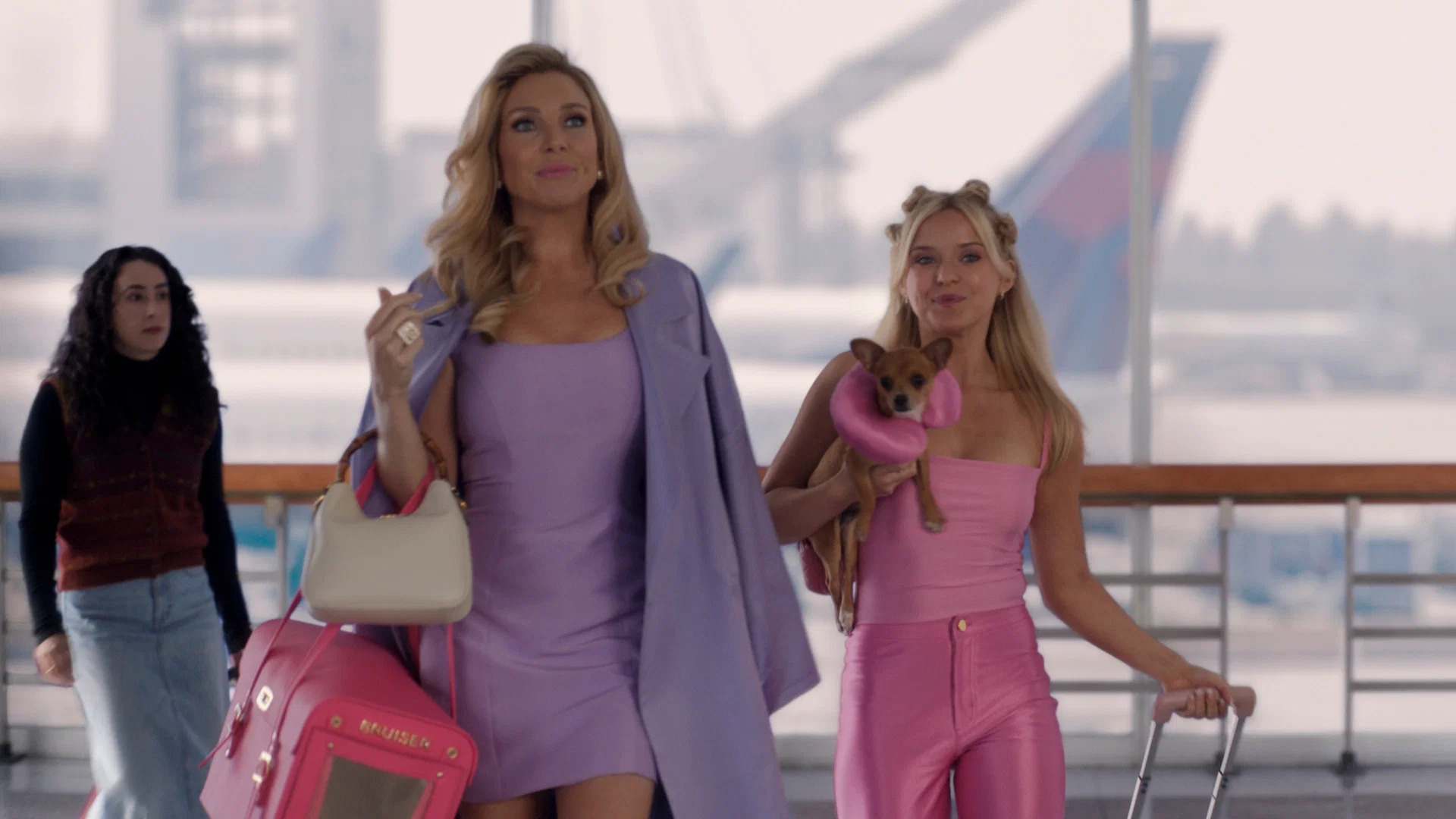
Lexi Minetree and June Diane Raphael in a scene from Elle. Their on-screen chemistry has been captivating audiences (Courtesy photo).
And what an absolute delight it is to watch the familial dynamic that grounds this trajectory! June Diane Raphael, shining brilliantly as Elle’s mother, brings a comedic sophistication and a warmth that elevate every single scene. Raphael has mastered the subtle art of delivering humor through a mere glance or impeccable timing, constructing a maternal figure who is simultaneously a product of her social milieu and a fascinating mirror for her daughter’s choices. The on-screen chemistry between the two delivers some of the sharpest, most deeply human dialogue of the season.
The Power of Being Unapologetically Yourself
At the very heart of Elle—beneath the undeniable charm, the iconic wardrobe, and the humor that acts as a literal breeze on a stifling day—lives a profoundly humanist thesis. The series follows a young woman discovering that growing up doesn't have to mean hardening.
In so many coming-of-age narratives, "self-discovery" dictates that the protagonist must abandon who they used to be in order to be taken seriously. Elle subverts this trope with pure elegance. The protagonist's journey is about finding the beauty in being exactly who she is. She uncovers new facets of herself, untapped capabilities, and fresh intellectual and social curiosities, all without ever having to fade her vibrant essence. She reminds us that vanity and depth are not mutually exclusive, and that genuine kindness is a truly formidable force.
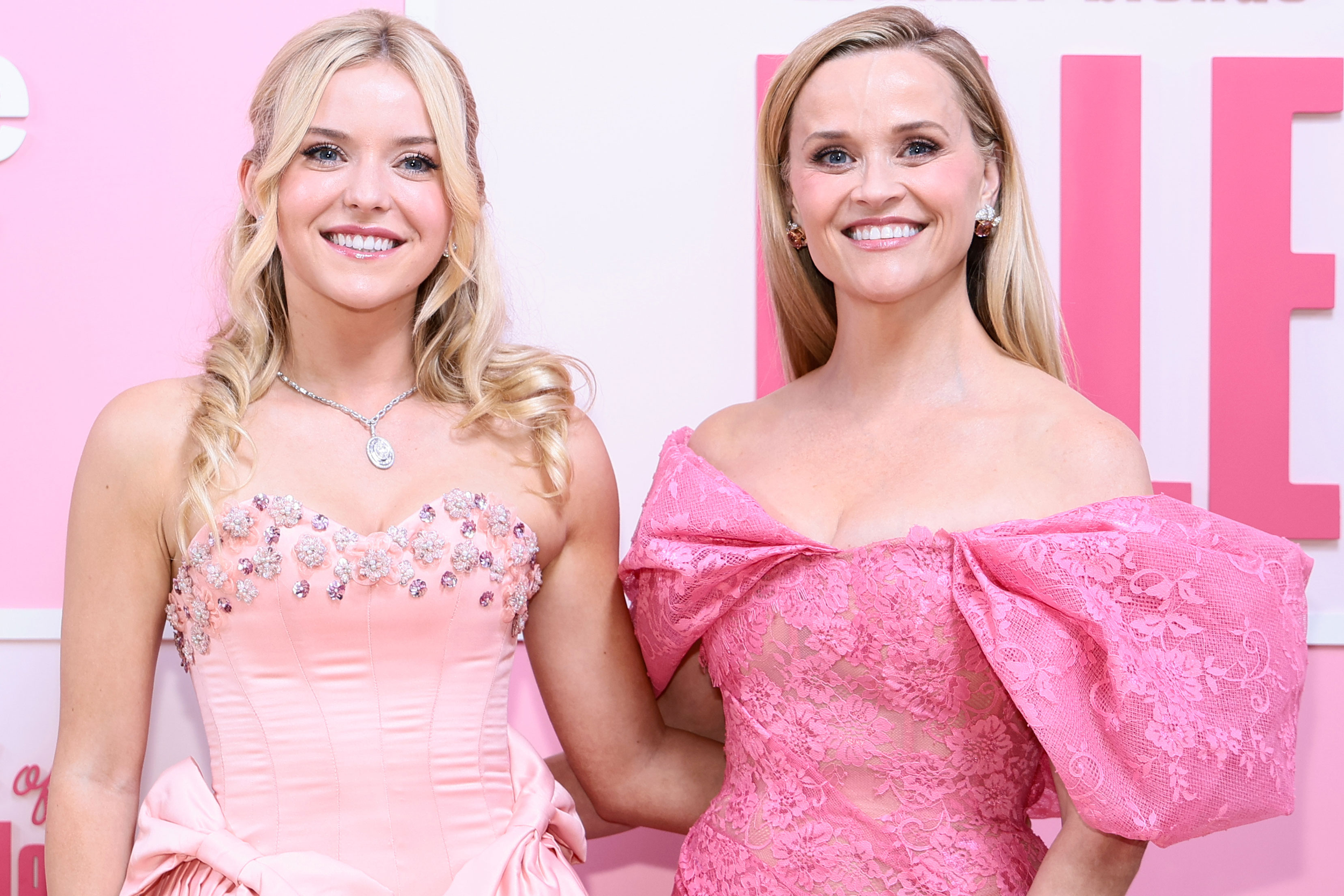
Reese Witherspoon, who immortalized Elle Woods in pop culture and now serves as executive producer for Elle, alongside Lexi Minetree—who gracefully carries the legacy (Courtesy photo).
Humor as a Respite
There is a rich tradition in great comedies of manners—the kind that stretches from Jane Austen to the golden-era rom-coms of the ‘80s and ‘90s—that understands laughter as a form of affection for the human condition. The humor in Elle doesn’t laugh at people, it laughs with them. It is witty, nimble, perfectly balanced, and entirely devoid of cruelty.
In an entertainment landscape that can so often feel exhausting, watching Elle is akin to sitting at a sun-drenched café or chic bar on a bright afternoon with your best friend, sharing a conversation that makes you see the silver lining without losing your edge. It is a work crafted with immense care, charm, and a generous sophistication—a much-needed reminder that sometimes, all we really need to navigate the world is a little perspective, a fabulous wardrobe, and the courage to simply be ourselves.