Stéphane Rolland Pays Tribute to Dalida: When Haute Couture Meets Memory
For the Autumn/Winter 2026–2027 Haute Couture season, Stéphane Rolland unveiled one of the most moving collections of Paris Couture Week. More than a succession of spectacular gowns, the French couturier created a heartfelt tribute to the legendary singer Dalida, transforming the runway into a space of memory, emotion and celebration.
Inspired by the artist’s extraordinary life, the collection traces her personal journey, her triumphs and the profound contrasts that shaped her story.
Dalida: The Woman Before the Legend
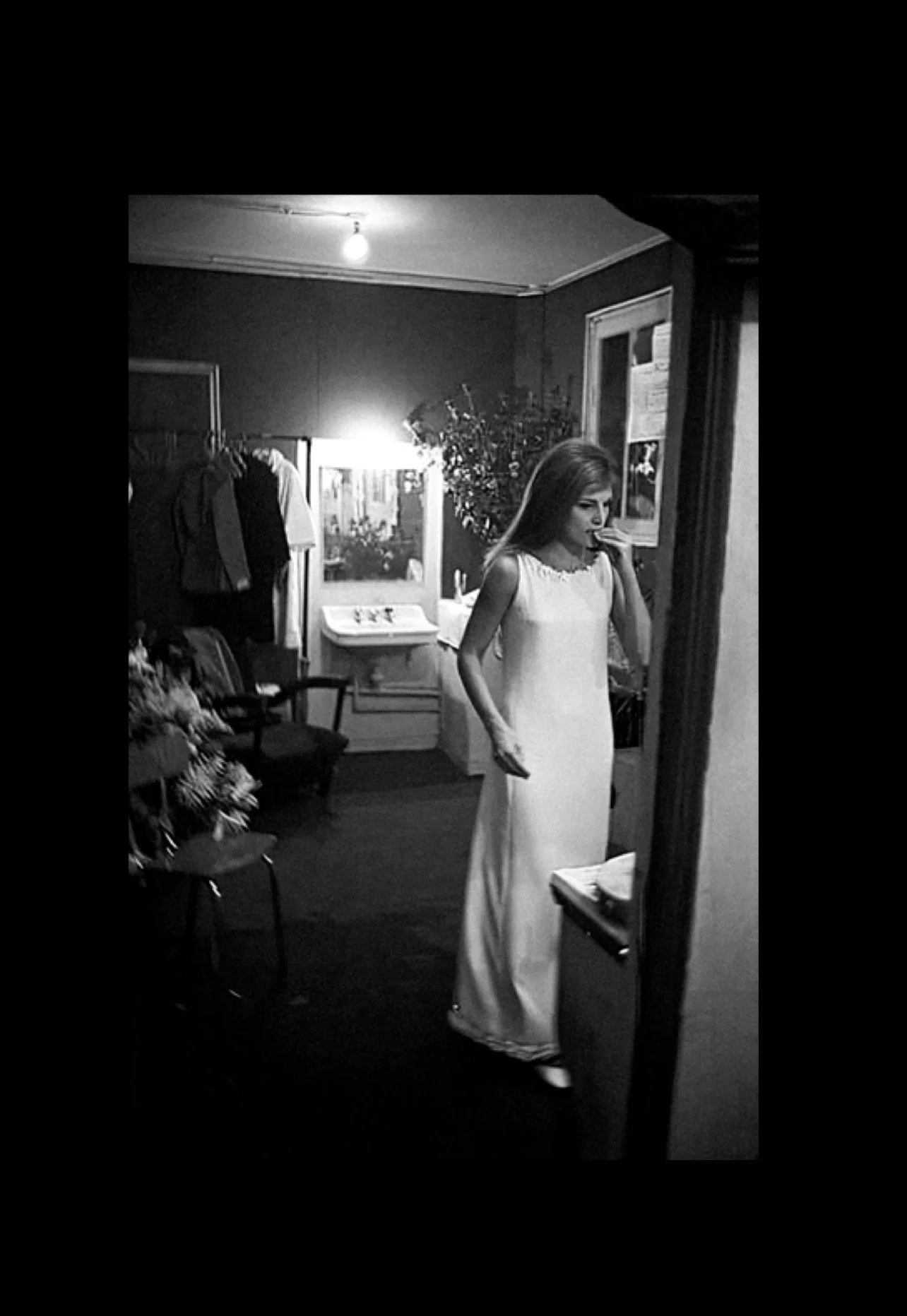
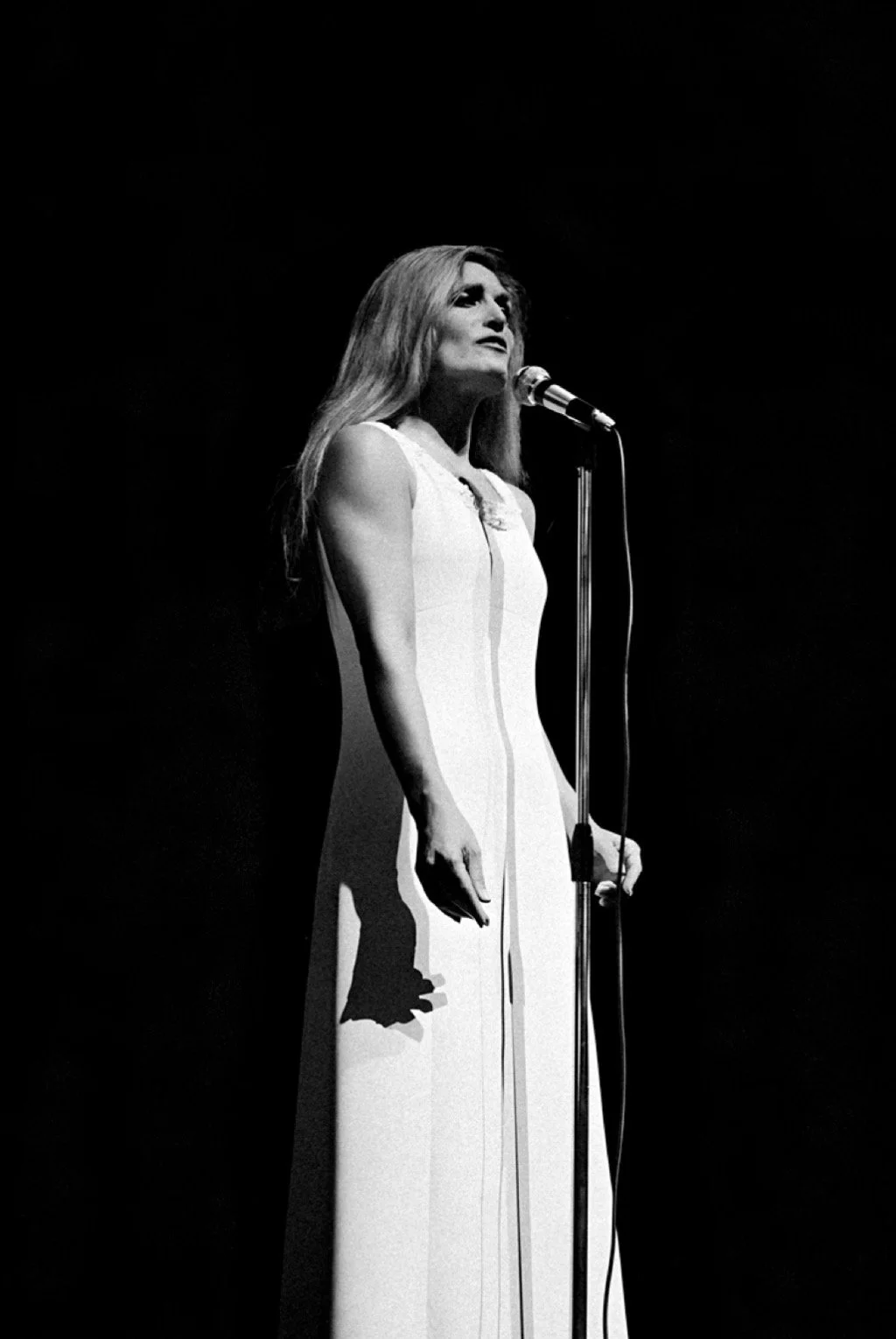
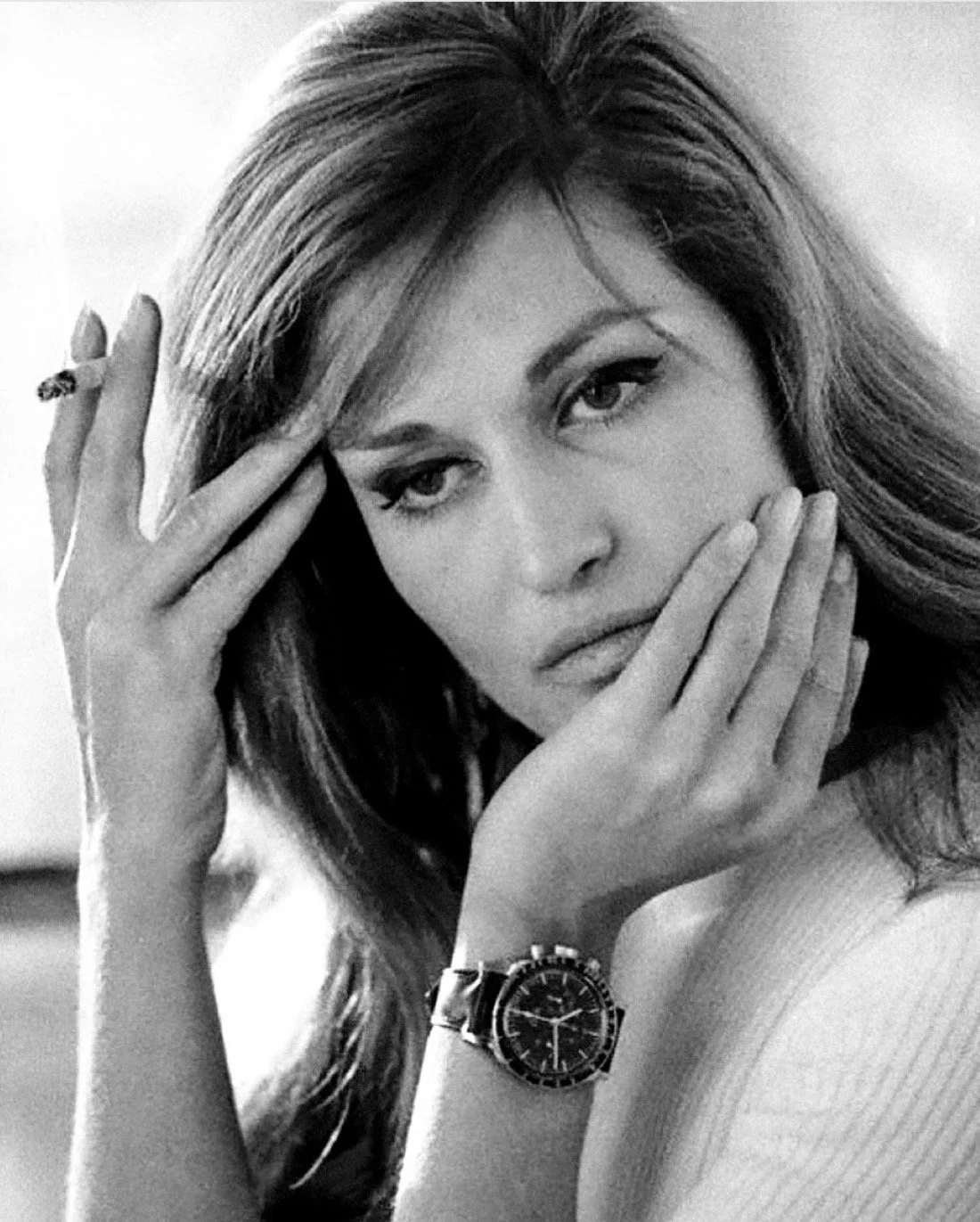
Born Iolanda Cristina Gigliotti in Cairo in 1933, Dalida grew up between cultures. The daughter of Italian parents from Calabria, she later embraced France as both her homeland and her destiny. This multicultural identity remained with her throughout her life, shaping a woman whose remarkable sensitivity was accompanied by a constant sense of belonging to more than one world.
Far more than the voice behind countless timeless songs, Dalida was deeply fascinated by life’s greatest questions. She immersed herself in philosophy, psychology and literature, reflecting on love, solitude, the passage of time and the fragility of the human condition.
The tragedies that marked her life most notably the death of Luigi Tenco, her partner in both music and life deepened this existential dimension. Her art came to express not only emotion, but also a relentless search for meaning.
Translating a Life into Haute Couture
Rather than recreating Dalida’s stage costumes, Stéphane Rolland chose to interpret her essence.
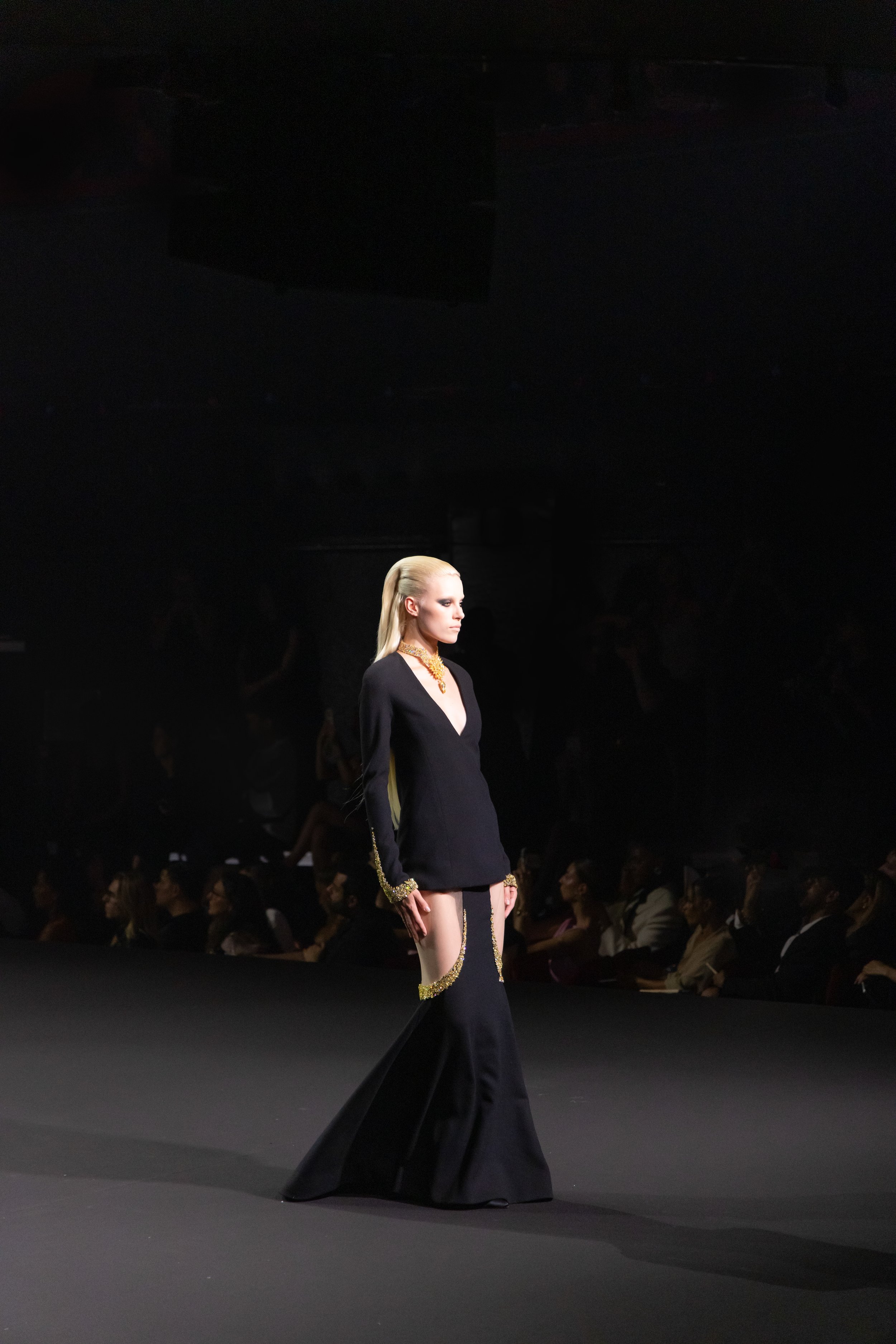
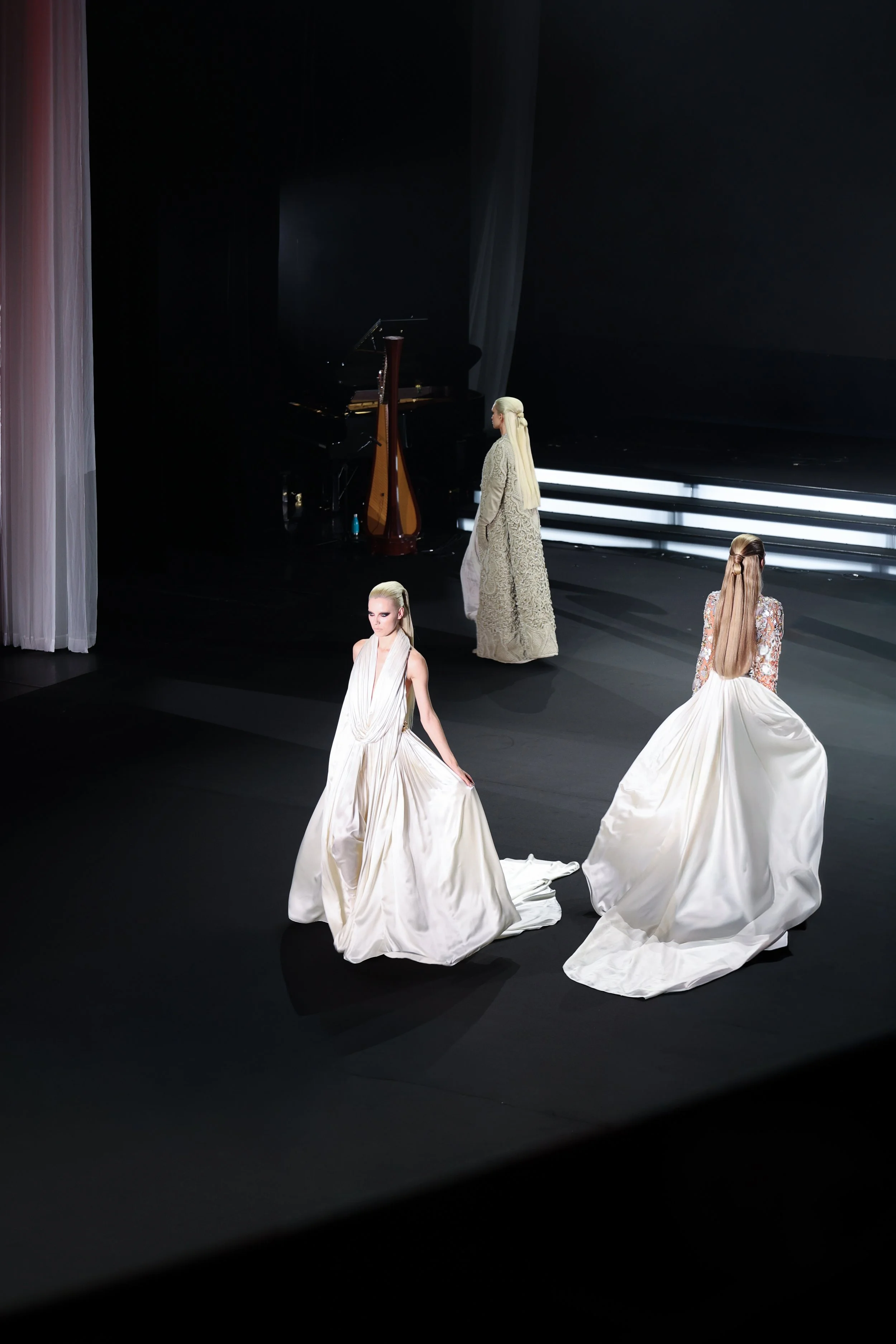
The collection features sculptural gowns, monumental volumes, impeccably executed drapery, dramatic capes and the architectural construction that has become the couturier’s signature. Every creation appears to embody a different emotional state, revealing both Dalida’s strength and her vulnerability.
The Looks That Defined the Collection
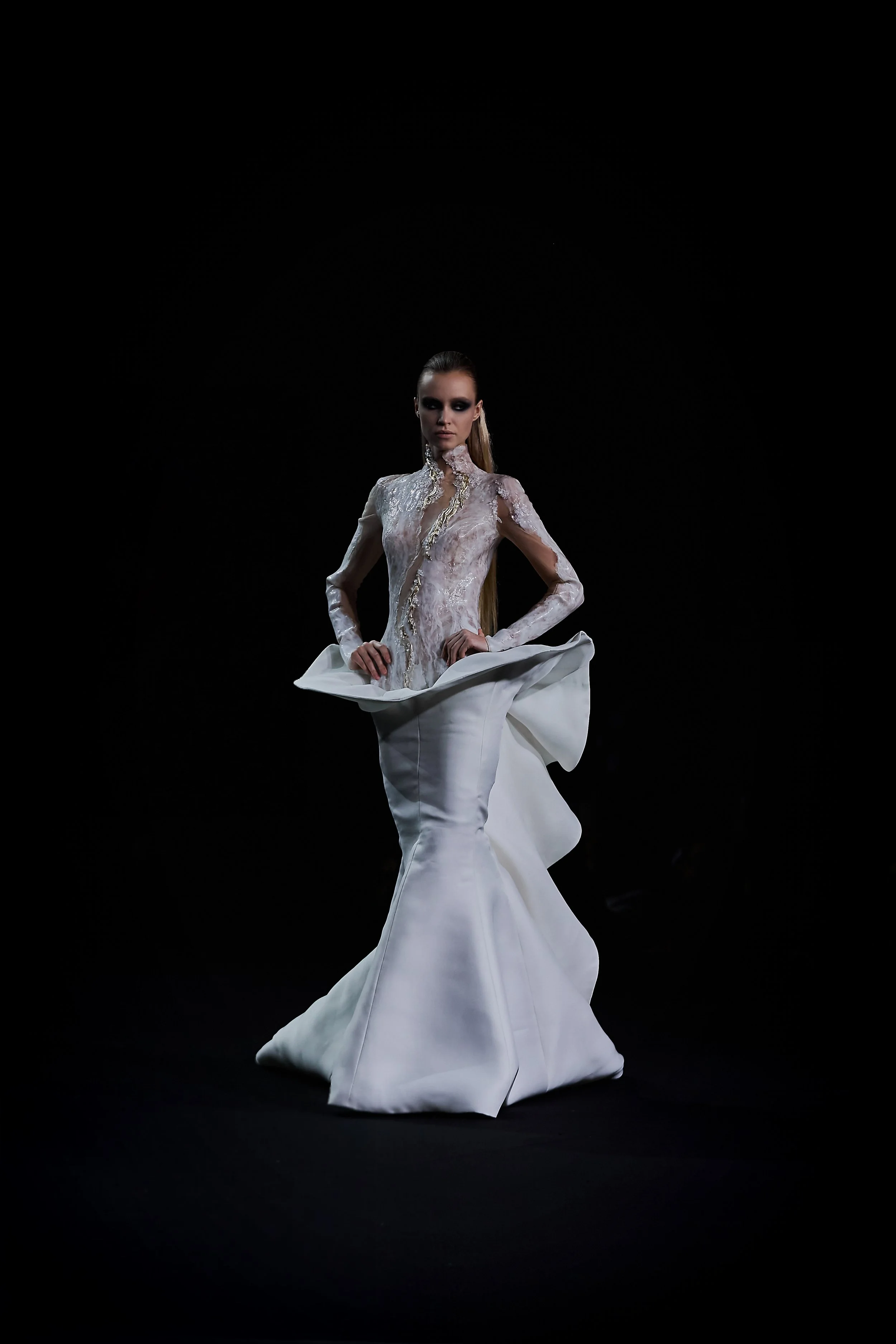
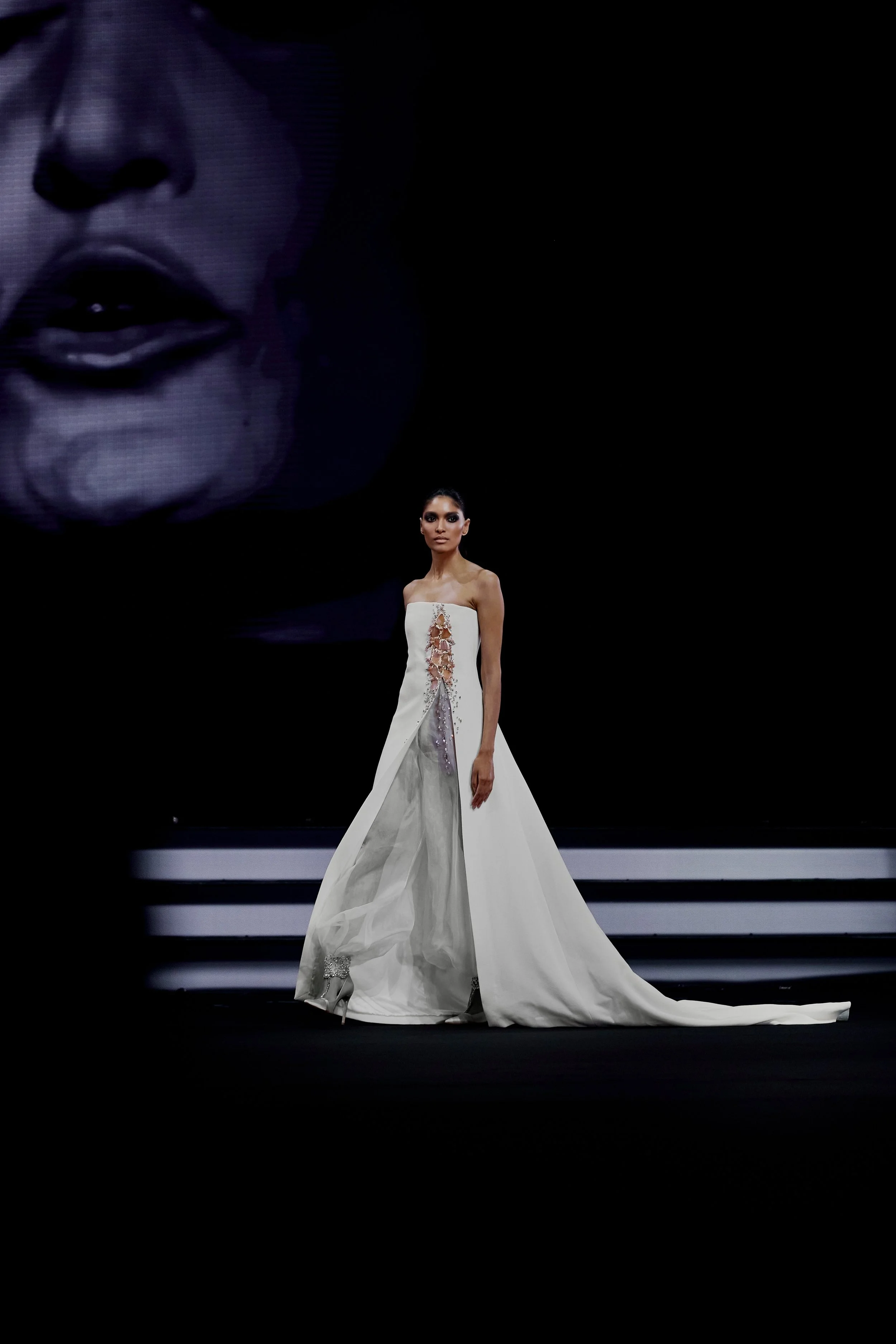
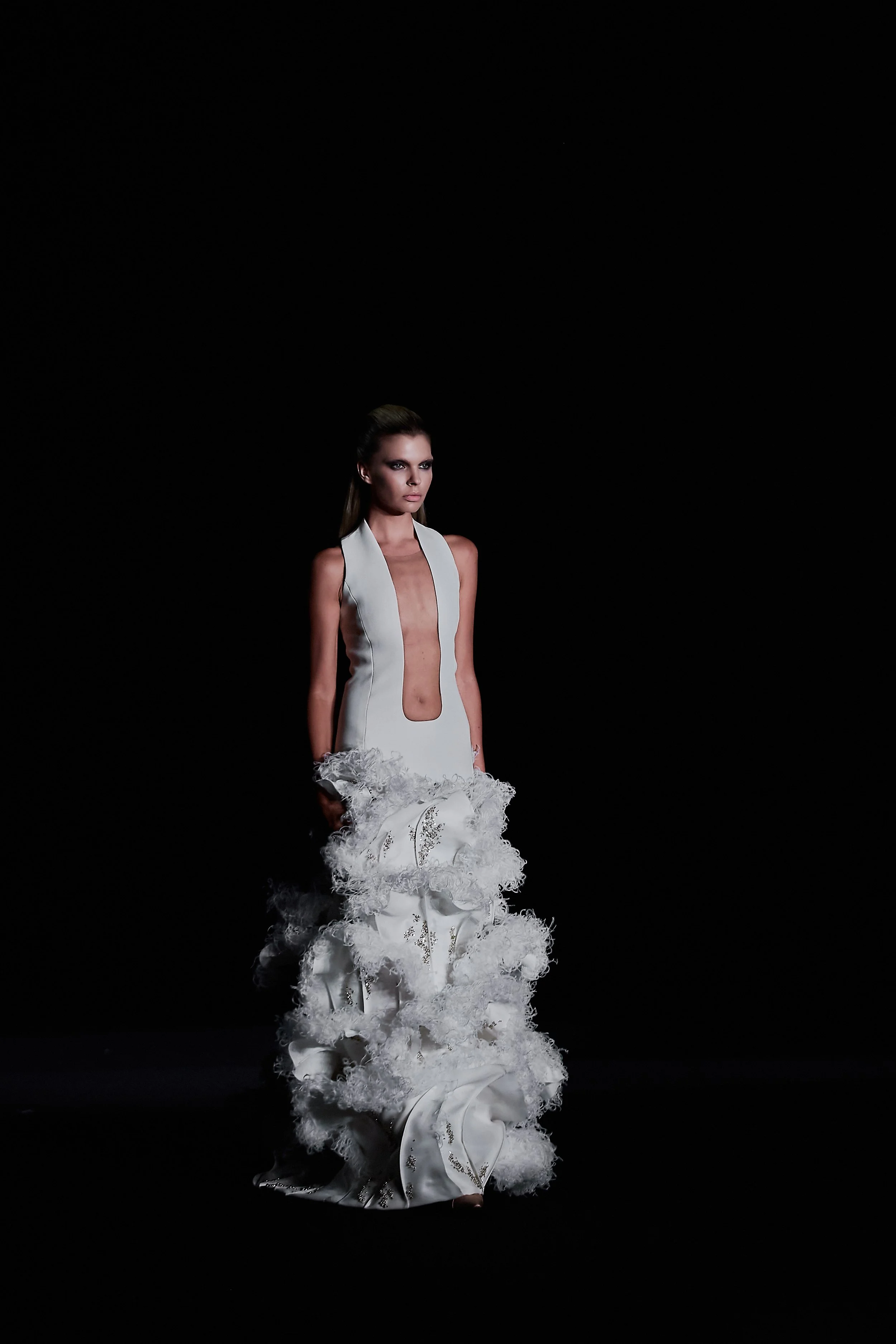
Rather than presenting a sequence of spectacular designs, the 33 looks were conceived as chapters of a single narrative. Each silhouette contributed to telling Dalida’s story.
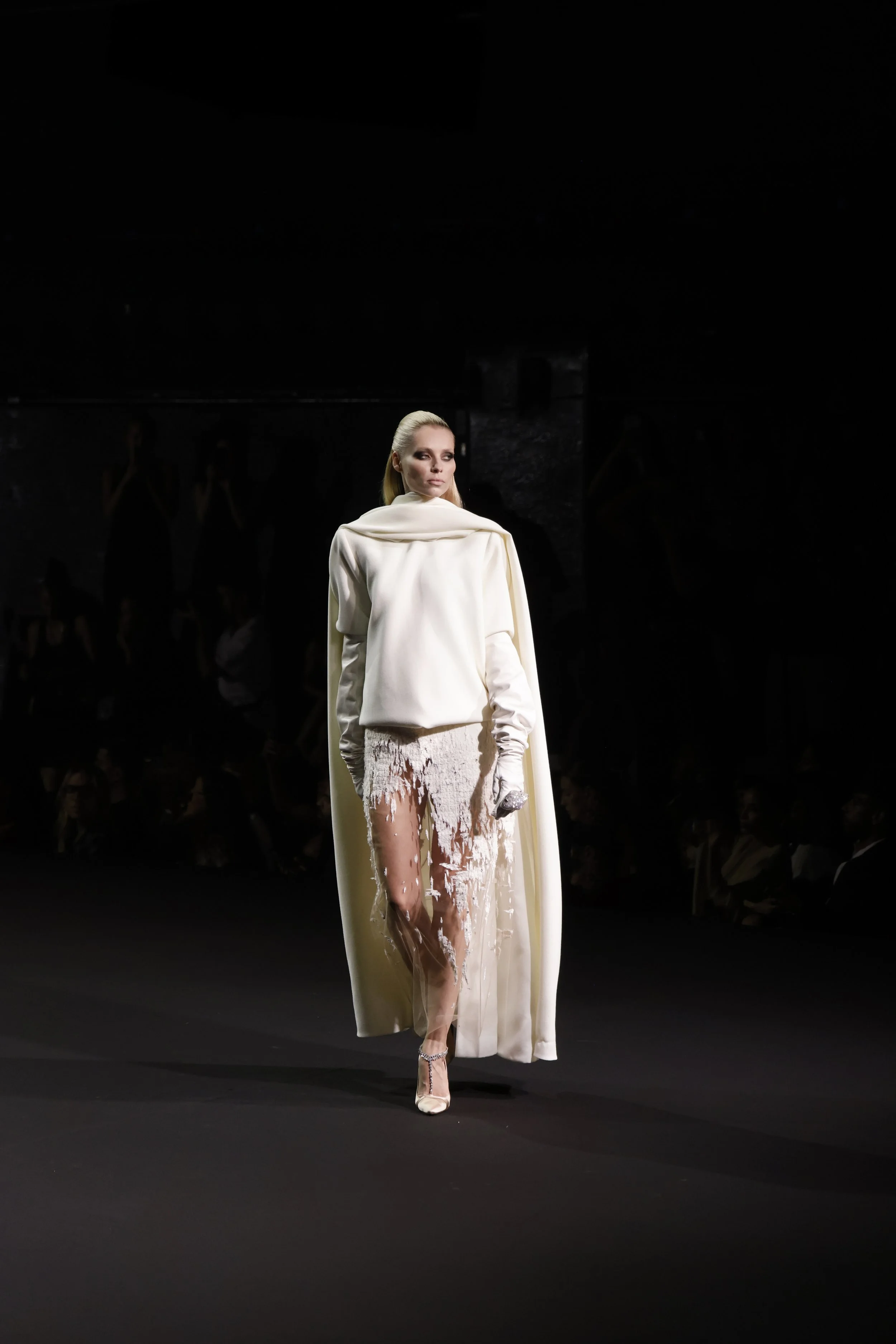
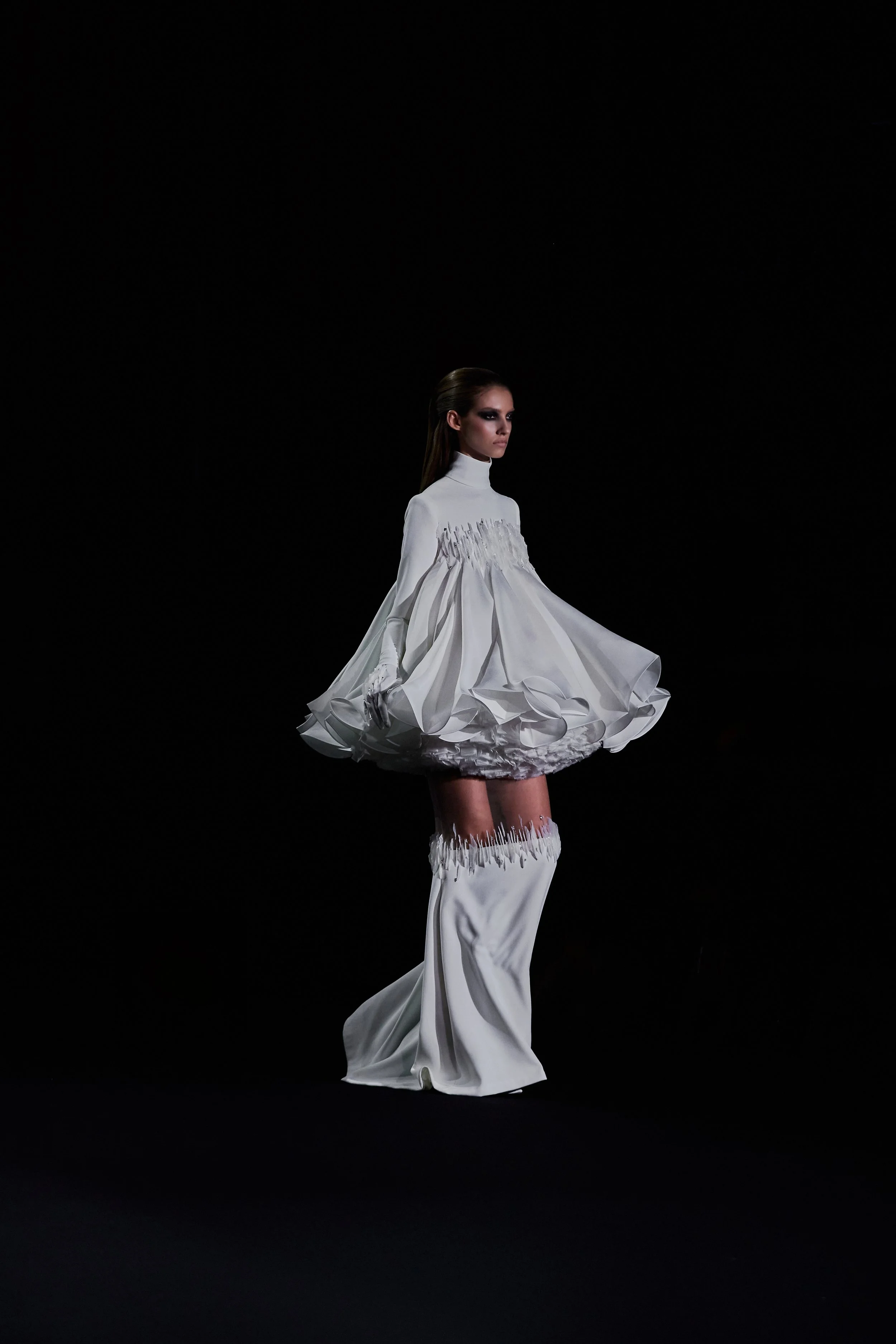
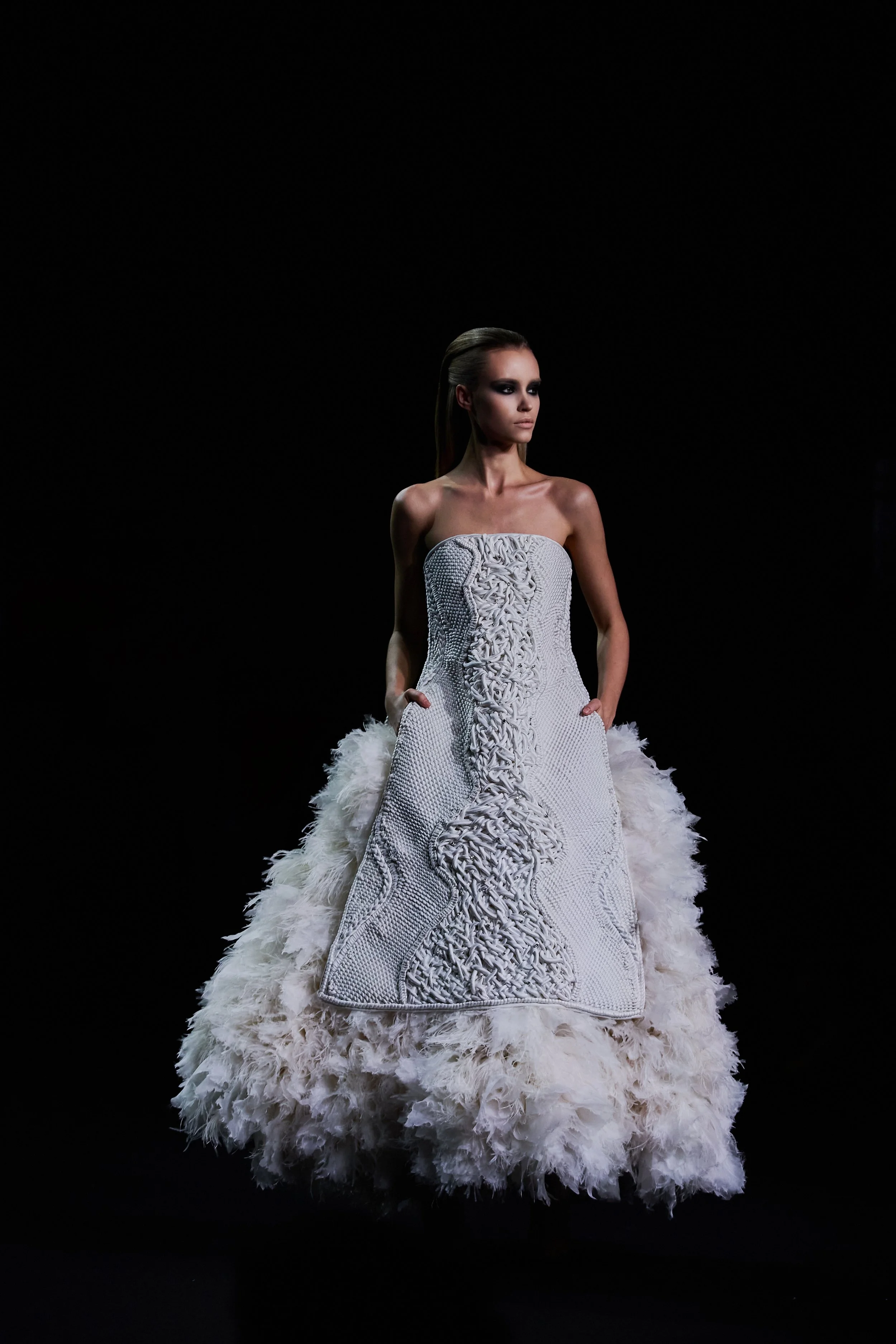
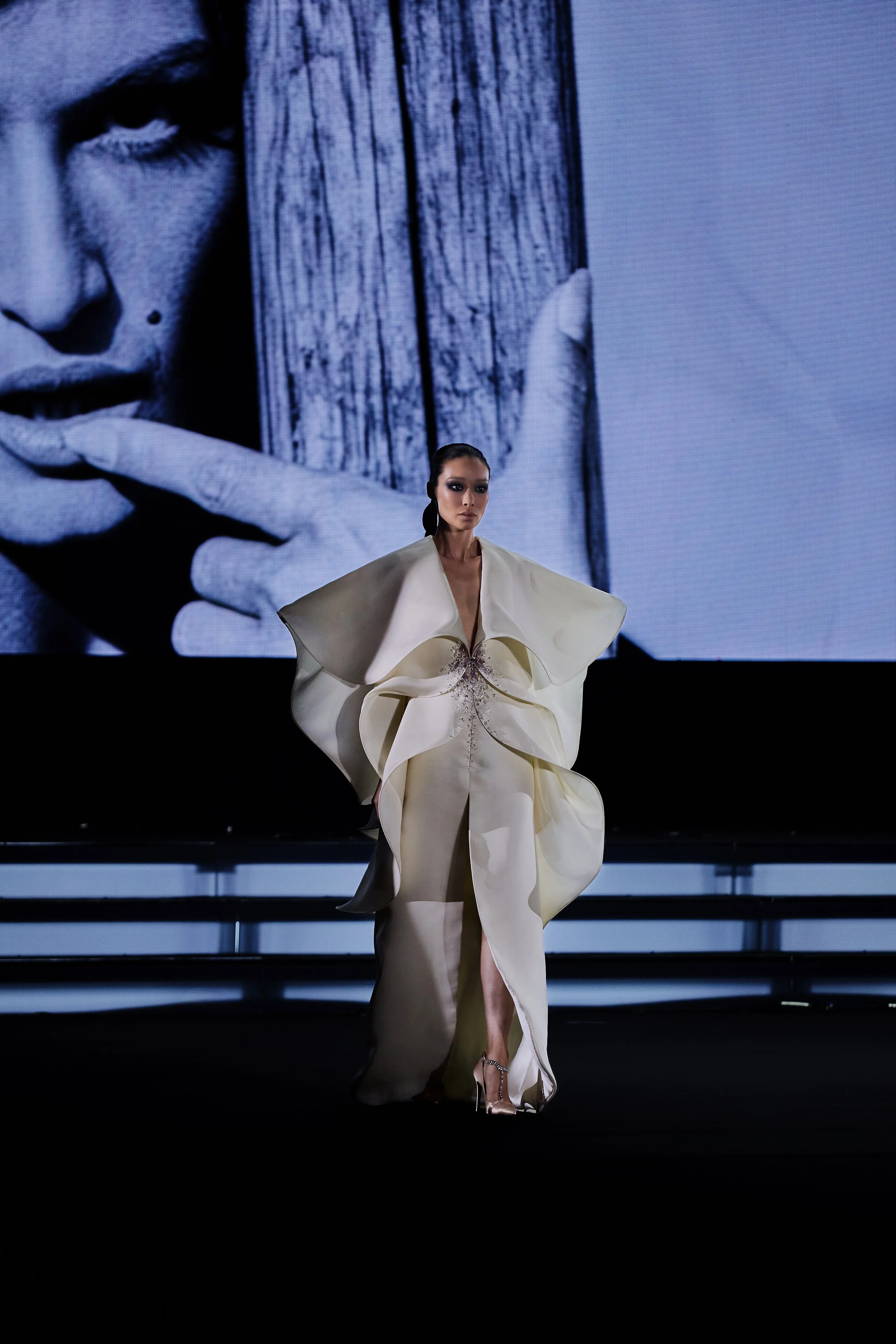
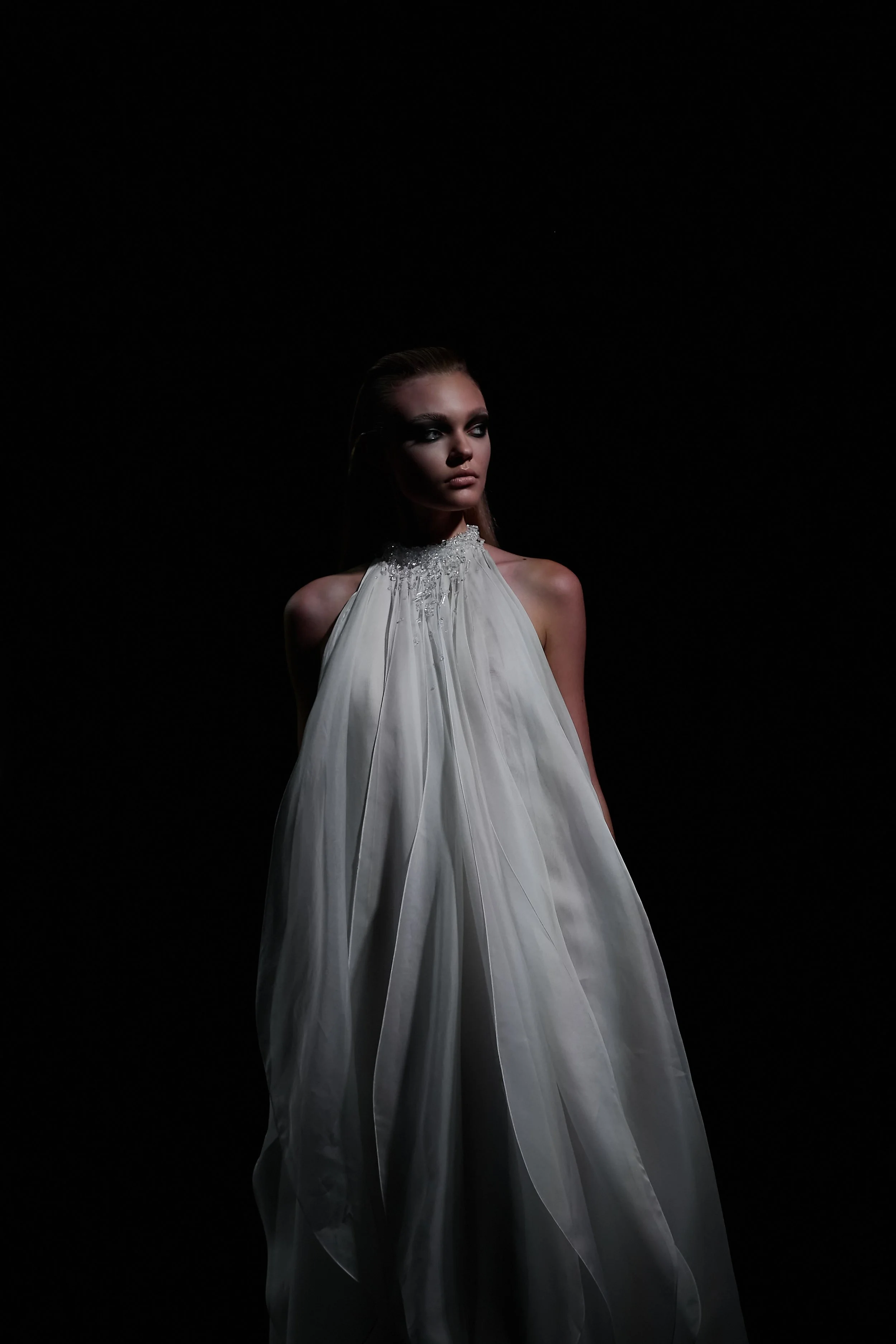
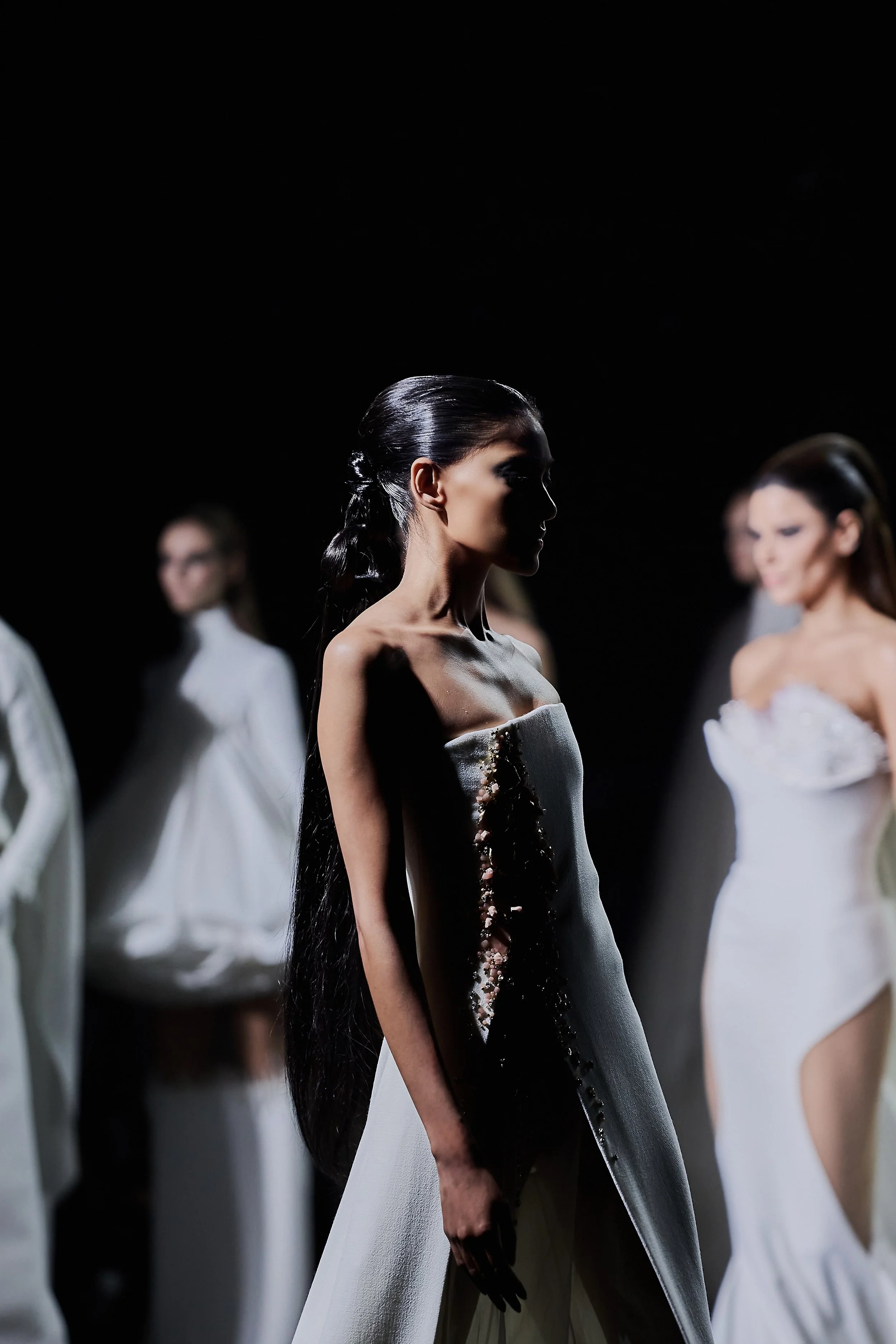
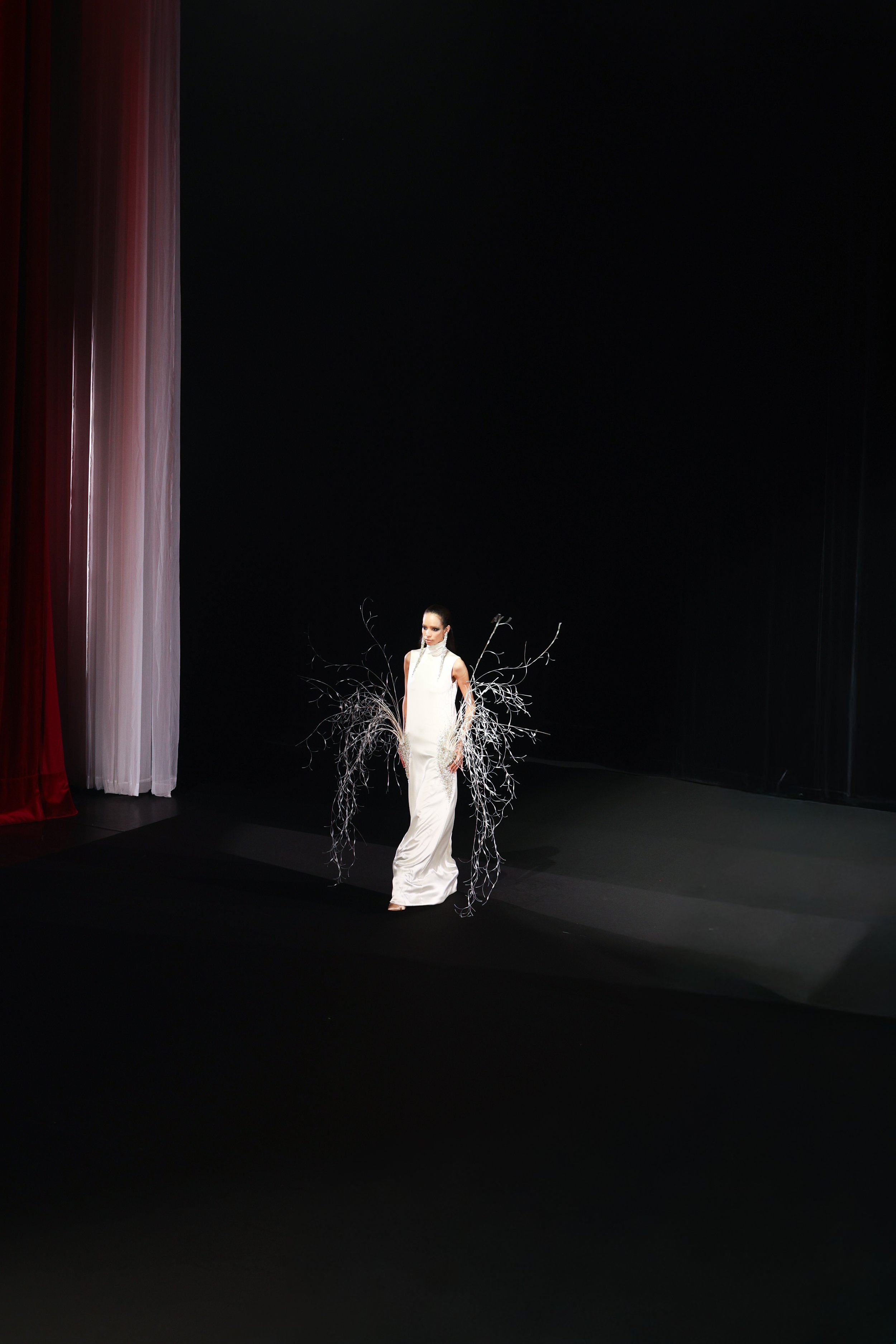
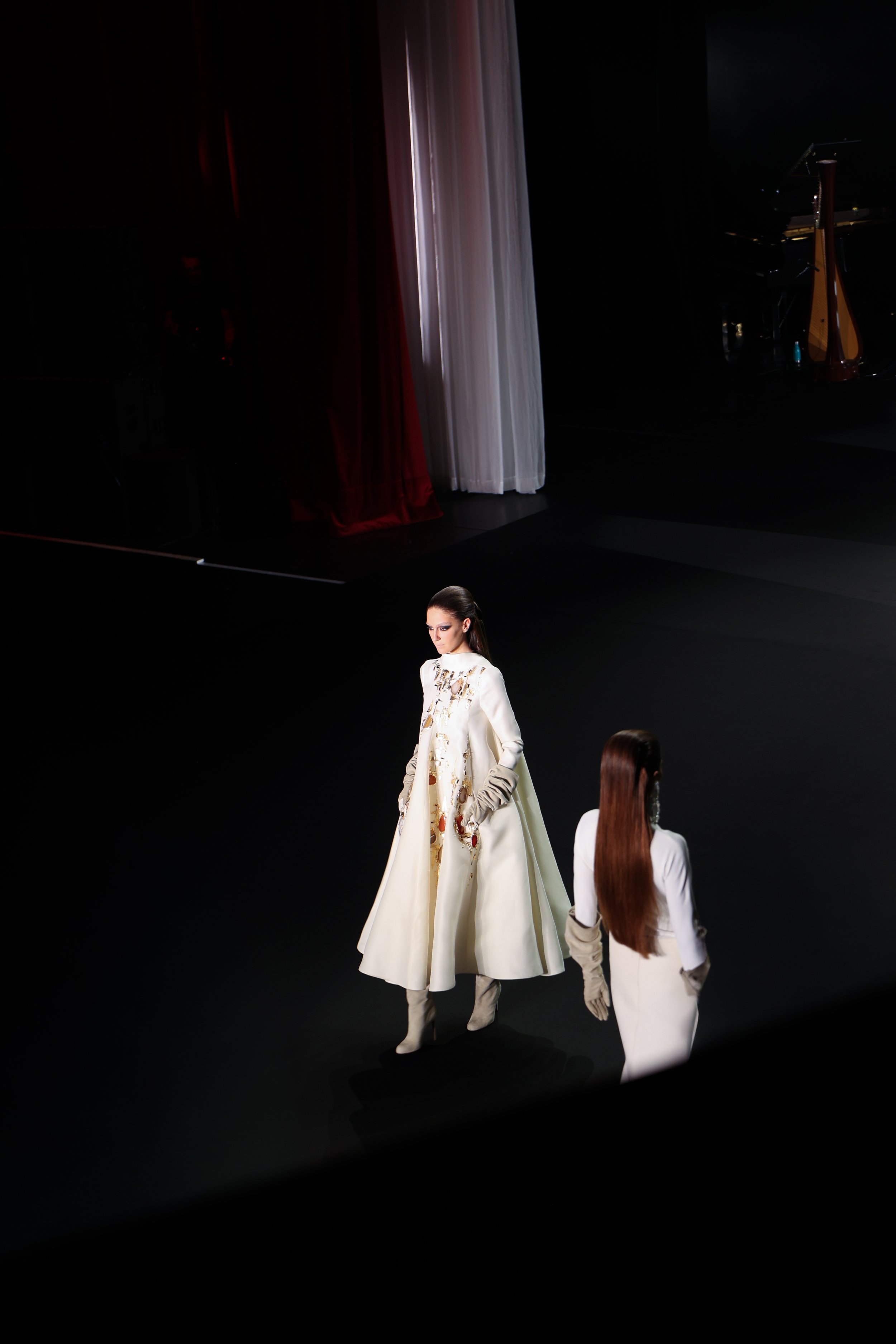
The show opened in luminous white. Dresses crafted from wool crepe, silk gazar and organza were embroidered with crystals, agates and silicone marble, evoking purity and light. A striking pareo-inspired bustier paired with embroidered organza zouave trousers, alongside the breathtaking Waves Dress in white silk gazar embroidered with silver and crystals, immediately established the collection’s sculptural language.
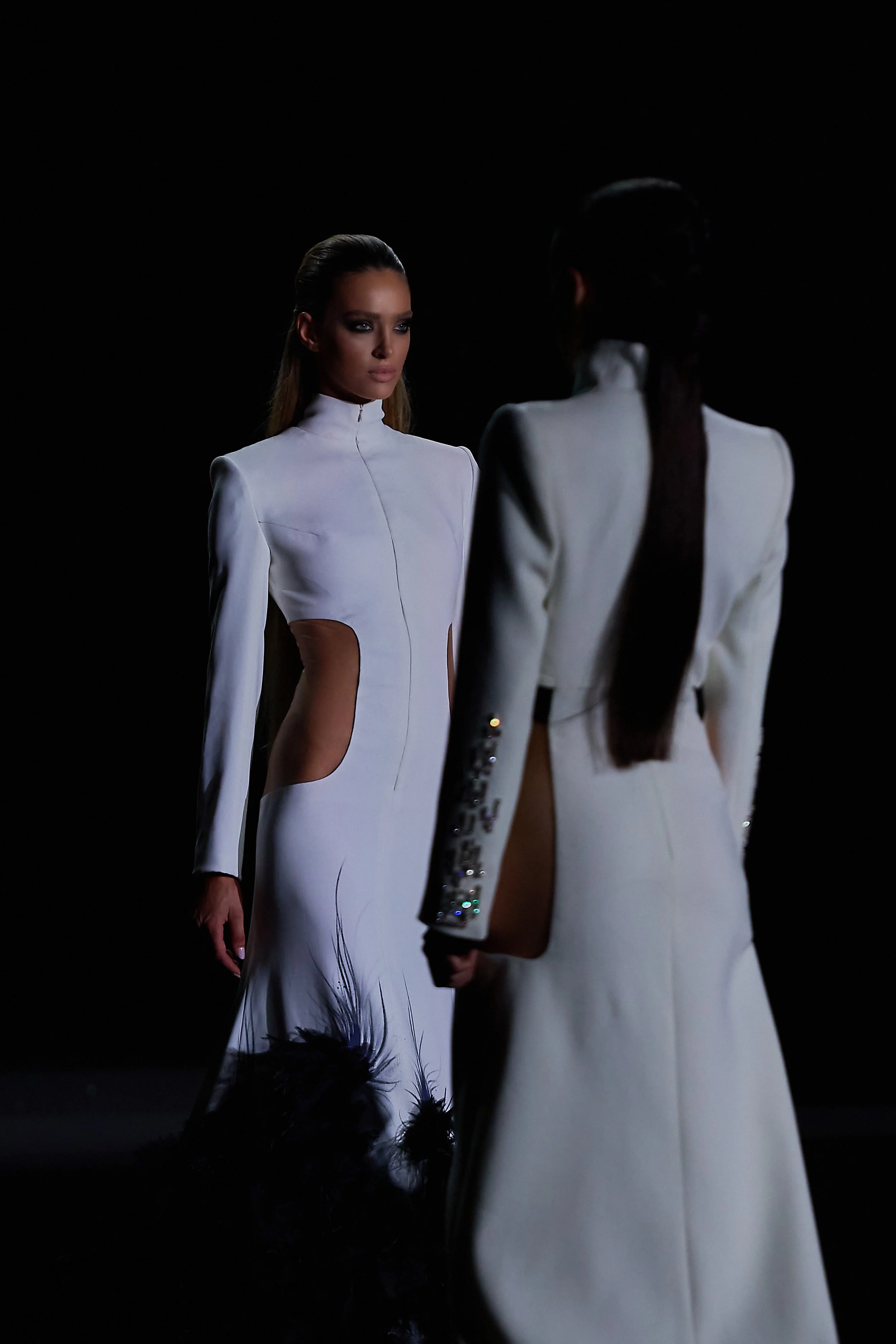
Another standout moment came with a backless trapeze dress in white wool gazar, embellished with ostrich feathers and embroidery recreating the texture of marble. The piece perfectly illustrates one of Rolland’s greatest strengths: transforming Haute Couture techniques into works of artistic expression.
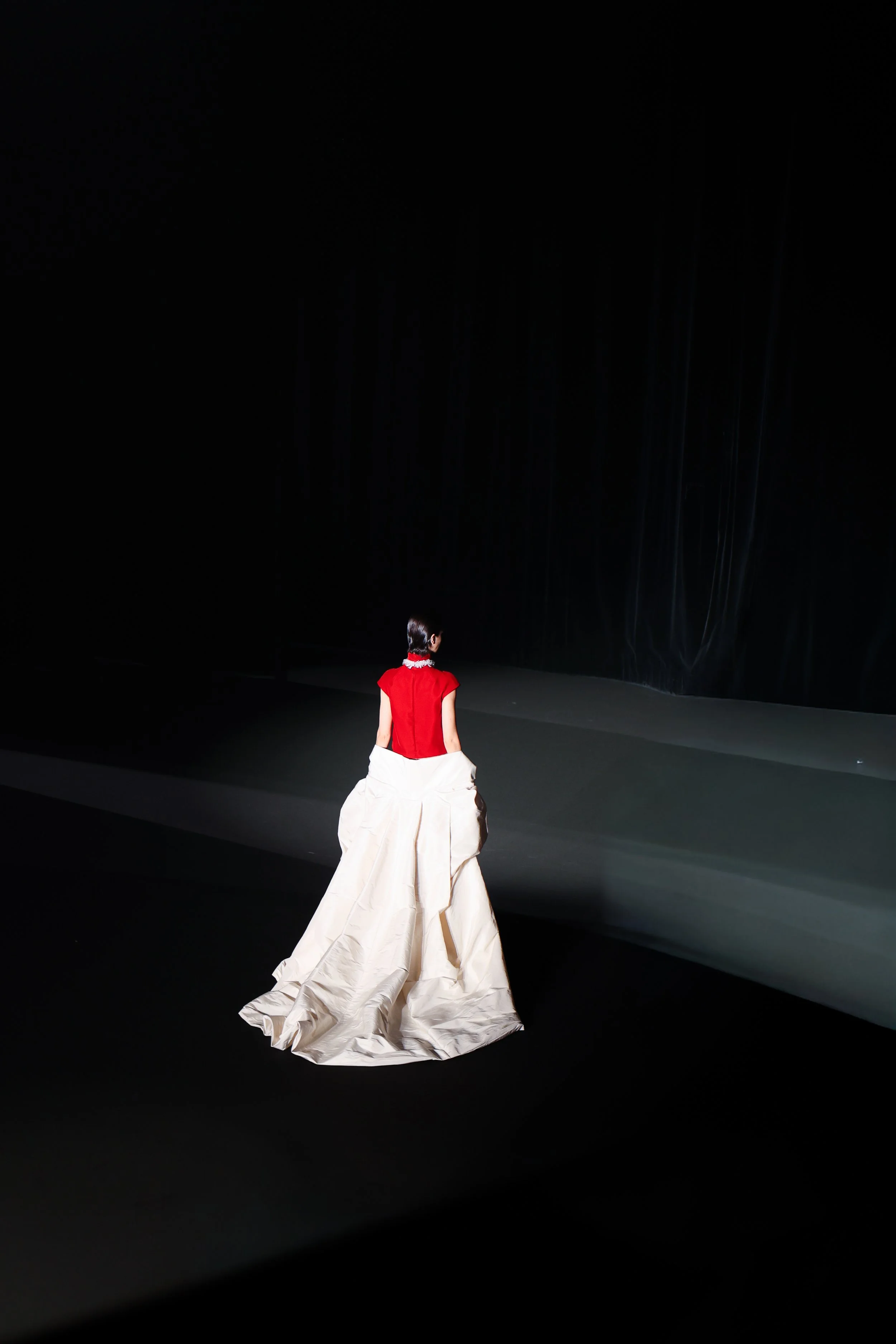
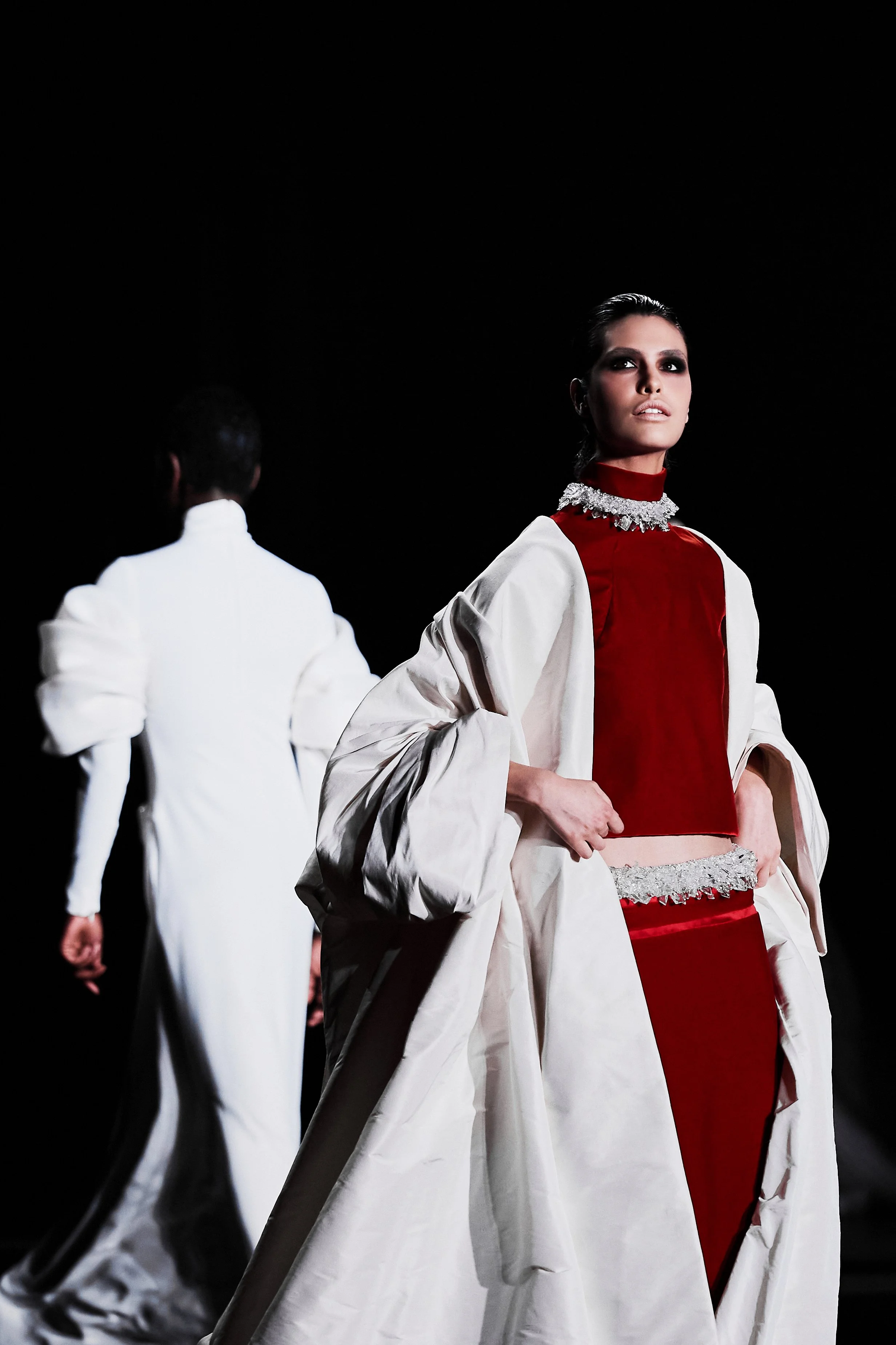
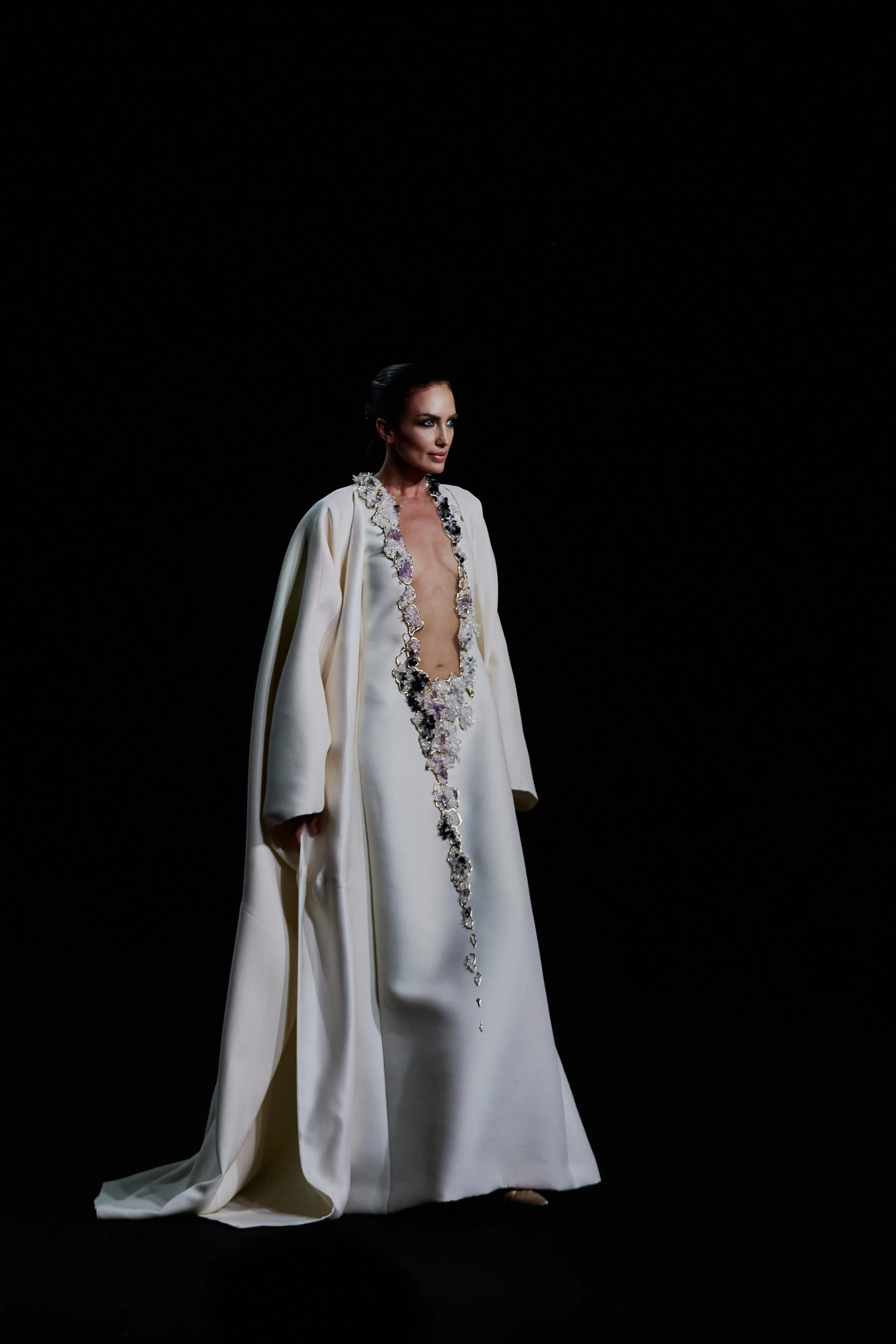
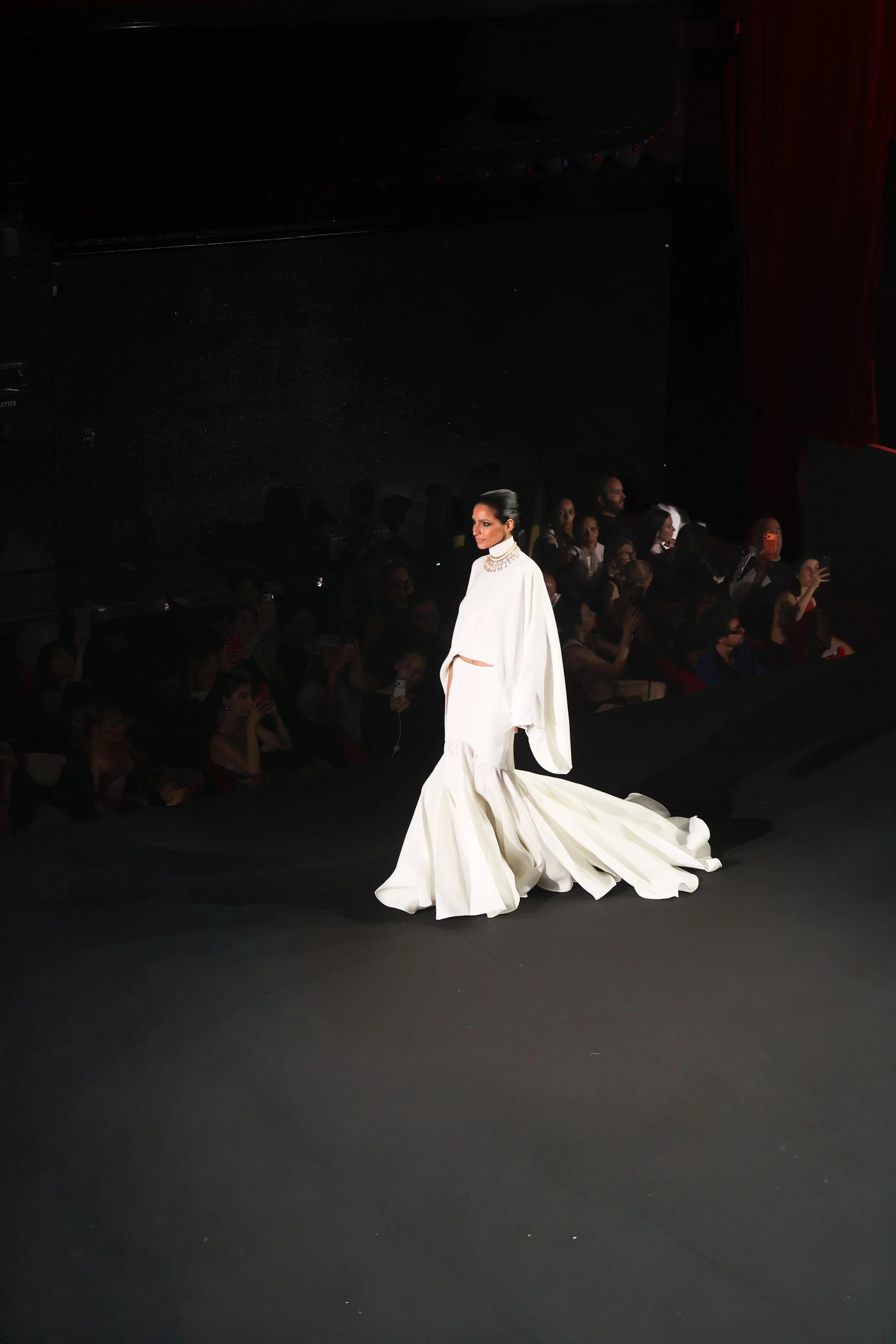
At the heart of the collection, white gives way to intense crimson in one of its most symbolic creations: the red velvet Olympia tunic gown, worn beneath a long ivory shantung kimono coat. The look pays direct tribute to the legendary Paris theatre where Dalida experienced some of the defining moments of her career, making it one of the show’s most emotionally charged highlights.
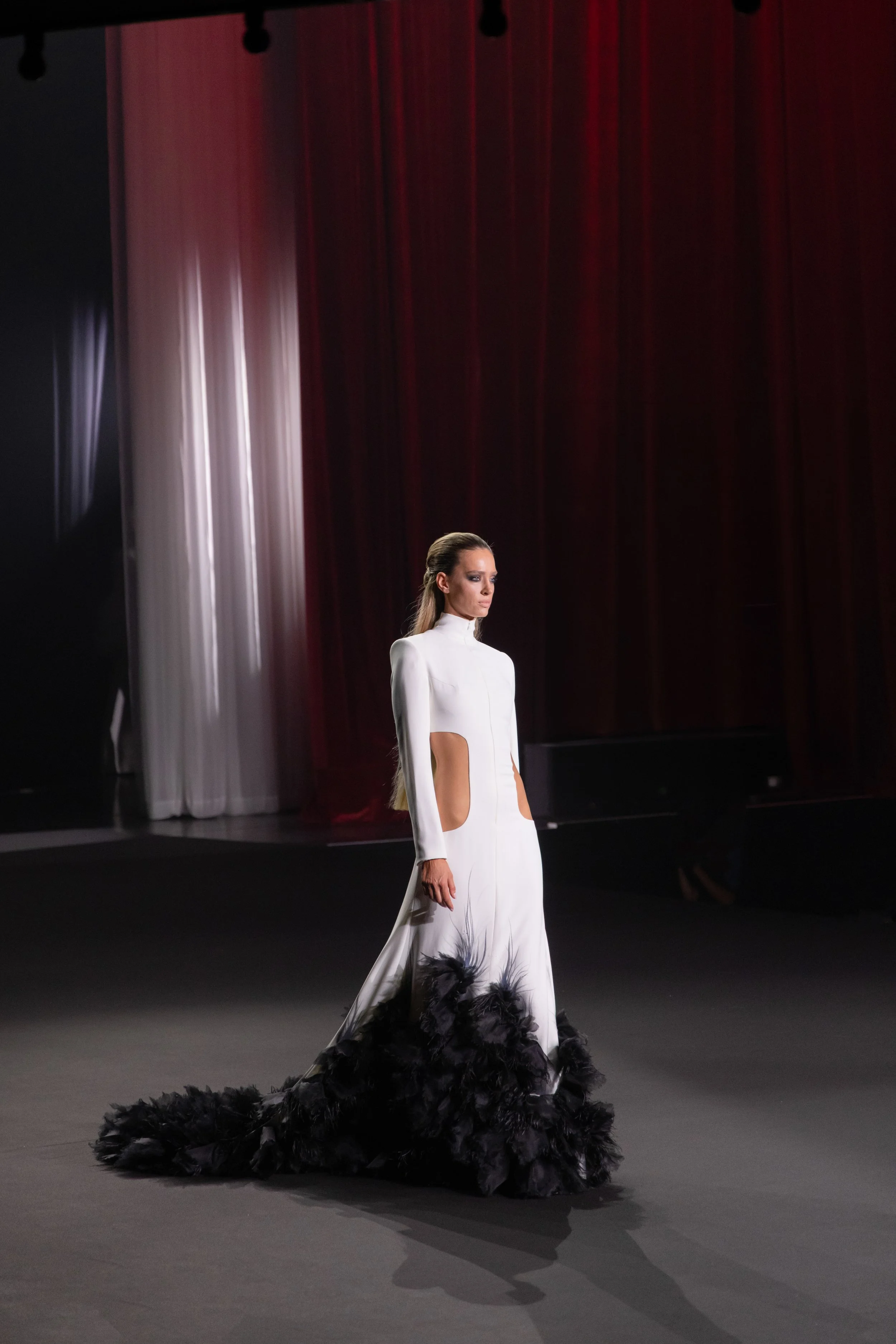
From this point onwards, the collection moves effortlessly between lightness and monumentality. Cascading gowns in white gazar embroidered with silver, sweeping crystal-embellished tulle skirts, marbled silicone knitwear and silhouettes enriched with ostrich feathers demonstrate Rolland’s extraordinary technical mastery and his ability to create movement while preserving architectural precision.
In the closing looks, gemstones including amethysts, onyx, rock crystal and jonquille-yellow diamonds elevate the collection’s craftsmanship even further. A black silk jumpsuit embroidered with diamonds, paired with a dramatic bisht coat, creates a striking contrast before the narrative returns once more to white.
A Story Told Through Colour
Colour plays a central role throughout the collection.
White symbolises light, spirituality and rebirth.
Black evokes introspection and timeless elegance.
Red expresses passion, love and the emotional intensity that defined Dalida’s life.
Gold accents recall the brilliance of the stage and the almost mythical stature she attained throughout her career.
A Dialogue Between East and West
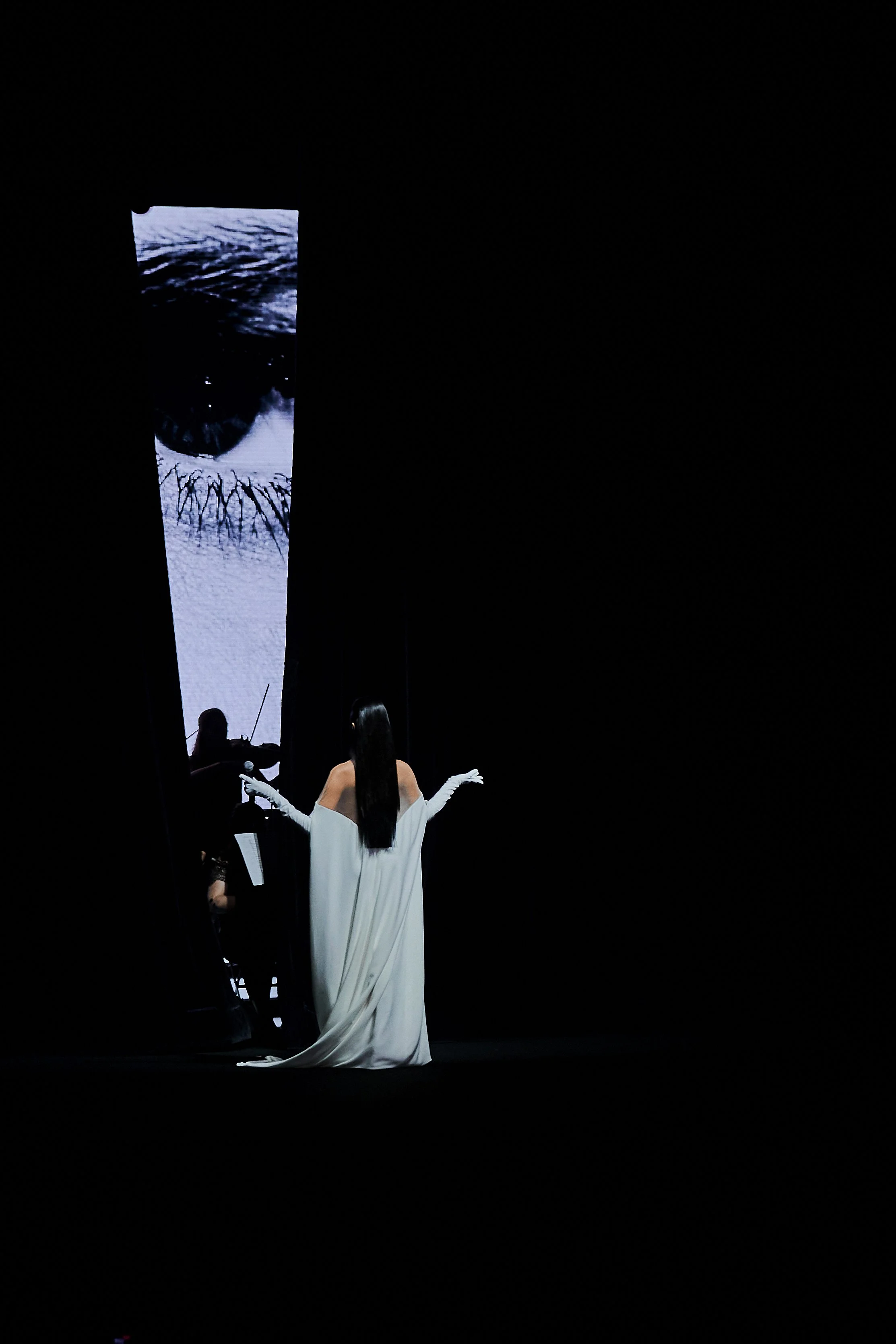
Music also plays an essential role in Stéphane Rolland’s tribute. To give voice to the collection’s narrative, the couturier invited Tunisian singer Oumaima Taleb, widely regarded as one of the leading voices of the contemporary Arab world.
The choice could hardly be more symbolic. Like Dalida, Oumaima was born in North Africa and has built a career defined by the emotional depth of her performances. Her presence creates a bridge between Cairo, where Dalida was born, and Paris, the city that transformed her into an icon of French music and culture.
Described by the Maison as an artist who “does not simply sing, but inhabits every word”, Oumaima embodies a musical tradition in which each performance becomes an act of confession. As the heir to legendary Arab voices such as Oum Kalthoum and Fairuz, she brings a spiritual dimension to the show, enriching the emotional resonance of the tribute.
As the models move through the space, music becomes every bit as important as the garments themselves. Oumaima’s voice envelops the audience, reinforcing the atmosphere imagined by Stéphane Rolland: a performance in which emotion, memory and Haute Couture exist in perfect harmony.
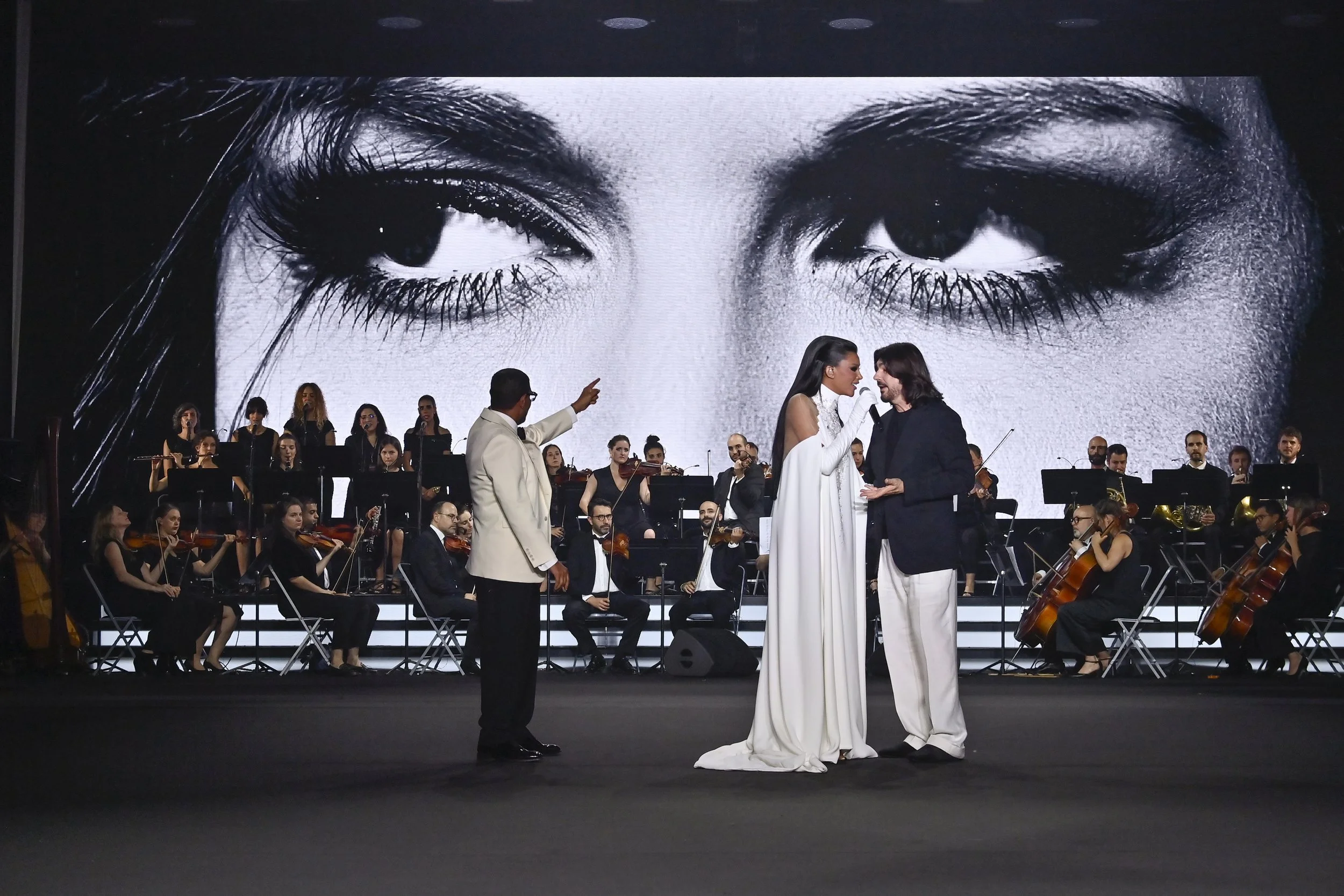
By the finale, it becomes clear that this collection was never solely about Dalida, It is about permanence, About artists whose legacy transcends generations because the emotions they expressed remain universally understood.
By dedicating his Haute Couture collection “to the woman, the artist and the light”, Stéphane Rolland reaffirms one of fashion’s greatest achievements at its highest level: the ability to preserve memory, transform emotion into material form and make beauty a language capable of withstanding time itself.
More than a fashion show, this was a declaration of love for art. A reminder that Haute Couture, when guided by emotion and purpose, can transcend fashion to become part of our cultural heritage.
As the final look disappeared from the runway, one impression lingered above all others: Dalida had never truly left the stage. She had simply found a new way to remain present—through the hands of one of the greatest names in contemporary Haute Couture.
Photos : @victorttelles / @arnaldo_monsieur.ferreira