The Cambridge Public House: A British Soul Redefining Parisian Cocktail Culture
Credits: 50 Best
Paris has never been short of exceptional places to drink. From the grand hotel bars that have welcomed generations of artists and travellers to the intimate cocktail addresses hidden along its historic streets, the French capital has cultivated a drinking culture shaped by elegance, craftsmanship and an appreciation for the pleasures of life. Yet, on a September afternoon in Le Marais, I found myself experiencing something rather different: a distinctly British pub in the middle of Paris.
I was in the city for The World’s 50 Best Hotels 2026 awards ceremony when LX Comms invited me to visit The Cambridge Public House. Having spent several years living in London, I was immediately intrigued by the concept. The idea of bringing the familiar atmosphere of a British pub into the heart of the French capital felt like a small cultural invasion, albeit a particularly welcome one. What I discovered was far more interesting than a simple interpretation of British drinking traditions.
Behind its relaxed atmosphere and understated interiors, The Cambridge Public House has developed a sophisticated cocktail programme, an international reputation and a commitment to sustainability that extends well beyond the ingredients in a glass. More importantly, it has managed to preserve something that increasingly feels precious in the world of award-winning hospitality: the ability to make people feel genuinely welcome.
When the British pub meets Parisian sophistication
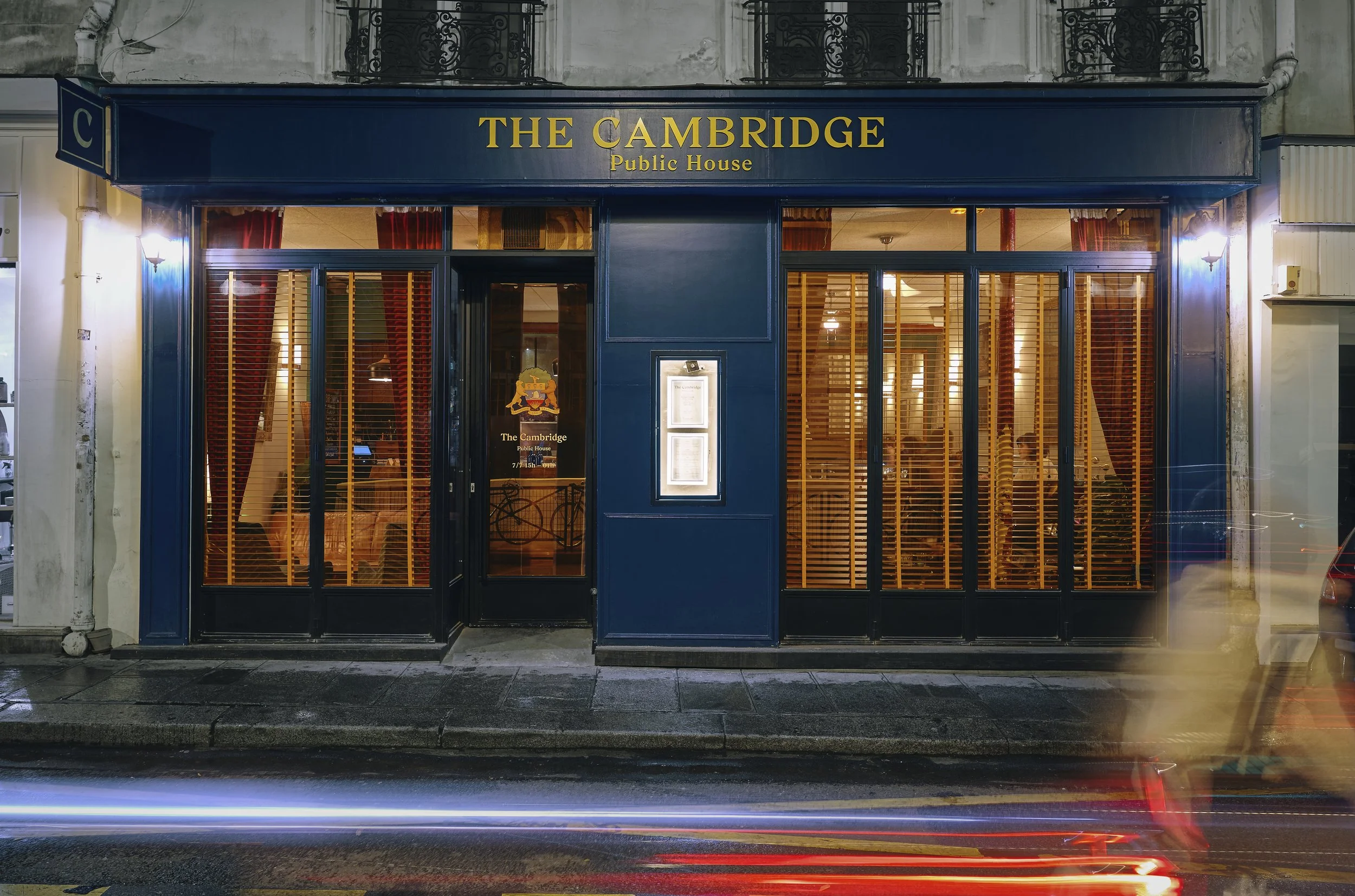
Opened in 2019 by Hyacinthe Lescoët and Hugo Gallou, The Cambridge Public House was conceived around an apparently simple proposition: combining the warmth and accessibility of a traditional British pub with the technical expertise of a contemporary cocktail bar. The result is what its founders describe as a cocktail pub.
Located on Rue de Poitou in Paris's third arrondissement, the venue embraces the familiar visual language of British pub culture. Dark wood, comfortable seating, patterned rugs and a relaxed atmosphere create an environment that feels reassuringly informal. During my visit, I was particularly drawn to the bar's interiors. There was something charming about finding these recognisable elements of British hospitality in a Parisian setting. The furniture, old wooden tables and decorative details created a sense of familiarity, while the street outside offered a constant reminder that I was still in the French capital.
The large windows facing the neighbourhood added another dimension to the experience. Sitting inside, watching people move along the street, I was reminded of one of the characteristics that makes British pubs so distinctive: their relationship with the communities surrounding them. A good pub is rarely just somewhere to order a drink. It is a place to meet friends, exchange stories, spend an afternoon or simply feel part of a neighbourhood.
The Cambridge has translated that philosophy into a contemporary Parisian context. Despite its international recognition, the atmosphere remains approachable. Guests can order a cocktail, a pint of beer or a glass of wine without feeling that they have entered an exclusive environment reserved for cocktail enthusiasts. For me, that balance was one of the bar's greatest strengths.
Cocktails that balance creativity and familiarity
Of course, the drinks are central to The Cambridge's reputation.The cocktail programme reflects a combination of technical precision, seasonal ingredients and a willingness to experiment with flavour. Rather than relying exclusively on elaborate presentations, the team focuses on creating drinks that are thoughtful, balanced and enjoyable. The menu evolves throughout the year, allowing the bartenders to respond to seasonal availability while introducing new interpretations of familiar cocktail styles.
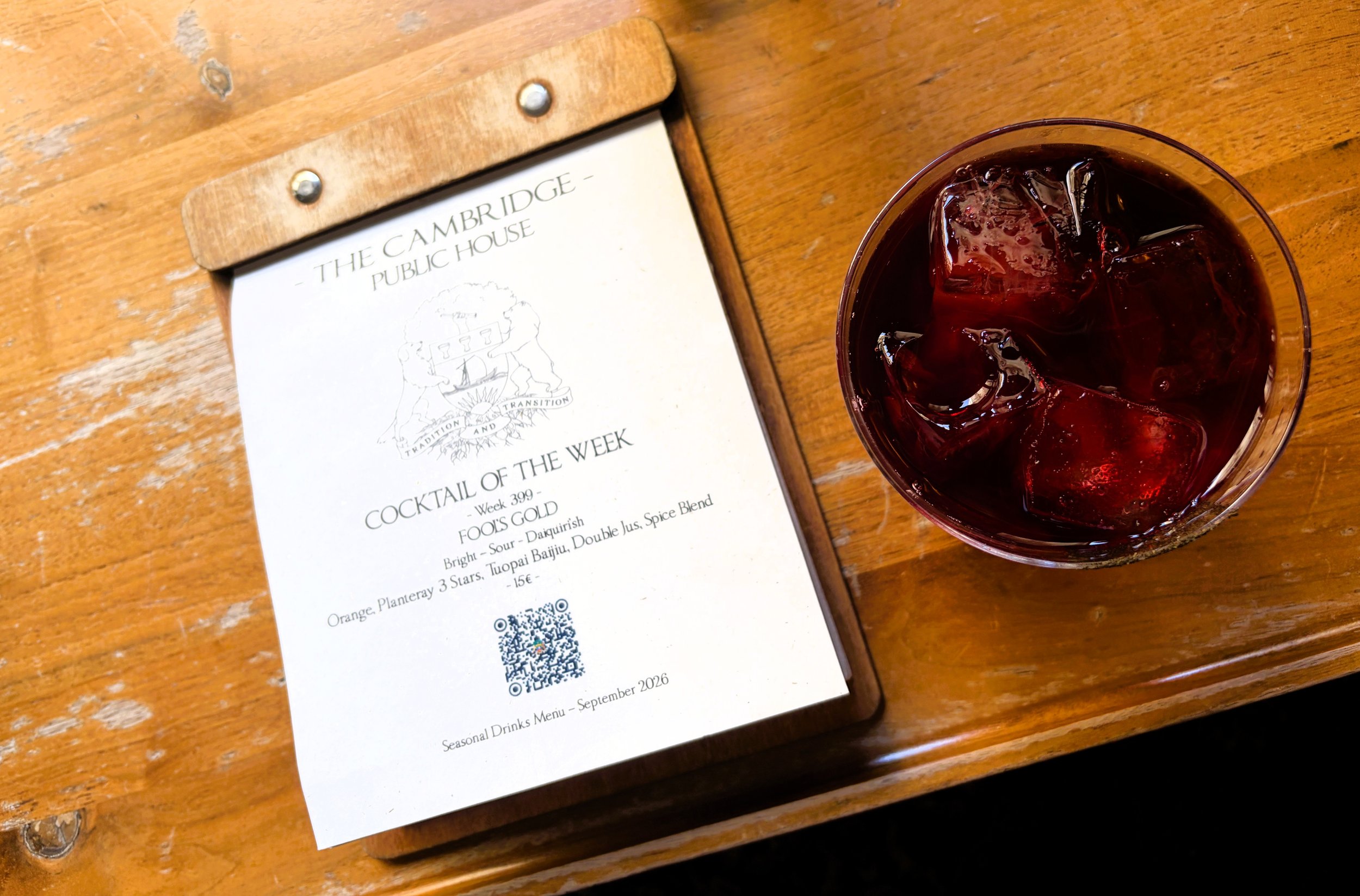
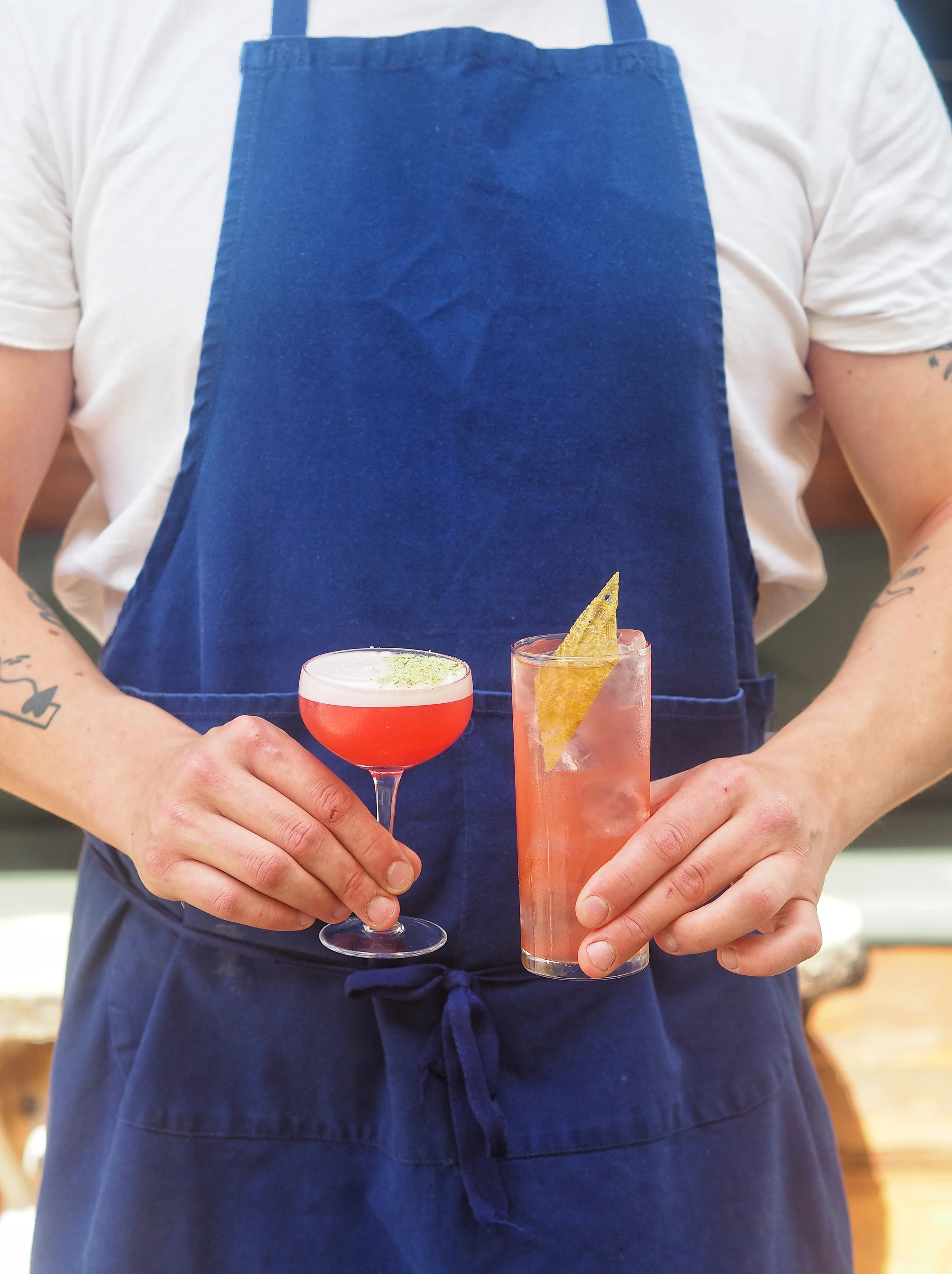
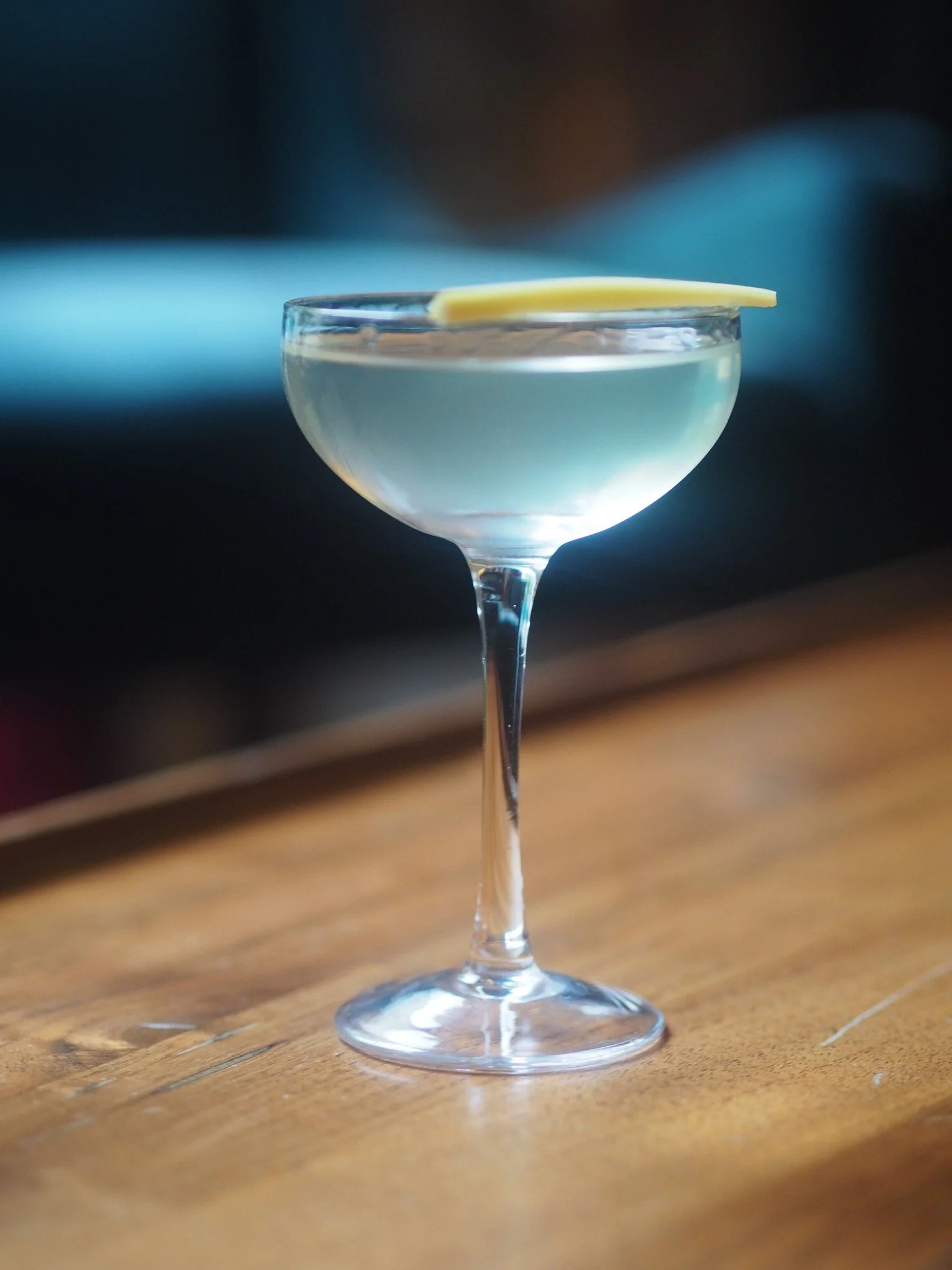
During my visit, I had the opportunity to taste several creations, each demonstrating a different approach to flavour and presentation. One of the drinks was served in a delicate coupe glass, its golden colour catching the afternoon light. Another arrived with a deeper red hue, offering a striking visual contrast. A third, served over a large block of ice with a carefully positioned garnish, reflected the more contemporary side of the bar's cocktail programme.
Credits: Own archive.
What impressed me was not simply the appearance of the drinks, but the diversity of their flavour profiles. The Cambridge explores combinations that move between bright acidity, sweetness, savoury notes and more complex aromatic expressions.
The menu photographed during my visit featured Fool's Gold, described as a bright, sour, Daiquiri-inspired creation combining orange, Planteray 3 Stars rum, Tuopai Baijiu, Double Jus and a spice blend. The use of baijiu alongside rum illustrates the team's interest in bringing together ingredients from different drinking traditions without losing sight of the cocktail's overall balance.
Another particularly interesting aspect of the menu is its relationship with time. While certain popular creations remain available, others are introduced for limited periods before disappearing to make room for new ideas. The bar's Last Chance concept takes this approach further, giving guests a final opportunity to enjoy cocktails approaching the end of their menu life. It is an intelligent way of encouraging exploration while acknowledging that a cocktail menu, like the ingredients from which it is made, does not need to remain static.
I also appreciated the opportunity to speak with some of the people behind the bar, who explained the thinking behind the drinks and how different ingredients and ideas had been incorporated into the menu. That conversation added another layer to the tasting. Understanding the creative decisions behind a cocktail often changes the way we experience it, allowing us to appreciate not only the final result but also the craftsmanship involved.
More than cocktails: The importance of community
What makes The Cambridge Public House particularly interesting is that its ambitions extend beyond the bar counter. The British pub has traditionally played an important role in local social life, functioning as a meeting place and an informal institution within its community. The Cambridge has embraced that tradition while expanding its meaning to include the international hospitality industry. Its approach is built around the idea that a successful bar should contribute to the environment in which it operates, rather than existing simply as a commercial destination.
This commitment can be seen in its relationships with local producers, its engagement with the neighbourhood and its efforts to encourage greater collaboration within the cocktail industry. Since 2023, the bar has organised the Cambridge Global Series, bringing together bartenders, hospitality professionals and industry leaders for seminars, guest shifts and discussions about the challenges facing contemporary hospitality.
Credits: 50 Best
Such initiatives help position the venue as more than a destination for excellent drinks. They make it a space for professional exchange, learning and collective reflection. This was one of the aspects I found most compelling during my visit. The Cambridge's international reputation could easily have encouraged a more exclusive identity. Instead, the team appears committed to maintaining a relationship with both its immediate neighbourhood and the wider community of bartenders and hospitality professionals. The result is a bar that understands influence not only as recognition, but also as the capacity to bring people together and encourage meaningful change.
Sustainability as a responsibility, not a trend
Perhaps the most significant dimension of The Cambridge Public House is its commitment to sustainability. In an industry where environmental responsibility is sometimes reduced to replacing plastic straws or incorporating locally sourced ingredients, The Cambridge has adopted a more comprehensive approach. In July 2024, it became a certified B Corporation, recognised for meeting standards relating to social and environmental performance, accountability and transparency.
Credits: 50 Best
The following year, it received the Ketel One Sustainable Bar Award at The World's 50 Best Bars 2025, recognising its work across environmental and human sustainability. Its approach begins with the ingredients. Seasonality influences the cocktail menu, while relationships with producers allow the team to make more considered sourcing decisions. Waste reduction and ingredient repurposing are incorporated into the drinks programme, demonstrating how creativity and environmental responsibility can reinforce one another.
Yet sustainability at The Cambridge is not limited to what happens behind the bar. The business also considers the wellbeing of its employees, including four-day working weeks, health insurance and opportunities for professional development. This is an important distinction. Discussions about sustainable hospitality frequently focus on environmental impact while overlooking the people whose labour makes the industry possible. A genuinely responsible hospitality business must consider both.
The Cambridge also directs one per cent of its annual income towards Parisian charities supporting local communities, extending its social commitments beyond its immediate operations. Its environmental, social and governance reporting provides another dimension of accountability, documenting the company's approach and encouraging greater transparency.
These practices connect with broader sustainable development priorities, particularly responsible consumption and production, decent work and economic growth, and sustainable communities. For me, the significance lies in how these principles have been translated into everyday decisions. Sustainability becomes more meaningful when it influences how ingredients are purchased, how employees are treated, how resources are managed and how a business contributes to the people around it. The Cambridge demonstrates that exceptional hospitality and responsible business practices do not have to compete. They can form part of the same philosophy.
From a neighbourhood pub to one of the world's best bars
The Cambridge Public House's international recognition reflects the growing influence of its approach. In 2025, the venue ranked No. 20 on The World's 50 Best Bars list, alongside receiving the Sustainable Bar Award. In 2026, it climbed to No. 13 globally and secured No. 7 on the inaugural Europe's 50 Best Bars ranking.
These achievements place The Cambridge among the leading cocktail destinations internationally, but they also reflect a wider transformation taking place in Paris. The French capital has increasingly established itself as a major centre of contemporary cocktail culture, with a new generation of bars combining technical innovation, distinctive identities and more considered approaches to hospitality.
Credits: 50 Best
At The World's 50 Best Bars 2026, Paris achieved a particularly significant milestone, overtaking London to become Europe's most represented city on the global list. Four Parisian venues appeared in the Top 50: The Cambridge Public House, Bar Nouveau, De Vie and Danico. The Cambridge's position at No. 13 made it the highest-ranked Parisian bar of the year.
There is something particularly interesting about this achievement when considering the venue's British inspiration. A bar that draws so heavily on the culture of the British pub has become one of the leading representatives of Parisian cocktail excellence. Rather than competing with French hospitality traditions, it has created a dialogue between them. The result is not an imitation of a London pub, nor a conventional Parisian cocktail bar. It is a hybrid identity that draws strength from both.
The future of the cocktail bar is about more than the drink
The Cambridge Public House offers an interesting perspective on the future of hospitality. Its success suggests that technical excellence and international recognition are no longer sufficient on their own to define an influential bar.
Increasingly, the establishments shaping the industry are those that can combine creativity with a strong sense of identity, meaningful relationships and a commitment to responsible business practices. The Cambridge's British pub inspiration provides its cultural foundation. Its cocktail programme demonstrates the possibilities of contemporary mixology. Its sustainability initiatives and community engagement give the business a broader purpose.
Together, these elements create an experience that feels coherent rather than simply fashionable. During my visit, I was reminded that the most memorable bars are rarely those that rely exclusively on spectacle. They are places where the drinks, the people and the environment contribute to a shared experience.
The Cambridge Public House may have brought a distinctly British idea to Paris, but it has developed something that belongs entirely to its own neighbourhood and moment in time. It is a place where a carefully crafted cocktail can coexist with the simplicity of a pint, where international recognition has not displaced local hospitality, and where sustainability is treated as an ongoing responsibility rather than a marketing exercise.
For visitors exploring Paris beyond its traditional luxury addresses, it offers a compelling reason to spend an afternoon or evening in Le Marais. And for the hospitality industry, it offers something equally valuable: a reminder that the most successful bars are not necessarily those that create the greatest distance between themselves and their guests. Sometimes, the greatest achievement is making everyone feel that they belong. That, perhaps, is the real spirit of The Cambridge Public House.