Tokyo Nights: How Sumo Brought the Rituals of Japan to the Heart of London
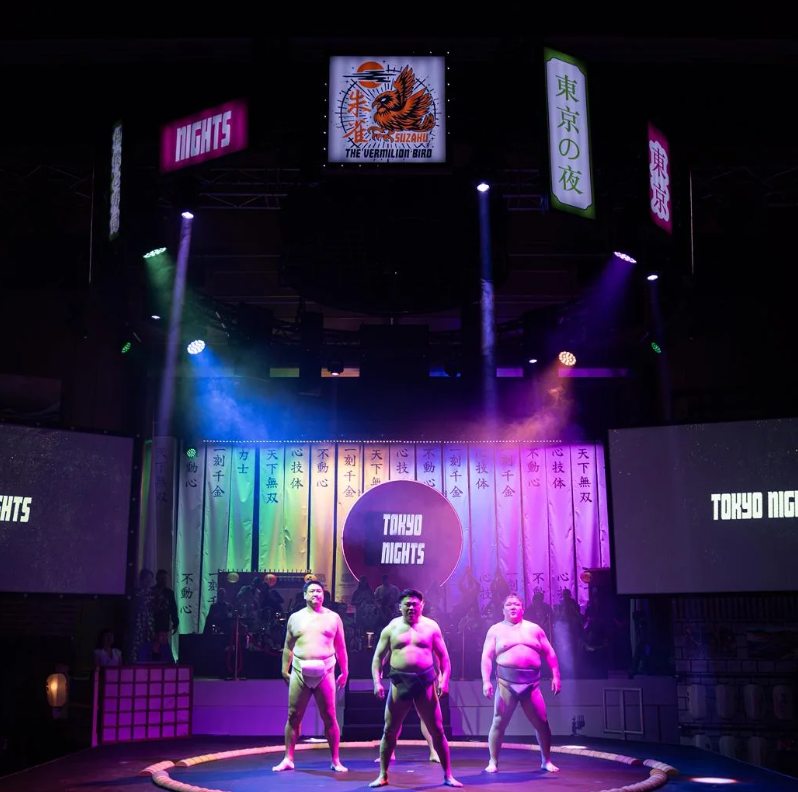
Credits: Tokyo Nights
There are experiences that linger long after they end. Experiences that transport you long before they begin. Tokyo Nights was one of them. Long before the first wrestler stepped onto the dohyō, before the crowd erupted in cheers or the first plate of sushi arrived at the table, the evening invited its audience into another world. It began not with competition, but with storytelling.
Japanese culture has long fascinated me, not simply for its refined aesthetics but for the philosophy that quietly underpins its traditions. It is a culture where ritual gives meaning to everyday gestures, craftsmanship is treated with profound respect, and practices that have endured for centuries continue to shape contemporary life. Watching live sumo wrestling in London therefore felt less like attending a sporting event and more like stepping into a living cultural tradition that has travelled far beyond Japan while remaining deeply rooted in its origins.
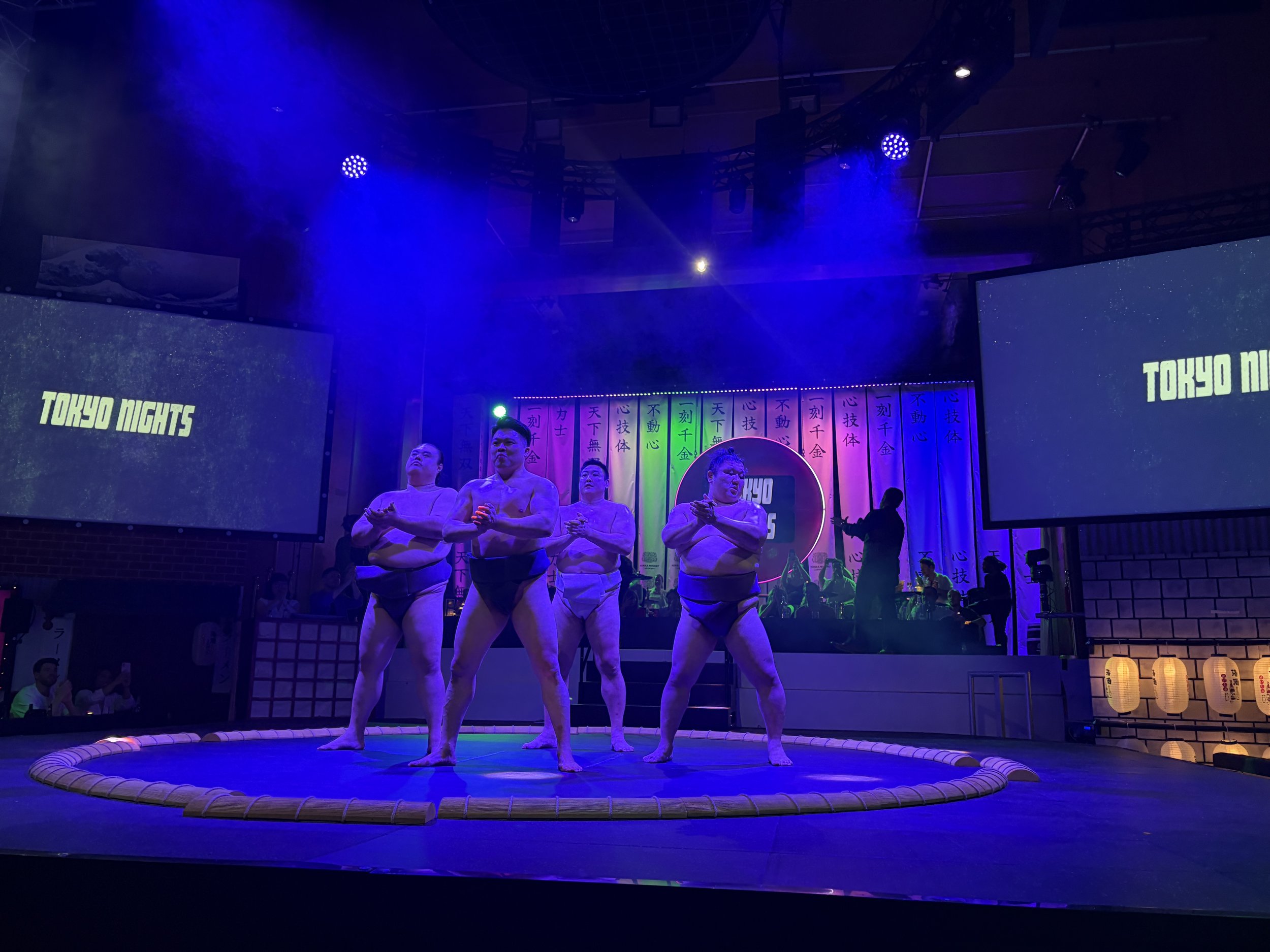
Credits: own archive
Set within the historic Greenwich Borough Hall, Tokyo Nights transformed the venue into an immersive world inspired by the legendary sumo district of Ryōgoku and the vibrant energy of modern Tokyo. Japanese cuisine, carefully curated sake and the anticipation surrounding the sacred clay ring blurred the boundaries between cultural event, theatrical performance and gastronomic experience.
Before the first bout, guests were introduced to the rich symbolism that lies at the heart of sumo. The evening explained the significance of the four mythological guardians who traditionally protect the sacred ring, inviting each guest to join one of four competing heyas: Genbu, Byakko, Seiryu or Suzaku. Although these celestial guardians originated in ancient Chinese cosmology, they were embraced by Japanese culture centuries ago and continue to hold symbolic importance within the dohyō-iri, the ceremonial ring-entering ritual that precedes every contest. It was an elegant reminder that sumo has never been merely a sport. It is ritual. It is philosophy. It is theatre.
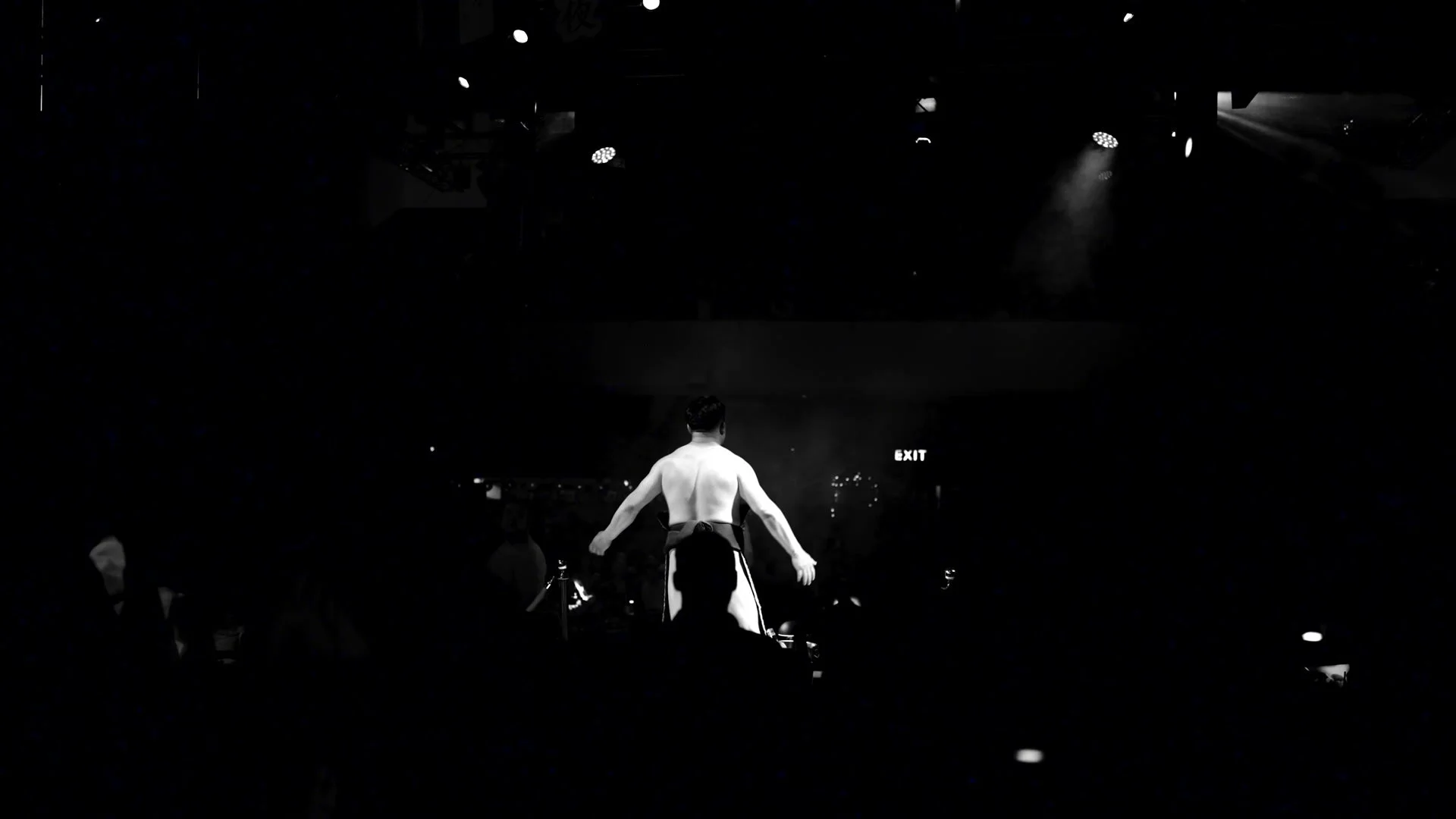
The wrestlers' entrance unfolded with quiet precision. Every movement carried symbolic meaning. Salt was scattered across the dohyō to purify the ring, powerful stomps were performed to drive away evil spirits, and each carefully choreographed gesture reflected sumo's enduring connection to Shinto tradition. Watching these rituals unfold, it became clear that the contest itself represents only one part of the experience. The ceremony is inseparable from the sport, transforming physical competition into an expression of cultural identity, spirituality and collective memory.
Credits: Tokyo Nights
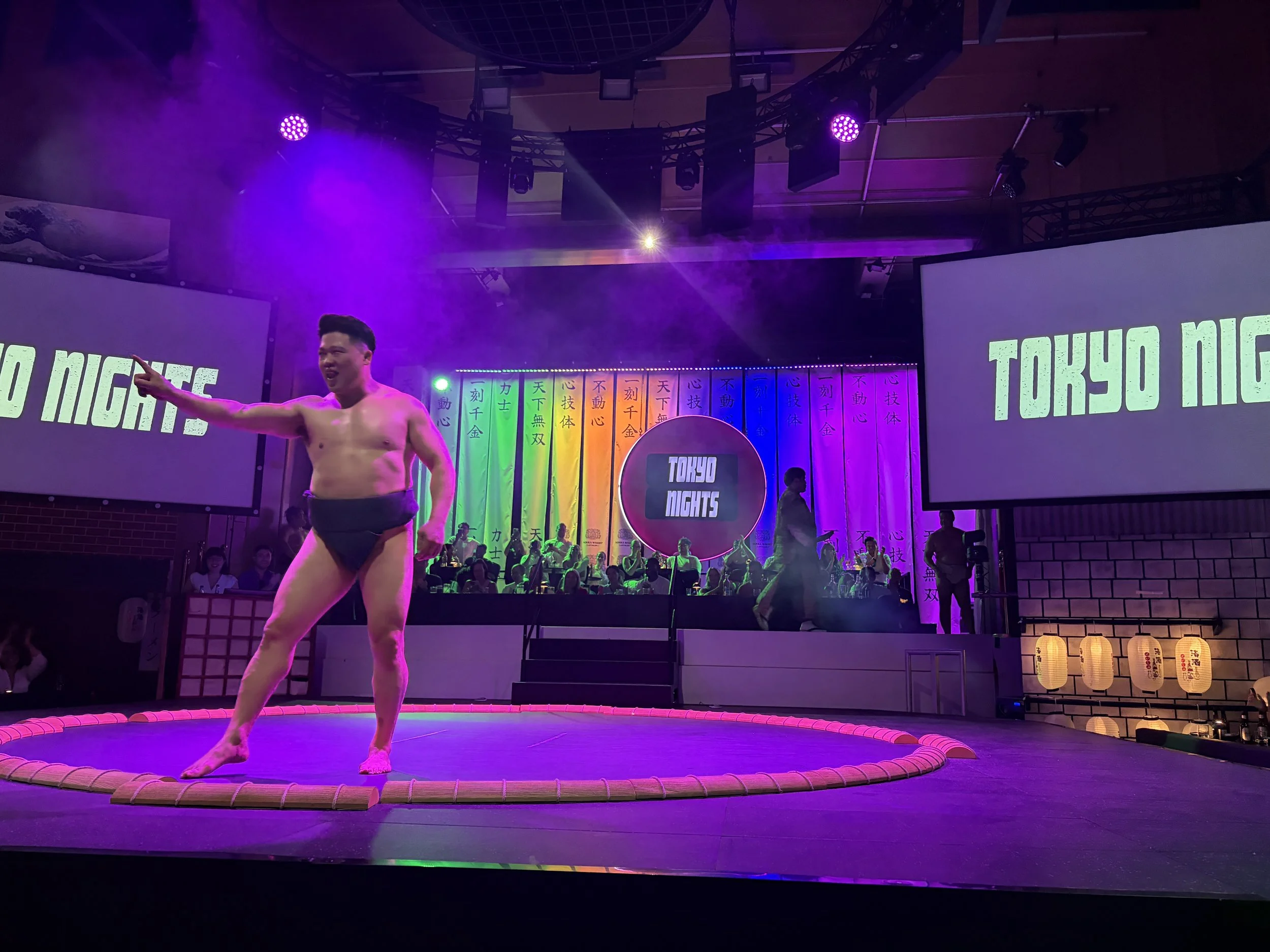
As the evening progressed, four former professional rikishi entered the ring to compete in authentic bouts, each one greeted by enthusiastic support from the audience members assigned to their respective heya. The competitive atmosphere felt genuine, yet it never overshadowed the cultural context established from the outset. Instead, every contest reinforced the respect, discipline and centuries of tradition that define Japan's national sport.
The culinary experience formed another essential part of the journey. A menu created by Sticks'n'Sushi accompanied the evening, complemented by premium sake and Japanese whisky. Rather than functioning as an addition to the entertainment, the food became another expression of Japanese hospitality, reinforcing the idea that culture is experienced not only through spectacle but also through taste, conversation and shared rituals around the table.
Credits: Own archive.
What impressed me most was that Tokyo Nights never attempted to replicate a Grand Sumo Tournament. Instead, it offered something altogether different: an interpretation of Japanese culture through the lens of contemporary London. The result was not an imitation, but an invitation. An opportunity to engage with one of Japan's oldest living traditions in a way that felt accessible while remaining respectful of its origins.
London has long distinguished itself as one of the world's great cultural crossroads, a city where traditions from every continent find new audiences. Yet genuine cultural immersion can still be surprisingly rare. Too often, experiences reduce heritage to entertainment or aesthetics, stripping away the history and symbolism that give them meaning.
Tokyo Nights approached that challenge differently. It recognised that participation can be a powerful form of cultural exchange. By inviting guests to understand the rituals before witnessing the competition, it encouraged curiosity rather than passive observation.
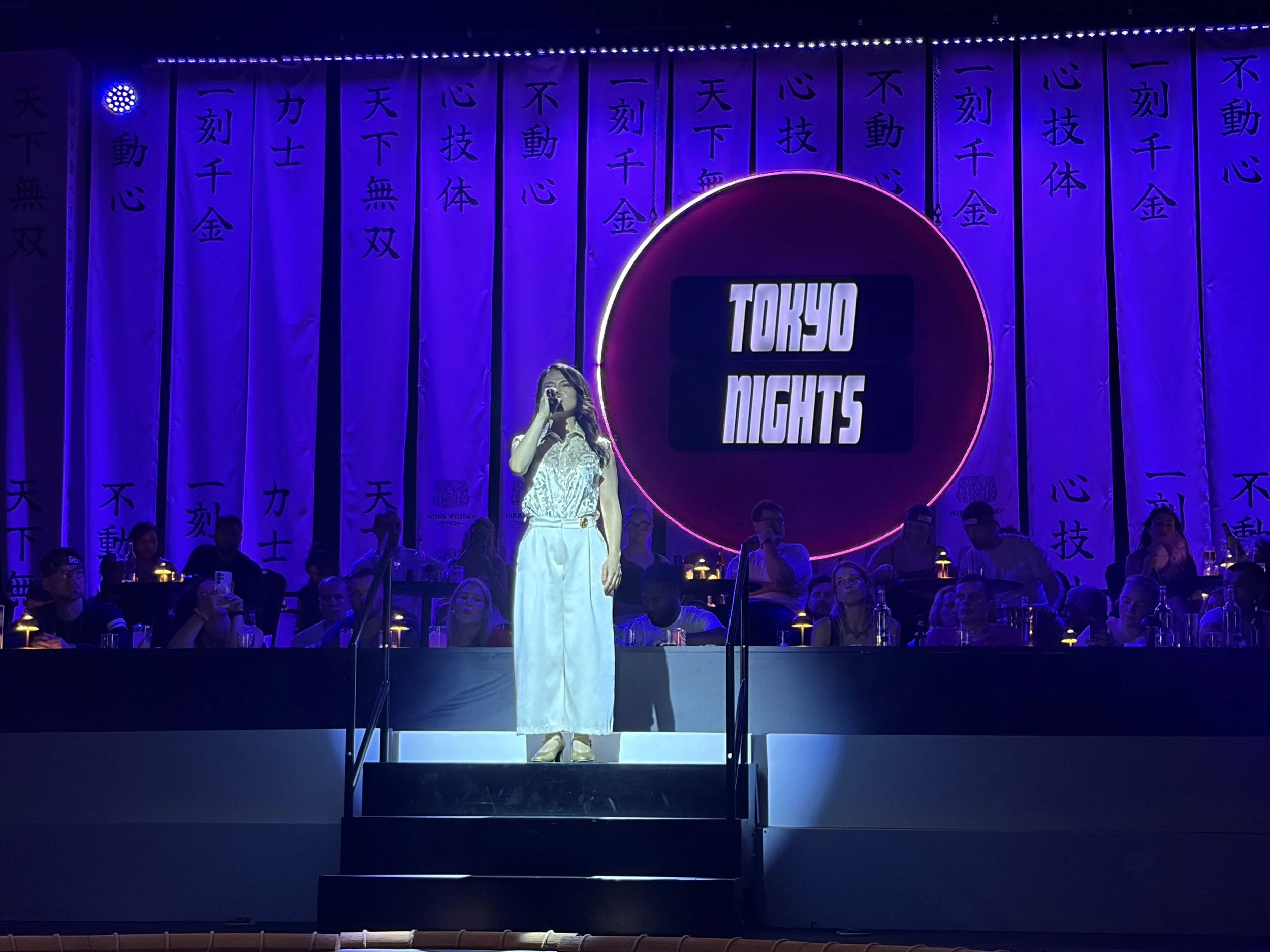
Credits: Own archive.
Long after the final bout, what remained with me was not simply the memory of the wrestling itself, but the rituals that framed it, the stories that gave it context, and the atmosphere that made Japanese culture feel remarkably close, despite being thousands of miles from its birthplace. It was a reminder that travel is not always measured in miles. Sometimes it begins by stepping through the doors of a historic hall in Greenwich and allowing yourself, for a few hours, to experience the rhythm of another world.