Inside the Louis Vuitton Hotel London Pop-Up
Credits: Louis Vuitton
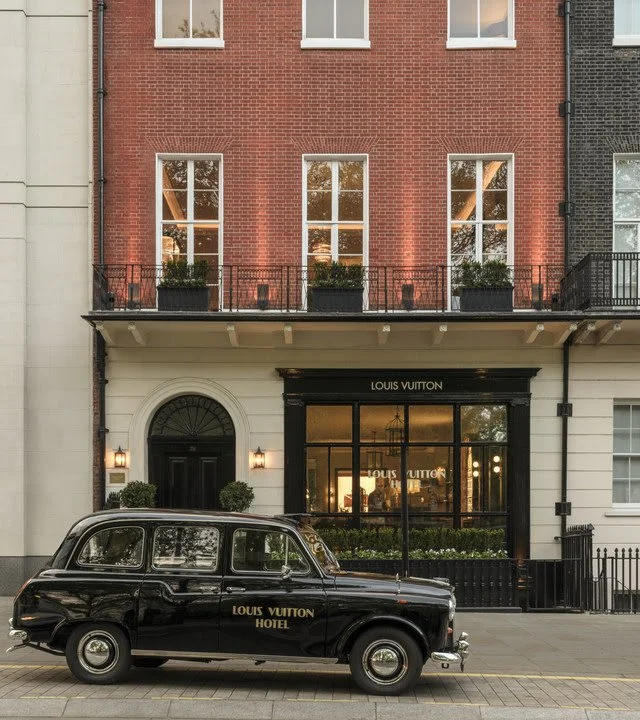
In a city that constantly reinvents the meaning of experience, London rarely feels still. Yet, every so often, something emerges that asks us not simply to visit, but to step inside an idea. This spring, in the quiet elegance of Mayfair, Louis Vuitton invites us to do precisely that. At 28 Berkeley Square, behind a discreet façade, the Louis Vuitton Hotel London unfolds not as a place to stay, but as a place to feel. An ephemeral installation, open for a limited time from April to June 2026, it reimagines the very notion of hospitality through the lens of fashion, heritage and storytelling. To call it a pop-up would be technically correct, yet conceptually insufficient.
A House Built on Travel
To understand the Louis Vuitton Hotel, one must begin with the origins of the House itself. Founded in 1854 as a maker of travel trunks, Louis Vuitton has always been less about destination and more about the journey. Movement, craftsmanship and the rituals of departure and arrival are embedded in its DNA.
Credits: Louis Vuitton
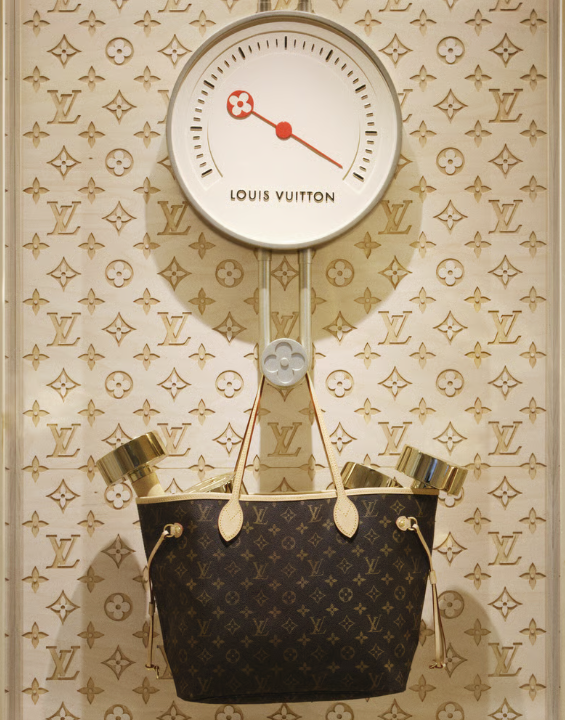
This installation marks 130 years of the Monogram, first designed in 1896.
What could easily have been commemorated through an exhibition or product release instead takes the form of a lived environment. A townhouse transformed into a narrative, where each room becomes a chapter in the story of travel. And so, the hotel is not a hotel. It is a memory of one.
Entering the Narrative
The experience begins as all hotels do, with an arrival. Yet instead of a conventional lobby, guests step into spaces that reinterpret some of the House’s most iconic creations. The Keepall, the Speedy, the Alma, the Noé. Bags that once accompanied journeys are now translated into environments that hold them. Each room carries a distinct atmosphere. Some feel intimate, others expansive. Together, they create a sequence that mirrors the emotional rhythm of travel itself. Anticipation, discovery, reflection.
What becomes immediately clear is that this is not about product display. It is about context. Objects are no longer static. They are placed within a spatial narrative that reveals their evolution, their function, and their cultural significance. The bag becomes architecture. The monogram becomes language.
Hospitality Without Staying
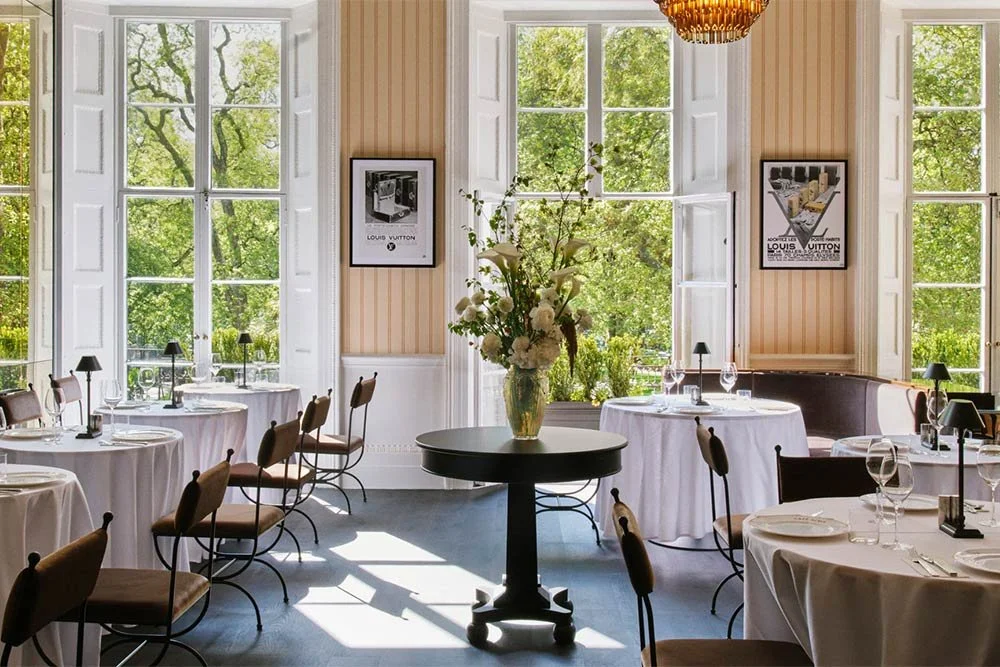
There is a quiet irony in calling this a hotel when no one can stay the night. And yet, the essence of hospitality is present in every detail. On the first floor, Café Alma offers a moment of pause. Overlooking Berkeley Square, it brings together French sensibility and British seasonality, translating the House’s aesthetic into a culinary experience that feels considered rather than performative.
Credits: Louis Vuitton
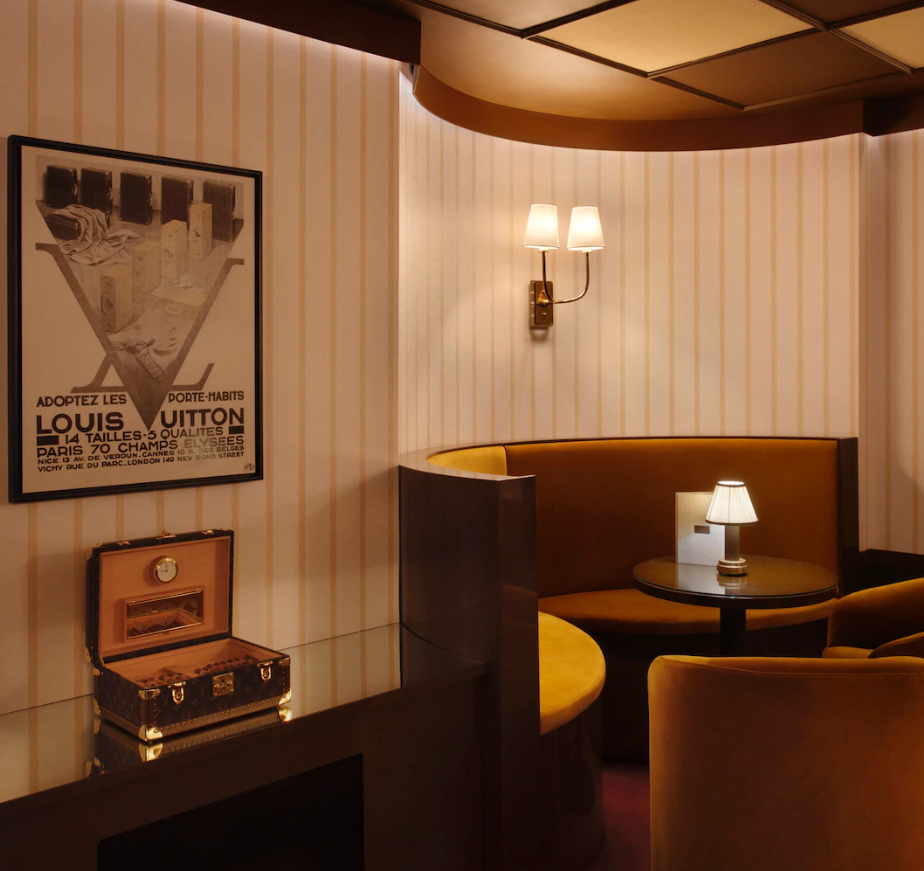
As evening approaches, Bar Noé shifts the tone. What begins as a refined champagne setting evolves into a more vibrant space, where music, light and conversation take over. These transitions mirror the rhythm of a day spent travelling. Morning clarity, afternoon ease, evening intensity. Hospitality here is not about accommodation. It is about atmosphere.
The Theatre of the Temporary
There is something inherently paradoxical about creating something so detailed, so layered, only for it to disappear. Yet this is precisely what gives the Louis Vuitton Hotel its intensity. Luxury, in this context, is not permanence. It is presence at all senses.
The pop-up format allows for a freedom that traditional spaces often lack. It invites experimentation, emotion and immediacy. It creates a sense of urgency that draws people in, not only to see, but to experience. This aligns with a broader shift within the luxury landscape. Increasingly, value is found not in ownership, but in participation. In being part of something that exists for a moment and then is gone.
That this experience takes place in London feels particularly fitting. The city has long been a meeting point of cultures, disciplines and ideas. It thrives on contrast. On the coexistence of history and innovation. On the ability to absorb and reinterpret. In Mayfair, where tradition often defines the aesthetic, the Louis Vuitton Hotel introduces a different kind of narrative. One that is immersive, fluid and contemporary.
Credits: Louis Vuitton
It does not compete with its surroundings. It dialogues with them.
It is an experience that exists between fashion and architecture, between memory and imagination, between object and space. In Mayfair, for a brief moment, Louis Vuitton has created a place that cannot be stayed in, yet somehow lingers. A hotel not of rooms, but of stories. And perhaps that is the most enduring form of luxury.