Portrait Milano: Inside the Historic Seminary Reimagining Luxury in the Heart of Milan
Credits: Portrait Milano
Some cities reveal themselves through monuments. Others through museums, restaurants or neighbourhoods. Milan, however, often reveals itself through its courtyards. Behind elegant façades and heavy wooden doors lies a hidden city, one shaped by private gardens, cloisters, ateliers and palazzi that quietly preserve centuries of history behind the rhythm of contemporary urban life. It is fitting, then, that one of Milan's most remarkable hospitality projects is concealed behind the walls of a former seminary dating back to the sixteenth century.
During my visit to Milan in June 2026, I was invited to experience Portrait Milano, the flagship Lombard property of the Ferragamo family's Lungarno Collection. Accompanied by Mariasole Meggi, PR & Marketing Specialist, I was guided through the vast complex that today stands as one of Italy's most sophisticated luxury hotels. Yet describing Portrait Milano simply as a hotel feels insufficient. It is a restoration project, an architectural statement and, perhaps most importantly, a reflection of Milan itself. At once historical and contemporary, discreet yet influential, it occupies a unique position within the city's cultural landscape.
A Renaissance Institution Reborn
Located within Milan's celebrated Fashion Quadrilateral, Portrait Milano occupies the former Archiepiscopal Seminary commissioned in 1565 by Saint Charles Borromeo. The scale of the transformation is extraordinary. For centuries, the complex served different purposes. Following its religious origins, it became Napoleonic barracks, later a wartime hospital and eventually office space. Over time, much of the structure fell into neglect, disappearing from the city's collective consciousness. Its revival required patience measured not in months but in decades.
When Lungarno Collection first identified the site's potential, negotiations reportedly lasted years. Preservation authorities closely supervised every intervention, ensuring that the building's architectural integrity remained intact throughout the restoration process. The result is remarkable.
Rather than imposing contemporary luxury upon a historic structure, Portrait Milano allows history to remain visible. Walking through the property, one senses that the building has not been reinvented but carefully reawakened. The monumental granite staircases, cloistered arcades and Baroque proportions continue to define the experience. Contemporary elements exist in dialogue with the architecture rather than in competition with it. The building's soul remains intact.
A New Piazza for Milan
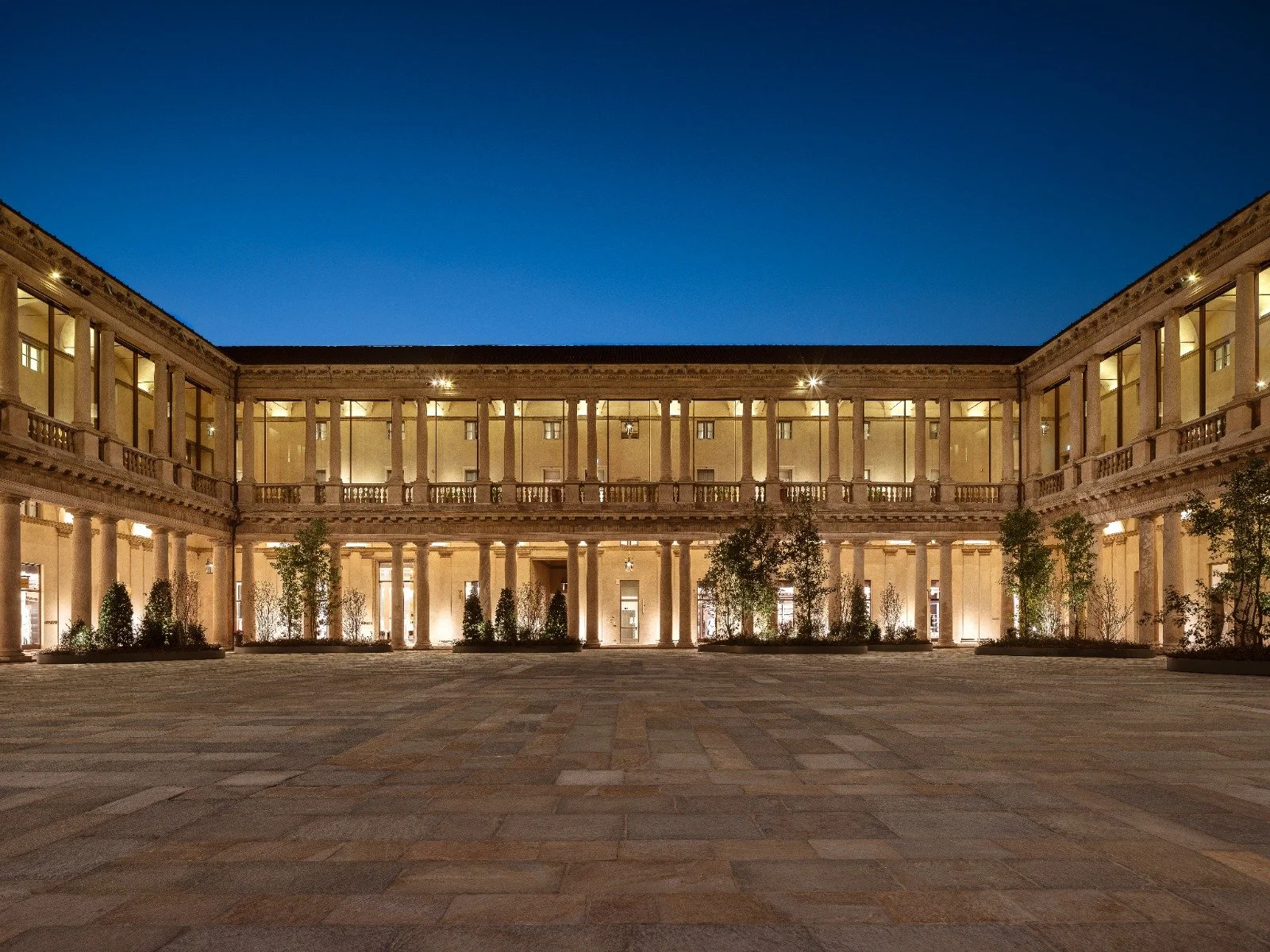
Perhaps the most significant aspect of Portrait Milano is not what belongs exclusively to hotel guests. It is what belongs to the city. At the centre of the complex lies one of the largest private courtyards in Milan, an expansive piazza that today functions as a public space connecting important sections of the Fashion District. Open to residents and visitors alike, it represents a rare gesture of urban generosity.
Unlike many luxury developments that retreat behind exclusivity, Portrait Milano embraces permeability. Locals cross the courtyard on their way through the Quadrilatero. Visitors stop for coffee beneath the arcades. Fashion professionals move between appointments. Hotel guests share the same space with Milanese residents. The atmosphere feels authentically Milanese precisely because it avoids becoming an isolated luxury enclave. Instead, it participates in the life of the city.
Credits: Portrait Milano
This integration reflects a broader transformation taking place across Milan, where former industrial and institutional buildings are increasingly being reimagined as cultural, commercial and hospitality destinations without losing their historical significance.
Design Through a Milanese Lens
The interiors, designed by Michele Bonan, draw inspiration from one of the city's most influential periods: the design renaissance that transformed Milan during the twentieth century. References to Piero Portaluppi and Gio Ponti appear throughout the property.
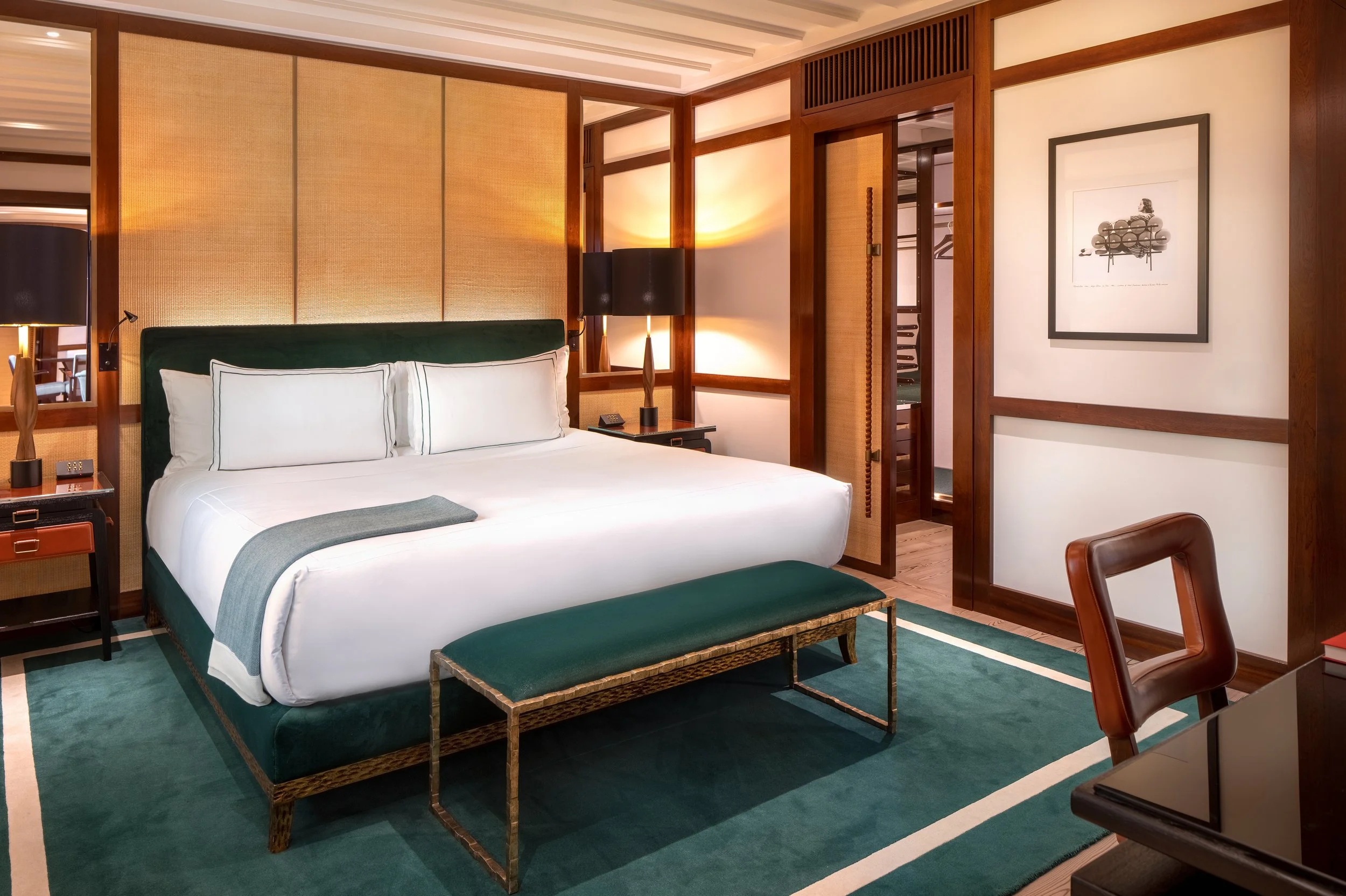
Portaluppi's geometric precision is echoed in stone archways and architectural framing, while Ponti's influence emerges through materiality, proportion and visual rhythm. Walnut panelling, bronze details, rattan accents and carefully calibrated lighting create spaces that feel unmistakably Italian without relying on clichés.
The aesthetic is refined rather than theatrical. The library, perhaps the most intimate room in the hotel, serves as both cultural salon and quiet retreat. Shelves filled with volumes on Milanese architecture, art and design reinforce a recurring theme throughout the property: education, craftsmanship and cultural memory.
Even the decorative elements tell stories. Photographs of Milanese design icons sit alongside images of Salvatore Ferragamo's groundbreaking footwear innovations, reminding guests that creativity often emerges through the intersection of artistry and technical knowledge. This intellectual dimension distinguishes Portrait Milano from many contemporary luxury hotels. Beauty here is never superficial. It is rooted in context.
The Art of Thoughtful Hospitality
The Ferragamo family has long understood that luxury is not synonymous with branding. Unlike many fashion-led hospitality ventures, Portrait Milano avoids overt references to the house that created it. There are no excessive logos or attempts to transform the hotel into a marketing vehicle. Instead, the connection reveals itself through craftsmanship, detail and an appreciation for Italian excellence. Nowhere is this more evident than in the guestrooms.
Spread across the upper floors, the seventy-three rooms and suites draw inspiration from the golden age of travel while remaining deeply contemporary. Walnut wood, rich textiles and warm colour palettes create spaces that feel residential rather than institutional. The attention to detail is extraordinary.
Credits: Portrait Milano
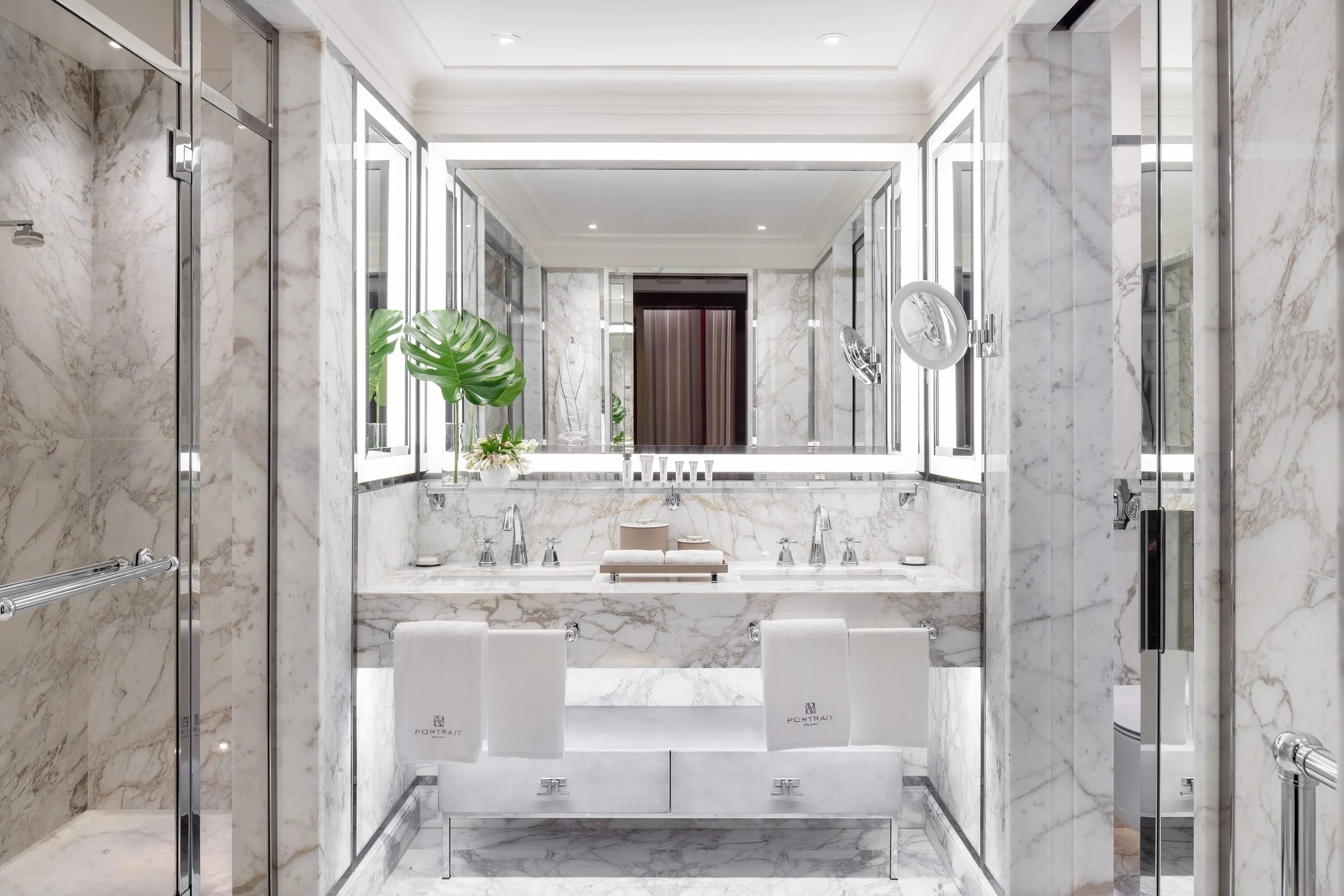
Leather handles crafted by Florentine artisans, carefully selected marble, bespoke furnishings and elegant brass fittings contribute to an environment where every element appears considered. The experience extends beyond aesthetics.
Guests complete sleep preference questionnaires before arrival. Pillow selections range from traditional options to advanced bamboo-filled alternatives designed to regulate temperature and moisture. Technology remains intentionally discreet, prioritising ease of use over unnecessary complexity. The effect is subtle but significant. Luxury here is not performative. It is thoughtful.
Aperitivo at 10_11
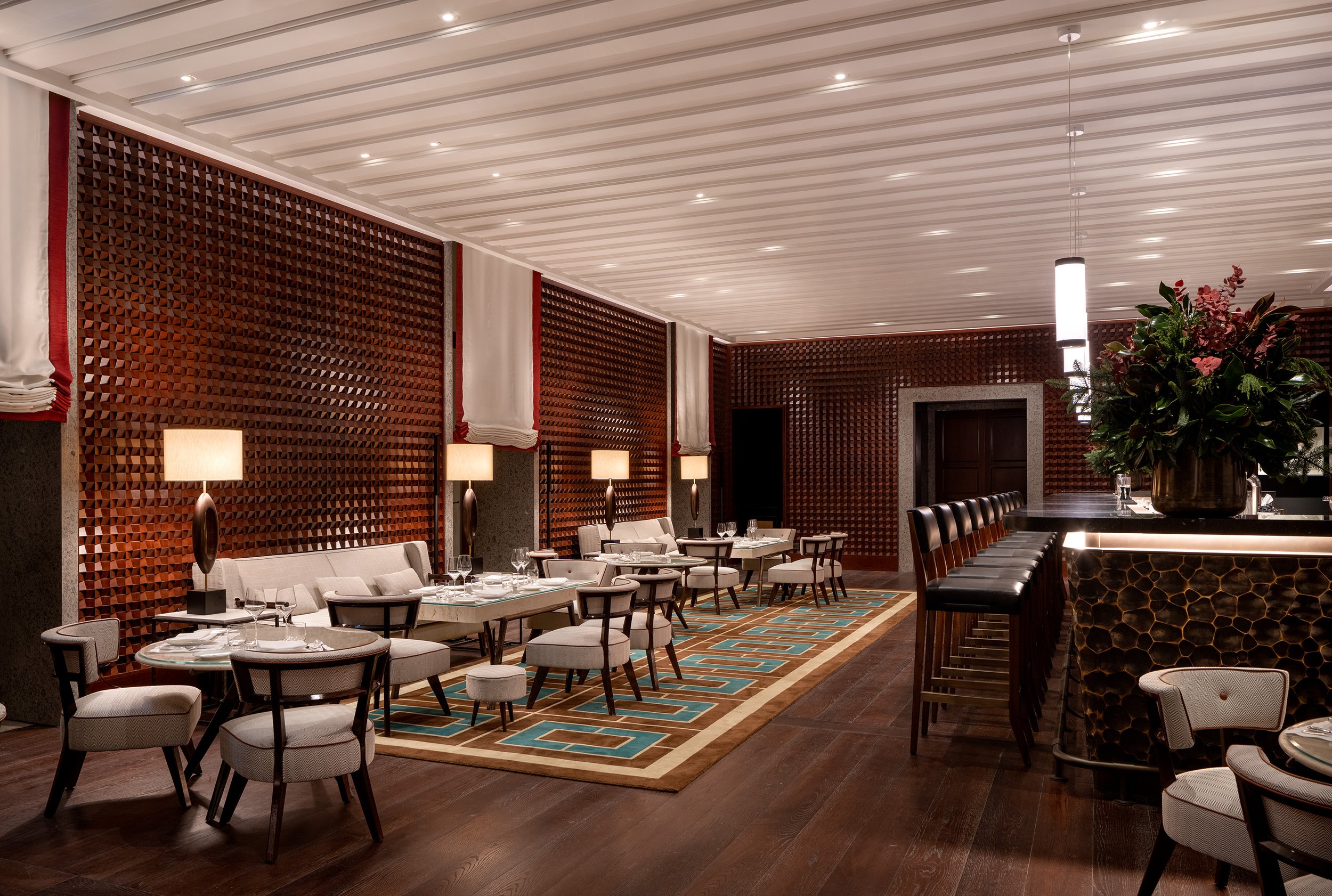
No exploration of Milanese culture would be complete without discussing aperitivo. More than a pre-dinner drink, aperitivo remains one of northern Italy's most enduring social rituals. It represents a pause between work and evening, a moment dedicated to conversation, observation and conviviality. At Portrait Milano, this tradition finds expression at 10_11, the hotel's restaurant named after the intersection of Corso Venezia and Via Sant'Andrea.
Credits: Portrait Milano
As afternoon shifted towards evening, I experienced the restaurant's celebrated (and recently launched) aperitivo trolley, a ritual that perfectly encapsulates the property's philosophy. There is an elegance to the experience that feels distinctly Milanese. Nothing is rushed. Drinks arrive with precision and grace. Small bites showcase seasonal ingredients and regional influences. Guests linger rather than consume.
The atmosphere reflects the city itself: sophisticated yet relaxed, fashionable yet unpretentious. Luxury here emerges not through extravagance but through confidence. The confidence to allow simplicity to speak for itself.
Gastronomy and Place
The culinary programme at Portrait Milano similarly embraces regional identity. Seasonality guides menus. Local producers inform ingredients. Traditional Lombard dishes are revisited with contemporary refinement rather than reinvention. This approach extends to sustainability. Water is served in glass bottles, reducing unnecessary waste, while the kitchens prioritise local sourcing and seasonal produce.
Such initiatives may appear modest, yet they reflect an increasingly important understanding that luxury and responsibility should coexist rather than compete. Within the broader hospitality industry, this shift feels particularly relevant. True luxury today is not merely about abundance. It is about care. Care for craftsmanship, heritage, people and place. Portrait Milano understands this instinctively.
A Sanctuary Within the City
What ultimately makes Portrait Milano so compelling is its ability to create tranquillity without isolation. Beyond the courtyard lies one of Europe's most influential fashion districts. Luxury boutiques, historic landmarks and cultural institutions are all within walking distance. Yet once inside the former seminary, the city's energy softens. The atmosphere becomes contemplative. Granite colonnades frame the light. Conversations echo gently across the piazza. The scale inspires awe, while the details invite intimacy. It is a rare achievement.
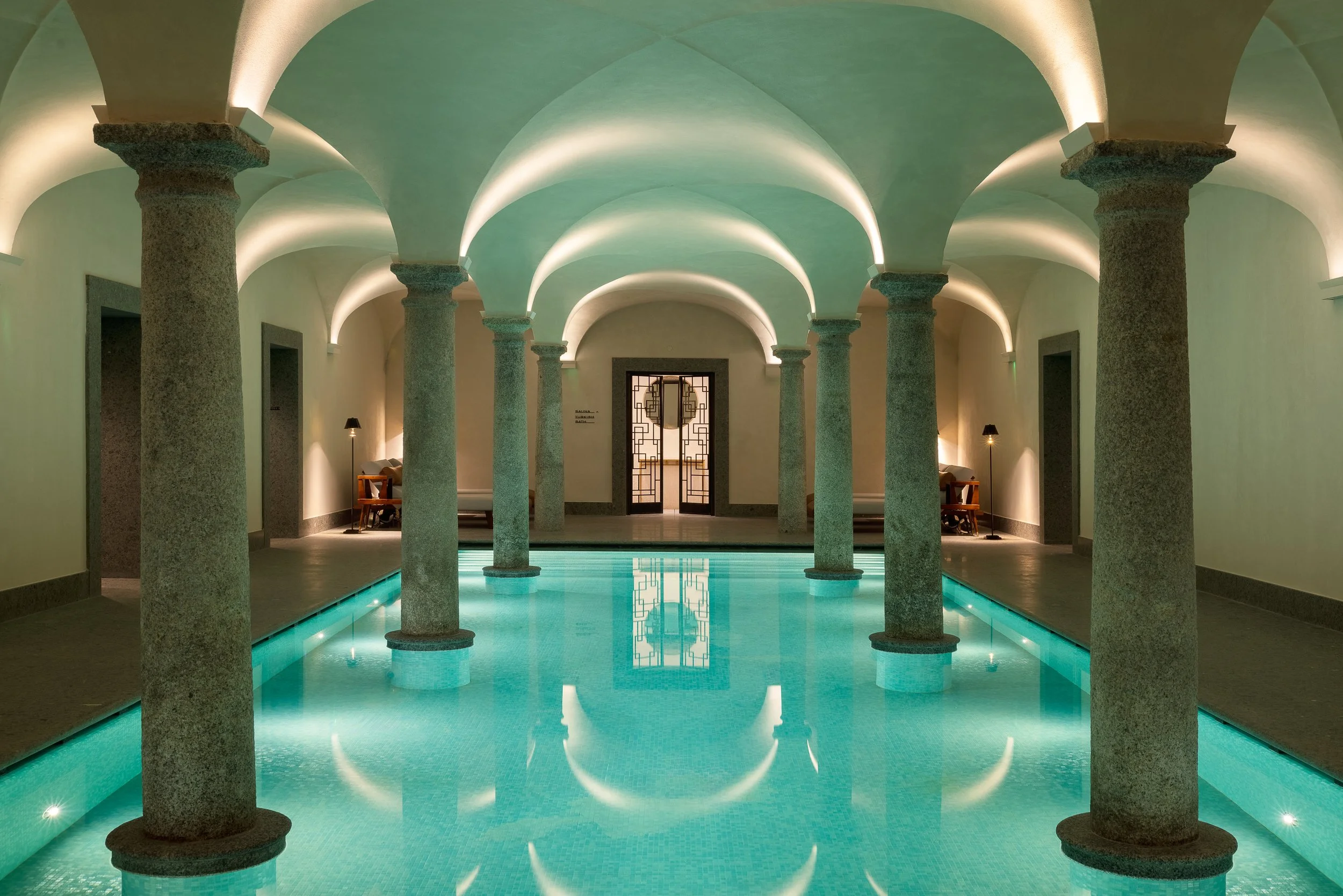
Credits: Portrait Milano
Many luxury hotels excel at design. Others succeed through service or location. Portrait Milano manages to unite architecture, hospitality, gastronomy and cultural heritage into a singular experience that feels deeply connected to its surroundings. Leaving the property, I found myself reflecting on the building's extraordinary journey. For centuries it served faith, education, healthcare and administration before falling silent for decades. Today it has been given a new purpose, one that honours its past while embracing the future.
In many ways, Portrait Milano mirrors Milan itself. A city that continuously reinvents itself without forgetting where it came from. A city where craftsmanship remains relevant, where design serves both beauty and function, and where history is not preserved behind glass but woven into everyday life. Portrait Milano is more than a luxury hotel. It is a portrait of Milan.