The Living Shadow: Rebekka Ruetz and the Radical Wholeness of LILITH
On February 1st, as part of Berlin Fashion Week, Austrian designer Rebekka Ruetz showcased her AW26 collection called LILITH at Alte Münze. The "minimalist avant-garde" feels even more powerful when contrasted against the cold, industrial concrete of a former mint.
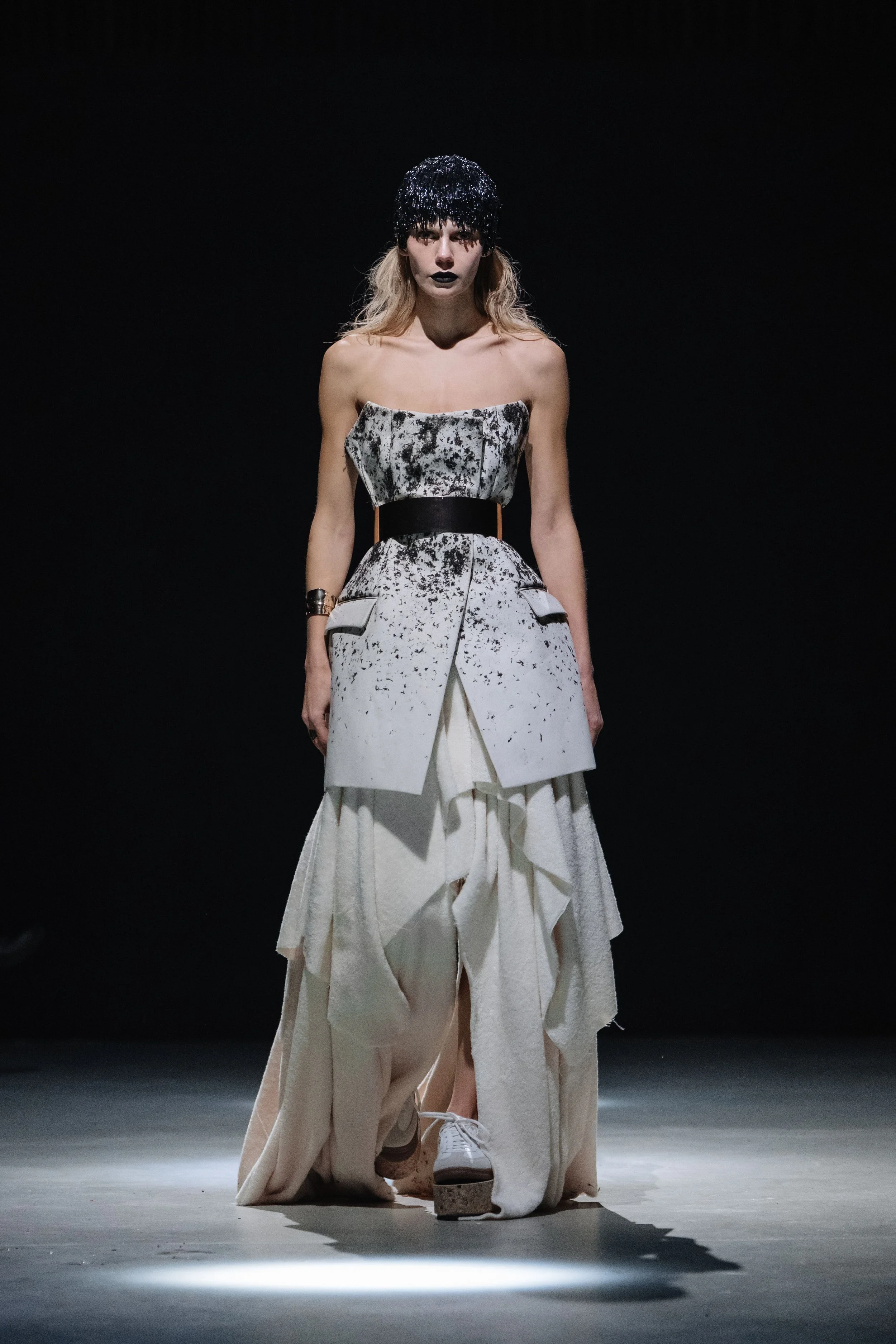

In the world of high fashion, "rebellion" is often a hollow buzzword. But the new LILITH collection chooses a more profound path. Rather than simple provocation, this collection explores the concept of "wholeness"—the radical idea that strength cannot exist without vulnerability, nor light without shadow.
The Myth Reclaimed
Historically, the figure of Lilith has been framed as a threat—a symbol of female autonomy demonized by a system that feared it. This collection reframes that narrative. Lilith is no longer a cautionary tale; she is a state of being. By embracing her, the designs acknowledge that true complexity doesn’t resolve contradictions—it carries them.
Design Through Discovery
The creative process behind LILITH is strikingly organic. These aren't looks dictated by a sketchpad; they are "discovered" through dialogue with the human form.
• Fluid Construction: Draping is adjusted and reshaped in real-time.
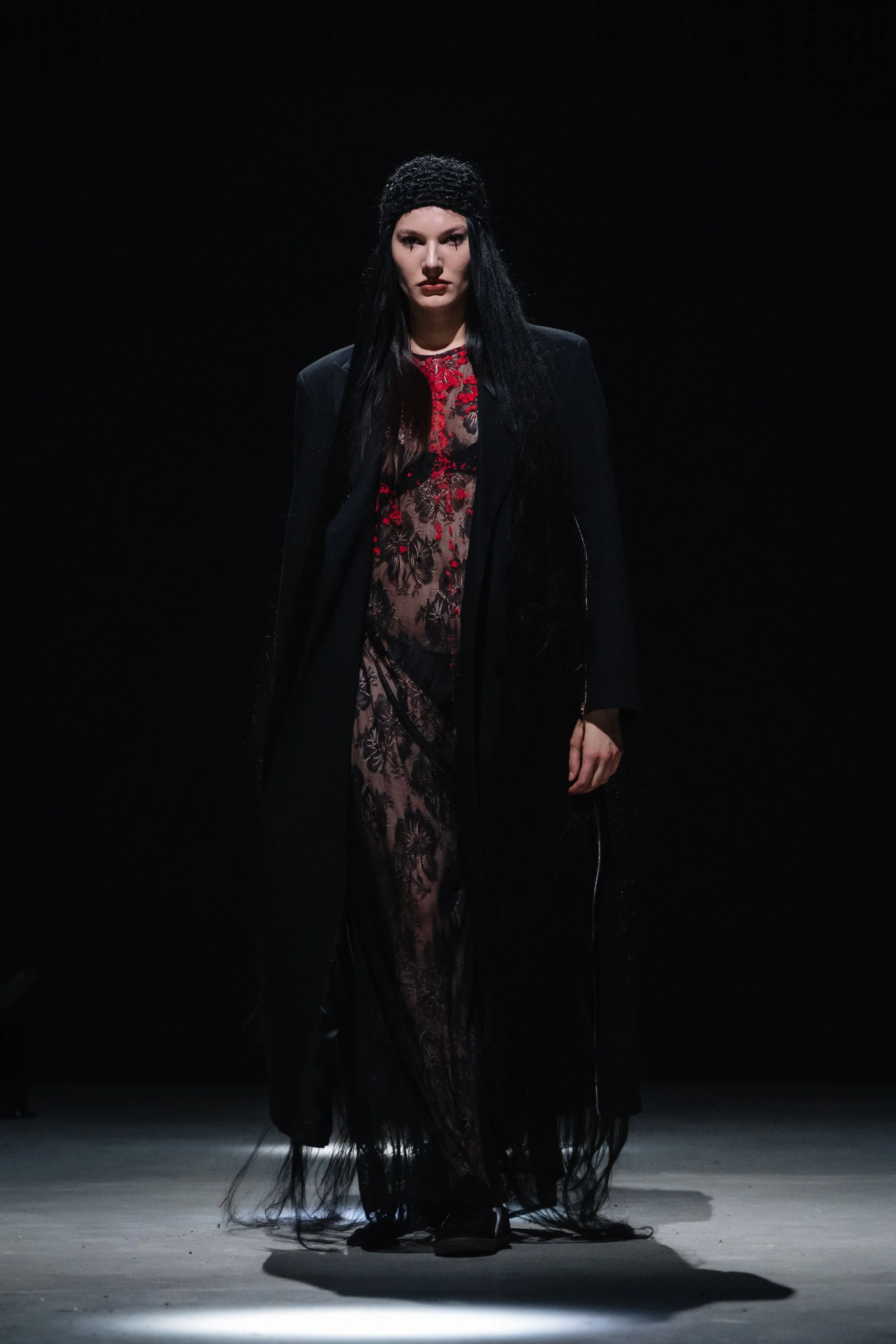
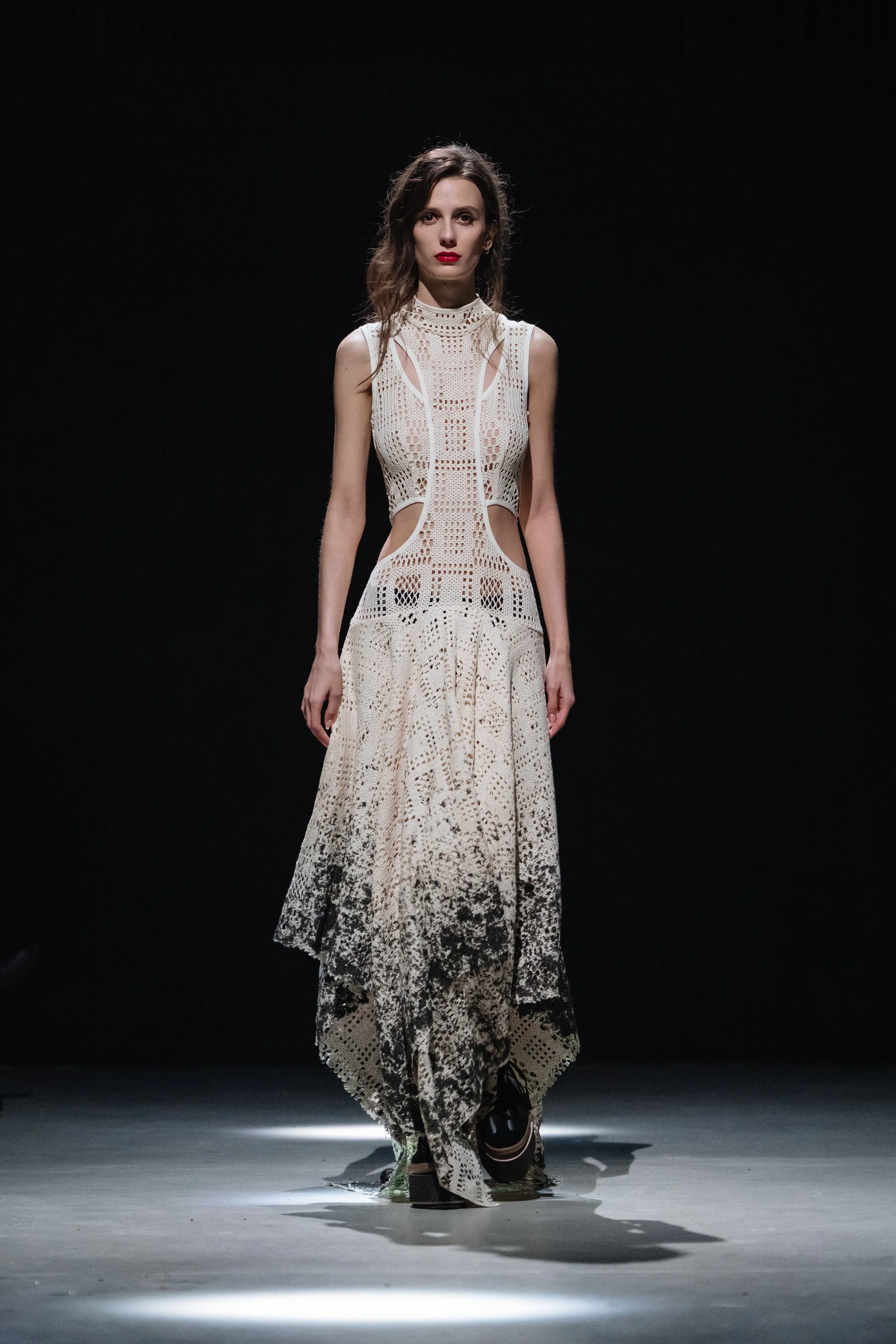
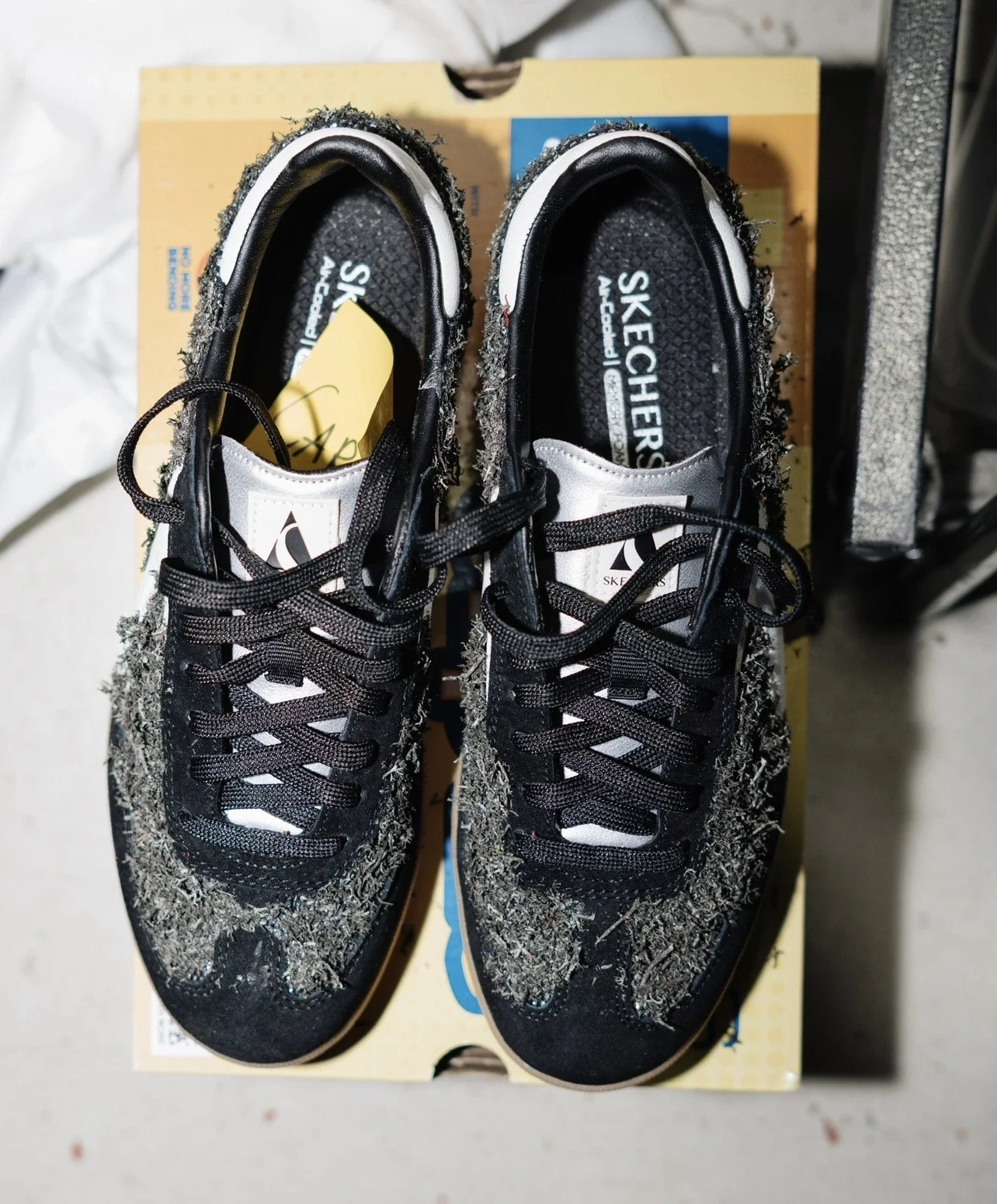
• The Living Garment: In a daring move, the collection features real moss. As the wearer moves, the moss crumbles and changes—a poetic reminder of decay, renewal, and the passage of time.
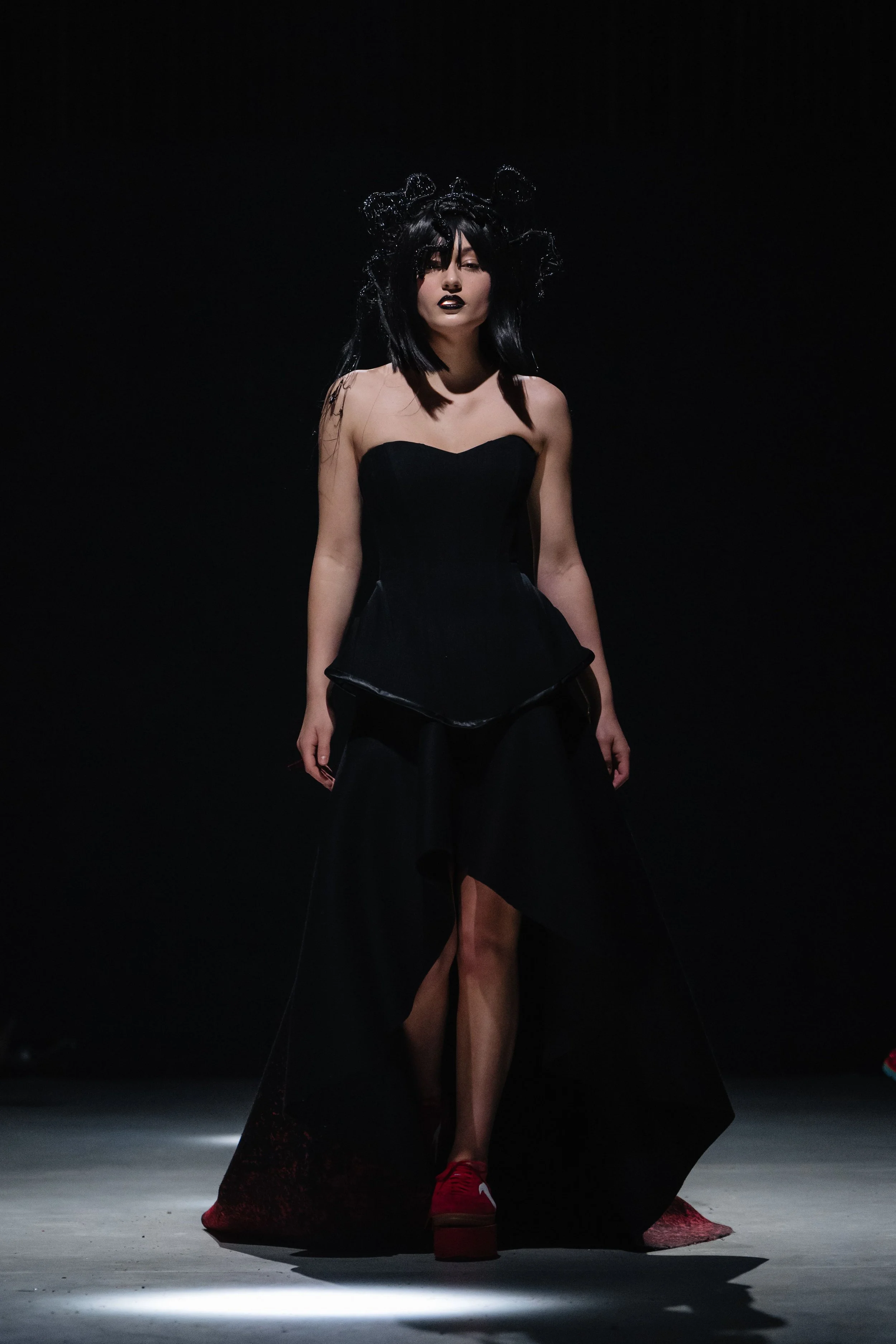
• Sculptural Contrast: The silhouette sits at the intersection of minimalist avant-garde and raw organicism. Think sculptural corsetry meeting fluid, moving fabrics.
A Palette of Presence
The color story is as intentional as the construction, moving between the grounded and the transcendent:
• Raven Black: The foundational depth.
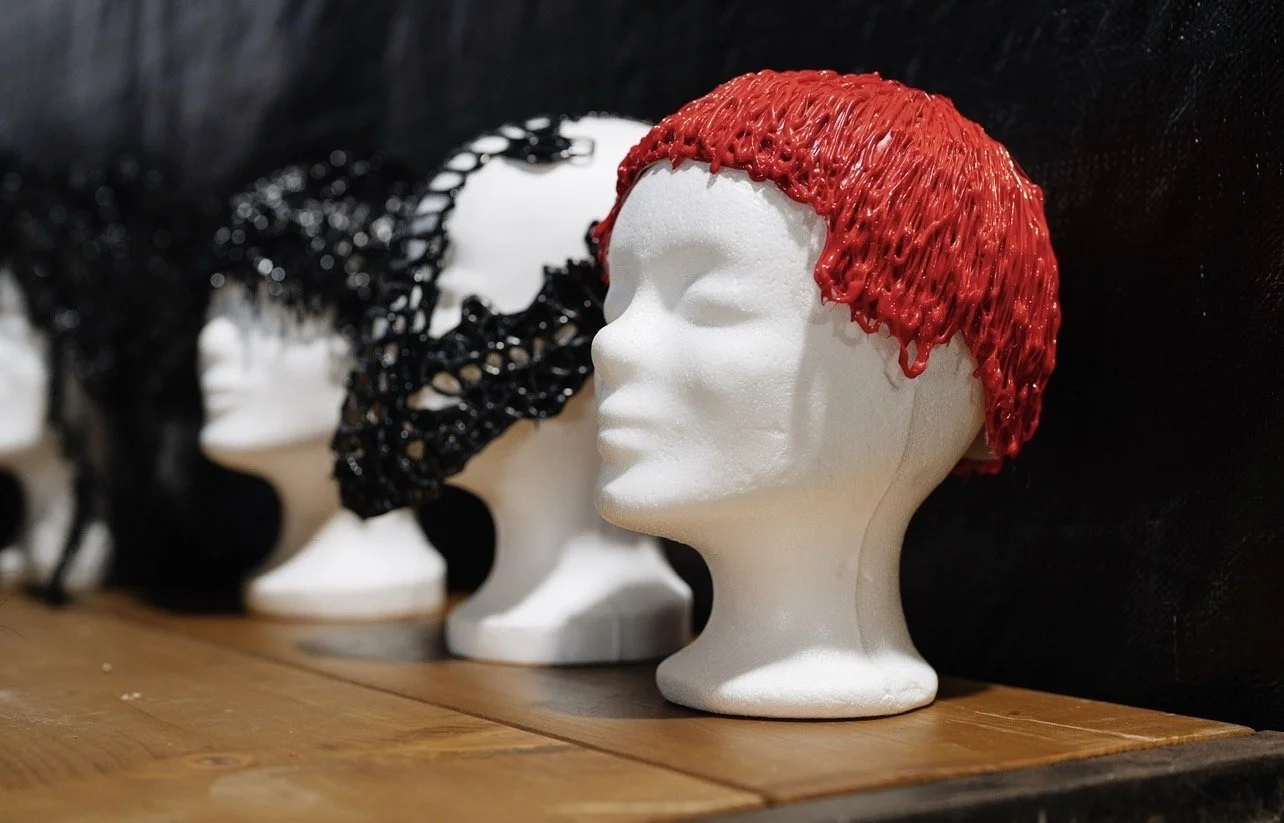
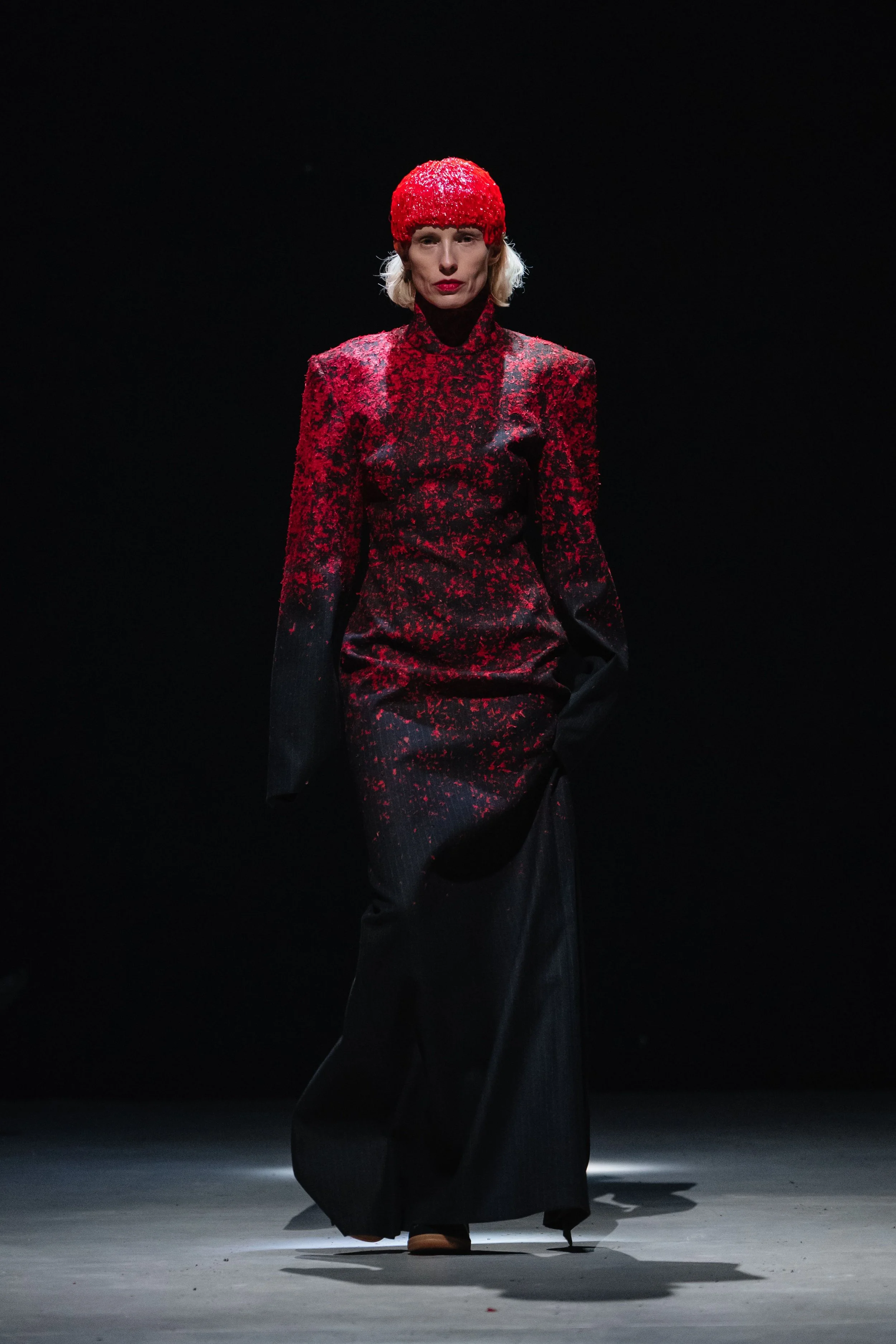
• The Reds: From the "impulse" of vivid crimson to a mythic, purplish-violet.
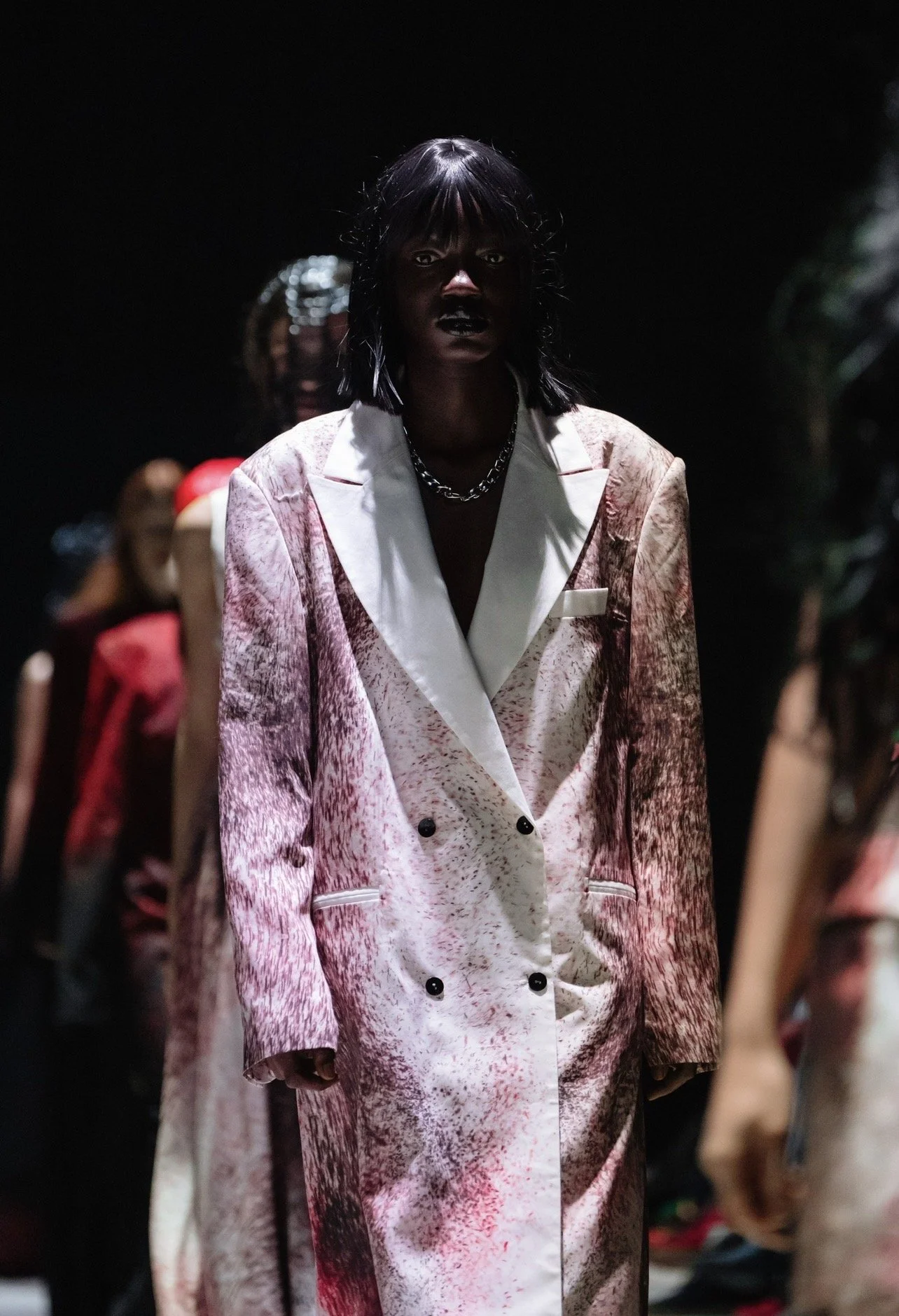
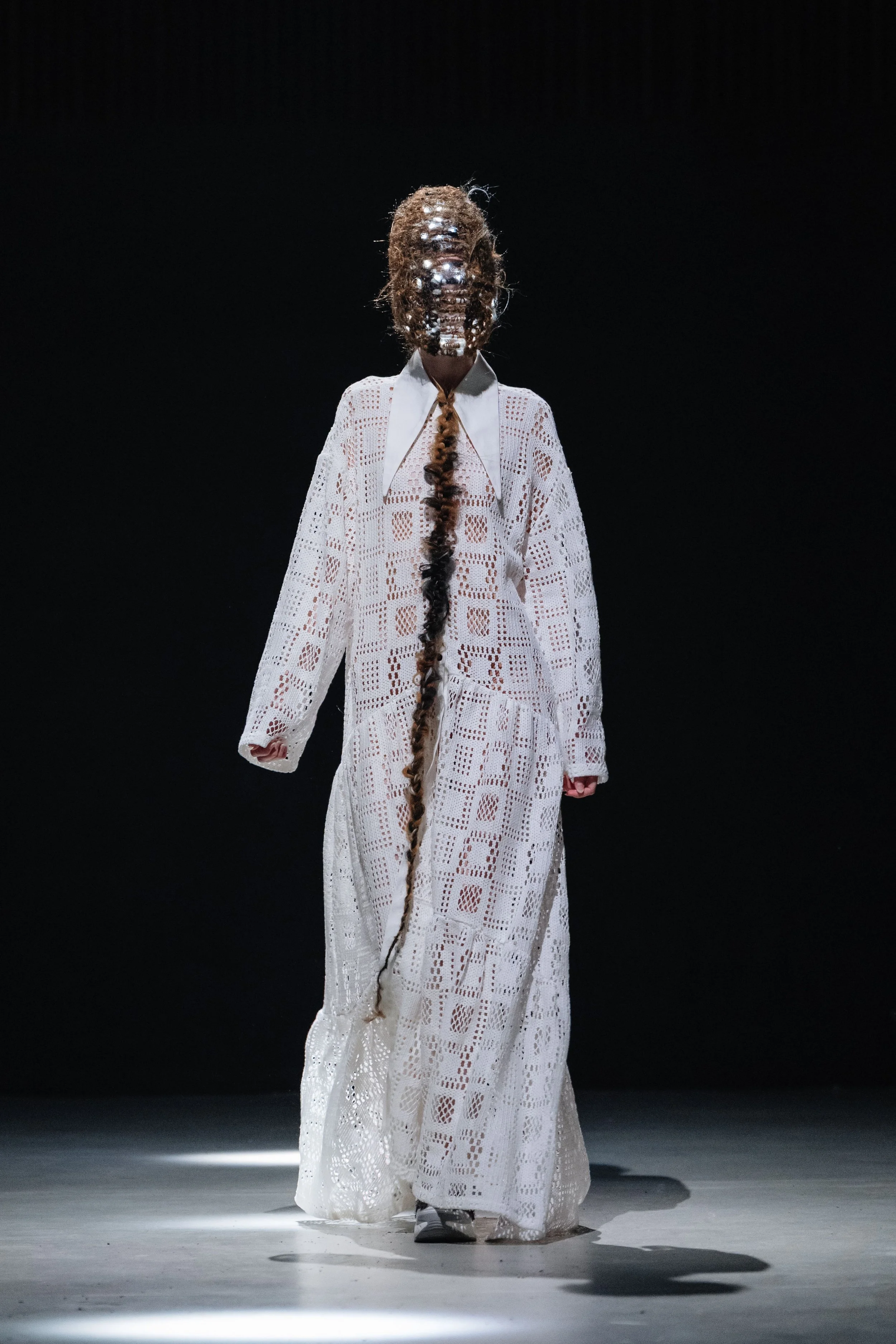
• The Whites: Bone textures and "serpent" finishes that shift into "dirty" beiges.
The Materiality of Meaning
Sustainability here is a spine, not a footnote. By breathing life into upcycled deadstock and organic denim, Rebekka created a tactile friction: the rugged history of Tyrolean loden meets the provocative slickness of natural latex. It is a wardrobe of contradictions—rough against smooth, opaque against transparent—designed for a body that refuses to be categorized.
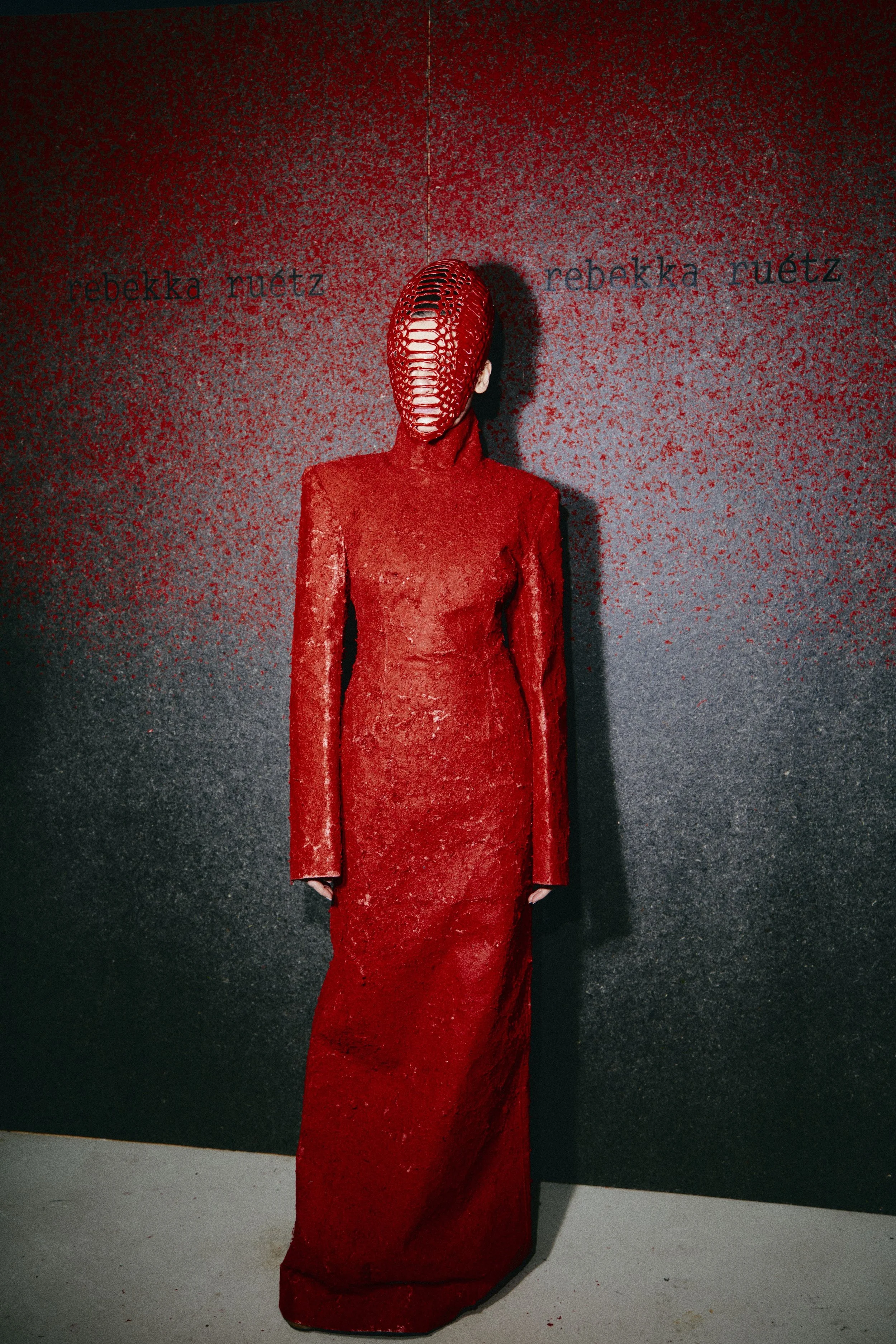
This monochromatic, floor-length gown features a high neckline and structured shoulders, created with a heavily textured, almost "shredded" fabric that mimics a raw, organic skin. The most arresting feature is the matching full-head mask, which is embossed with a scaly, serpent-like pattern. This detail directly references the mythological serpent associated with Lilith, transforming it from a symbol of "temptation" into a bold armor of identity.
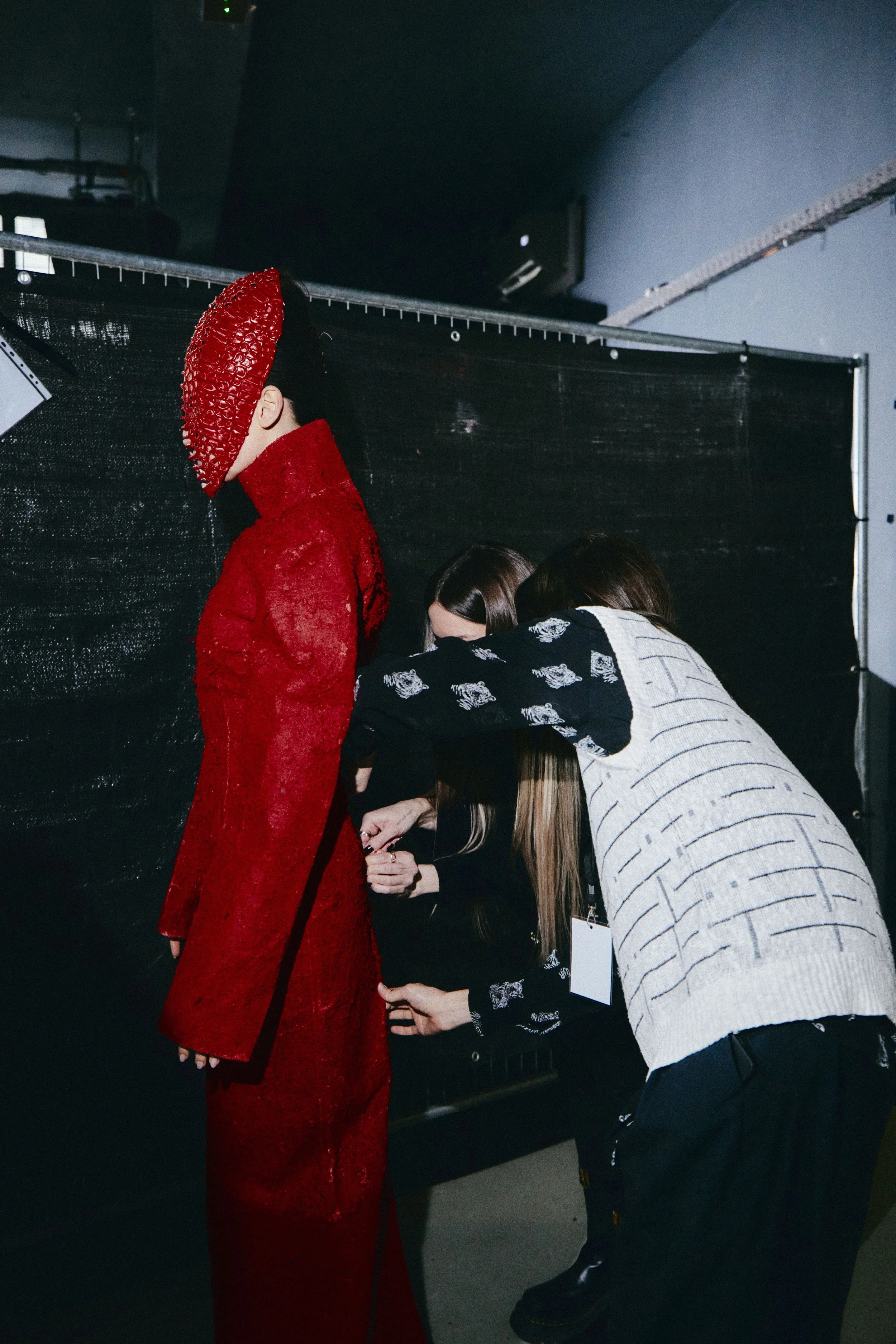
Ultimately, LILITH rejects the industry’s obsession with static perfection. Instead, it offers garments that accompany the body rather than conceal it—proving that fashion is most powerful when it allows complexity to exist.