Flowers, colourful skulls, monumental altars and parades transform the Mexico into a vast public stage for memory and celebration.
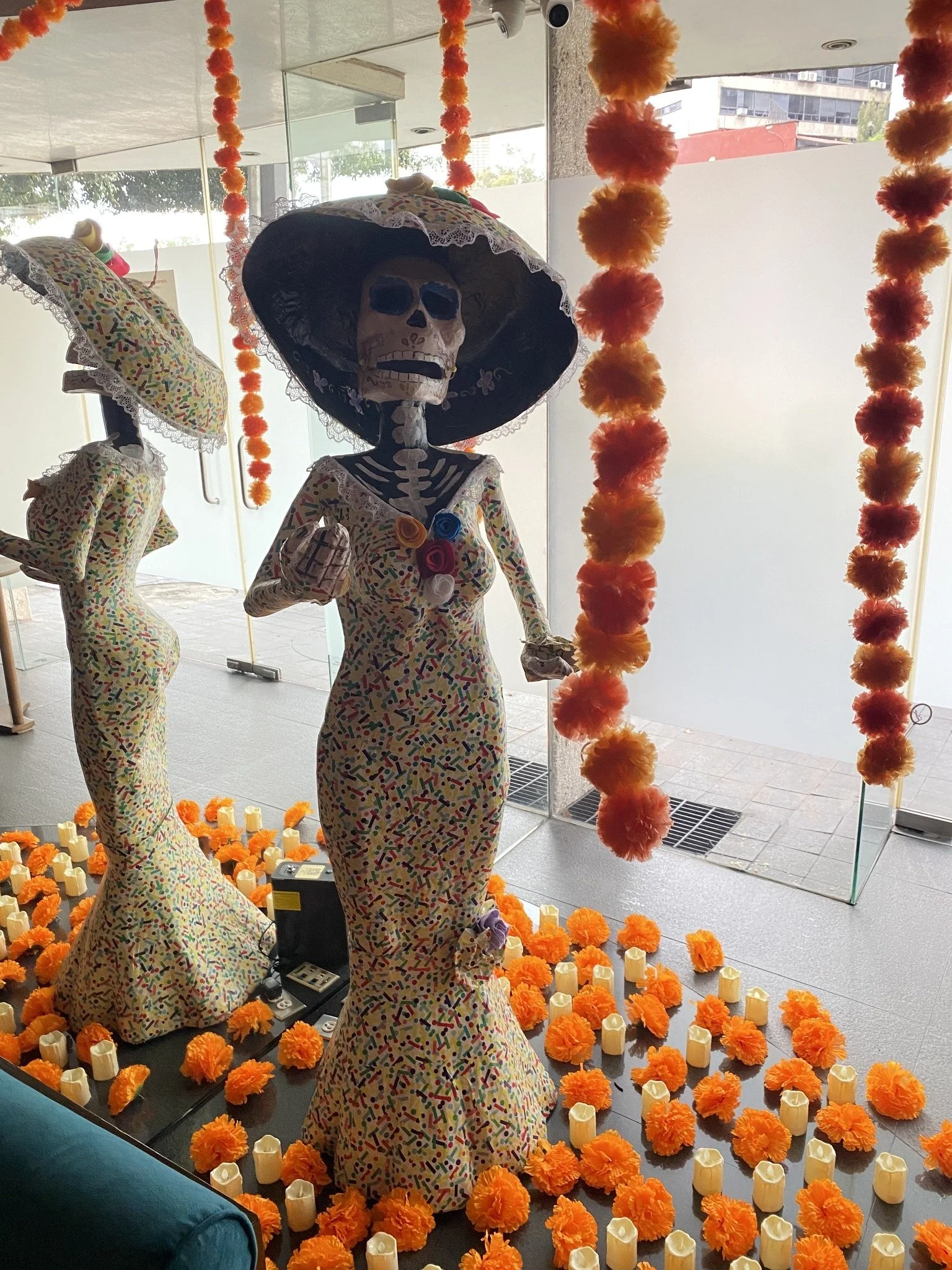
By mid-October, Mexico begins to change. Orange cempasúchil flowers appear along pavements, in markets and outside buildings. Skeletons wear elaborate dresses and enormous hats. Altars begin to appear in museums, restaurants, squares and private homes. Giant figures rise along Paseo de la Reforma, while the Zócalo (main square in Mexico City) prepares for one of the most elaborate public displays of the season.
Little by little, the country seems to assume another identity. And despite the abundance of skulls and skeletons, the atmosphere is far from macabre.
For visitors arriving from countries where the end of October is dominated by Halloween, the contrast is remarkable. Here, death is surrounded not by horror, but by flowers, colour, food, music and humour. Skulls are painted in pinks, blues and yellows. Skeletons dance. Catrinas pose elegantly in feathered hats and embroidered dresses. Entire streets glow orange with marigolds.
"Own archive, 2026"
When loved ones return
At the heart of Día de los Muertos is the belief that, during these days, the souls of those who have died can return to visit the living. And the families prepare for them. The official Día de Muertos programme includes illuminated figures of altars and cempasúchil flowers along Paseo de la Reforma.
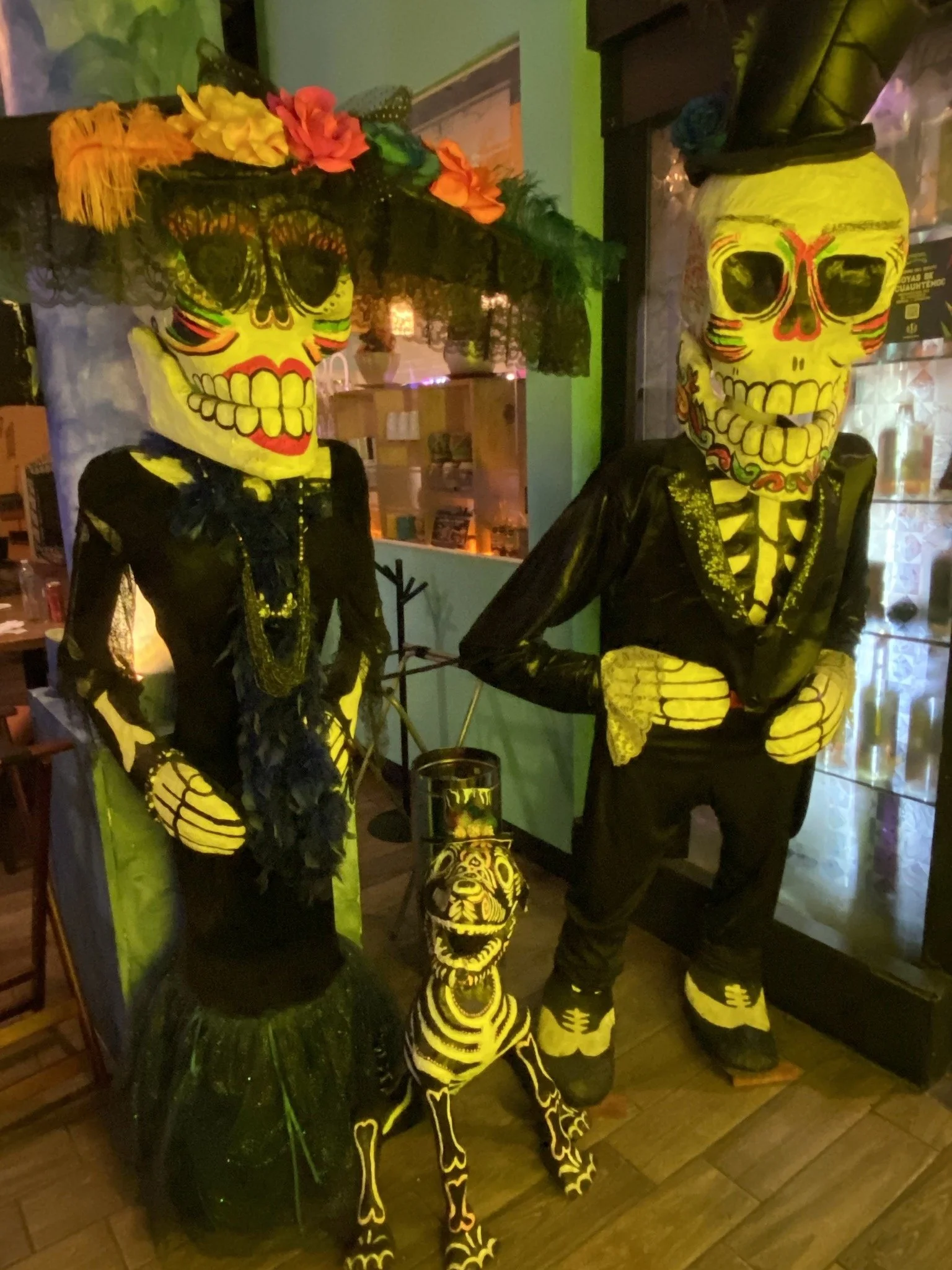
The most important expression of this is the ofrenda, or altar, created to honour a particular person, several generations of a family or even pets.
"Own archive, 2026"
Photographs are placed alongside candles, flowers, water and food. Favourite dishes may be prepared. There might be fruit, sweets, pan de Muerto (a traditional sweet bread cooked specially for this occasion), tequila or mezcal. Objects associated with the person can also appear on the altar: something they loved, something they used, something that immediately recalls who they were.
The idea is extraordinarily tender: the dead know where to go because the living have prepared the way for them. Día de los Muertos therefore turns remembrance into something physical. Memory is given colour, scent and taste.
Pan de Muerto
The flowers that take over the city
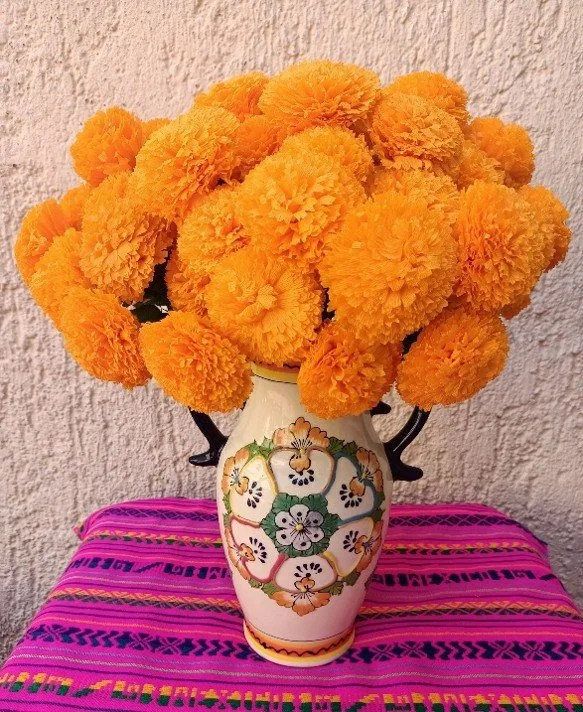
It is difficult to be in Mexico City in October without noticing cempasúchil.
"Own archive, 2026"
They fill markets and public gardens, frame ofrendas and cover monumental installations. This year, Paseo de la Reforma even hosts a dedicated Cempasúchil Flower Festival, bringing together 140 flower growers and agroecological producers from rural areas of the capital, becoming an urban performance.
The city as a stage
Nowhere is that transformation more visible than in Mexico City.
Monumental convoy of cars go through the main avenues and light installations recreate a symbolic journey between the worlds of the living and the dead. Chapultepec Park, the biggest park in Mexico City, becomes the setting for music, dance, altars and an immersive “Cempasúchil Trail”. Community ofrendas appear across different boroughs and thousands of residents move between the roles of spectator and participant.
This reaches its peak with the Gran Desfile de Día de Muertos, the enormous parade that travels along Reforma towards the historic centre. In 2026, the parade takes place on 31 October, with marching bands, dancers, giant puppets and large floats travelling towards the Zócalo.
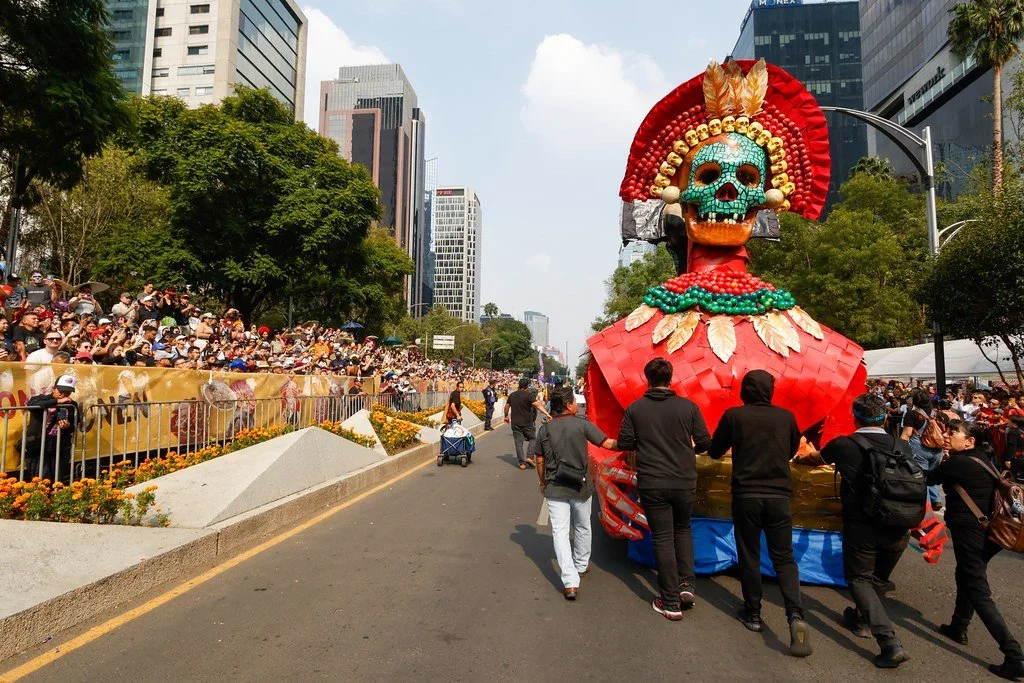
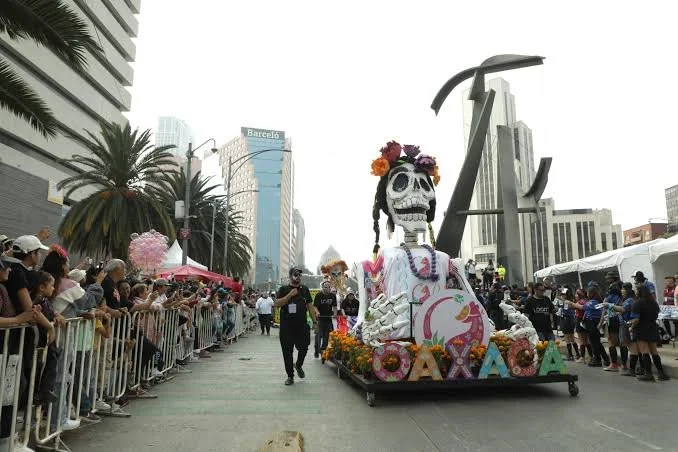
Pictures of Desfile dia de Los muertos , from Visit Mexico website.
When cinema created a tradition
For a parade that now seems inseparable from images of Día de los Muertos in Mexico City, the Gran Desfile is surprisingly recent.
Its origins are partly cinematic. The opening sequence of the 2015 James Bond film Spectre takes place during an enormous Día de los Muertos parade in Mexico City.
There was only one problem: that parade did not actually exist.
Yet the image was so convincing and became so internationally associated with the city that Mexico City subsequently organised a real-life version. The first major Día de Muertos parade took place the following year, in 2016.
Cinema imagined the performance; the city adopted it. Since then, the parade has grown into one of the capital's most recognisable.
Catrinas everywhere
Then there is La Catrina. Elegant, skeletal and usually dressed with extraordinary sophistication, she has become perhaps the most internationally recognisable figure associated with Día de los Muertos.
Her story, however, is not originally a religious one. The figure developed from the satirical skeletons of Mexican illustrator José Guadalupe Posada, whose images mocked social pretension and reminded viewers that wealth and status ultimately disappear in death.
Today she appears as sculpture, costume, face paint and public art. They smile, wear flowers and dance.
Thousands of people take part in Mexico City's annual Mega Procession of the Catrinas, transforming Paseo de la Reforma into something between a parade, theatrical performance and enormous collective portrait. This year's procession took place on 25 October.
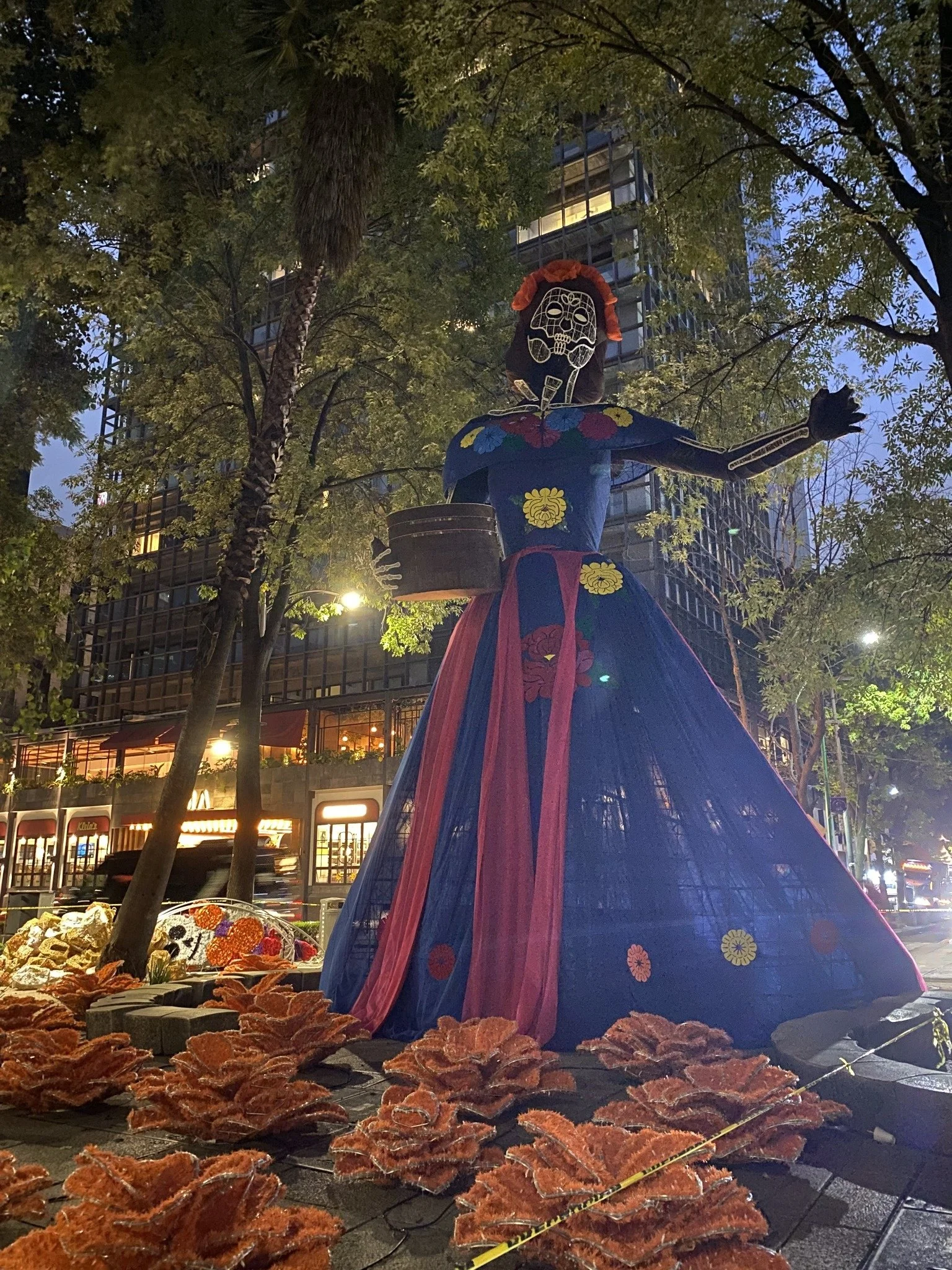
"Own archive, 2026"
A celebration of memory
There is no single version of the celebration. Its contemporary form is the result of centuries of cultural layering, combining Indigenous understandings and rituals surrounding death with Catholic observances introduced during the colonial period. The celebration can be intimate and spectacular at the same time.
Behind the giant skeletons and parades, behind the Catrinas and orange flowers, there is a photograph of someone who was loved and whose absence has not erased their place in the family.
The person who died is remembered through the things they enjoyed, the food they ate, the objects they used and the stories that remain.
And the dead, welcomed by candlelight and trails of orange flowers, are invited back into the city.
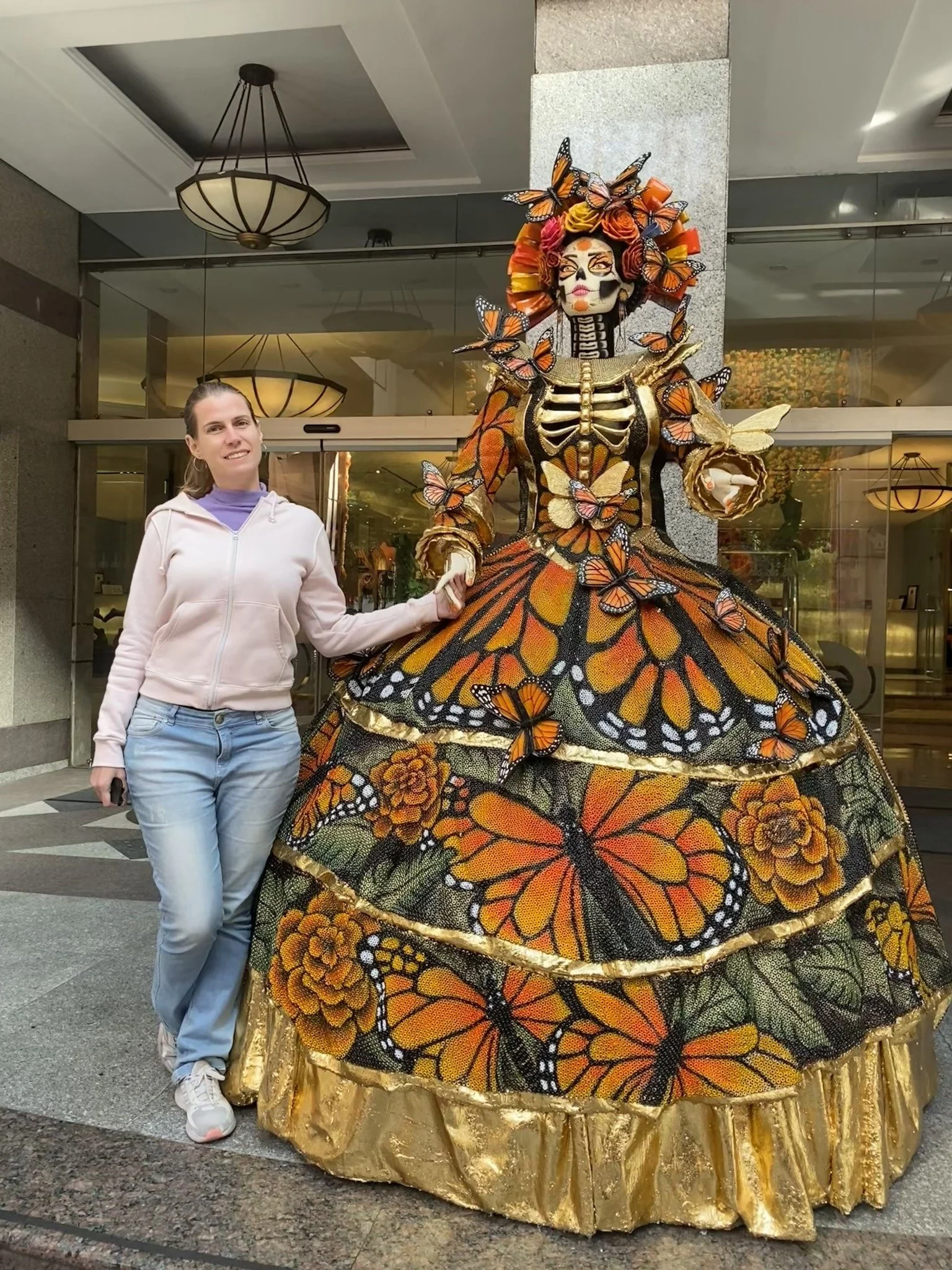
"Own archive, 2026"